American politics

How does the Catholic J.D. Vance justify Trumpian policies?

‘Read Hillbilly Elegy,’ a friend messaged me a decade ago. ‘The author really gets it.’ So I did, and indeed he did. The young and then obscure J.D. Vance showed, through his family travails in Appalachia, how both Republicans and Democrats had in their different ways screwed blue collar, just-about-working-class families like his. The book went platinum and launched his public career. Three things saved the young Vance from the fate that awaited people like him: a fiercely defensive and religious grandmother (‘Mamaw’), enlisting in the US Marines, and evangelical Christianity. He fell away from this last, however, as he discovered that his fundamentalist faith may have had community love in spades but was very short on good answers to big questions.


Trump inherited a weaponized justice system

Has Donald Trump “weaponized” the justice system to go after his political enemies? The answer is no. “What about former FBI director James Comey?” you ask. “What about New York Attorney General Letitia James?” Both went after Trump hammer and tongs. Now both have been indicted by the Trump Justice Department. Are those not textbook cases of “weaponization,” of “retribution,” of using the power of the system to punish people who have punished you? Hold on. I write this in mid-October. By the time you read it, I suspect that the list of indictments will be much longer.

Trump

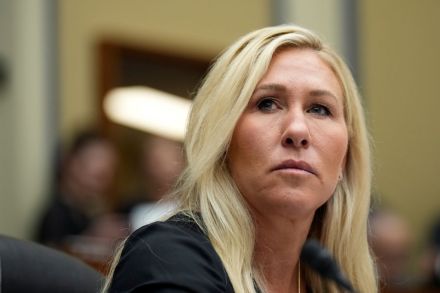
Is Marjorie Taylor Greene a Democrat? 

Georgia Congresswoman Marjorie Taylor Greene has spent the last week gnawing on the hand that feeds her, showing that no one in American politics is worse at reading the tea leaves.   Taylor Greene entered Congress in 2021 wearing a face mask that read “Trump Won.” She was so fervently a supporter of January 6 pardons that Georgians invoked an "insurrectionist disqualification clause" to try to remove her from Congress. But now that MAGA is riding high on a wave of world peace and prosperity, Taylor Greene has changed her tune and, though she says she’s still conservative, is sounding more like an unholy fusion of Liz Cheney and Nancy Pelosi.   Over the weekend, MTG appeared on comedian Tim Dillon’s podcast, claiming that she is still “MAGA through and through.

Taylor Greene

I’m done with default illiberalism

It took me far too long to reach the point where I could vote for Donald Trump confidently. I’d been redpilled multiple times. First in 2015, during Trump’s first campaign and the unhinged reaction to it; then again during the Brett Kavanaugh hearings; and most intensely in 2020 while living in Los Angeles. That city under lockdown was chaos. Churches and AA meetings were shuttered. Protests, looting and arson were tacitly permitted. I watched the collapse of society, a grim spectacle of selective enforcement and eroded trust. The grown-ups, I realized, weren’t in charge. Someone had to clean up the mess. I could explain away my reluctance to vote for Trump with January 6 or his contesting the 2020 election results. Those events provided convenient excuses.

Kirk

Magnificent – but is it war?

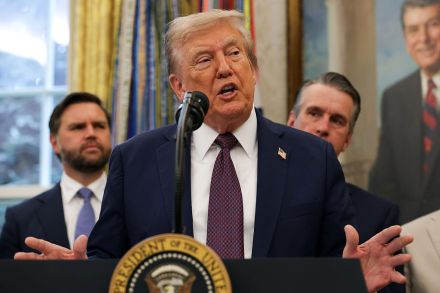
When Donald Trump made building a “big, beautiful” wall along the southern US border a priority in his first term, he was widely derided. There wasn’t enough concrete or steel to build such a structure. Anyway, it was futile because migrants would find some way over or around it. It was a heartless and evil project being promoted to distract from other failures. When shutting off immigration from Mexico became an unrealized project from that first term, Trump’s critics enjoyed themselves. Campaigning for his second term, Trump hardly mentioned the wall. Yet something remarkable has happened. Undocumented migration across the border has all but ceased.

Trump

The mixed legacy of Zbigniew Brzezinski, strategist of the Cold War

From our UK edition

In the autumn of 1938, within nine weeks of each other, two boys arrived in New York, fleeing the gathering storm: a 15-year-old Jewish German and a ten-year-old Catholic from Poland. Both would repay the mortal debt they owed by dedicating their lives to the Land of the Free. The older boy was, of course, Henry Kissinger, later Grand High Poobah to Richard Nixon and Gerald Ford. The younger was Zbigniew Brzezinski, Jimmy Carter’s national security adviser from 1977 to 1981 and the subject of a magisterial biography bythe Financial Times’sWashingtonsupremo, Edward Luce. From the first, Zbigniew Brzezinski (pronounced ‘ZbigNieff BreshinSki’, as Carter helpfully informed his team) sat in Kissinger’s shadow, always a step or two behind the great Bavarian.

Joe Biden’s puzzling legacy

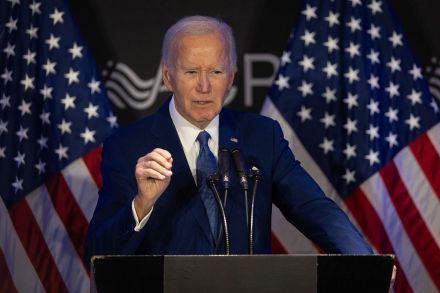
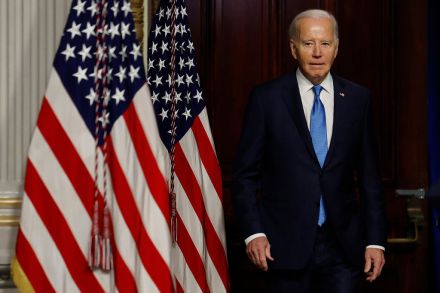
The commentariat is awash with experts on prostate cancer. What precipitated this sudden acquisition of specialized medical expertise? Why, the announcement that former president Joe Biden is suffering from stage four of the big PC which, the news reports are gasping, has metastasized to his bones. Let me pause to join Donald Trump in expressing my best wishes to the former president for “a fast and successful recovery.” Let me also recall how suddenly the world became populated with epidemiologists after the Wuhan flu led Anthony Fauci, Deborah Birx and the entire bureaucratic establishment to discover their inner totalitarian hankerings. The revelation about Biden’s health is a sort of synecdoche for a much larger universe of pain.

Biden
political

Is everything political?

I first heard the slogan “Everything is political” from a left-wing reporter for Wyoming’s statewide newspaper in the mid-1980s, at least a decade before I became acquainted with the work of the revolutionary Italian theorist Antonio Gramsci, deviser of the strategy known as the “long march through the institutions” of the West. While the right clearly has no choice but to fight fire with fire in the struggle against its ideological and political adversaries, the fact remains that the left has substantially won the battle by having helped to transform a slogan into present reality. The idea of everything as politics, and politics as everything, is ideology in its purest form.

How the Blue Dogs have evolved

In every iteration of the American National Election Studies since 1952, respondents have been asked to name their biggest “like” and “dislike” when it comes to the two main parties. From 1952 to 2004, voters’ biggest “like” about the Democratic party was that it was the “party of the working class,” whereas the biggest “dislike” that voters had of the Republican party was that it was the “party of big business and the upper class.” Today, the parties’ reputations have shifted dramatically, mirroring the changing composition of their electorates. In the 1990s, nearly 60 percent of Democratic voters were white and didn’t have college degrees. For the 2020s, that proportion has fallen to 25 percent.

Blue Dogs
supreme court trump

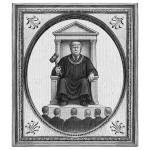
Why Trump should put himself on the Supreme Court

Legend has it that after subduing Greece, Egypt, Persia, wide swaths of India and what’s now Afghanistan, Alexander the Great wept, lamenting “there are no worlds left to conquer.” Donald Trump is close to knowing how that feels. “I run the country and the world,” he declared in a recent Atlantic interview. Trump’s second term has barely begun, but already the thought must cross his mind: “What next?” Alexander was lucky to die young, at 32 and at the peak of his power. The President is in rude health and leads a charmed life. The grim reaper missed him last year when an assassin’s bullet grazed his ear in Butler, Pennsylvania. As it stands, Trump can look forward to leaving office, aged 82, in January 2029. He’s conquered the world only to lose it to term limits.

Cathedral online

Am I too Online?

There have always been “two Americas.” Our country has always reflected deep social, economic and cultural divides. It’s threaded into the fabric of our national identity, with origins dating back to the very beginning: should America exist on its own? Tensions only intensified in the 19th century between the industrial North and agrarian South, which played out in the Civil War and Reconstruction. In 1967, Dr. Martin Luther King Jr.’s “The Other America” speech described two nations. One was prosperous. The other was trapped in poverty, racial injustice and systemic inequality, especially for black Americans.

An insightful account of America’s decline

I wouldn’t have thought a book about America’s decline would cause me to laugh out loud, but having enjoyed its author Matt Purple’s work for years now (full disclosure: he’s a personal friend and former Spectator colleague), I should not have been the least bit surprised that his debut book is as funny as it is insightful. Decline from the Top: Snapshots from America’s Crisis and Glimmers of Hope is a veritable joy to read. Though he declares himself to be a “cranky conservative,” Purple’s humor and wit offer a diagnostic examination of the American condition that exudes warmth and obvious heartfelt concern for our nation’s wellbeing.

Purple
Democrats

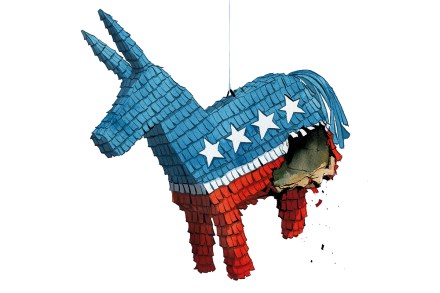
The Democrats need a new rulebook

Donald Trump’s triumphal return to the White House is the end of more than just the Joe Biden era. Since Bill Clinton’s presidency, Democrats had adhered to a formula they thought unbeatable: They would be socially progressive, economically centrist and staunchly internationalist. Republicans, they thought, had staked their future on demographics that were in decline — whites and the most conservative Christians. Democrats were the party of twenty-first-century America, an ethnically diverse and more secular, or at least religiously liberal, land. What went wrong? When Trump won in 2016, Democrats dismissed it as a fluke.

When will Ronald Reagan get the recognition he deserves?

From our UK edition

The talented military historian Max Boot has published a well-researched life of Ronald Reagan that is fundamentally wrong. First the good parts: he has combed through lots of archives finding new information and has interviewed countless people who worked with or knew Reagan. His style also bears the reader effortlessly along. Yet his claim that Reagan was merely a lightweight pragmatist who had little effect on reviving the American economy, resuscitating the country’s self-esteem or winning the Cold War is absurdly revisionist. It says more about the author’s own rejection of the Republican party than it does about Reagan’s world-historical achievements.

Conspiracy theories are as old as witch hunts 

From our UK edition

To millions of people across America, Hillary Clinton sits atop a global network of satanic child-traffickers and is battling an underground resistance led by Donald Trump to maintain her malign influence. That is the core tenet of the QAnon movement, a conspiracy theory that originated in obscure corners of the internet before being seized upon by members of the Republican elite for their political advantage. Did the Clintons get rich while undertaking a life of public service? Absolutely QAnon is at the heart of Gabriel Gatehouse’s The Coming Storm. But the book begins with a conspiracy theory from centuries earlier, about witches in medieval Europe.

From ugly duckling into swan – the remarkable transformation of Pamela Digby

From our UK edition

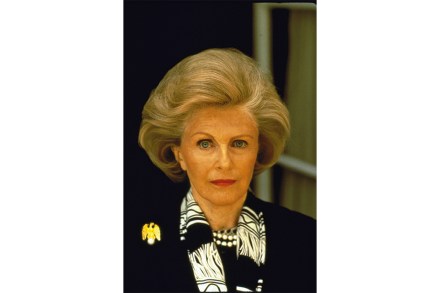
The tramp of lovers marching through our heroine’s bedroom in the first half of Sonia Purnell’s Kingmaker almost deafens the reader. But then not for nothing did Pamela Digby Churchill Hayward Harriman become known as the alpha courtesan of the 20th century. What is perhaps not so well covered is her decade-long influence on American politics before becoming the United States Ambassador to France under (no, not literally) Bill Clinton. The Hon Pamela Digby was born on 20 March 1920 and brought up quietly in Dorset, riding, hunting and meeting only those her parents (her father was the 11th Baron Digby) considered above the social plimsoll line. Early on she realised that what gave a woman supreme independence was great wealth – usually acquired through a man.

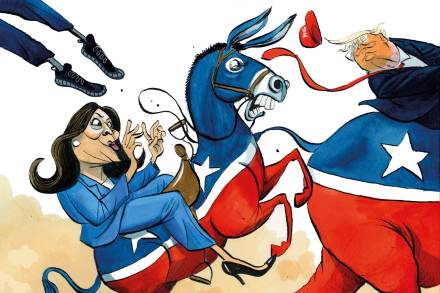
How — and why — the Democrats ignored the will of the people… again

See the wheels come off the Democratic machine as the party leader (who is also the current US president) displays to all the world his verbal and cognitive breakdown. See the party barons’ absurd race to circle the wagons with rationalizations as implausible as their praise for their boss’s historic “accomplishments.” See the media scramble to hide its complicity in the long-term cover-up of the president’s faltering tenure.

democrats electoral college
democracy

Is the fate of democracy truly at stake?

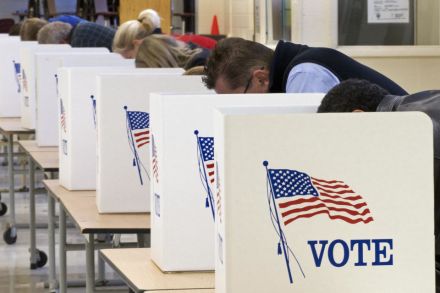
In a few months, the stolen election narratives will start in earnest. There was one in 2020, of course, but there had been another in 2016, a liberal myth about Russian interference stealing victory from Hillary Clinton. Disgruntled Democrats similarly said the Republican president before Trump was “selected, not elected” — put in office by the Supreme Court, not voters. Claiming that Barack Obama wasn’t a natural-born citizen of the United States, as “birther” Republicans did in 2008 and 2012, was another variation on the stolen-election theme. Even when elections run smoothly, ideologues easily find cause for complaint. Discontents can even apply to foreign elections.

Born in the USA: how Bruce Springsteen’s 1984 album bridged the American political divide

From our UK edition

In 1977, in the wake of the death of the king of rock’n’roll, the American journalist and music critic Lester Bangs said: ‘We will never again agree on anything like we agreed on Elvis.’ The ‘we’ was America. And Bangs was right – until June 1984, when Bruce Springsteen released Born in the U.S.A. The album’s blend of synths, guitars and colossal drums would vault Springsteen into stadiums. It went on to sell 17 million copies, and for a time made its creator the biggest rock star in the world. Steven Hyden looks to trace who Springsteen was before this moment, what happened to him during it, who he became after it – and, with more difficulty, what became of his audience.

The course of the American empire

In the 1830s, the English-born American artist Thomas Cole painted an ambitious sequence of five large rectangular canvases delineating “The Course of Empire.” He began with “The Savage State,” which depicts the rude life of humans before the advent of letters, domestication and permanent architecture. “The Arcadian or Pastoral State” is marked by harmony and some early accoutrements of civilization. “The Consummation of Empire,” at fifty-one inches by seventy-six inches, is a third larger than its fellows. Here we see a sun-drenched landscape transformed by a panoply of classical architecture counterpointed by bustling commerce and a triumphal, if overripe, stateliness. Next comes “Destruction.

empire