Alex Garland

The politics of horror

From our UK edition

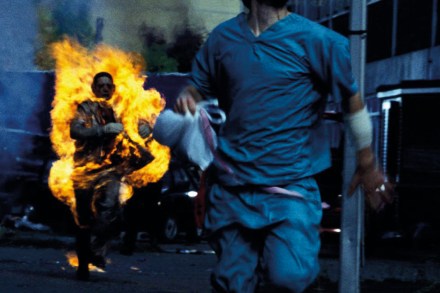
Everyone forgets the actual opening scene of 28 Days Later, even though it’s deeply relatable, in that it features a helpless chimp strapped to a table and forced to watch doomreels of ultraviolence until it loses its little monkey mind and eats David Schneider. But it’s eclipsed by the famous sequence that follows where Cillian Murphy wakes in a hospital bed to find that he has slept through a deadly pandemic and the ensuing collapse of civilisation. As Murphy drags his not-yet-world-famous cheekbones through an eerily abandoned metropolis, we see Piccadilly plastered with the names and faces of the missing and the dead. Audiences in 2002 were reminded of the recent World Trade Centre attacks, which happened in the middle of filming.
Magnificently bloodthirsty: 28 Years Later reviewed

From our UK edition

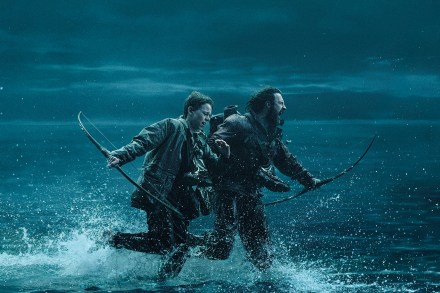
First it was 28 Days Later (directed by Danny Boyle, 2002), then 28 Weeks Later  (Juan Carlos Fresnadillo, 2007) and now Boyle is back at the helm with 28 Years Later, which is, as I understand it, the first in a new trilogy. This post-apocalyptic horror franchise could go on for ever. As the last film was generally (and rightly) regarded as a desultory cash grab, there is much riding on this one. The verdict? It’s entertaining but not outstanding. The biggest surprise is its tonal swerve into sentimentality. Jodie Comer and Ralph Fiennes, however, bring character and heft and, just to put your minds at rest, yes, it’s as magnificently bloodthirsty as ever.

Civil War is the first success of A24’s new box-office strategy

If you make the mistake of following journalists on Twitter, you would think that Civil War is the most talked about film of the year. It's not — and the over-coverage it's been receiving isn’t because it's particularly amazing or outrageous or riské or inflammatory. It did reach number one at the weekend box office, but on a quiet weekend, competing with third-week tickets for Godzilla x Kong: The New Empire. No, all the attention has come because Civil War is about journalism and there are few things we like talking about more than ourselves, despite few others being that interested. And so, here I am. But more interesting than the film is the release strategy behind it, because it represents A24 taking a punt on far more expensive films than usual.

civil war

Secrets of the dorm: Come and Get It, by Kiley Reid, reviewed

From our UK edition

Oh hell, the novel after the Big Book. It’s so, so difficult. David Nicholls took seven years to follow up One Day with Us. Alex Garland gave up after The Beach and went off to write films. Lawyers prevent me from speculating on precisely what it did to Allison Pearson. And Kiley Reid’s Big Book was a joy. Her debut novel Such a Fun Age was razor-sharp, incredibly funny and utterly unafraid: commercial fiction with serious things to say and with wide appeal. It won prizes and sold brilliantly. Of course it’s difficult to follow up. And Come and Get It, whose title is difficult to remember and has nothing to do with the plot, is a classic victim. It’s hard not be sympathetic.

There is not going to be a second Civil War

I have important news for everyone: there is not going to be a second American Civil War. That may be hard for some people to grasp, as they seem almost fully committed to the idea that Civil War 2 is a pre-produced done deal just waiting for a wide release. But, as honorary American Gordon Ramsay might say, let me make one thing clear, young lady. The Second Civil War is a fear-based fantasy, mostly based on media-bubble abstractions. And our fantasy-making apparatus is in the midst of exploiting that fear. Exhibit one is Alex Garland’s upcoming A24 movie, subtly titled Civil War, starring Kirsten Dunst as a blue state-looking photojournalist who is chronicling the drama as President Ron Swanson sends fighter jets to attack what used to be his citizens. https://twitter.

civil war