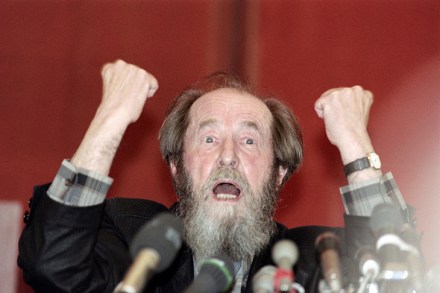
Aleksandr Solzhenitsyn

Confessions of a Russiagate survivor

As the latest special counsel files new charges against former president Donald Trump, it’s beginning to look like legal crusades in America are more important than political ones. Locking up one’s political opponents is the sort of thing they used to do in Ukraine, after all, or the totalitarian state of which Arthur Koestler wrote in Darkness at Noon. Just a few years after claims of Russian collusion with the winning candidate of America’s 2016 presidential election were debunked, it is ironic that a Russian’s critique of our political culture nearly half a century ago captures our current predicament so clearly.

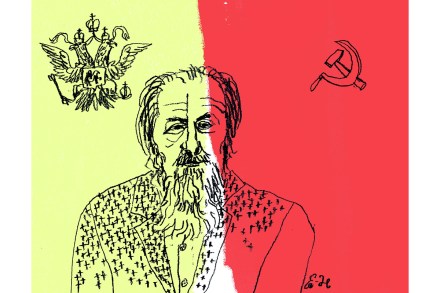
russiagate

Aleksandr Solzhenitsyn’s masterpiece is finally appearing

In the mid-1970s, exiled from the Soviet Union for exposing its vast crimes against humanity, and having won the Nobel Prize in Literature for that endeavor, Aleksandr Solzhenitsyn turned his back on the lionization that awaited him in New York and other cultural capitals of the West and instead settled with his family in the woods of Vermont. Avoiding visitors for the better part of the next two decades, he churned out half a dozen or so books, averaging roughly 750 pages each, that together tell the story of the Russian Revolution and its antecedents. This act of sheer energy, self-discipline and renunciation of the conventional worldly pleasures bestowed by the literary elite was in the spirit of Russia’s own eastern monasticism.

Solzhenitsyn

Solzhenitsyn, Russian Nobelist and noblest Russian

Trudging through heavy snow along the perimeter of the Maple Avenue Cemetery, my steps are punctuated irregularly by shotgun blasts from the deer hunters in the nearby woods. Why did I wear this cervine-tawny jacket? I gaze up into the slate sky of a late November twilight and think… well, my first thought is that I hope these guys are good shots, local boys and not city hunters. My second thought is of Aleksandr Solzhenitysn, the long loneliness of exile, and the sustaining dream of repatriation. ‘Away from home in a country far away Even the springtime sun is gray.’ Or so Solzhenitsyn wrote as he dreamed of his return.

Aleksandr Solzhenitsyn