Albums

The joy of American romanticism

Grade: A– For some record collectors, the fun lies in comparing recordings of standard repertoire. For others, it’s more about exploring – discovering works that are extinct in the concert hall, but which the inscrutable economics of recording make viable. If you’ve a habit of forming modest crushes on wallflowers and unfashionable composers, the news that Chandos is recording the orchestral music of Edward MacDowell (1860-1908) will bring a pleasant flush of blood to the cheeks. MacDowell, in short, is what American classical music sounded like before there was such a thing as American classical music – before Copland, Gershwin and all that jazz. Romantic, in other words; very, very

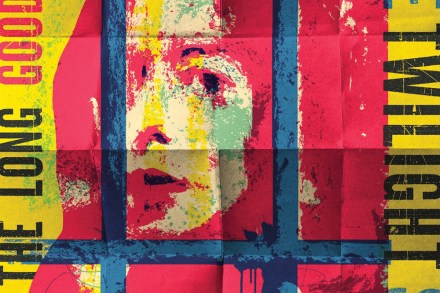
Anthemic angst from The Twilight Sad

The only thing misery loves more than company is a backbeat. While capturing pure happiness surely remains the Holy Grail of any artistic endeavour, the blues is the bedrock of popular music for a reason. Sure enough, as we ready for the clocks to go forward, two albums arrive which could hardly be said to be full of the joys of spring, although they approach personal crisis – and catharsis – in very different ways. It’s The Long Goodbye, the sixth album by Scottish indie-rock band the Twilight Sad, is their first in seven years. During that hiatus lead singer and lyricist James Graham was dealing with his mother’s decline

Harry Styles has a cute voice

Grade: B In which the foppish Davy Jones figure from the manufactured band One Direction (Zayn Malik being Peter Tork; One Direction didn’t have a Mike Nesmith) sheds the soft-rock pop-lite that has served him so well and goes with what he fondly believes is challengingly funky EDM, a genre which I do not believe plays to his strengths. So what you get is lyrics as fabulously inane as on ‘Watermelon Sugar’ but very little of the pleasant tunes which accompanied that and his many other hits. There are some interesting rhythmic textures for sure, and a surfeit of old-skool playground synths. There is also a surfeit of repetition, a

U2’s childlike response to world affairs

Whither the protest song in 2026? In January 1970, John Lennon wrote and recorded ‘Instant Karma!’ in a single day and had it in the shops a little over a week later – no mean feat given the mechanics of physical record production at the time. Nowadays, when the practicalities of releasing music are infinitely more streamlined, it has never been easier for artists to react to current events within moments of them occurring. And with the febrile news churn packing a year’s worth of drama into each week, there is certainly no shortage of material. A small man with big ideas and a loud voice, Bono is a veritable

Zach Bryan is no Springsteen

There would, on the surface, appear to be little common ground between the wife of stuffy old Malcolm Muggeridge and the latest bard of blue-collar America. Yet the unlikely ascendancy of Zach Bryan brings to mind Kitty Muggeridge’s killer putdown of David Frost as the superstar who ‘rose without a trace’. You may be surprised to learn that Bryan, a 29-year-old US Navy veteran from Oklahoma, will headline two concerts later this year at Tottenham Hotspur’s stadium, as well as perform to 60,000 people each night in Edinburgh and Liverpool. He now ranks alongside Bon Jovi and Bruno Mars as a gold-star draw on the 2026 summer show circuit. Bryan

Who let Men Without Hats make a new album?

Grade: D A Montreal band led by a Ukrainian/Canadian called Ivan Doruschuk, with a histrionic baritone, famous solely for having had the most ludicrous hit of that ludicrous decade, the 1980s, with ‘Safety Dance’. Perhaps more famous still was the hilarious video that accompanied the song: Mr Doruschuck in medieval gear cavorting in fields with peasants, throttling a dwarf and entrancing a very pretty blonde woman who looked well up for it. Status Quo, bizarrely, covered ‘Safety Dance’, but the band had no more hits. Why on earth are they still going? Who gave them the advance for a new album? And is it any good? No, of course not.

There’s a lot to like in Rosalia’s new album

Grade: A Welcome to the Andalusian cadence, the minor fall and the major lift, the descent from Am through G and F to E. Welcome also to Rosalia Vila Tobella, who is not Andalusian, but Catalan, but uses that cadence an awful lot, much as Status Quo prefer to stick to C, F, G. She has been much praised for the depth and ambition of her compositions – and commercially much rewarded when those compositions, sometimes appended to fairly straightforward EDM, get the kind of downloads you would more usually expect from Ariane Grande. Though I find a good few of the compositions comparatively slight, there is no doubting the

Violin concertos from two Broadway legends

Grade: B+ The 20th century, eh? What a lark that was. Vladimir Dukelsky studied in Kiev under Glière and looked set to be one of the smarter Russian composers of his generation. He even wrote a ballet for Diaghilev. Then communism happened and Dukelsky ended up in the USA where to the bemusement of his friend Prokofiev he reinvented himself as Vernon Duke, Broadway songsmith. ‘Autumn in New York’ and ‘Taking a Chance on Love’ are both by Duke; classic Americana by way of Tsarist Ukraine.  Duke’s Violin Concerto (1943) is recorded here alongside the 1941 concerto by Robert Russell Bennett – better known as the king of Broadway orchestrators;

The mind-bendingly creative works of Louis Couperin

The French lutenist Charles Fleury, Sieur de Blancrocher, is one of those unfortunate historical figures who are chiefly remembered because of how they died. He was climbing the stairs to his apartment near the Louvre after a court dinner in November 1652 when he slipped, fell head over heels and was dead a few hours later. We don’t know, though people have wondered, whether the wine was to blame. Only one piece of music by him survives, and he would probably be forgotten if he hadn’t been memorialised in several tombeaux – slow memorial dances – by royal composers, one of whom was a young harpsichordist whose genius is only

Has Taylor Swift been reading The Spectator?

The Last Dinner Party received quite the critical backlash when they arrived amid much fanfare in 2023. Posh, precocious and theatrical, armed with lofty ideas that matched their station as four young women who had benefited from very expensive educations, the band encountered widespread suspicion that they were industry ‘plants’, or had somehow bought their way to instant recognition. Happily, their debut album, Prelude To Ecstasy, proved sufficiently accomplished to repel these waves of hostility (strange how the success of privileged young women tends to attract far greater opprobrium than that of privileged young men). In any case, the excellence of the follow-up should settle the matter. Rougher around the

An album that proves Martinu was one of the great quartet composers

Grade: A Bohuslav Martinu was a patchy composer; worse, he was also a prolific one, meaning that if you dip into his music at random you never quite know if you’re going to have your day made, or just half an hour wasted. Ideally, you need someone to do the choosing for you, and praise be, here’s one of today’s brightest and best chamber ensembles doing exactly that. Seriously: listen to one of the big-name string quartets of the CD era – the Alban Berg Quartet, say, or the Emersons – and ask yourself, hand on heart, whether the Pavel Haas Quartet doesn’t play the socks off them. The vitality,

No, Big Thief’s Double Infinity is not the greatest folk album ever

Grade: B- ‘I feel within myself a constant dialogue between my masculinity, my femininity and the part of me that is neither of those things. I’m just trying to talk about it because I feel like I’m something that is very ambiguous,’ explains lead singer and songwriter Adrianne Lenker. This may explain why the first song on the new album from this New York indie-ish folk-rock band is called ‘Incomprehensible’, a title which could easily be appended to a good 60 per cent of the lyrics on an album which, given its heralding as the greatest folk album ever, is something of a let-down. It ain’t quite John Prine, let

‘Modern pop makes me want to kill myself’: Neil Hannon interviewed

Search for a successor to Tom Lehrer, and you’ll be hard pressed to find any decent candidates. One of the  few, however, who can match the wit and sophistication of the late musical satirist is the Northern Irish musician Neil Hannon. The 54-year-old is the sole permanent member of his band the Divine Comedy, and his elegant records mix Lehrer-esque wordplay with swooning orchestral pop that is in equal measure Dusty Springfield, Scott Walker and Michael Nyman. But matters have darkened somewhat on his newest LP, Rainy Sunday Afternoon. Here, we are far from the cheeriness that many will remember on his 1990s records Casanova and Fin de ​Siècle. The

A new Beethoven cycle to keep – but hide

Grade: C In the 1990s the young Italian pianist Giovanni Bellucci gave us a reading of Beethoven’s Hammerklavier Sonata whose thrilling athleticism bore comparison with those of Maurizio Pollini and Charles Rosen. A few years later Bellucci began a complete cycle of the piano sonatas – but, rather than include his existing Hammerklavier, he produced a version that was in keeping with the style of the cycle: deliberately perverse, reinterpreting (that is, ignoring) the composer’s precise instructions in the score. Only now has Bellucci finished the cycle, explaining in his pretentious liner notes that he was held up by his meditations on Beethoven’s true intentions. So, for example, the first

Disconcerting but often delightful new Bach transcriptions

Grade: B Everyone loves the music of Johann Sebastian Bach. Rather fewer people love the sound of an unaccompanied organ, so a cottage industry has developed among conductors and composers, retrofitting Bach for full orchestra. From Elgar and Mahler to showman-maestros like Stokowski and Henry Wood, orchestral Bach transcriptions have tended towards the spectacular, and they annoy all the right people. When Wood arranged the D minor Toccata and Fugue for a super-sized orchestra, he pre-empted the backlash by crediting it to a fictional Russian modernist, ‘Paul Klenovsky’. The critics duly raved.  Still, who knew that the late Sir Andrew Davis – the closest thing we had to a latter-day

Why I don’t get the blues

The Louisiana bluesman Buddy Guy is releasing a new album this week. It is called Ain’t Done With The Blues – a statement which one might argue seems redundant considering Guy, who is 89, has been releasing albums with the word ‘blues’ in the title since 1967’s Left My Blues In San Francisco. Since then, we’ve had A Man And The Blues (1968), The Blues Giant (1979), DJ Play My Blues (1982), Damn Right, I’ve Got The Blues (1991), Rhythm & Blues (2013), The Blues Is Alive And Well (2018) and The Blues Don’t Lie (2022). This is a man who isn’t ever going to give David Bowie a run

Irritatingly, Wet Leg’s new album is pretty good

Grade: B+ There’s quite a lot to dislike about Wet Leg, even aside from their stupid name. The entirety of their lyrical canon, for starters – vapid and petulant millennial inanities, 50 per cent performative braggadocio, 50 per cent adolescent carping. Or there’s the commodification of their sexualities: they’ve traded up to being bi, just before the market peaks. Or there’s Rhian Teasdale’s frequent, bone-idle recourse to an affected, half-spoken monotone in lieu of, y’know, a tune – that shtick had begun to pall even before the end of their debut single, ‘Chaise Longue’. Or the unremitting chug chug chug of the guitars and the fact that Teasdale sings in

No amount of discourse will make a good pop song into a great one

There is no higher calling than making great pop music, and no mechanism by which such an achievement can be faked or fudged. No lofty exposition, no pleading discourse, no mitigating circumstance, no ifs, buts or boo-hoo back story can bend a piece of so-so music into a great pop song. We simply know one when we hear one. Commentators may gush about Beyoncé’s genre-strafing cultural significance until the cows come home, but it doesn’t alter the plain fact that she hasn’t released a single piece of music in more than a decade that will stand the test of time come pop’s judgment day. ‘Pop’ implies freshness. Fizz. This doesn’t

Alfred Brendel was peerless – but he wasn’t universally loved

In middle age Alfred Brendel looked disconcertingly like Eric Morecambe – but, unlike the comedian in his legendary encounter with André Previn, he played all the right notes in the right order. OK, so perhaps I’m selling the maestro a bit short: I do think Brendel, who died on 17 June at the age of 94, was a peerless interpreter of the Austro-German repertoire, and for a time in the 1970s had a better claim than any other pianist to ‘own’ the Beethoven and late Schubert piano sonatas. But some of the media tributes have been embarrassingly uncritical, implying that Brendel was universally loved. He wasn’t, and he didn’t want

If you think all orchestras sound alike, listen to this recording

Grade: B+ These are gloomy days, so here’s a burst of melody and colour to cheer you up. Back in the LP era it wasn’t unusual for classical recordings to be put together like a concert that you might actually want to hear: a sequence of works by different but complementary composers, offering the possibility of a happy discovery. Come for the Strauss, stay for the Reznicek – that sort of thing. This lively new disc from the Borusan Istanbul Philharmonic adopts the same principle. The unifying theme is early-20th-century eastern European nationalism – the folksong-collecting variety, not the Archduke-assassinating kind. But it’s the opposite of monotonous. The Bartok is