Air Force

Why the Army needs the cavalry

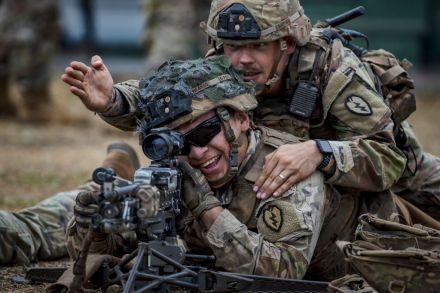
A generation ago, I was an officer in the US Army National Guard and later in the Army Reserve. I did absolutely nothing important, and never saw any places more exotic than Fort McCoy, Wisconsin, and Camp Atterbury, Indiana. I then spent a dozen years working for the Army as a civilian employee. I had already decided before these events to devote my academic career to the study of the Army. I loved (and still do love) it in an abstract and historical sense. However, only after my personal association with it did I realize how profoundly shortsighted it was. I observed this myopia daily and marveled at its immensity. Veterans may remember the adage that there is “the right way, the wrong way and the Army way.” The Army way is usually just plain dumb.

Army

Why the left wants you to be weak

For much of my life, fitness wasn’t optional. I was held to very specific standards and tested to confirm that I was adhering to those standards. I was a hockey player. In college, and briefly, in the minor pros. Most seasons began the same way: a searing battery of strength and conditioning tests – on-ice sprints, off-ice endurance runs, bench press, squats, pull-ups, all to termination. Scores aggregated and ranked, from first to last. Personal value was assigned to the scores. Coaches took notice. I trained accordingly and drew a portion of my self-worth from being fit. That mindset would serve me well after school, when I joined the US Air Force as a Pilot Trainee. I was medically discharged before commissioning, but while I was in, fitness wasn’t optional.

Harrison Kass

America’s new stealth jets don’t need pilots

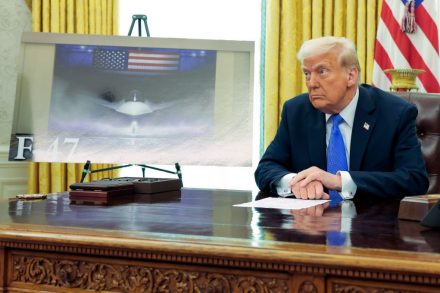
Donald Trump is presiding over an unprecedented boom in stealth jet production. He announced the F-47 in March and the F-55 in May – alongside upgrades to the F-22 Raptor. He inherited the B-21 Raider project and will make a decision about the Navy’s F/A-XX program. It promises to be a deadly stable of airborne thoroughbreds. But before the President and the rest of the national security apparatus commits future generations to paying for these programs, they should pause and consider a basic reality: in most cases, the military doesn’t need manned aircraft to fly over enemy territory anymore. Most of the functions of the four new, exquisite and very expensive, manned aircraft under development can already be performed by other, far less expensive systems.

Stealth

Can the US airman who set himself on fire ‘Rest in Power?’

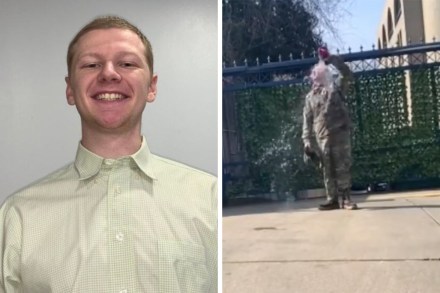
The war in Gaza has claimed another victim — this time on American soil. Airman Aaron Bushnell died on Sunday night after lighting himself on fire in protest of the war. Bushnell filmed his protest in front of the Israeli Embassy on Sunday and livestreamed it on Twitch, quickly becoming a martyr for the far left. Well, some of them. “I will no longer be complicit in genocide,” Bushnell said in the video. “I am about to engage in an extreme act of protest, but compared to what people have been experiencing in Palestine at the hands of their colonizers, it’s not extreme at all.” Bushnell then lit himself on fire while screaming, “Free Palestine,” until he fell to the ground. The video shows police officers working for more than a minute to put the fire out.

aaron bushnell airman fire

The advent of AI-piloted planes

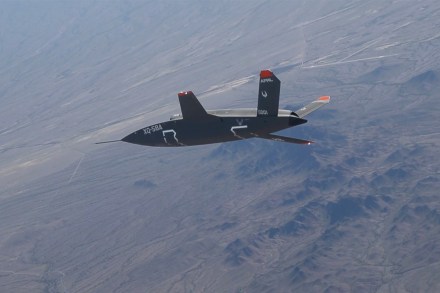
The US Air Force conducted the first flight test of the XQ-58A Valkyrie drone, from Kratos Defense and Security Solutions, piloted by artificial intelligence, on July 25. The test was part of a years-long effort headed up by the Air Force Research Lab designed to integrate advanced technology into the Air Force’s arsenal. The lessons learned and data gathered from the test will be applied to the Collaborative Combat Aircraft program, which seeks to procure an unmanned combat drone capable of working — collaborating — with manned systems, like a traditional fighter jet.  Bringing AI into the fold offers numerous benefits to the modern warfighter.

The Kratos XQ-58 Valkyrie ai drones

How to solve the military recruitment crisis

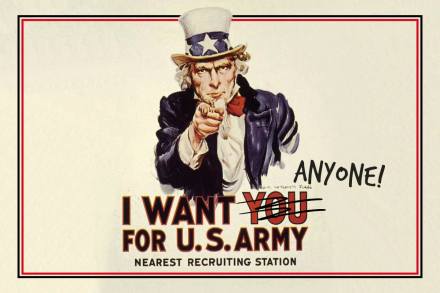
Our military is facing the worst recruiting crisis in the history of our fifty-year-old All-Volunteer Force (AVF). Contrary to what you may have read elsewhere, there is no single explanation for this urgent problem. Rather, this crisis is the product of a number of factors: a strong civilian labor market, the effects of COVID, a shrinking pool of American youth eligible to serve in the military, and — of greatest concern — a reduced interest in joining the military, fed by a lack of knowledge, a declining sense of service, false and negative messaging about the forces, and the activist politicization of the force. Today, there are about 1.3 million active-duty military members; they are its greatest asset.

military recruitment

The military recruitment drought is a national security crisis

“Leave no one behind” has been the American warrior’s ethos for decades. It is ingrained in the Army Ranger’s Creed: “Leave no fallen comrade behind.” It is the reason they searched so desperately for Navy Seal Marcus Luttrell, the Lone Survivor, and so many others throughout our country’s history who have been separated from the team in the heat of battle. As a midshipman at the United States Naval Academy, the Marines who trained us beat accountability into us to ensure we take care of our own — always.  These are the core values service members carry with them, and these are the values that attract young Americans to join the armed forces. That is, until Joe Biden became commander-in-chief.

military recruitment drought

Ghost riders in the sky

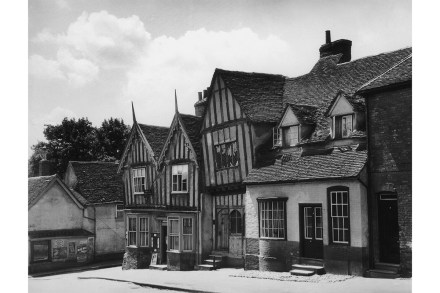
Christmas Eve 1944, and the airfield near the tiny Suffolk village of Lavenham shook with the noise of bombers from the 487th Bomb Group, part of the 8th US Army Air Force. The commanding officer, leading more than 2,000 aircraft from various airfields, was brigadier general Frederick Walker Castle, and today was to be his 30th and final mission. Over Allied-held territory in Belgium, Castle’s B-17 Flying Fortress developed engine trouble. Dropping back from the bomber stream so as not to slow it down, he refused to jettison his bomb load on the Allied troops below. He was a sitting duck. After repeated fighter attacks, his plane on fire and in a tailspin, Castle ordered his crewmen to bail out.

lavenham