Agatha christie

Adapting Wodehouse for the radio is a challenge – but the BBC has succeeded brilliantly

From our UK edition

Everyone knows a Lord Emsworth. Mine lives south of the river and wears caterpillars in his hair and wine on his shirt and has just occasionally written for this magazine. That doesn’t much narrow it down. When you look at him, you understand a little better why P. G. Wodehouse is topping the lists of authors to read during lockdown. It’s not just that the books are funny. With an Emsworth or a Bertie Wooster you’re guaranteed that idling and dithering will land you somewhere. Even if it is in the soup. Adapted for Radio 4 this fortnight, Leave it to Psmith, the second in Wodehouse’s Blandings series, sees the dithering Earl invite a prospective thief into his home after mistaking him for a Canadian poet.

The lockdown list: books to read during quarantine

Now we’ve got time on our freshly cleaned hands, The Spectator’s literary luminaries are lubricating the wheels on time’s wingèd chariot and seizing the chance to boost their morale and brain function, reflect on the meaning of life and catch up on a good book or six. Each day, the Lockdown List carries our bibliophilic recommendations. Day 74: Indian summerRoss Clark The success of Black Lives Matter has deflected attention from a group which has no less a cause for grievance over its treatment throughout US history: native Americans. Indeed, to this day Native Americans, thousand for thousand, have an even greater chance of being killed by police officers as do African Americans.

custer

A purity test for artists is the end of art

From our UK edition

However we keep ourselves amused over the holidays this year, two sources of entertainment are off the docket. Amid the deluge of sexual misconduct allegations last month, the BBC dropped an Agatha Christie drama from its Christmas line-up after one of the actors, Ed Westwick, was accused of rape and sexual assault — which Westwick denies, slathering a layer of irony on the mystery’s title: Ordeal by Innocence. Mere hours before the scheduled premiere, the distributor of I Love You, Daddy refused to release the film, in anticipation of an ugly big reveal in the New York Times. The movie’s star, director, producer and writer, Louis C.K., now admits to having masturbated in front of multiple younger female comics (but hey, at least he asked first).

The death of cosy Christie

From our UK edition

This is not Midsomer Murders. The new film adaptation of Agatha Christie’s Murder on the Orient Express is thick with violence and sexual innuendo. It elevates Hercule Poirot, the diminutive, fastidious Belgian detective, with his egg-shaped head and pot belly, to part-time action figure, a man who chases bad guys down dizzying descents in exotic snowscapes before straightening his magnificent moustache with a twinkle in his eye. This is less cosy, golden age detective fiction than a cross between Daniel Craig’s 007 and Scandi noir. Kenneth Branagh, who stars and directs, has brought his experience playing the dejected Swedish police inspector Wallander to the fore, giving the usually reserved detective unusual passion and vulnerability.

Good clean fun | 7 July 2016

From our UK edition

The Detection Club is rather like the House of Lords of British crime writing, though considerably more select. (I should declare an interest: I’m a member of the club, so it’s possible I may be biased.) Founded in 1930 by Agatha Christie and Dorothy L. Sayers among others, the club chooses new members by secret ballot. Candidates undergo an initiation ritual involving black candles, a billowing red robe originally designed for G.K. Chesterton, a terrifying sacred oath and a skull called Eric. (Forensic examination has demonstrated that Eric belonged to a female.) The story of the club’s early years has been well told in The Golden Age of Murder by Martin Edwards, the current president.

Old masters

From our UK edition

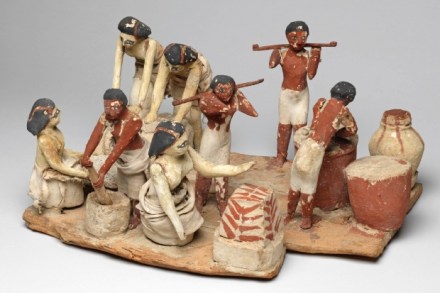
The Fitzwilliam Museum is marking its bicentenary with an exhibition that takes its title from Agatha Christie: Death on the Nile. But it turns out it was another writer of a different type of fiction who was directly involved. M.R. James, author of Ghost Stories of an Antiquary, amassed some of the exhibits in his capacity as director of the Fitzwilliam from 1893 to 1908. And almost any object on display would have made a perfect prop for one of his tales, because the subject is ancient Egyptian coffins. Generally, the main character in a story by James is a retiring gentleman scholar who comes across a venerable item which then brings upon him some diabolic haunting or curse.

Aleppo Notebook

From our UK edition

I had been trying to get to Aleppo for ages, but was unable to do so because rebel activity had cut off the city from the outside world. Syrian government military successes at the start of January meant there was at last a safe road. I hired a driver, was allocated a government minder (very handy at checkpoints), and booked into a hotel. Driving north from Damascus, we picked up a 22-year-old Syrian army lieutenant called Ali, returning to his unit after eight days’ leave with his family. We drove through Homs — miles and miles of utter devastation — and then east on to the Raqqa road. Ali told me that he had been assigned to Kuweires military airport east of Aleppo, which was under siege for three years from Al Nusra and Islamic State forces.

If the world economy crashes again, blame the central bankers

From our UK edition

Like the Christmas pudding sampled by Hercule Poirot at Kings Lacey — but six weeks early — our Spectator Money supplement contains a little treasure in every portion, and perhaps even a priceless gem. I particularly commend the essays by Warwick Lightfoot and Subitha Subramaniam on interest rates, and why central banks have become so hesitant to raise them. In recent days we’ve had an indication from Mark Carney of the Bank of England that UK rates will stay at their current low well into next year, maybe until 2017; in the US, strong job numbers have pumped expectations that the first rate rise for nine years will be delivered by Fed chairman Janet Yellen in December.

When escape to the sun — or even to Devon — goes horribly wrong

From our UK edition

A character in Sophie Hannah’s A Game for All the Family (Hodder, £14.99, pp. 432) presents a theory: ‘Mysteries are the best kind of stories because you only get the truth at the very end, when you’re absolutely desperate.’ This makes us realise just how scarce truth is. In books, as in life. It’s an idea to keep in mind as we follow former television producer Justine on her quest to start a new, quieter life in Devon. This dream proves elusive, as her teenage daughter makes a new friend at school, a friend who the teachers insist doesn’t actually exist. Is the friend real, or just a product of a girl’s imagination?

How cool is Britannia?

From our UK edition

Is it true that, having lost an empire, we reinvented ourselves as an island of entertainers? Do we channel the same rigour and vigour into film and music and literature as once went into conquering continents? Is there a residual colonialist bias in our arts, seen, for instance, in our cinematic penchant for creating patriotic period dramas such as Henry V or The King’s Speech? How much of our cultural success depends on the US market and the accident of a shared language? To what extent does our cultural expression reflect not our idea of ourselves but an American distortion?

Affairs in squares

From our UK edition

On all those comic lists of the world’s shortest books (Great Italian War Heroes, My Hunt for the Real Killers, by O.J. Simpson etc.), the best title I ever came across was Bloomsbury: the Untold Story. Now, though, BBC2’s new drama, Life in Squares, is giving us yet another chance to marvel at how many sexual permutations one small group of people can achieve. But before all that began, Monday’s first episode was at some pains to show us the forces of Victorian stuffiness against which the Bloomsbury group rebelled. In the first scene, a suitor tried to woo Vanessa Stephen with the chat-up line, ‘Only two more days, Miss Stephen, to the opening of the trout-fishing season.

No sex, please, in the Detection Club

From our UK edition

‘The crime novel,’ said Bertolt Brecht, ‘like the world itself, is ruled by the English.’ He was thinking of the detective story and the tribute was truest in the ‘golden age’, between the great wars; the period covered, hugely readably, by Martin Edwards. Edwards’s primary subject is the Detection Club, whose members included the giants of the genre — G.K. Chesterton, Agatha Christie, Dorothy L. Sayers, Margery Allingham. Its rules (they loved rules) were given quasi commandment authority by one of the club’s founder-members, Monsignor Ronald Knox, professional churchman, amateur novelist.

Indiscretions from two veteran producers

From our UK edition

Stars, playwrights and even set designers are constantly being lionised in the papers. But why not producers? They, after all, are the ones who choose the plays, the stars, and then make it all happen. Duncan Weldon and Paul Elliott are two veteran cigar chompers who’ve been in the business for 45 years. They’ve made and lost a packet, over and over again. They never seem to learn. Like all producers, they love their wives almost as much as they love a hit. Over lunch in the West End, I discussed the knack of being and staying a producer. Great exponents such as Cameron Mackintosh and Bill Kenwright have always had loyal teams. But Elliott and Weldon are in a way the true odd couple. They shared an office on the Aldwych (Ivor Novello’s old suite of rooms) for 37 years.

The ‘detestable, bombastic, egocentric’ detective — Hercule Poirot lives on

From our UK edition

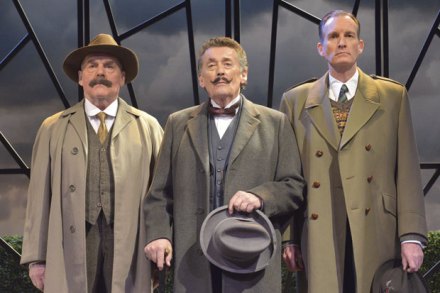
With all the enormous fuss over Sherlock on the telly, David Suchet’s recent retirement from Poirot should not be forgotten. What an incredible innings! The actor finally hung up his patent-leather shoes after a quarter-century of playing the sleuth in 70 stories. The case is not closed for fans, however. Agatha Christie’s Belgian brainbox — to whom a speck of dirt on a cuff is more agonising than a bullet wound — has already returned. He is on stage in the form of Robert Powell, famous for once playing Jesus of Nazareth. The play is Black Coffee, Christie’s first play and the only one with Hercule Poirot in it. Poirot, a Belgian refugee from the first world war, made his début in her first book, The Mysterious Affair at Styles.