Africa

Rules of engagement | 5 July 2018

From our UK edition

‘Can one person really grasp the significance of what another person has been through?’ asks Dr Rita Charon in this week’s essay on Radio 3. She’s a physician in New York (isn’t it somehow telling that in Britain we’ve long since forgotten what GP actually stands for?) and as a result of her experiences as a doctor has set up a pioneering training programme at Columbia University. In Narrative Medicine (produced by Elizabeth Funning) Charon explained how she came to believe in the power of literature, of listening to stories, as a way of bringing physicians ‘near enough to the patient to recognise their suffering and help them through their ordeal without disabling clinical judgment or rendering them helpless with passive sympathy’.
Wild life | 28 June 2018

From our UK edition

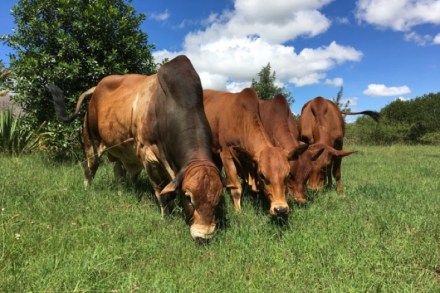
Laikipia, Kenya A minotaur head glowers at me through the bathroom window while I am brushing my teeth in the morning. It’s George the bull, who wants his ears scratched. After I get dressed, it’s time to select a cattle stick, known here as a finbo, from an umbrella stand stuffed with crooks, wands, withies, shillelagh-like cudgels and rods that a biblical prophet might have forgotten had he come to supper. I choose my favourite, a finbo that balances perfectly in the hand like a drum major’s malacca cane. Outside, a Jersey bullock is sprawled on the garden path, chewing the cud.

Wild life | 3 May 2018

From our UK edition

Laikipia, Kenya Neighbours Tom and Jo came by with a bucketful of wild African mushrooms, which they had collected in old cattle bomas on the way to the farm. I asked: ‘How do you know they are not toadstools?’ Tom said you could peel the caps, the gills were dark brown, not white, there was a ring around the stem like a Jacobean ruff — and they did not smell poisonous. ‘Fine,’ I said and into a great pot they went with butter and parsley from the garden. Everything else for supper was from the garden too — even the road runner cockerel — except the flagons of wine brought by guests David and Kate, also from a farm only two hours’ drive away. The mushrooms were delicious.

The Spectator Podcast: The Wrong Brexit

From our UK edition

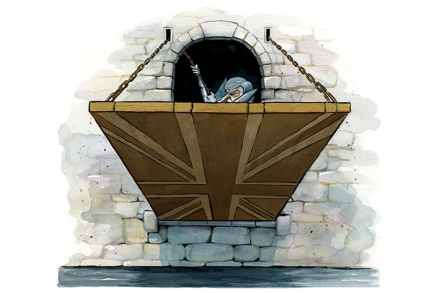
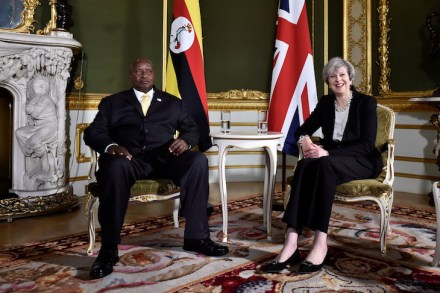
This week we ask why Theresa May is pulling up the drawbridge to Britain, exactly when she should be advertising Britain’s openness in a post-Brexit world? We also discuss why charities are working to shut down schools in Africa, and hear from Quentin Letts on his experience of being pursued by the Establishment. As Commonwealth leaders meet in London this week, Theresa May has been under fire for her government’s treatment of the Windrush generation. The government initially refused a meeting requested by Commonwealth leaders to discuss the issue, only to U-turn on it hours later.

Wild life | 8 February 2018

From our UK edition

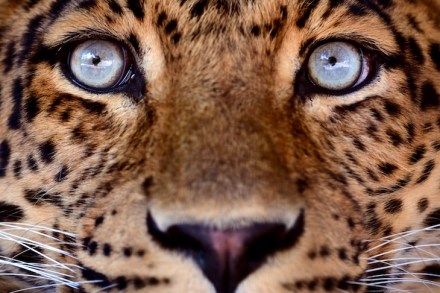
Laikipia I woke with the breath of a leopard a few feet from me as I lay in my bed. Before he came there were the sounds of Laikipia’s darkness: nightjars, insects, a wandering hyena. Then it all went abruptly silent and I heard him exhale, just on the other side of the bedroom door. I got out of bed and listened to him snuff the air. A hiss came from the back of his throat, then a deep-throated cough. Our three dogs sat up in their baskets, ears up, hackles raised, silent and staring. At dusk I had put them — Jock, the labrador, Sassy the collie, and our mongrel bitch Potato — in the bedroom to sleep close to me because the leopard had been after them for a string of nights. A leopard loves nothing more than a dog to kill.

High life | 1 February 2018

From our UK edition

Gstaad I caught a whiff of it as it rolled in from the east, the smell of hypocrisy being different from others that penetrate our olfactory nerves in everyday life. It was coming from Davos and it had a Graeco-Roman flavour to it. The prime ministers of those once upon a time great countries, Greece and Italy, asked for a Marshall Plan for Africa to solve the root cause of the migrant crisis that threatens the old continent’s existence. Just think of it, dear readers. Tsipras and Gentiloni, the former a liar, the latter unelected, both leading two basket-case countries, asking for a vast programme of wealth transfer so that Europe and the rest of the world can enjoy visits by African oligarchs, colonels, generals and their whores enjoying their new-found wealth.

Stop trying to make football perfect

From our UK edition

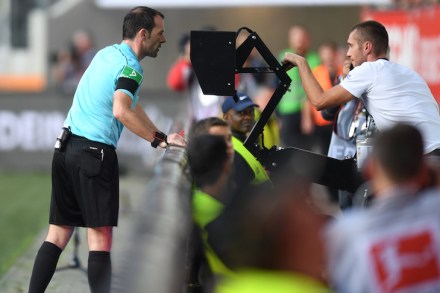
They’ve got this new thing in football. It’s called the Video Assistant Referee and it is designed to make the game, at the highest level, pristine and free from human error. This is, to my mind, a mistaken aspiration in a game that relies on human error for its excitement, especially when the England goalkeeper Joe Hart is playing. Anyway, what happens is this. When the referee isn’t sure about some crucial incident on the pitch, he summons another referee via a headset to help him. The other referee is many miles away, watching the match on the television. The ref stops the game and wanders over to have a look at a video screen by the side of the pitch.

The call of the wild | 4 January 2018

From our UK edition

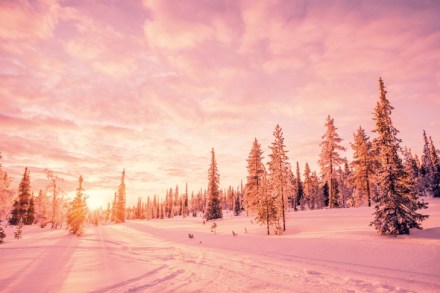
As Sini harnessed up the huskies they were all yelping with excitement, but once we set off and the forest closed in around us they fell silent. Now the only sound was the soft patter of their paws as they raced ahead, dragging our wooden sledge through the snow. It felt good to be back in Lapland, the last wilderness in Europe, where temperatures can drop to –40C, where the population density is barely one person per square kilometre and where the natural world still reigns supreme. I’d been to Lapland once before, husky sledging, but that was across the border in Sweden, 300 miles away.

Wild life | 13 December 2017

From our UK edition

Laikipia, Kenya   The zebra lacks a rumen and eats at least twice as much as a cow. On our modest Kenyan ranch we run several hundred head of Boran cattle. In our arid conditions, this number is carefully calculated on a stocking rate of so many beasts to the acre. If you add hundreds of zebra to the pasture you swiftly finish your grass. During this year’s drought, and the chaos beyond our boundaries, wild animals were poached and they starved. Many arrived on the farm so desperate that they smashed through walls and fences to get in to where it was safe. I let them stay. The elephants came and went as they pleased, barging through any barrier.

The era when you could love a car is over

From our UK edition

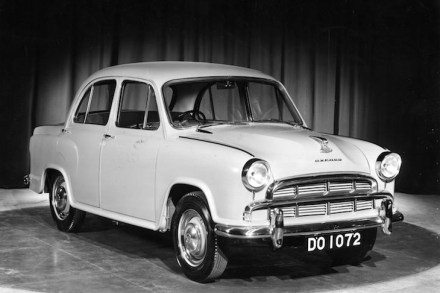
There are four of us in this relationship: my partner and I, his horse and my truck. His horse is 12, my truck 18. I’m jealous of his horse. He’s beastly about my truck. In our household Julian has only to say ‘nitrogen dioxide’ over dinner and my jaw tightens. ‘Particulants’ saps my appetite. ‘Scrappage scheme’ will drive me from the table. But, yes, I cannot dispute it: my beloved machine is a filthy polluter. The grey 1999 Vauxhall Brava five-seater ‘king-cab’ pickup illuminates every red light on the Guardian environmentalist George Monbiot’s dashboard. It’s noisy, smelly and smoky, and it’s older-generation diesel. But it’s my faithful friend and has barely done 100,000 miles.

Wild life | 5 October 2017

From our UK edition

Laikipia Ripping up the black cotton soil on the farm’s high savannah I get a sense of what it must have been like to be a sodbuster on the Great Plains of America 150 years ago. Riding my big yellow tractor I find it thrilling to plunge through virgin land that has been innocent since time began, but it also makes me feel intensely sad that it had to come to this. Through the clouds of dust and diesel fumes I can see a giraffe pouting at me from above a stand of acacia trees that will soon be torn out. Herds of zebra, oryx and eland are retreating as the lines of freshly turned tilth advance across tawny grasslands stretching northwards all the way to Ethiopia. I am destroying wildness in order to survive. We never built a safari camp for tourists.

High life | 28 September 2017

From our UK edition

I think this week marks my 40th anniversary as a Spectator columnist, but I’m not 100 per cent certain. All I know is that I was 39 or 40 years old when the column began, and that I’ve just had my 81st birthday. Keeping a record is not my strong point, and it’s also a double-edged sword. I once planned to publish my diary, but then I stopped keeping one. I’d found passages in it that were dishonest, written in the heat of the moment, most likely under the influence, and the result was a bum-clenching embarrassment. Now I don’t use any social media, certainly not Twitter, Facebook or Instagram, being a firm believer that Zuckerberg and Bezos should be locked up for life (Zuckerberg for not doing enough to tackle terrorist content).

Wild life | 29 June 2017

From our UK edition

Laikipia, Kenya   During our evening walk on the farm, Claire kept looking around nervously instead of engaging in conversation. At one point the dogs ran ahead, probably thinking that they were after the scent of a rabbit. Seconds later, they tore back past us, leaving a trail of dust, and heading after them came a bull elephant moving at quite a pace, trunk up, ears flapping. Claire took off after the dogs and I followed, briskly but grumpily. I had been irritated by Claire’s anxiety in the bush, excited by the story of an incident that had happened a few days before, when an elephant had charged and completely flattened a man on the plains nearby. It was probably the same elephant and, I grudgingly had to admit, she was right.

Party piece

From our UK edition

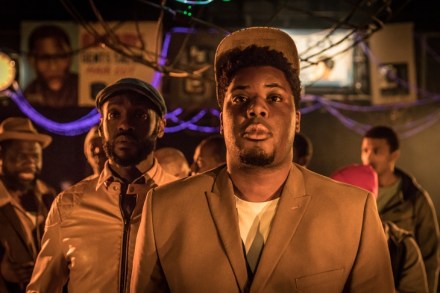
The National Theatre could hardly resist Barber Shop Chronicles. The play shines a light on a disregarded ethnic community, black urban males, who like to hang around in barber salons seeking friendship, laughs and tittle-tattle. Setting the play in a single venue would just be a sitcom, like Desmond’s, so the show establishes a series of shops stretching from London to the capitals of various sub-Saharan nations. This makes it a global epic. In theory, at least. In fact, it’s still a sitcom with some melodramatic bits on the end. The disjoined structure is tiresome at first as the action keeps legging it from Britain to Nigeria and Ghana and back again. Inevitably, the intellectual level is pretty undemanding, somewhere between music-hall and panto.

Libya’s best hope

From our UK edition

We were in a detention centre for migrants in Tripoli and we came to a big locked door. It was impressively bolted and padlocked. Someone murmured that we didn’t have time to look inside. But I felt somehow obliged to do so. Outside in the sun I had already said hello to about 100 migrants — almost all of them from West Africa: Guinea-Conakry and Nigeria. They were sitting on the concrete in rows, their heads in their hands; the men in one group, and about half a dozen women a little way off. They had been here for months, in some cases, and they wanted to go home. Kwasi Kwarteng and Kim Sengupta consider the future of Libya: ‘J’ai faim,’ said one of the men. ‘C’est pas bon ici,’ said another.

The lords of poverty

From our UK edition

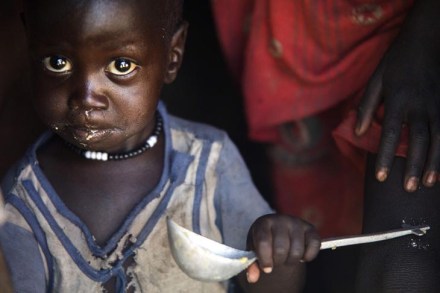
 Kenya I met Dr Tom Catena in Sudan’s Nuba Mountains — the site of an African war and famine few have even heard about — in a hospital overflowing with children. I saw bombs had ripped away their arms, flying shrapnel had taken out a baby’s eye, anti-personnel mines had shredded legs to jagged bone and ribbons of gangrenous flesh, infants suffering kwashiorkor and the other horrors of malnutrition. Inspired by St Francis of Assisi, ‘Doctor Tom’ has worked almost every day, all day, since he arrived as the only surgeon for the Catholic hospital in Nuba nine years ago. I asked him: ‘Why do you stay?’ He replied: ‘There’s no other option. You leave and abandon everyone here or you stay and keep going.

Remembering Tristan Voorspuy, who was recently killed in Kenya

From our UK edition

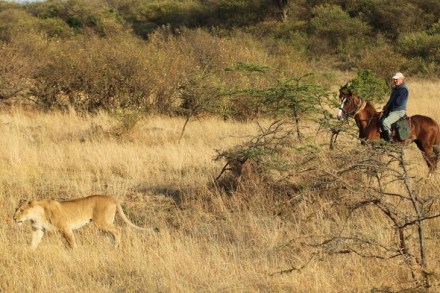
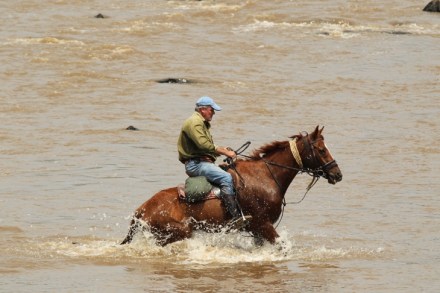
After he left the Blues and Royals in 1981, the young Tristan Voorspuy drove a motorbike from London to Cape Town. Thus began his love of Africa. He also learnt to fly, and arranged to travel alone to Kenya from England in a single-engine aeroplane, using only a schoolboy atlas. Luckily, his brother Morvern, a professional pilot, heard of this plan and prevented it. But Tristan reached Kenya by other means, and became a Kenyan citizen. For 30 years, he was a leading conservationist there and set up and ran the accurately named firm Offbeat Safaris, which allows guests to ride among the great beasts of Africa.

The Spectator’s Notes | 9 March 2017

From our UK edition

After he left the Blues and Royals in 1981, the young Tristan Voorspuy drove a motorbike from London to Cape Town. Thus began his love of Africa. He also learnt to fly, and arranged to travel alone to Kenya from England in a single-engine aeroplane, using only a schoolboy atlas. Luckily, his brother Morvern, a professional pilot, heard of this plan and prevented it. But Tristan reached Kenya by other means, and became a Kenyan citizen. For 30 years, he was a leading conservationist there and set up and ran the accurately named firm Offbeat Safaris, which allows guests to ride among the great beasts of Africa.

Wild life | 9 March 2017

From our UK edition

Laikipia On Tristan Voorspuy’s hell-for-leather riding safaris across Kenya’s savannah, he cracked a bullwhip at predators that tried to eat his guests. One time a lion chased American actress Glenn Close on her horse and Tristan said, ‘We nearly lost her.’ They all joked about it that night around the campfire. Tristan was among the last of the stylishly mad people in Kenya. He once rode his horse into the bar at the Muthaiga Club during a stag party. From the saddle, he toasted the groom, his steed defecated on the parquet and off he trotted between astonished drinkers into Africa’s night. Tristan was a gentleman and well read.

Wild life | 9 February 2017

From our UK edition

 Laikipia plateau, Kenya My great-grandpa Ernest Wise was an engineer who sailed to South Africa towards the end of the 19th century to build Cecil Rhodes’s Cape-to-Cairo railway. Although that project never took off, he decided to stay on in the continent — and he prospered. A cousin recently sent us a photograph of Ernest and his six children, taken in the 1890s at his home in Pretoria. Ernest wears a humorous expression and he looks as if he is about to speak to me, still in Africa 130 years later. I imagine him saying, ‘What, my boy — still there?’ The Wise family image is among the photographs and paintings at home on the farm in Laikipia that we have started to move to safer ground elsewhere.