Affirmative action

The real scandal of Zohran Mamdani’s college application

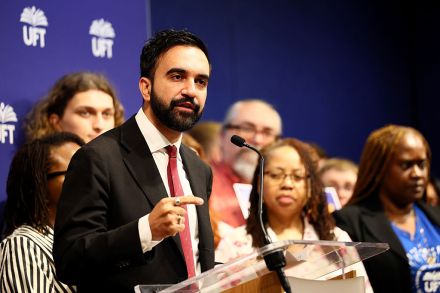
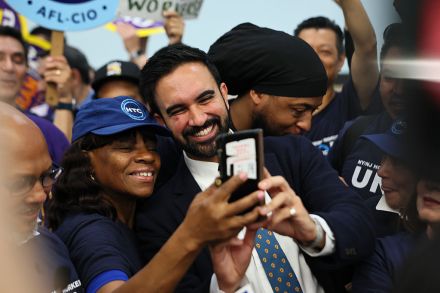
While the fact that Zohran Mamdani had identified as black on his Columbia University application stole the headlines, the hack that exposed this information highlighted something much more insidious in the college admissions system.Admitting the accuracy of the leaked data, Mamdani claimed that he was simply trying “to capture the fullness of [his] background” by checking the “Black or African American” box in 2019. New Yorkers raised an eyebrow. But what would have alarmed them more was the revelation buried in the trove of hacked data: that affirmative action is alive and well in America. The leak of Columbia’s admissions data demonstrates that, even after the Supreme Court ruled affirmative action policies unconstitutional in SFFA v.
Mamdani

Mamdani’s strategically claimed blackness

When Zohran Mamdani applied to Columbia University in 2009, he checked both the “Asian” and “Black or African American” boxes on his admissions form. He wasn’t lying – technically. Born in Uganda to Indian parents, Mamdani said he was trying to express his complex heritage. But in a recent interview with The New York Times, he admitted something telling: he doesn’t consider himself black.That admission, buried beneath the usual progressive buzzwords about “nuance” and “complexity,” should be a wake-up call for anyone still defending race-based admissions in elite education. Mamdani didn’t cheat the system. He played by its rules. And that’s exactly the problem.

Zohran Mamdani
harvard npr

NPR says Asian Americans should love affirmative action

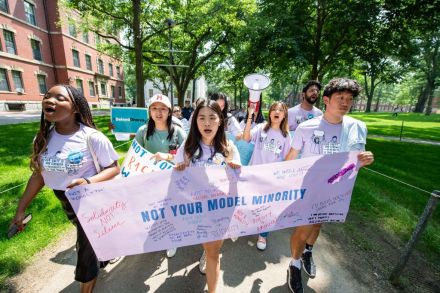
NPR thinks Asian Americans should stand against the Supreme Court’s ruling on affirmative action whether they like it or not. In an article published Sunday, NPR’s race and identity correspondent Sandhya Dirks argued that white conservative activists have used affirmative action to divide Asians from other communities of color for far too long. In fact, Asian students have nothing to lose by embracing the practice.  Per the article, Asian Americans became proxies for white privilege when affirmative action lawsuits brought by white students failed in 2013. To beat the legal system, Edward Blum, the head of Students for Fair Admissions, approached Asian students who he claimed had been hurt by biased college admissions.

How DEI destroyed itself

Those who wonder why more Americans haven’t risen up in rebellion against the Trump administration’s assault on affirmative action, its gutting of university departments, its violation of the neutrality of the American legal profession, should keep in mind the epigraph from the 20th-century philosopher Will Durant that appears in the opening moments of Mel Gibson’s 2006 movie Apocalypto: “A great civilization is not conquered from without until it has destroyed itself from within.” As he promised to do, Donald Trump is dismantling large parts of the government he conquered at the ballot box last November. You don’t have to approve. Roughly half of Americans do not. But the regime he is undoing has yielded diminishing returns for most of this century.

DEI market

Code red: DEI is in the ICU

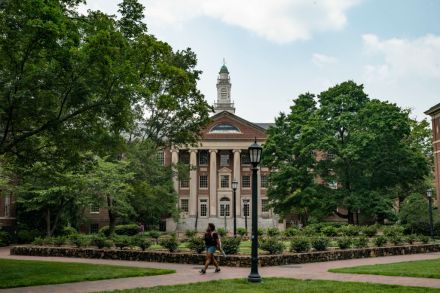
One of the most important political developments of 2023 was the growing pushback against “diversity, equity and inclusion.” Those DEI programs and the ideology that underpin them are under siege politically and legally, and they are losing. They had grown rapidly, thanks to a mixture of support, indifference and timidity. But that began to ebb last year and will continue to recede in 2024. The wounded patient was wheeled into the intensive care unit when the Supreme Court undermined a crucial foundation for DEI and related affirmative action programs. The decision came in Students for Fair Admissions v. Harvard and a similar case against the University of North Carolina.

Is the era of the corporate DEI officer coming to an end?

Barely three years after the death of George Floyd, it appears the era of the corporate DEI officer is rapidly coming to an end. Or at least experiencing a major contraction. Across American business, the number of Diversity, Equity and Inclusion roles grew by 55 percent following the protests of summer 2020, reported the Society of Human Resource Management. At the start of 2022, the entire DEI “industry” was worth an estimated $9.4 billion. In 2023, it’s a very different story. According to the workplace trends consultancy Revelio Labs, DEI jobs shrank by one-third last year. The key problem with the DEI industrial complex is not the idea that American workplaces should be more representative of America — but the means often used to achieve those ends.

DEI

Is the age of the legacy student over?

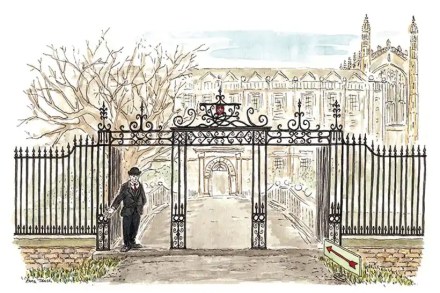
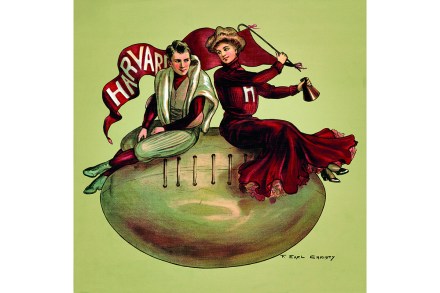
Johnston’s Gate isn’t the only entrance to Harvard Yard. For years, money, status and secret lists have opened back doors into Harvard University for a select group of privileged students. And the easiest way to open these doors? The right parents. According to the Harvard Crimson, over a third of the class of 2022 had a parent or other relative who attended Harvard. In the wake of the Supreme Court’s ruling against affirmative action, the admission policy that has created America's aristocrats is starting to take some heat. Could legacy admission be the next to go? Three Boston-based advocacy groups say yes.

small colleges legacy

Meritocracy now!

Last Friday, a day after the Supreme Court’s decision on affirmative action, I noted the gap between the Democratic Party’s leaders and its voters on race-based admissions. Polls find a majority of Democrats opposed to using race as a factor in admissions. The party’s elite, however, is almost universally in favor of affirmative action — as hysterical reactions from the president and others made clear.  But that was last week. Now that the dust has settled, and everyone has had a chance to cool down over July 4, have the Democrats gained some Independence-Day perspective on the end of race-based decisions? Not really.

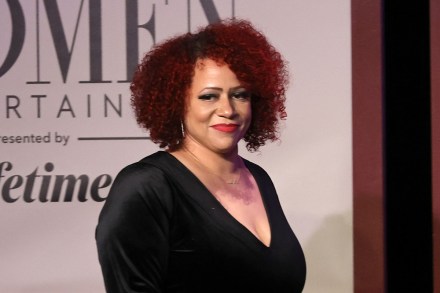
Nikole Hannah-Jones almost goes back to work

Nikole Hannah-Jones, author of the "1619 Project”, almost brought herself to lift a finger in defense of affirmative action — almost. She took to Twitter on Thursday to denounce the recent Supreme Court ruling striking down affirmative action. The anger was not strong enough, though, to make it worth picking up the pen. Hannah-Jones tweeted: “Was going to write an essay about it, but why even bother. (Also, Clarence Thomas is actually irrelevant here. So thanks but no thanks)” The Wall Street Journal’s new editor-in-chief has criticized the work ethic of the paper’s staff, but clearly the New York Times is not much better — Hannah-Jones wrote her last piece for the paper in February 2023, which itself was the first in two years.

europe nikole hannah-jones
scotus limousine liberal

SCOTUS cancels hot limousine liberal summer

There will be no hot limousine liberals' summer in 2023. The Supreme Court has in a series of rulings struck down everything that those high earning, Uber Black-ordering, sushi and box-seats-at-Taylor Swift liberals favor when it comes to government policy. If you are someone who knows all the indie films and foreign contenders for the Oscars every year, our hearts go out to you in your moment of pain. You have been dealt an excruciating blow by the 6-3 conservative majority on the court.

singapore

Singapore should serve as a model for how to fix racial disparities

In theory, the SCOTUS decision to strike down affirmative action in higher education should be considered as part of the post-George Floyd racial reckoning to “dismantle systematic racism.” But judging by the hysteria going on over at MSNBC and condemnations from President Biden, it’s clear that the activist class and American intelligentsia have a very different conception of what exactly constitutes racial justice. Two and a half years on, this racial reckoning has instead produced higher murder rates, generational declines in basic literacy among students — with the sharpest declines among black and Latino kids — and a massive transfer of wealth to an ever-growing DEI bureaucracy, BLM grifters and gurus like Ibram X.

softball

Trans women take over DC softball

It’s not just women’s high school and college sports that need to be protected from biological men, apparently. The DC intramural softball circuit has become another battleground for “trans rights.” Cockburn has learned that Democratic and progressive co-ed teams are skirting league rules regarding how many women must play in each game by filling their spots with trans women — i.e. those born as males. The Center for American Progress, a left-wing think tank, fielded an over-six-foot trans woman in a recent game against a conservative media outlet. Some players on the team said that it didn’t matter much because the person was not very good at softball, while others got the impression that he/she was intentionally playing poorly to avoid criticism.

harvard supreme court

Why the Supreme Court’s Harvard decision matters

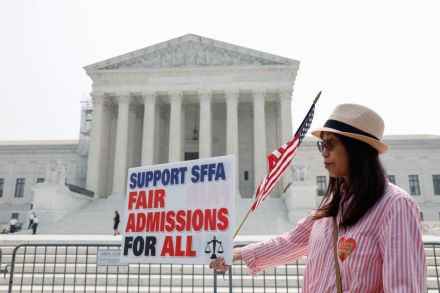
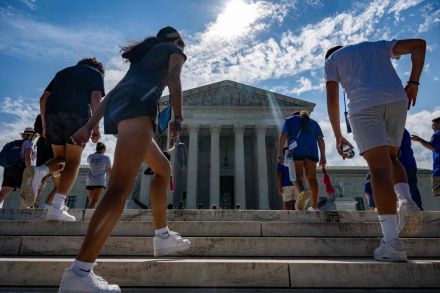
The decision is all anybody can talk about. Well, that’s not exactly true. It’s the banner headline in the New York Times, but if you scroll down or turn the pages, you will find something on “Smoke From Canada Fires Stretches From Midwest to East Coast,” and ‘Dangerous High Temperatures Stretch Across the South.” The world hasn’t stopped spinning and Mr. Putin is still causing trouble. A French police officer killed a seventeen-year-old French citizen of Algerian and Moroccan descent, touching off riots in several cities.  But the story that has riveted the attention of America is the Supreme Court’s decision in Students For Fair Admissions, Inc. v. President and Fellows of Harvard College. And for good reason.

Clarence Thomas is no hypocrite

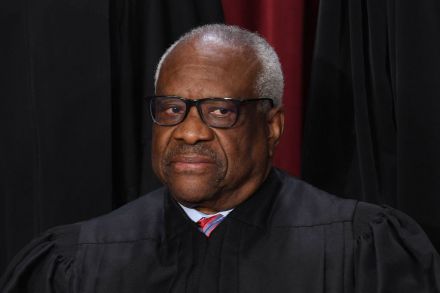
Anyone looking for a villain in the Supreme Court’s decision to strike down decades of affirmative action precedent will find one in Clarence Thomas. Critics have long found Thomas’s politics vexing in light of his race, a frustration that has only grown more pronounced as the affirmative action decision drew near. To hear his detractors tell it, Thomas was himself the beneficiary of affirmative action policies, both as an undergraduate at the College of the Holy Cross and later at Yale Law School. That Thomas could have such an experience and still strike down race-based admissions policies seems to make him a hypocrite — and an ungrateful one at that.

The crucial Supreme Court decisions set to be decided this week

The Supreme Court is entering the home stretch of its session, with just days left before it goes into recess for the summer. Some of the most significant decisions have yet to be issued, teeing up a big week. Here is what some of those cases are. Moore v. Harper This case tackles whether a state’s supreme court can rule on gerrymandering cases. The plaintiffs are testing the independent state legislature theory, which argues that state legislatures have the prerogative in redistricting, and that state supreme courts cannot get involved in the process. North Carolina’s supreme court has since switched its original decision against the state legislature, meaning that the US Supreme Court might drop the case instead of issuing a decision. Students for Fair Admissions v.

supreme court

Inside the legal fight for a race-neutral America

Four billion dollars in debt relief for black farmers only. Special stipends for Black, “Latinx” and Native American entrepreneurs. Minority- and women-owned restaurants prioritized for pandemic recovery funds. School admissions policies designed to reduce the number of whites and Asians. Racial preference programs have become ubiquitous in American society. When was the last time you filled out an official form without being asked to disclose your race? In the name of ending racism, we have been divided and labeled according to vague and outdated racial classifications that are then used to benefit certain groups at the expense of others. Is there hope for a more race-neutral America?

race-neutral

Harvard’s diversity disgrace

In 2014, the non-profit Students for Fair Admissions filed a lawsuit against Harvard University, alleging discrimination against Asian Americans in its admissions process — discrimination resulting from Harvard’s stated commitment to “a diverse class.” After defeats at the District and Court of Appeals level, the suit has arrived at the foot of the United States Supreme Court. The case will be argued in the 2022 term. Harvard’s reputation is not all that’s at stake. The case threatens to bring down the entire system of race-based affirmative action that dominates college admissions. Looking at the numbers, it’s easy to see why Students for Fair Admissions believe they have a case.

harvard

Into the lioness’s den: why higher education is skewed against men

Are you ready to 'challenge man box culture?' asks the University of Wisconsin-Oshkosh’s Women’s Center. Or maybe that special man in your life suffers from 'privilege' and needs rehab through Brown University’s Masculinity Peer Education program. But what about young men looking for meaningful, non-confrontational connections on campus? That scene is awfully dry. While groups like Women in STEM and Women in Business boost female students’ confidence by treating them as capable and competent professionals, college-aged men are often left with little to give their lives direction. Don’t expect these trends to change anytime soon either. According to the Wall Street Journal, women now make up nearly 60 percent of the college population, an all-time high.

men

How Harvard went woke

On January 1, 1993, I arrived at Harvard to take up a newly endowed professorship in Yiddish literature. It seemed preposterous: me at Harvard, Yiddish at Harvard. The university had never figured in my aspirations. My impressions of the university had been formed mostly from what I knew of its program in Jewish studies, which was jokingly referred to as ‘the Yeshiva on the Charles’ because of its emphasis on Talmudic and medieval sources. Its almost exclusively male Department of Near Eastern Languages and Civilizations felt obliged to appoint a female. My gender played an even more prominent part in the deliberations of the Department of Comparative Literature where I was to hold a joint appointment.

ruth wisse harvard