Advertising

Variety is the spice of evolutionary life

I would have enjoyed mathematics more at school if I’d known what the real value was. The benefit of studying maths isn’t numeracy at all: it’s creativity – a kind of benign neuro-diversity. A new set of eyes through which to see the world, and the priceless lesson that the best way to solve a problem is to redefine it. Many of the most interesting people I’ve met have been mathematicians. Nassim Taleb taught me a whole new way to look at statistical variance. And, in a chance meeting with Stephen Wolfram, I heard something which at first surprised me, but which has needled me ever since. When I joined the advertising industry in the 1980s, it was like the Galapagos Islands.


Sydney Sweeney, the Hollywood radical

From our UK edition

Every time you feel down about Britain’s out-of-touch elites, a look across the Atlantic is a reassuring reminder that it could be worse. Hollywood, in particular, seems incapable of learning lessons. The highlight for me was when various actors tried to comfort people during the pandemic by recording a butchered version of John Lennon’s ‘Imagine’ from their California mansions. As if the worst song ever written wasn’t already bad enough. Such political tone-deafness has become such a stock trope of Hollywood that it has been lampooned at length, most brilliantly by South Park creators Trey Parker and Matt Stone in Team America: World Police (2004).

Peter Mandelson’s greatest sin? Baby talk

From our UK edition

There’s was so much to loathe and laugh at in Peter Mandelson’s contribution to Jeffrey Epstein’s ‘birthday book’ (which inadvertently has turned into more of a ‘burn book’). But the words ‘yum yum’ were, for me, in a league of their own. Whatever they were referring to – it could have been the peachy posterior of a pool-boy or a particularly perfect profiterole – they identified Mandelson as a practitioner of verbal infantilisation. For this alone, he deserved to be sent packing. I spent five months in hospital during last winter and spring, and though the nursing staff were generally excellent, we were oft spoken to like children in preschool.

Inside London’s transport time warp

From our UK edition

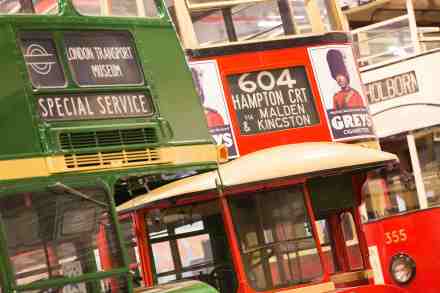
The illustration shows a smiling couple on a yacht, the wind ruffling their hair and the coastline receding into the distance behind them. Above it are the words: ‘Work out of London – get more out of life.’ Something from the post-Covid work-from-home era, perhaps, or Boris Johnson’s 2019 ‘levelling up’ election campaign? No – this is the work of ‘The Location of Offices Bureau’, set up by the Tory government in 1963 and abolished by Margaret Thatcher. The advert appears on the wall of a decommissioned Tube carriage that’s one of many frozen in time in a warehouse in west London. In the latest issue of The Spectator, Richard Morris writes that museums often have a ‘wealth of treasures… hidden away in storage’ and argues that more should open their vaults.

How emotions shape our decision-making

From our UK edition

Ask any estate agent: most potential house buyers arrive with a detailed list of criteria for their new home, only to end up buying a property which meets almost none of them. The same is true of dating – few of us are married to people chosen on the basis of an initial checklist. Henry VIII tried this approach and it didn’t turn out well. You could dismiss this as mere whimsicality. However, the seeming messiness of such decision-making – the fact we refine our preferences in response to what we find available – is what makes consumer capitalism much more innovative than the faux-rational capitalism practised by large organisations. By demanding a problem be defined precisely and inflexibly before you are allowed to solve it, you close the door to more creative solutions.

Spare us from podcast host plugs

From our UK edition

I’ve spent most of my working life producing radio commercials. You might expect me to say this, given my job, but when hosts read out ads on their own podcasts, I find it embarrassing. On commercial radio and television, viewers and listeners have always understood that the ads pay for the programmes and they’re fine with that – on one condition. The ads must be separated from the programmes in a commercial break. This has always been the unspoken agreement between advertisers and their audiences: a programme might be interrupted but at least it stays honest to itself. Podcast hosts are trashing this time-honoured contract when they read out the ads themselves.

The marketing genius of Jaguar

From our UK edition

Woke it may be, but Jaguar’s ‘Copy Nothing’ video is a work of marketing genius. With its ungendered models, ungrammatical slogans (‘live vivid’, ‘delete ordinary’) and strange absence of cars, the 30-second ad has brought global attention to a brand that was dying for want of a new generation of customers, in an auto industry in turmoil over its stalled transition from carbon fuel to battery power. And a week later comes the reveal in Miami of the futuristic Type 00 electric concept car that the fuss was really about.

Nothing beats a 1980s brick phone

From our UK edition

In the late 1980s, a story entered advertising folklore. A group from an ad agency had boarded an evening train from Newcastle to travel home from a client meeting. On boarding, they learned that the buffet was out of action, and they were hungry. Happily, one of them was carrying in his briefcase a wondrous new brick-sized device called a mobile phone. After a series of rebuffed calls, he managed to find a lone Indian restaurant in Peterborough willing to deliver to their train when it stopped en route to London; there our hero duly handed a wedge of cash through the carriage window before taking delivery of the food.

Is there such a thing as too much empathy? 

From our UK edition

Back in the 1970s, a less politically correct age, there was a standby formula for television advertising known as 2Cs in a K, which would feature two women by a washing machine engaged in unlikely conversation about some wondrous new detergent. Since The Spectator is a family publication, I shall pretend that 2Cs in a K stood for two ‘consumers’ in a kitchen, although it did not. If you are still trying to puzzle this out, the male equivalent is two dicks near a fence, a routine in which one man implausibly explains to his neighbour the many virtues of a particular woodstain, say, or one of those natty electric pressure washers which allow you to jetwash your patio while pretending you are wielding a flamethrower during the Tet Offensive.

The golden noose around Apple’s neck

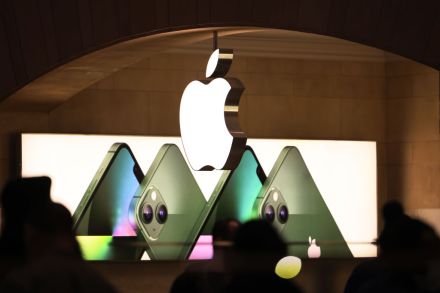
"Innovation comes from saying no to 1,000 things to make sure we don't get on the wrong track or try to do too much,” said the late Steve Jobs. “We're always thinking about new markets we could enter, but it's only by saying no that you can concentrate on the things that are really important." These days, Team Apple is all about finding new markets, no matter how removed they are from the company's core focus. Jobs once flirted with an advertising-supported operating system but ultimately gave it a pass. Now, in a strange twist, Apple is doing just that — selling ads in its services that are part of its platform. It wants to become a pooh-bah of digital advertising (it had tried before in 2010 with iAds, an effort that fizzled out).

Mad Men in the movies: ten films about advertising

From our UK edition

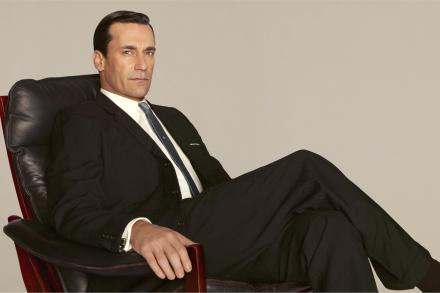
This week Mad Men celebrates the 15th anniversary of the show’s debut. Elmer Wheeler’s famous phrase about the science of advertising holds as true today as it did when he originated it almost a century ago: ‘Don’t sell the steak, sell the sizzle.' Matthew Weiner’s series cast the advertising profession under a jaundiced eye, examining the mores and morays of Madison Avenue advertising executives from 1960 to late 1970. The show made Jon Hamm (as Don Draper aka Dick Whitman) a star, as well as boosting the careers of other regular cast members including Elisabeth Moss, John Slattery, Jared Harris, and Christina Hendricks.

Sorry State Farm: we’re boycotting now

State Farm learned the hard way that you don't come for people's kids. A leaked email released by Consumers Research on Monday revealed that the insurance company planned to mobilize its agents to indoctrinate children as young as five into woke gender theory. State Farm agents in Florida were told by a "corporate responsibility analyst" that the company is partnering with the GenderCool Project, the goal of which is to "increase representation of LGBTQ+ books and support our communities in having challenging, important and empowering conversations with children 5+." The analyst, who helpfully put his pronouns in his email signature, asked for agents to donate LGBTQ books to local schools, libraries, and community centers.

state farm

The myth of the typical Brexit voter

From our UK edition

In Jake’s Thing, Kingsley Amis gave it a name: he called it ‘the inverted pyramid of piss’: ‘One of [Geoffrey Mabbott’s] specialities was the inverted pyramid of piss, a great parcel of attitudes, rules and catchwords resting on one tiny (if you looked long and hard enough) point. Thus it was established beyond any real doubt that his settled antipathy to all things Indian, from books and films about the Raj, to Mrs Gandhi… was rooted in Alcestis’s second husband’s mild fondness for curries.’ It’s high time this phrase was revived, because piss pyramids are everywhere. We assumed more data would help humanity settle its differences: in reality it often exacerbates them.

The irresistible lure of classified ads

From our UK edition

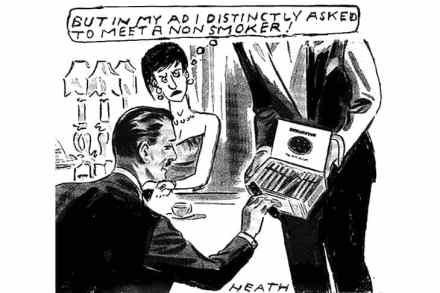
The great thing about classified ads is that they have not usually been created by an agency — so what you get is the advertiser’s own best efforts to announce themselves, and what they have to offer, in just 20 words or so. You can glean a lot from what they say, and not always in the way intended. Take this particularly telling example from the Spectator personal ads a couple of years ago: ‘Looking to meet woman on HRT (Hormone Replacement Therapy).’ That he added (and paid for) the last three words tells you more than he could ever understand.

The exhortative tradition in America

G.K. Chesterton observed after his return to England from a lecture tour in the United States that America is a nation with the soul of a church. That is hardly surprising, the northernmost of the original thirteen colonies having been established by a fervently religious sect. All religions are exhortative by nature, none more so than the sectarian ones which have a solid history of being noisier in this respect than the established churches, partly, I suppose, because one encourages the burning of witches in louder tones than one solicits a bigger collection plate for the relief of the victims of territorial rebellion in Ethiopia. It is true that the first generation of Puritans in Massachusetts were a more dignified lot than many of their successors.

exhortation

The Mozarts of ad music

From our UK edition

It’s Christmas 2020 and Kevin the Carrot is on a mission. Snow swirls, ice glistens and roast turkeys and cold cuts wait on the table, bathed in cosy firelight. The visual symbols of Christmas are all present and correct in the big Aldi seasonal advert, but what pulls them together is the music. A hint of John Williams on a solo horn, a burst of swashbuckling rhythm; symphonic strings as our vegetable hero makes it home. It’s all there, sumptuously scored and precisely gauged to make you feel that in 30 seconds, you’ve experienced an epic. And then, of course, to go out and buy parsnips. ‘I was lucky, because the mood had already been chosen,’ says Guy Farley, the composer who wrote that score.

The art of the public information ad

From our UK edition

Bring back the Tufty Club. Bring back the Green Cross Code. Bring back ‘Charley says’. Bring back ‘Only a fool breaks the two-second rule’. Bring back Vinnie Jones and ‘Stayin’ Alive’. Bring back the Country Code and ‘Always take your litter home’. Bring back public information films. Bring back the Central Office of Information. For younger readers, I probably need to explain what the hell I am talking about. Tufty was created for the Royal Society for the Prevention of Accidents, and was an implausibly sensible young squirrel whose behaviour (in contrast to the foolish antics of the louche Willy Weasel) gave lessons to children on road sense. At its height, the Tufty Club had two million members.

Why corporations should not bow to the mob

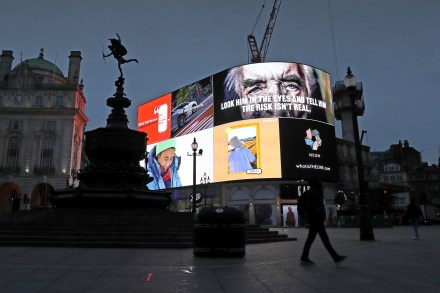
Some of America’s biggest businesses are withholding their ad spending from social media sites, in order to pressure these platforms into restricting or fact-checking posts from conservative users — under the guise of ‘opposing hate online’. On Friday, Unilever, the company behind household brands Lipton, Dove, and Axe, announced it would stop buying ads on Facebook, Instagram, and Twitter to encourage those sites to be a ‘trusted and safe digital ecosystem’. Unilever joined several other major brands boycotting social media advertising, such as Coca Cola, Denny’s, Honda, and Starbucks. This corporate pressure campaign is an unfortunate example of businesses bowing to the online mob.

corporations

The Facebook ad boycott is a convenient virtue-signal

When the coronavirus pandemic hit, some industry pundits predicted that the ‘techlash’ — the souring of public opinion on huge technology companies like Facebook and Google — would cool off or even disappear entirely. After all, with everyone cooped up at home, surely we’d develop a newfound appreciation for the technologies that became the only way to connect with others?That was short-lived. Following extraordinary social pressure amid this summer’s heated civil unrest, an advertiser boycott of Facebook has taken hold. Under the moniker Stop Hate For Profit and backed by the Anti-Defamation League and NAACP, brands from Starbucks to Unilever to Coca-Cola have bravely pulled ads from Facebook for the month of July.

facebook

Another fine media mess

When I spoke with NBC News earlier this week to talk about the media industry’s role in combating misinformation, I worried that the story might gain undue traction if any footage happened to get posted from my Zoom interview. In it, I was sitting in front of a bookcase full of chainsaw operation manuals and guides to dealing with invasive plant species. (Hello from COVID exile in rural Maine, where every day is Groundhog Day. Literally. A family of groundhogs has taken up residence outside the living room window.)Instead, the story turned out to be the fruits of a partnership between NBC News and a nonprofit called the Center for Countering Digital Hate.

nbc news