Adaptations

A new adaptation of The Great Gatsby is enrapturing and impressive

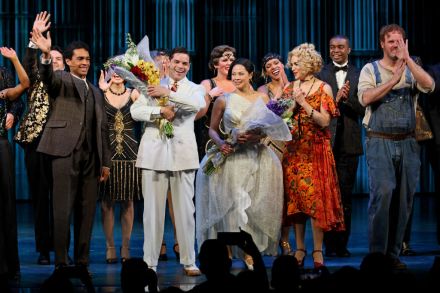
In F. Scott Fitzgerald’s classic 1925 novel The Great Gatsby, Daisy Fay is a mercurial character. The popular rich girl from Louisiana — married to Tom Buchanan, an adulterous brute — is ravishing and entrancing and, at times, cruel. It is her voice that most draws Jay Gatsby to her years after their initial fling when he was a poor officer, as he longs for her across the bay. As Fitzgerald describes it, Daisy’s is a voice that rises in dramatic swells and falls to intimate murmurs, coaxing its listeners to draw closer. Gatsby, the nouveau-riche rumored bootlegger from an impoverished farming family, is obsessed with Daisy: her class, her beauty, her unattainability, her voice. It is a voice, he tells the book’s narrator Nick Carraway, that is “full of money.

Gatsby

Reconsidering Paul Thomas Anderson’s Inherent Vice

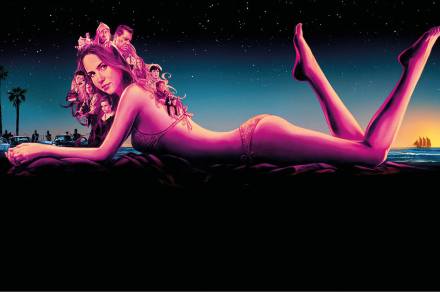
Much has been made in the Thomas Pynchon Reddit community — a crazed bunch — of the author’s rumored cameo appearance in Paul Thomas Anderson’s 2014 adaptation of his 2009 novel, Inherent Vice. Photos circulate in a frenzied online meta conspiracy: is he this old man? That guy in the hat? Famously reclusive, Pynchon has barely been photographed in real life. His only acting credit was when he voiced himself on The Simpsons, while his cartoon likeness appeared with a paper bag over its head. Pynchon revels in the oxymoron of the anonymous celebrity and his fans simply can’t get enough. He found the right director to bring his work to the screen.

Inherent Vice

How green is your Soylent?

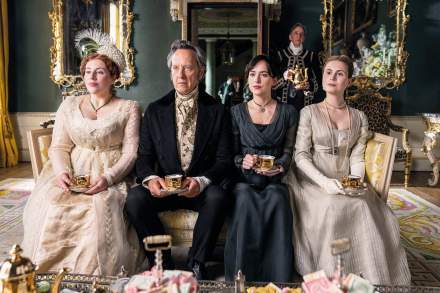
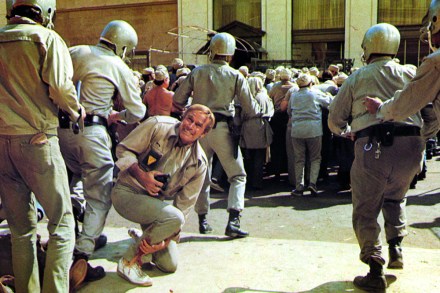
In 1966, when Harry Harrison penned his dystopian thriller Make Room! Make Room!, which began life as a serial in Impulse magazine, he predicted that by 1999, there would be more than 7 billion people on earth, and a robust 35 million in New York City alone. The 1973 film adaptation of Harrison’s novel, Soylent Green, altered several aspects of Harrison’s novel, including the year in which the thriller is set: 2022. Now that we’re there (and decades past 1999), it’s worth asking: did Soylent Green director Richard Fleischer and his writer, Stanley R. Greenberg, get things right?

Soylent

Around and around the world

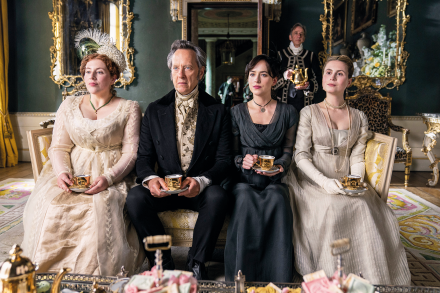
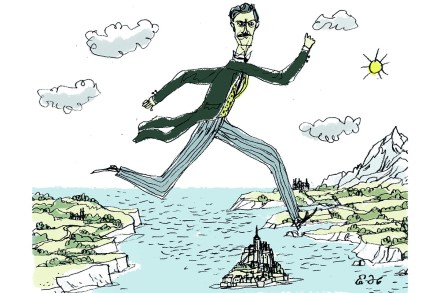
Kudos to Masterpiece’s new eight-part series Around the World in 80 Days, if only for nudging me to read Jules Verne’s original tale of an eccentric Englishman who sets out from London in 1872 on a strict deadline to girdle the globe, as well as to revisit Michael Todd’s Oscar-winning 1956 movie version. Bad translations and Disney movies long consigned much of Verne’s prodigious output to the realm of juvenile entertainment, in the popular mind anyway. Serious critics tell us that we should think again — that in a novel like Around the World in Eighty Days (1873) there is indeed a lot going on. The character of Phileas Fogg has layers beneath his serene reserve, as his passage around the world begins to reveal.

masterpiece around

Waugh in Hollywood

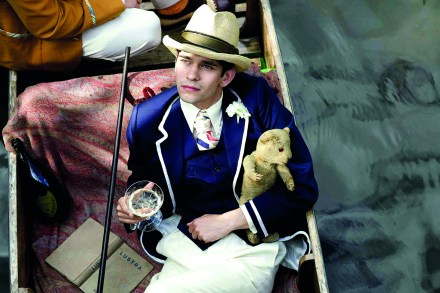
The English author and curmudgeon Evelyn Waugh (1903-66) is today best known for his 1945 novel Brideshead Revisited. A luxuriant evocation of the beauties of pre-World War Two Oxford, coupled with a cautionary narrative about the destructive power of Catholic guilt, it has remained a constant favorite with everyone from college students to literature scholars. It was memorably filmed for British television in 1981, and it launched the careers of Jeremy Irons and Anthony Andrews as, respectively, the novel’s narrator Charles Ryder and the flamboyant aesthete Sebastian Flyte.

waugh