Adam smith

Blame the Enlightenment for species extinction

From our UK edition

As if she hadn’t got enough on her plate already, the high-powered Danish journalist and mother of three Lea Korsgaard decides to track down all Danish butterfly species in a single summer. She knows nothing about butterflies, claims to be unsure about what has sparked her unusual ambition and sets about learning a new language – of nature, lepidoptera and obsession – with a disarming lack of expertise. The nature-quest narrative is an eccentric but surprisingly well-populated subgenre of nature writing. Midway through my own journey to find all British butterfly species in one year, I was devastated to discover that there was an earlier book on the same undertaking by Robin Page.
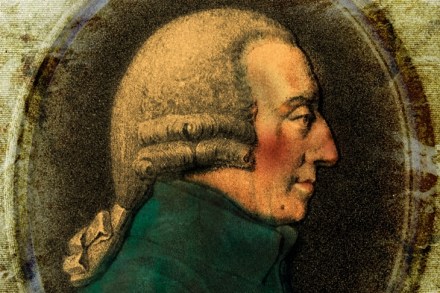
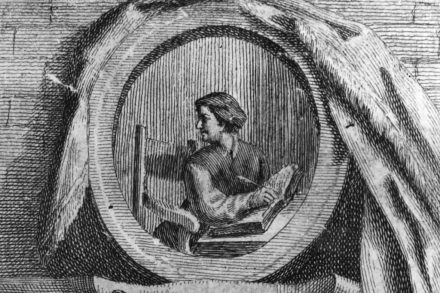
What would Adam Smith make of the AI revolution?

Today marks the 250th anniversary of the publication of The Wealth of Nations: Adam Smith's seminal text in the history of economics. Smith gave his name to the institute that I co-founded, so you might expect me to advocate for reading his most famous text. But you shouldn’t. It’s very long, written in elegant but spacious prose and full to exasperation of examples, observations and terminologies that puzzle a modern reader. Read my Condensed Wealth of Nations instead or wait for my cartoon graphic novel to come out later in the year. Smith would see the scale of government today as the greatest tyranny Nonetheless, modern unreadability doesn’t mean that The Wealth of Nations is unimportant.

What a slippery, hateful toad Fred Goodwin was

From our UK edition

Make It Happen is a portrait of a bullying control freak, Fred Goodwin, who turned RBS into the largest bank in the world until it came crashing down in 2008. Fred the Shred’s character makes him a tough subject for a drama. His morning meetings were called ‘morning beatings’ by terrified staff. He ordered executives to pitch him an idea in the time it took him to eat a banana. Inciting arguments between staff amused him and he once sacked an employee for saying ‘I tried’ instead of ‘I succeeded’. He was obsessed with colours and fabrics and he personally oversaw the design of the carpets and even the handwash at the bank’s headquarters. But James Graham’s play offers us very few clues about the origins of his character flaws.

Imperialism still overshadows our intellectual history

From our UK edition

Peter Watson begins his survey of the history of ideas in Britain with the assertion that the national mindset (which at that time was the English mindset) changed significantly after the accession of Elizabeth I. His book – a guide to the nature of British intellectual curiosity since the mid-16th century – begins there, just as England had undergone a liberation from a dominant European authority: the shaking off of the influence of the Roman Catholic church and the advent of the Reformation, and the new opportunities that offered for the people. He describes how a culture based largely on poetry and on the court of Elizabeth then redirected the prevailing intellectual forces of the time.

Tariffs will make America poorer

Is life worse today than it was 50 years ago? According to a Pew Research survey, 58 percent of respondents believe it is. Perhaps watching the doom and gloom of the nightly news gives the impression that times have never been worse. But the facts show otherwise.The world has never been richer, food has never been more abundant, and extreme poverty is at historic lows. We are fortunate to live in a country where the people have a strong work ethic and control a vast, resource-rich territory. Yet, even with those advantages, we rely on trade to access goods that America simply does not produce in abundance, like coffee and bananas. Perhaps we should ask a more nuanced question: is international trade good or bad?

Rand Paul

Trump is playing a high-stakes game of international poker

From our UK edition

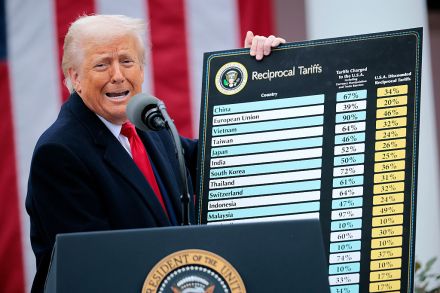
On what he called “Liberation Day,” President Trump announced a new tariff schedule. While the markets had been up in anticipation, they are down sharply, with the Dow dropping 2,200 points, perhaps surprised by the extent of them. Basically, Trump has laid tariffs equal to about half what other countries charge on US exports, inviting them to lower theirs in exchange for reciprocity. What the final result will be is anyone’s guess, for the Trump tariffs are chips in a high-stakes game of international poker. They have already had an effect. Canada has promised retaliatory tariffs while Israel has dropped all tariffs on US goods. A tariff is a tax laid on goods passing through a port.

trump
trump

Trump is playing a high-stakes game of international poker

On what he called “Liberation Day,” President Trump announced a new tariff schedule. While the markets had been up in anticipation, they are down sharply, with the Dow dropping 2,200 points, perhaps surprised by the extent of them. Basically, Trump has laid tariffs equal to about half what other countries charge on US exports, inviting them to lower theirs in exchange for reciprocity. What the final result will be is anyone’s guess, for the Trump tariffs are chips in a high-stakes game of international poker. They have already had an effect. Canada has promised retaliatory tariffs while Israel has dropped all tariffs on US goods. A tariff is a tax laid on goods passing through a port.

Give Trump’s tariffs a shot

So the big question is: will it work? Will Trump’s protectionist policies, announced with some fanfare at a Rose Garden event at the White House yesterday, increase American prosperity? Or will they harm the economy?  Opinion on that matter is sharply divided. In one corner we have the free traders. They are wringing their hands and warning about higher prices, disruption of international trade and a trade war no one can win.  In the other corner are – what to call them? Most are not “anti-free traders” or “economic protectionists” (though some are).  Let’s call them “fair traders.” They like the idea of free trade – in theory. What they don’t like is the ethic of “free trade for thee but not for me.

DoGE will only work when government agencies compete 

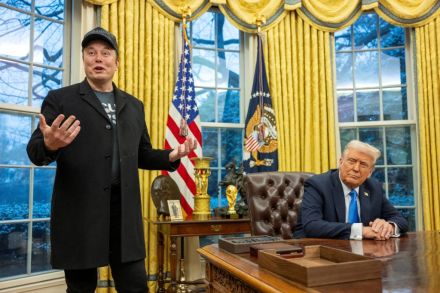
Elon Musk calls his Department for Government Efficiency (DoGE) the “wood chipper for bureaucracy.” He’s going to need much heavier machinery. The dysfunction across federal government is now near-impossible to cut through. For decades, these agencies have been allowed for decades to grow larger and become slower, more expensive and less responsive to the taxpayers they allegedly serve.  When you think of a monopoly, you might picture the sluggish service at Blockbuster Video before streaming competitors drove it out of business. Perhaps you think of Detroit’s lousy cars in the 1970s, before Japanese imports captured the market and forced American manufacturers to reorganize and compete.

doge

The populism of Machiavelli and Jefferson

A few years ago a Marine turned novelist, G. Michael Hopf, captured a classic truth in a pithy formula. Inspired by cyclical theories of history — in particular the generational “turnings” of William Strauss and Neil Howe — Hopf wrote in his novel Those Who Remain, “Hard times create strong men, strong men create good times, good times create weak men, and weak men create hard times.” One need not put much stock in Strauss and Howe to appreciate the maxim. It could just as well be derived from Sallust or other classical sources. Or from Machiavelli: in his Discourses on the First Decade of Titus Livy, the Florentine philosopher considers where best to build a city.

Machiavelli

The balance of power between humans and machines

From our UK edition

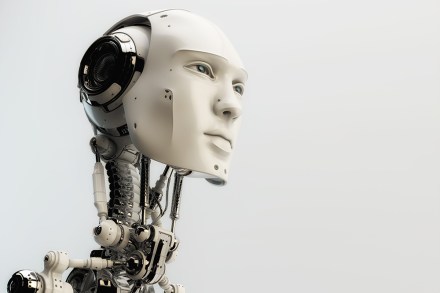
The twin poles of the modern imaginarium about technology and society can be represented by two masterpieces of popular culture. In James Cameron’s film The Terminator (1984) and its sequels, a global computer system called Skynet becomes sentient and proceeds to try to exterminate the human race by means of time-travelling Austrian bodybuilders. In Iain M. Banks’s ‘Culture’ novels, by contrast (beginning with Consider Phlebas, 1987), a space-faring humanlike species has created superintelligent machines, known as Minds, which automate all the labour of production, leaving people free to pursue artistic activities and extreme sports.

How to increase your home’s value – with a sandwich

From our UK edition

It is a tenet of neo-liberal economics that there is no such thing as a free lunch. This is obvious baloney. There are free lunches everywhere. The problem is that those free lunches are no longer served to people doing useful work. They are instead handed out to the owners of a few favoured asset classes through untaxed gains. We have created far more tax breaks for rent-seeking than for productive work… and then we wonder why Britain has a productivity crisis. Under a future Sutherland regime, there would be no tax paid on beer drunk in a pub I must admit I enjoy a few free lunches myself – literally.

How the right fell out of love with markets

In December 2016 I was speaking at a conference in London. Much of the discussion, unsurprisingly, gravitated toward Donald Trump’s recent election as president. It meant, I noted, that an outspoken free-trade skeptic would be in the White House. At that point a bright young French economist turned to me and said, ‘Mon ami, I thought that free trade was a done deal on the right. Apparently, it isn’t.’ As it turns out, it wasn’t just free trade that much of the American right was on the brink of rejecting. A systematic questioning of the central place assumed by free markets in conservative thought and policies since the 1970s, in the United States and the broader Anglosphere, was well underway.

Free markets

Last chance to end the tech tyranny

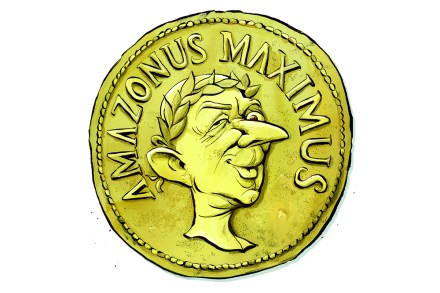
What would Adam Smith think of cancel culture? Many advocates of banning books now hide behind a veil of free-market purity: If Amazon bans a book, it’s not really banned because the online megalomart is, a private company. But it controls an outright majority of book sales in the United States, and even that remarkable measure may underestimate the power Jeff Bezos’s company wields over individual titles. Bestsellers can be found elsewhere perhaps, but most books have few other outlets. So Amazon doesn’t ban books. It just makes them much harder to buy and read. If a private company chooses to do that, who are you to complain?

oligarchy tech capitalist pigs

Why Edinburgh’s Adam Smith statue should stay

From our UK edition

In the wake of the Black Lives Matters protests last year, Edinburgh Council announced the creation of the 'Slavery and Colonialism Legacy Review Group'. Headed by Sir Geoff Palmer — an academic and human rights activist — the group is looking at all public memorials on council land that ‘perpetuated racism and oppression’ with the option of ‘removal or re-interpretation’ for problematic monuments. The grave of Adam Smith, as well as a statue dedicated to the Enlightenment thinker, have both been identified by the review due to a passage in which Smith, according to the body, ‘argued that slavery was ubiquitous and inevitable but that it was not as profitable as free labour.