Actors

Press night

From our UK edition

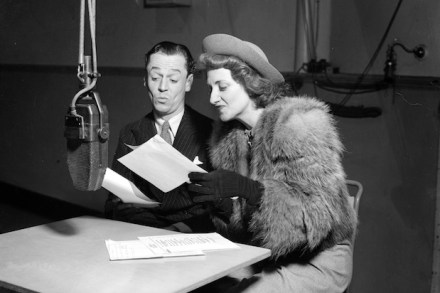
Sam Mendes once said there is no such thing as the history of British theatre, only the history of British press nights. That observation takes us closer to understanding the taboo that constrains journalists from reviewing the opening performance of a West End play. A dozen or so previews take place before the critics are invited in for a star-studded gala, or ‘press night’, which is fixed by the producer to make the show appear in its most seductive light. Newspapers are usually wary of censorship in any form, so their assent to this convention must be considered a great anomaly. The vanity of the lead actor is a significant element. A first night is usually full of hazards and mishaps as the cast acquaint themselves with the props, costumes, door-handles and so on.
Shakespeare’s duds

From our UK edition

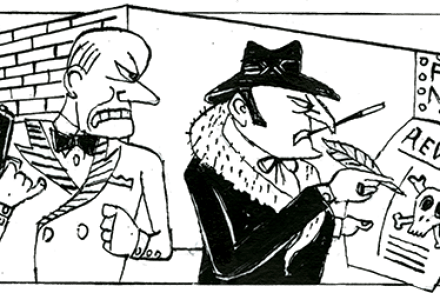
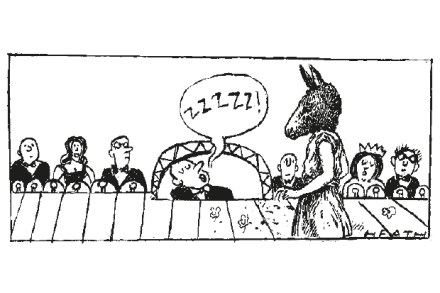
I love Shakespeare. But when he pulls on his wellies and hikes into the forest I yearn for the exit. A Midsummer Night’s Dream has a moonlit, sylvan location populated by a syrupy crew of hectic fairies, humourless bumpkins, panting maidens and swooning aristocrats in disguise. Shakespeare wrote it during his apprenticeship and he had yet to learn that several romances are far less interesting than just one. The result is a cloying, over-busy fantasy whose highlight is a love potion that makes a sprite called Titania fall in love with a donkey called Bottom. If you find the passion that flowers between a Sloane-y dryad and a pack animal hilarious then poor you.

The Heckler: down with the actor-commentariat!

From our UK edition

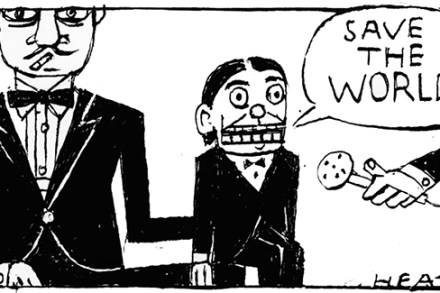
I’ve never been terribly keen on actors. I prefer hairdressers and accountants. And teachers and builders and lawyers. I may even prefer politicians and footballers to actors. It’s a modesty thing. No profession demands more attention. And no attention is less warranted. Everywhere you look, there they are pouting and grimacing on billboards and TV screens, like oversized teenagers. How have we come to this? These people dress up and pretend to be other people — for a living! It wouldn’t be quite so bad if that were all they did. But these days actors are taking over our public space in a way that is unsettling and impossible to ignore.

A beautiful speaking voice is a window to the soul

From our UK edition

Recent text from a female friend. ‘I’m in love with Neil MacGregor.’ To which I reply, ‘But of course! Up there with the Dean of Westminster and Frank Gardner.’ The same day, walking in Kensington Gardens, another friend admits, ‘I think I’m in love with Neil MacGregor.’ We mourn the fact that MacGregor’s Wikipedia entry tells us he’s ‘listed in the Independent’s 2007 list of most influential gay people’, so the director of the British Museum is, sadly, out of reach to womankind. It’s his beautiful speaking voice that does the trick. I like the way, in his Radio 4 series Germany: Memories of a Nation, MacGregor pronounces ‘Germany’, with a sounded ‘r’.

The summer of love

From our UK edition

Last time I was allowed to write a story for The Spectator, I managed to get away with a frankly smutty and boastful piece about sex. Well, it’s been a while, so... I do hope nobody minds if I do that again. If I’m honest, when young, one of the reasons I decided to mortgage my life to showbiz was because I thought that if I did, I would get more than my fair share of bedroom action. Hang on. Sorry, not more than my fair share. (I must stop putting myself down.) Firstly, as we all know there is no such thing as fair in these matters; very attractive women regularly confound the rest of us by sleeping with people everyone thinks are ghastly.

Sean Penn: A Kissinger For Our Time

From our UK edition

One of Henry Kissinger's great gifts is the ability to write op-eds that are clear as petrol. I recall one such piece, published by the Washington Post (his favoured venue for ex cathedra announcements), that left opponents and supporters of tougher measures against Saddam Hussein believing the old man was on their side. Kissinger had, still has I assume, the ability to inject complexity into a coin-toss. He baffles with nuance. Though I suspect their politics differ, Sean Penn evidently fancies himself a Kissinger for our times. The great man has space in the Guardian today, revealing his thoughts on the future of the Falkland Islands. For this we should, I suppose, thank the Guardian even if publishing this twaddle is plainly a hit-hookering ploy.

Bookends: A shaggy beast of a book

From our UK edition

Autobiography is a tricky genre to get right, which may be why so many well-known people keep having another go at it. By my reckoning Tales from an Actor’s Life (Robson Press, £14.99) is Steven Berkoff’s third volume of autobiographical writings, although I might have missed one or two others along the way. This one, though, is a little out of the ordinary. Written in the third person — he refers throughout to ‘the young actor’ — it tells a number of stories of his formative years ‘in the business’, of auditions failed, of rep tours endured, of disastrous productions walked out of, and of lessons learned, usually far too late to make any difference.

Bookends: A friend of mine

From our UK edition

A friend of mine was throttled by Pete Postlethwaite once. It was outside a TV studio, people were smoking and Postlethwaite was only demonstrating some bit of business he had done while playing Macbeth, but even so, very few of us can claim to have been strangled by someone Steven Spielberg once called ‘the best actor in the world’. Postlethwaite died in January, to a vast and unexpected surge of public grief. Now arrives an autobiography, A Spectacle of Dust (Weidenfeld & Nicolson, £20), written during illness, incomplete at death, finished by other hands. But there’s no doubt it’s the real thing. Postlethwaite was an unusually open, emotional actor, both strong and vulnerable, never terribly bothered about being liked.

Rogues’ gallery

From our UK edition

The distinguished writer Brian Masters in his handsomely produced book on the actors of the Garrick Club has set himself a formidable task. Not only, until he reaches the mid-20th century, does he have to assess the art of long-dead actors from contemporary accounts; he is also writing a history of the theatrical profession from the time when actors were actually designated, in an 1822 Act of Parliament, ‘Rogues and Vagabonds’, until their gradual edging into respectability. This was symbolised by two events: the founding of the Garrick Club in 1831 and Henry Irving’s knighthood in 1895.