Abstract art

Witty, lyrical and abstract: the art of Kurt Schwitters

From our UK edition

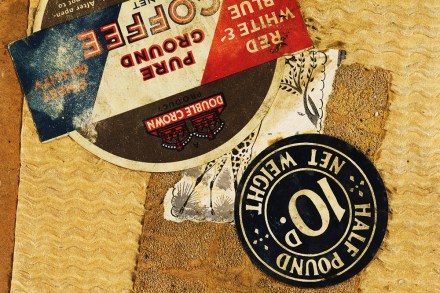
Aged ten, Jennifer Potter moved to Ambleside in the Lake District and was soon aware that one of the giants of modern art, Kurt Schwitters (1887-1948), had lived there some years earlier. He was a German artist associated with Dadaism, the anarchic movement that ushered in Surrealism, who developed his own brand of anti-rational art called ‘Merz’. He assembled urban detritus into two or three dimensions (collages and objects). His work was witty, lyrical and abstract, but also organic. He called art ‘structure’ or ‘creative evidence’, as natural as a plant or a crystal, but reliant, too, on the action of the artist’s imagination. He was a large man, somewhat shambolic in appearance.
Is Hilma af Klint overrated?

At the corner of Manhattan’s Tenth Avenue and 22nd Street, there is a mural by the Brazilian artist Eduardo Kobra. Situated over the landmark Empire Diner, Kobra's painting reimagines Mount Rushmore as a paean to art stardom or, depending on how one looks at these things, the tragically hip and perpetually overrated.  Kobra supplants George Washington, Thomas Jefferson, Abraham Lincoln and Theodore Roosevelt with the graffiti artists Keith Haring and Jean-Michel Basquiat, the Mexican fabulist Frida Kahlo and the melanin-deprived panjandrum of Pop, Andy Warhol. These cultural icons loom over the crowds supping on blistered shishitos and tuna tartare inside the diner.

The greatest decade for British painting since Turner and Constable? The 1970s

From our UK edition

Slowly the canvas was unfurled across the concrete floor of a warehouse on an industrial estate in Suffolk. On and on it went, a flurry of paint marks and brush strokes, yellow, green and occasionally blue, like a cornfield at harvest time. By the time we got to the end some seven metres of it lay stretched out at our feet. It was the first time anyone had seen this unknown magnum opus by Gillian Ayres since it was rolled up in 1974 – and it looked sensational. Recently I’ve been reflecting on the 1970s for a couple of reasons. One is that I’m working on a book about art in London at that time, the other is that I’ve been helping to organise an exhibition of Ayres’s work from that era at the Heong Gallery, Downing College, Cambridge. Of course, as L.P.

The dynamic genius of Milton Avery

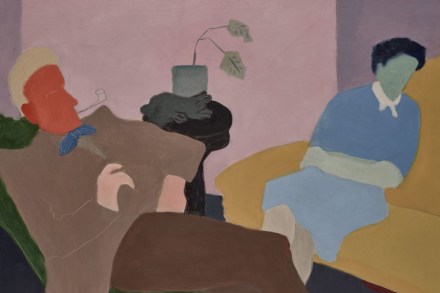
It’s hard not to feel slightly odd when standing in front of a Milton Avery painting. Take his 1943 work Hors d’Oeuvres as an example. The painting — currently on show at London’s Royal Academy’s exhibition, Milton Avery: American Colorist — is large, at nearly a meter across, and the background is what appears to be a coastal landscape, with a greenish sea and the curve of a bay appearing in the upper right-hand corner. In the foreground of the painting is a cream table and on it, a blue platter of food: the “hors d’oeuvres” of the work’s title. So far, it might be hard to understand what is so disconcerting about this painting.

Deserves to be much better known: Sophie Taeuber-Arp at Tate Modern reviewed

From our UK edition

Great Swiss artists, like famous Belgians, might seem to be an amusingly underpopulated category. Actually, as with celebrated Flemings and Walloons, when you start counting you discover there are more of them than you thought. Paul Klee, for example, and Alberto Giacometti. A third, whose work is reassessed in a large exhibition at Tate Modern, was Sophie Taeuber-Arp. Clearly, unlike the other two, hers is far from being a household name even in fairly artistic homes. There are several reasons for this, one perhaps being the unwieldiness of that cognomen itself. She was born Sophie Henriette Gertrud Taeuber in 1889 at Davos, and as was then the custom, hyphenated her surname with her husband’s when she married Hans (or Jean) Arp in 1922.

Like burst balloons after a party: the last paintings of John Hoyland

From our UK edition

When the internationally acclaimed abstract painter John Hoyland died in 2011 at the age of 76, a large chunk of light, laughter and danger went out of the British art world. Hoyland, who was born in Sheffield and trained at the local art college before coming to London and the Royal Academy Schools, was a force to be reckoned with. Reaching maturity in the 1960s, his career was established by a solo exhibition at the Whitechapel Gallery in 1967, after which he divided his time for several years between London and New York. In the 1970s he settled back in London and Wiltshire, but travelled widely, often to the tropics. He lived hard and channelled his experiences back into his paintings.