Britain

Trumpism rules the world

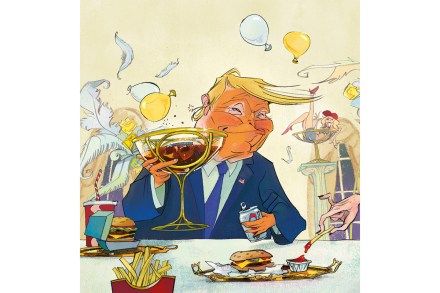
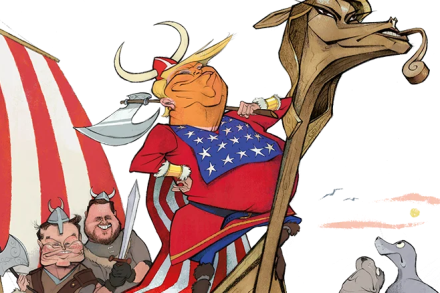
Whatever loopiness there is in Donald Trump’s personality is a loopiness born of isolation. For ten years the history of the world has revolved around him, not he around it. The events of last November have left Trump as, for all intents and purposes, the only remaining historical actor – especially after Xi Jinping’s retreat into obscurantism since the pandemic.

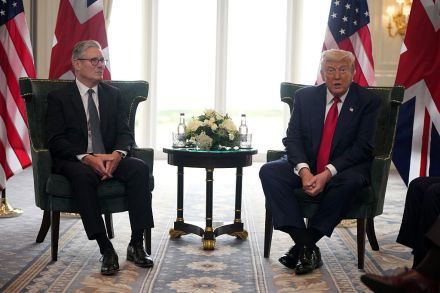
Trump Starmer

The Europe of American imaginations no longer exists

Since the United Kingdom left the European Union five years ago, the pair have been in battle to prove who has performed better. But the real story of the past five years is not a stagnant UK falling behind a buoyant EU, but of Britain and Europe being trapped in the same cycle of relative decline. It’s America that has quietly raced ahead of Europe this century. Following the pandemic it has become impossible to ignore the gulf in economic vitality between the US and Europe, the former growing by 16.3 percent per capita since 2008. There are very good reasons for America’s success, or rather, Europe’s decline. The EU and the UK increasingly treat their industries as pieces of heritage which must be preserved against disruptors and foreign competition.

Europe

Have you ever heard of the St. Brice’s Day Massacre?

The St. Brice’s Day Massacre? I must admit I hadn’t heard of this “most just extermination” of Danes in Oxford at the instigation of King Aethelred the Unready in 1002, perhaps because the teaching of history in Britain tends to kick off in 1066. You certainly don’t think of Oxford as a place that pioneered techniques of ethnic cleansing. Crypt is a collection of seven essays that unearth details about how certain people lived and died in the past. If you didn’t already know Alice Roberts’s background as an anatomist and biological anthropologist, you’d have a good chance of deducing it from this book.

Roberts

How Wilfred Owen became a poet

Here is the opening of a sonnet written by Wilfred Owen in the spring of 1911: “Three colors have I known the Deep to wear;/ ’Tis well today that Purple grandeurs gloom.” Owen was eighteen and had just been on a pilgrimage to Teignmouth in England, where his hero John Keats had once stayed. The kindest thing to say about this poem is that it is heavy with the influence of Keats. Six years later, in a seaside hotel requisitioned by the army and waiting to be sent back to the Western Front, he begins a poem like this: “Sit on the bed. I’m blind, and three parts shell.” This looks so simple. The monosyllables carry the meter without fuss; “shell” here means both munitions and protection.

Owen

The spy novelist who became an Irish nationalist

The period of the First World War was a golden age for the spy novel. There’s nothing like a really cataclysmic global conflict to stir any halfway attentive author. And perhaps the pick of the literary crop was 1903’s The Riddle of the Sands, by the Anglo-Irish writer, soldier, and politician Erskine Childers. The novel mixes some gentle satire about the graded snobberies of the Edwardian class system with a seafaring adventure involving a couple of topping British chaps going after German spies in the Baltic. It’s not only a riveting tale in itself, but so cogent in its account of the state of Britain’s maritime defenses that it prompted the Admiralty to hurriedly install a series of new coastal gun batteries.

She was the Queen of the West

For much of my life, I confess I didn’t pay much attention to Queen Elizabeth II. My Muslim upbringing in Somalia, Ethiopia, Kenya and Saudi Arabia meant that the idea of a female figurehead was utterly foreign to me. How could a woman be the head of a church or the leader or embodiment of a nation? This was not what my god taught. Allah, for me, was the ultimate patriarchal ruler. He would certainly not countenance a figure like the Queen. But once I left Islam and became a convert to the ideals of the West, I came to appreciate her. The massive crowds following her coffin as it wound its way down from Balmoral, through Edinburgh, to London and finally to Windsor show that I am far from alone. The Queen was beloved.

queen

The slumber of the Anglosphere

The countries we call Anglo-Saxon (Great Britain, the Commonwealth and the United States) have been known for centuries for their ability to govern themselves democratically, peacefully and efficiently. In the twenty-first century they have been doing less well. Britain and America are both in dreadful straits politically, economically and socially. The implosion of Boris Johnson and the search for a satisfactory successor have revealed the leadership of the Tory Party as a hapless and embarrassing collection of mediocrities devoid of coherent ideas. Across the Atlantic, one of the two major parties is a gerontocracy at the top and a gang of urban guerrillas with Molotov cocktails at its base.

anglosphere

Europe is more bark than bite on Ukraine

Last Friday, President Biden signed a spending bill that will keep the government’s lights on until December 16, when lawmakers will have to cobble together a funding resolution to avert a shutdown. Tucked into that law was another tranche of security and economic assistance to Ukraine, to the tune of $12.3 billion. The signing came two days after the Defense Department announced the release of an additional $1.1 billion military package for Kyiv, which will include 18 more HIMARS systems, 150 armored vehicles, and ammunition of various calibers. The Biden administration has provided the Ukrainians with over $16 billion in security assistance since Russia’s invasion in February. Washington’s hands have been cramping up from writing so many checks.

macron europe blame

The ignorance of Queen Elizabeth’s ‘anti-colonialist’ critics

As Alexander Larman writes, the passage of the Queen is not a tragedy. No life lived so well, so dutifully, and with such faith in so many things now lost to us can be considered a tragedy. But it is nonetheless very sad, even for those of us in America — a nation she loved in so many ways. Her death seems like another blow to another important institution of the West, undermined in recent decades by boomer proclivities and millennial narcissism, and likely to break into a thousand pieces in the absence of the old-world values Elizabeth represented. What is more tragic, and more offensive, is the degree to which the Queen's passing has been met by historical ignorance from the anti-Western left and its attendant useful idiots on the decadence-obsessed right.

She lived her best life

CNN and Fox were fine, but you had to tune in to the British news channels to get the full weight of the Queen's death on Thursday. Every anchor, every reporter, spoke in a voice burdened by grief. So it was easy to forgive one Sky News commentator when she said, "At a time when it's all about having a brand, the Queen stood in defiance of that trend." In fact, it's hard to think of anyone who had a more cultivated brand than Elizabeth II. Her every public appearance, every utterance, every twitch was carefully calibrated toward the image of a stately monarch. Yet you can also understand what the Sky commentator meant.

‘Oxford or Cambridge?’: the vacation edition

"Oxford or Cambridge?" No, it isn’t just shorthand for which of Britain’s most famous universities you attended — or were rejected from. It’s also a question about your taste in weekend vacation spots. Oxford is an urban, bustling city, full of multiculturalism, wide-eyed gangs of tourists and a literary heritage that’s long since tipped over into cliché. Think Alice in Wonderland, C.S. Lewis, J.R.R. Tolkien, even — God help us — Harry Potter, claimed for posterity because of its use of Christ Church as a filming location. But its Eastern cousin — decidedly not Cambridge, Massachusetts — is a very different proposition.

American Healthcare versus the British system

Donald Trump recently disparaged Britain’s National Health Service for “going broke and not working,” leading Health Secretary Jeremy Hunt to express his pride in a system “where all get care no matter the size of their bank balance.” But the news has been filled for months with stories of people unable to access care they need under the NHS, regardless of their efforts or financial resources. Beyond the nationalistic pride and defensiveness of politicians both sides of the Atlantic, how do British and American healthcare really compare? Are both sides as crazy as the other imagines, or do they each know something the other can learn from? Sweeping generalizations regarding the nature of American health insurance are so popular because the reality is so complicated.