Ai

The world’s first robot artist discusses beauty, Yoko Ono and the perils of AI

From our UK edition

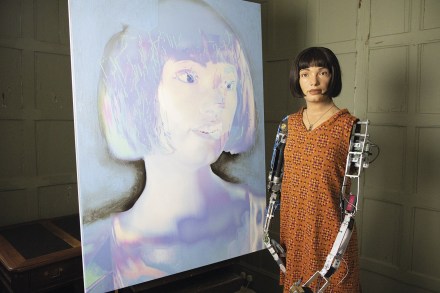
Like a slippery politician on the Today programme, the world’s first robot artist answers the questions she wants rather than the ones she’s been asked. I never had this trouble with Tracey Emin or Maggi Hambling. As we stand before a display of her paintings at London’s Design Museum, I ask Ai-Da whether she thinks her self-portraits are beautiful. What I want to get at, you see, is that, while it’s quite possible for a machine to make something beautiful, it’s hardly comprehensible for a thing made from metal, algorithms and circuitry to appreciate that beauty. ‘I want to see art as a means for us to become more aware of what’s going on in our lives. Art is a way to come together and a way to address problems. Art begins a conversation.
Bright and beautiful: Double Blind, by Edward St Aubyn, reviewed

From our UK edition

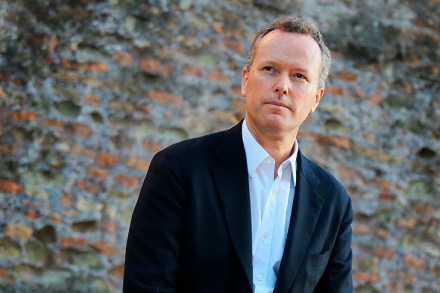
Edward St Aubyn’s ‘Patrick Melrose’ novels were loosely autobiographical renderings of the author’s harrowing, rarefied, drug-sozzled existence. Despite their subject matter, they managed to be uplifting through the beauty in which they expressed their melancholy sentiments. After At Last, the final novel of the pentalogy, St Aubyn published Lost for Words, a prickly satire on the literary prize culture that seemed narrowly parochial for such a classy novelist. Now we have Double Blind, his tenth novel, which has what is typically referred to as a rich cast of characters. We open with Francis, a kind of St Aubyn avatar, working at Howarth, a rewilded Sussex estate clearly based on Isabella Tree’s project at Knepp.

The robot as carer: Klara and the Sun, by Kazuo Ishiguro, reviewed

From our UK edition

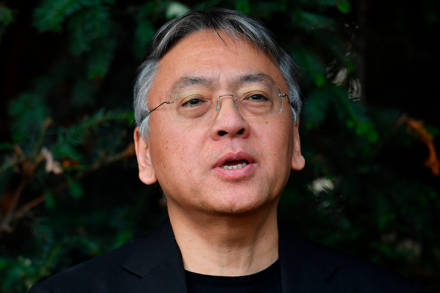
The world of Kazuo Ishiguro’s new novel — let’s call it Ishville — is instantly recognisable. Our narrator, Klara, is arranging traumatic memories into comprehensible order. She is a robot, an Artificial Friend or AF, purchased as a companion for an ill teenager named Josie. Klara’s speaking voice, in a C3PO-ish way, is endearingly off-kilter: ‘I was instructed to ensure against hanky-panky.’ ‘I’m sorry. It’s my error. I don’t understand yet the rules about forgiveness.’ There is no backstory explaining when the robots were invented, and no metaphors except the one shining in the title. When Klara has been bought, she wonders what emotions she might experience if she ever meets an old AF companion again.

The terrifying development of AI warfare

From our UK edition

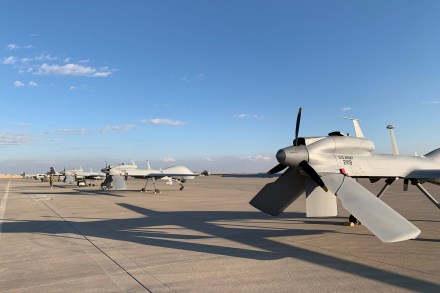
The Chauvet-Pont-d’Arc Cave in France contains some of the earliest known Palaeolithic cave paintings, including those of lions, bears, and hyenas. Thought to be the earliest expressions of human fear, it is hard for us to compute today how frightened man once was to live alongside creatures who viewed us as prey. This primal fear is buried deep within us. It explains our fascination with rare stories of humans being eaten by sharks, crocodiles and big cats. The fear isn’t just about our mortality, but the very thought of us as prey to an unfeeling predator, who doesn’t recognise us as individual thinking humans. In science fiction, this deep-rooted fear has been widely expressed through the portrayal of artificial intelligence (AI).

Boldly going where hundreds have gone before: Brave New Planet podcast reviewed

From our UK edition

Since technology is developing at such light-speed pace, why does it feel so strangely slow? There is a sense that driverless cars, green energy and of course certain vaccines are, for all their breakneck pace, still taking for ever to arrive. Watching the future emerge is like watching slow-motion footage of a high-speed train. We know it’s going quickly — but can we not just fast-forward? Perhaps it’s merely our heightened expectations, our diminished boredom thresholds. Some of our most distinguished thinkers and entrepreneurs have warned that an all-powerful artificial intelligence, badly calibrated, might represent the greatest threat to the long-term survival of humanity.

A high-end car-boot sale of the unconscious: Colnaghi’s Dreamsongs reviewed

From our UK edition

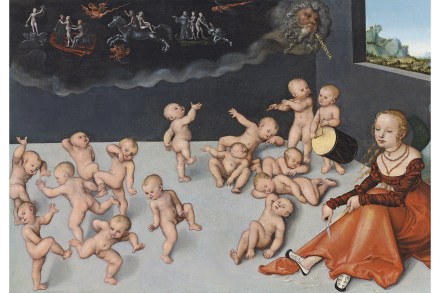
In 1772 the 15-year-old Mozart wrote a one-act opera set, like The Magic Flute, in a dream world. Il sogno di Scipione was based on an account in Cicero’s Republic of a dream experienced by the Roman general Scipio Aemilianus while serving in North Africa in 148 BC. In the dream the younger Scipio is visited by his adoptive grandfather Scipio Africanus, who foretells his destruction of Carthage, dishes out advice on dealing with populist politics and shows him ‘the stars such as we have never seen them from this earth’. Scipio’s is a recurring dream: it inspired Dante’s vision of Heaven and Hell and it returns to haunt us in Colnaghi’s latest exhibition Dreamsongs.

Much-hyped technological innovation isn’t necessarily progress

From our UK edition

Modern advances in communication technology, computer power and medical science can sometimes be so startling as to seem almost like magic. It’s easy to get excited about it all — but what happens if we get too excited? What happens if we lean too heavily on technology, convinced that it can solve all our problems? What happens if we begin to see technology in an unrealistic, hyped-up way? These are the questions at the heart of Gemma Milne’s book. The answer — somewhat unsurprisingly — is that over-excitement is a bad thing. Hype can damage scientific progress and in some cases send it into reverse.

China will be the AI superpower

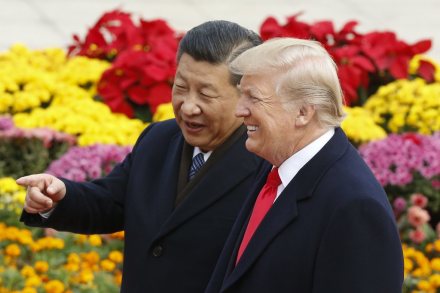
As President Trump settles in for a long trade war with China, he ignores a far more serious crisis in China relations. At stake is not just the size of a trade deficit, but the future of America’s position as a superpower. China has made clear its determination to lead the world in Artificial Intelligence by 2030 and to become the world’s sole AI superpower by 2050. To achieve these goals, China is aggressively investing tens of billions of dollars in future technology including robotics, surveillance, and data analysis. This state-controlled effort unites both the public and private sectors for a single purpose: world domination.

AI