3I

Why the comet 3I/Atlas still fascinates

Our latest visitor from interstellar space is leaving us. It reached its closest point to the Sun on October 29 and is now heading back toward the stars at great speed, having spent a few months traversing our region of space. This visitor – a comet called 3I/Atlas – scared some, fascinated astronomers and thrilled us all as we marveled at its strange journey. 3I/Atlas, which Michael P. Gibson introduced Spectator readers to in the last issue of this magazine, got its name because it is the third object ever found to have entered our solar system from interstellar space – and Atlas is the name of the sky survey that found it as a point of light moving against the distant stars.

universe 3I

3I, the interstellar object that’s baffling astronomers

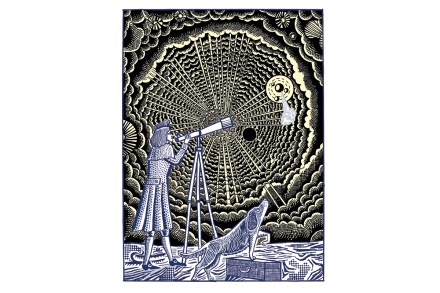
Science began in the skies. Just after sunset, to be exact, on the evening of November 11, 1572 when a young Danish nobleman, Tycho Brahe, raised his eyes to the night sky. There, above his head, a star was shining brighter than all the rest – a new star that should not have been. Brahe thought he was mistaken, that his eyes were playing tricks on him, but others confirmed what he saw. And yet, according to the reigning theory, derived from Aristotle, there could be no change in the eternal heavens. Surely then this object could not be a star. It must be an anomaly in the upper atmosphere, closer to the Earth, within terrestrial realms. But Brahe got to work. Using trigonometry and observations, he found that the impossible had indeed occurred.

3I