19th-century European history

A history of Napoleon’s marshals has all the dash and vigour of a cavalry charge

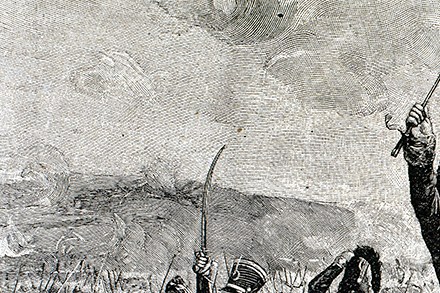
In his fourth book on Napoleon, after Napoleon and Wellington (2001), Waterloo (2005) and Napoleon the Great (2014), Andrew Roberts focuses on the emperor’s relations with his 26 marshals. Writing with the dash and vigour of a cavalry charge, having walked 53 of Napoleon’s 60 battlefields, Roberts analyses campaigns and battles from Italy in 1796, through Austerlitz, ‘the greatest victory in the history of France’, and the retreat from Moscow (ten marshals served in the Russian campaign) to Waterloo in 1815. Accounts of marches and battles are interspersed with frequent quotations from the emperor’s letters, sent day and night to his marshals to micromanage their campaigns, as well as from the marshals’ personal correspondence with each other.
The unfairytale life of two European princesses

From our UK edition

This hefty book is more about context – the turbulent years of mid-19th-century Europe – than it is about its two protagonists. Details of the many popular uprisings of the time, plus the jockeying for position of the main players and the battles and intrigues involved, are so packed into its pages that teasing out the stories of the two empresses is not always easy. The early married life of Empress Elisabeth of Austria, known as Sisi, sounds appalling. Her older sister had been groomed to marry the young Emperor Franz Joseph, but the moment he saw Sisi, then only 15, she was the one he wanted. It was impossible to turn him down. Much of the future of Bavaria (her parents’ kingdom), let alone that of her own family, depended on his goodwill.

The Franco-Prussian war changed the map of Europe – so why are we so ignorant about it?

From our UK edition

Is there a single major European conflict of the past 200 years that gets so little attention in this country as the Franco-Prussian War of 1870-71? In 1961 Michael Howard brought out his history of the war, but Howard and the odd battlefield tourist apart, Rachel Chrastil’s bibliography – strong on contemporary memoirs, strong in fact on everything from the miraculous appearances of the Virgin Mary and the cult of St Radegund to the transmission of smallpox – is curiously thin when it comes to British interest.