-
AAPL
213.43 (+0.29%)
-
BARC-LN
1205.7 (-1.46%)
-
NKE
94.05 (+0.39%)
-
CVX
152.67 (-1.00%)
-
CRM
230.27 (-2.34%)
-
INTC
30.5 (-0.87%)
-
DIS
100.16 (-0.67%)
-
DOW
55.79 (-0.82%)
Spectator Competition: Lines on the leaves
In Competition 3374 you were invited to write an ode to autumn. There was bathos amid the beauty. I regret not finding room for Alan Millard’s ‘Season of musts’, Elizabeth Kay’s garden musings, Joseph Houlihan’s paean to the blazing hills, Nicholas Lee on what Keats could do with ‘rotting vapes arranged about the scene’, and this from Anca Gramaticu: ‘a flock of leaves took their flight/ In a roar of applause’. Finally, there’s just space for Daniel Galef’s poem in full: ‘The first leaf that falls –/ That takes balls.’ Those below win £25.
Supposing autumn to be a country doctor
In his vintage russet car and wholemeal tweeds,
Prescribing to both plutocrat and pauper.Splendid reassurance at his brusque arrival,
Attention burnishes his patients and their needs,
Life ripening where there’s doubt of survival.His voice is fruity, his bedside manner easy
A first frost’s clarity he brings to signs he reads:
His diagnoses, Latin gilded, he keeps breezy.Departing, his tail lights show a hopeful glimmer,
As of last light flickering through leaf-stripped trees.
Well past nightfall, at his last call, there’s a shiver.Adrian Fry
Autumn, it’s your turn to shimmy,
To whirl and to skirl, and to settle,
To whistle your way through the chimney,
Like a sudden and untoward kettle –
To dance your erratic mazurka
Down careless, meandering streams
And sometimes, when acting berserker,
And playing your role to extremes,
Throwing gusts with a happy abandon,
So that children are all in a pickle,
Or find that they’ve no legs to stand on –
Ah, you are notoriously fickle,
The season that heats up or freezes,
That suns all the paths in the park,
Before acting up just as it pleases,
To hurry us home in the dark.Bill Greenwell
Season of crisp golden leaves
And hidden dog turds,
Of changing all the clocks,
Of migrating birds.Season of squirrels storing nuts,
And conkers galore.
Of ignoring trick-or-treaters
Knocking at the door.Season of scrumptious berries
Being baked into pies,
Of folk building bonfires
Before burning their guys.Season of cosy dramas,
Strictly starts once more…
We try to guess who’s screwing who
Both on and off the floor!Tracy Davidson
Season of mists and skies of murky grey,
retrieve your jumpers, coats and thermal socks,
it’s time to put the barbecue away
and queue up for your flu jab at the doc’s.
We’ll rake the leaves and ring the local plumber
to clear the gutters too – we’re grieving at
deserted avenues of leafless trees
eclipsing long-lost memories of summer.
Ignore the trick-and-treaters on the mat,
draw down the blinds, turn up the thermostat
and don’t, god’s sake, forget the antifreeze!Sylvia Fairley
Autumn, you may have charmed young Keats to say
Some pleasant words about your fruitfulness,
And who can doubt the colours you display
Make us believe in coming happiness?
But all your promises are cruel deceit;
Your mellowness was never meant to last,
For when you leave we suffer snow and sleet
And feel the chill of winter’s icy blast.
You may sit playfully among your store
Teasing us with the treasures that you bring
But in a few short weeks you’ll tease no more
And winter will forbid your birds to sing.
But what the hell, deceitful though you be,
Perhaps we should enjoy you while we can,
And though you will not last eternally
Let’s love the golden fruit of your brief span.Frank McDonald
The leaves are falling, sodden with the rain,
And worse, the students are all back again,
Bright-eyed and bushy-tailed and oversexed,
Intent on leaving me distraught and vexed.
The academic session’s just begun,
Though autumn means the year is nearly done.
Did I say autumn? I meant Michaelmas,
But who keeps up traditions? Now, alas,
Letters that once said ‘Dear Professor A…’
Have turned into e-mails, and what they say
Is ‘Hi!’ Besides, they seem younger each year.
They’re not, of course – it’s me. I rather fear
That starting things in autumn leaves me cold.
The year is fading. I feel just as old.
Their brave new world starts at the Freshers’ Ball,
While I, like autumn leaves, am in free fall.Brian Murdoch
O beautiful Autumn you are wondrous to behold;
With brown and yellow leaves in sums untold,
I summon all the metaphors that I can muster
To praise you for your golden lustre
More beauteous than the spring that comes in May.
More glorious even than Dundee, jewel of the Tay:
You are the greatest season of them all
And in America you’re hailed as Fall.
Alas, though, all the little birds have fled
Except for those too slow and now are dead,
Because your winds came early in October 2024,
And swept them from the branches to the floor.
Your winds blow fiercer than the bagpipes in a ceilidh hall,
Yet I shan’t flee your grasp, for I am most enthrall’d
And as this ode is meant to sing your praise,
I choose to freeze with joy and stand in frosty gaze.Ralph Goldswain
No. 3377: Whose legs?
You are invited to submit a version of ‘Ozymandias’ for the future (16 lines maximum). Please email entries to competition@spectator.co.uk by 20 November.
2679: Choc-a-block
The unclued lights (two of two words) are of a kind.
Across
1 Awards for very large Cadillacs, say (6)
11 Dave, Keith and I reviewed viceroy’s territory (10)
14 Basque cap with pillowcase on end of cot (5)
15 During performance, steal a jumper (7)
18 Healthy food on the golf course (6)
22 Scottish 37 destroyed sledge (6)
25 Heart of the justification for isle (5)
26 Suave young socialite is lost, commentating on TMS? (2,3)
30 More that one grand in soap review (6)
33 Awestruck, having silver ring on fourth finger (4)
39 Fool adopting old practice at guillotine motion (7)
40 Call me this in novel – not ‘Clint’ (7)
41 Country chum from Tyneside? (5)
43 Spring bloom Noel and Ernest cross-fertilised (6,4)
44 Groups of songs take ages (6)
45 Brawny youth-leader distributed wines first (6)
Down
1 Nil VAT company returns on paper (6)
2 Scottish grate found in Welsh castle (5)
3 20s – (old pound) – for hair-spray (7)
4 Shankar’s instruments from isle in possession of celebs (6)
5 Applaud Eisteddfod graduate (5)
6 Philosopher, surprisingly inane, for ages (9)
7 Yankee airborne, flying around (6)
8 Landlord accepts European record again (2-5)
9 Stops, we’re told, at pavement edges (5)
10 Runs from former wife’s threats – oddly (6)
12 Do not disturb field: one with old calf in (5,5)
16 Schoolchildren hold off editing OT books (10)
21 Trials started – so organised (4,5)
23 Arrangements of songs (4)
27 Place where horse may be found? (7)
29 Poem by Scott about peerless Roman Empire (7)
31 They warn of femmes fatales (6)
32 Craftsmen for two generations (6)
37 Bird film about appeal of other birds (5)
38 Tricky shot manipulative female has no use for (5)
Download a printable version here.
A first prize of £30 and two runners-up prizes of £20 for the first correct solutions opened on 25 November. Please scan or photograph entries and email them (including the crossword number in the subject field) to crosswords@spectator.co.uk, or post to: Crossword 2679, The Spectator, 22 Old Queen Street, London SW1H 9HP. Please allow six weeks for prize delivery. The dictionary prize is not available at present.
2676: ITOX – solution
The unclued lights reveal phrases beginning (or, with 8, ending) with the numbers 1 to 10. The red and yellow squares reveal two members of LES SIX, the solution at 45 Across.
First prize Jenny Mitchell, Wells, Somerset
Runners-up Sean Smith, Southport; Rupert Cousens, Oxford
What Britain can learn from Donald Trump’s victory
This has been the year of ejection elections. Across the democratic world, incumbents have been thrown out and insurgents have triumphed. And nowhere has the establishment been so humbled, the insurgency so resurgent, as in the US – still the world’s greatest democracy.
For Democrats, it is mourning again in America. Just as in 2016, it is not just their candidate who has been defeated but their beliefs about their country. There are lessons for them, and for all political actors across the West, in Donald Trump’s victory.
The failure of the Democrat campaign shows the folly of telling voters what they should think
The Democrat campaign was premised on a series of assumptions: that you could win an economic argument if you had the better statistics; that concerns about migration were misplaced at best and fascist at worst; that abortion was the most important issue for female voters; and that wayward rednecks would repent of their darker prejudices when educated out of them by the enlightened.
On economics, the Democrat campaign had no effective answer to Trump’s insistent questioning of voters: were they better off now than they were four years ago? Kamala Harris and Joe Biden could point out that on their watch America’s growth figures had outpaced other countries. But for voters, the valid comparison was not with the OECD’s basket of nations but with their own experience under the Trump administration. Economists might say that GDP was increasing, but the experience of citizens was that store prices were the only things going up.
The Democrats’ conviction that the principal motivating issue for female voters would be ‘reproductive rights’ was another mistake. Upholding feminist principles might be number one in the court of Queen Kamala, but for most Americans, male or female, Bill Clinton’s rule still held – it’s the economy, stupid. In any case, it was cultural condescension of the highest order to assume that those voters who did care about abortion were automatically in favour of extending access to the termination of unborn children.
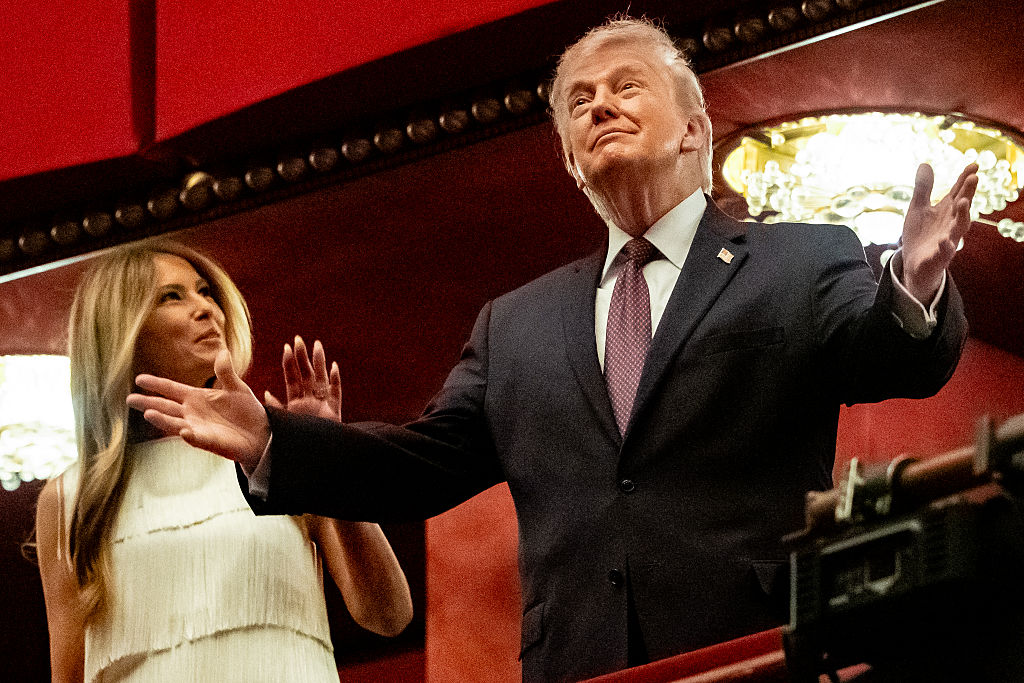
The Harris campaign believed they were engaged in a war against prejudice, but as the abortion question, and so many others, showed, they were the ones blinded by their own biases. They clearly thought the endorsements of celebrities such as Jennifer Lopez and the rapper Cardi B, as well as the support of old establishment Republicans such as Liz Cheney, were signs of a tent drawn widely. But voters saw a gilded elite behind the VIP barrier congratulating each other on their own moral superiority. In contrast, Trump’s stint at a McDonald’s drive-thru, his turn behind the wheel of a garbage truck and even his golf swings on stage all strengthened a sense of the opposite – a candidate at home in the territory where mainstream Americans work and live.
Trump had an instinctive understanding of the insecurities and concerns that voters felt the Biden/Harris administration failed to address. His relentless focus on migration, far from alienating voters from minority ethnic groups, won them over. He appreciated that for many of them, illegal migration drove down their wages and increased their fear of crime. On foreign policy, he recognised that in a world which has grown more dangerous, Americans wanted fewer conflicts, cheaper energy and a focus on their own nation’s security. When he gave voice to these instincts and the Democrats decried them as fascist, that only reinforced the sense among voters that it was the Democrats who were out of touch – and if Trump’s opponents at home feared him so much, then America’s foes abroad would fear him even more.
There will still be a tendency among many people, especially outside America, to depict Trump’s victory as the heralding of a return to a darker age. But the failure of the Democrat campaign shows the danger in demonisation and the folly of telling voters what they should think rather than listening carefully to what they have to say.
Since the 2008 financial crash there has been a growing divide across the West. On the one side are those with capital, credentials and connections, those who in David Goodhart’s words can operate successfully anywhere. On the other side are those who work with their hands, who build, manufacture and care, who are rooted somewhere special to them and whose attachments are to family, community and nation rather than status. This divide is both cultural and economic. The people keenest on the idea of net zero are both those who can absorb higher fuel bills and those less likely to work in energy intensive industries. The strongest supporters of more migration are both those whose social circles would applaud such a stance and those who benefit from cheaper wages for cooks and cleaners.
It may seem curious that a victory for Trump should be an invitation to greater humility. But for those in positions of power across the West, including in Britain, a period of contemplation rather than a chorus of condemnation would be the right response.
Portrait of the week: Trump’s victory, Kemi’s shadow cabinet and footballer killed by lightning
Home
Kemi Badenoch, the new leader of the Conservative party, appointed a shadow cabinet. She made Robert Jenrick, whom she beat for the leadership, shadow justice secretary; Dame Priti Patel, shadow foreign secretary; Chris Philp, shadow home secretary; Mel Stride, shadow chancellor. Alex Burghart was given Northern Ireland and the Cabinet Office, with Laura Trott at education, Edward Argar at health and James Cartlidge at defence. Badenoch had been elected leader by 56.5 per cent of the 95,194 members’ votes (compared with the 57.4 per cent for Liz Truss in 2022), in a turnout of 72.8 per cent (compared with the 82.2 per cent in 2022). The Pitt Rivers museum in Oxford returned to Borneo a sun hat acquired in 1923 from the Brooke family, who ruled Sarawak. Sir Henry Keswick, the Jardine Matheson businessman who owned The Spectator from 1975 to 1981, died, aged 86.
Bridget Phillipson, the Education Secretary, lifted the cap on university fees for the first time in eight years by £285 to £9,535 next year, an increase of about 3.1 per cent. Maintenance loans for students in England will rise by the same percentage. Sir Lindsay Hoyle, the Speaker, asked for a ‘full inquiry’ into how details were reported in the press before the Commons was told. Farmers were enraged by the Budget making inheritance tax payable on estates worth more than £1 million. GPs complained at their businesses having to pay increased employers’ national insurance. The government conceded that people could smoke in pub gardens and outside shisha bars but pressed ahead with a law against anyone now 15 or under ever buying cigarettes. An unpleasant and mysterious smell afflicted Leeds City bus station.
Sir Keir Starmer, the Prime Minister, in a speech to the Interpol general assembly in Glasgow, said: ‘We are going to treat people smugglers like terrorists.’ The budget of the new Border Security Command would be doubled to £150 million and the Crown Prosecution Service enabled to decide on cases more quickly. About 60 Tamil migrants stranded for years on the island of Diego Garcia were offered the right to come to the UK; in October they’d been offered a move to Romania. In the seven days to 4 November, 1,405 migrants in small boats arrived in England. More than 600 miles of power lines must be built to connect new renewable energy to the grid, according to the government’s own National Energy System Operator. The Queen cancelled some engagements because of a chest infection.
Abroad
Many world leaders congratulated Donald Trump on his election as US President, having beaten Kamala Harris, in a contest decided in half-a-dozen swing states. ‘We’re going to help our country heal,’ he said. ‘I look forward to working with you in the years ahead,’ said Sir Keir Starmer. The Republicans took back control of the Senate. Polish prosecutors said that a series of parcel fires in Poland, Germany and Britain were trial runs by Russia for sabotage to flights to the United States and Canada. Supporters of Bolivia’s former president Evo Morales seized a military post near Cochabamba, taking 200 soldiers hostage; the Bolivian government had denied an attempt on Morales’s life a week earlier. Quincy Jones, the American music producer responsible for Michael Jackson’s Thriller album, died aged 91.
Benjamin Netanyahu, the Israeli Prime Minister, sacked defence minister Yoav Gallant, citing a ‘crisis of trust’. Israel said a senior Hezbollah operative was captured in a naval raid on the Lebanese town of Batroun. Hezbollah rockets killed seven in northern Israel. Iranian authorities detained a woman who walked in her underwear at Tehran’s Azad University. Only about 400 spectators watched the Women’s Tennis Association final in Riyadh, Saudi Arabia. A footballer was fatally struck by lightning during a game between Juventud Bellavista and Familia Chocca in Peru.
The number killed by floods around Valencia rose to more than 217. Some people pelted the King of Spain with mud when he and the Queen visited affected areas. Heavy rain disrupted Barcelona airport. The concrete canopy at Novi Sad station in Serbia collapsed, killing 14. Moldova’s pro-EU President Maia Sandu was re-elected. Bangladesh increased payments to Adani Power (which provides 10 per cent of its electricity) after the Indian conglomerate cut supplies from its coal-powered station by half. In Japan, cyclists using a mobile phone could be jailed for six months under a new law. CSH
The real test for the republic
It’s always intimidating to write for a readership more clued up than you are. I file this on the very Tuesday the international commentariat have relentlessly claimed is the most consequential election day in American history. Now, in my ignorance, I suspect this superlative reflects the blinkered vanity of the present, and I’ve braved expressing my trust on the record that the country will ultimately survive either dismaying outcome. Yet only you know if an anti-climactic calm still prevails down thousands of American Main Streets; if, rather, the cities are aflame, armed militias reign, supermarket shelves are bare, and the US army is trying to decide which side to back; or if something in-between has manifested, including the freakishly unexpected.
This is not an abstract, distant fear of mine, but an active terror. I take the US national debt personally
I will take refuge in a rare certainty. Whichever substandard candidate ends up winning 2025’s booby prize, he or she will inherit the world’s most gorily red balance sheet, leading a country at least $36 trillion in the hole. Should his or her actual policies remotely resemble his or her campaign promises, the other rock-solid certainty is that the 47th American president will make the country’s humiliating national debt even worse. According to the Committee for a Responsible Federal Budget, over ten years Kamala Harris’s plans would increase that debt by up to $8 trillion, while Donald Trump’s plans would entail additional borrowing of about twice that, so that by 2035 the USA would owe $52 trillion.
You’ve surely encountered those analogies that try to overcome the unfathomability of even $1 trillion by expressing the figuratively astronomical in literally astronomical terms. You know, such as: lined up end to end, a trillion dollar bills would almost reach the sun. But these pictorial mental games don’t work. We can’t fathom the distance between the Earth and the sun, either. So let’s simply agree that $36 trillion-and-counting is a whole bunch.
We all have our deepest fears about the future, and I get that younger people often live in horror of a warmer climate (though many switched that dread for a hyperbolic ‘genocide’ of Palestinians awfully fast). But as for what most threatens our own aspirations and the prosperity of our descendants – other than, granted, all-out nuclear war – I doubt the answer is getting a suntan in December. I think the scariest variable in the human world is money.
That may seem a surprisingly venal assertion from a woman who styles herself as an ‘artist’. But in 2016 I derived a whole novel from that anxiety, which first stirred in the precarious year of 2008. Unlike many obsessions I mine for material, fascinations I often use up and move on from, since publication the worries that produced The Mandibles have only ballooned. Of course, apocalyptic fiction set in the future is common as dirt, as is staging these nightmare scenarios in the United States. Yet The Mandibles is the only such cautionary tale I know of that extinguishes the American idyll through economics.
The novel kicks off in the piquant centennial of financial disaster, 2029, when the full faith and credit of the grievously insolvent US no longer washes, and the dollar is replaced as the international reserve currency. The president promptly defaults on America’s groaning national debt. Through the fate of one extended family, the novel explores ‘What does the US national debt have to do with me?’. As Britons might well ask the same question, I’d call your attention to the one wildly implausible aspect of my plot, whose scope I wished to limit. Only in fiction could the US economy fall apart without bringing the rest of the world down with it.
A reserve currency is the money everyone agrees to accept. It’s used for settling debts between countries or buying commodities priced in that currency. Central banks everywhere therefore hold disproportionately large amounts of this dosh, which functions financially the way English now functions linguistically.
Thus the US has printed vastly more dollars than its own population requires without necessarily accepting the inflationary consequences. If American currency were to lose reserve status due to alarming debt – already too enormous to ever pay back – the dollar would seem like every other rubbish currency, and all those greenbacks in foreign banks would come flooding home. The subsequent inflation in America would make your head spin.
This is not an abstract, distant fear of mine, but an active terror. I take the US national debt personally. The more financially secure I become on paper, the more insecure I feel. (This is commonplace: first you worry about getting money; then you worry about keeping it.) I repeatedly envision waking to the two-inch-high headline ‘DOLLAR CRASHES’, and my savings have just turned to ash. I’m getting older, and if I’m so broke overnight that I can’t take care of myself, no broke government will take care of me either.
This profound mistrust of the durability of my savings can show itself in the smallest decisions. On Amazon Prime Day, I bought two beautiful chef’s knives we didn’t really need. But they were half-price, and I calculated that the knives would last longer than the dollars would. Stored boxed in a drawer, they’d still be lethally sharp a few years later, while the dollars they cost will have decayed like mulch.
Most economists doubt the US can pile up debt indefinitely. They mostly differ on when, not whether, the brown stuff will hit the fan. America is running a Ponzi scheme, relying on the reputation of treasuries as the safest investments going. But eventually those bonds won’t feel safe, and no one will want to get stuck holding a deadbeat’s IOUs. Debt interest will consume the Congressional budget like a tapeworm. Americans may have their pick of poisons: loss of reserve status, hyperinflation, outright default, or all three. US dominance is based on money, without which you can’t maintain a military and nobody loves you. Democrats? The real ‘threat to the republic’ is bankruptcy. Given that neither feckless presidential candidate campaigned on fiscal prudence, maybe it doesn’t matter who won on Tuesday.
Watch more from Lionel Shriver on SpectatorTV:
How Trump could temper tensions in the Middle East
One of Donald Trump’s 2024 campaign ads was aimed at Jewish voters. Three stereotypical New York bubbes are kvetching about the state of the world. ‘Israel’s under attack. Anti-Semitism like I never thought I would see.’ One says: ‘Oy vey… You know Trump I never cared for, but at least he will keep us safe.’ This was a canny appeal, recognising that many American Jews were traditionally Democrats and would have to hold their noses to vote for Trump. But Trump has been – as he says himself – Israel’s ‘protector’ and Israel’s Prime Minister, Benjamin Netanyahu, was the first foreign leader to praise him for his victory: ‘Congratulations on history’s greatest comeback!’
Netanyahu signed off his message to Trump ‘in true friendship’. In truth the two have a difficult history. They didn’t speak for almost four years after Netanyahu recognised Joe Biden’s win in 2020. In April, Trump made a number of digs at Bibi to Time magazine. He blamed him for the 7 October massacre and said the Israeli leader had backed out of what was supposed to be a joint operation to assassinate the Iranian general Qasem Soleimani (‘That was something I never forgot’). Not a stand-up guy, not loyal – the worst thing you can be in Trumpworld.
The path to a wider war is clear. Iran and Israel are locked into an escalatory cycle
They patched things up over the summer when Bibi visited Mar-a-Lago, all smiles and hugs by the pool. Trump later told one of his rallies that Netanyahu was calling him almost daily for advice. He said Israel should ‘finish the problem’ in the war against Hamas. He revelled in the pager attacks on Hezbollah. All this is a reminder of how Trump was the American president who recognised Jerusalem as Israel’s capital, who moved the US embassy there, and who ended the Iran nuclear deal. But Trump is also, famously, transactional and American military support for Israel reportedly cost $23 billion last year. He is also instinctively an isolationist and might, this time, bring enough loyalists into government to face down America’s interventionist foreign policy establishment. Above all, he is a dealmaker – and this is where the danger to Netanyahu lies.
One of the greatest and most unexpected diplomatic triumphs of Trump’s presidency was the Abraham Accords. Trump had told his son-in-law, Jared Kushner, to go and make peace in the Middle East. To everyone’s surprise, Kushner came back with a deal for the United Arab Emirates and Bahrain to recognise Israel. (It might have helped that Kushner was being tutored by Henry Kissinger.) The next logical step is for Saudi Arabia, too, to formally make peace with Israel. They were edging towards an agreement before 7 October. Now, though, the Saudi price for a deal is the creation of a Palestinian state – something Netanyahu has spent his entire career trying to stop.
Kushner and his wife, Ivanka Trump, have said they won’t return to the White House, too busy becoming billionaires as Kushner’s investment fund is showered with cash. But while Kushner had no formal role in his father-in-law’s election campaign, he was reportedly active behind the scenes. Could Trump call on him to work informally again, as a backchannel to the Saudi leader? That informal role might suit Kushner. When Trump left office, Mohammed bin Salman (MBS) gave $2 billion to Kushner’s fund. Staying out of office makes it much easier to accept these payments.
Kushner and MBS always had a warm rapport. But getting MBS to drop the demand for a Palestinian state will be hard. In September, the Crown Prince appeared to strengthen his position, saying a Palestinian state is a condition of any peace agreement. This is necessary rhetoric for an authoritarian Sunni ruler keeping one eye on the Arab street, which has been inflamed by images of children’s corpses in Gaza and Lebanon. But the Saudi royal family are ruthless in pursuit of their own interests and Kushner – or some other envoy – will have the strongest possible card to play: the promise of a new defence pact with the US.
Such an agreement is probably only possible as part of a deal for normalisation of Saudi-Israel relations. Otherwise even a Republican senate would find it difficult to ratify yet another US military commitment. The Saudis might be persuaded to agree to some halfway house: a roadmap to a sovereign Palestinian state rather than its actual establishment. This is because the Middle East is on the brink of a catastrophic war that could ignite the whole region.
The path to a wider war is clear. Iran and Israel are locked into an escalatory cycle. A month ago, Iran fired 180 ballistic missiles at Israel. Israel responded with precise and effective strikes on military installations, almost completely destroying Iranian air defences. The response to the response has yet to come, but senior Iranian officials have been quoted as saying it will be ‘harsh’ and ‘unimaginable’. This is standard rhetoric, but Iran’s supreme leader, Ali Khamenei, may feel he has to order something credible in order to avoid admitting defeat. Israel could then expand the war to hit oil facilities and Iran’s nuclear programme.
The wider Middle East war might be raging by the time Trump takes office. Trump might feel the US should come into the war on Israel’s side (if that isn’t already happening by the time he swears the oath). It was unwise of Iran – if true, as claimed – to run a covert influence operation to hurt Trump in the election. But Trump would also love to get out of the region altogether. He once said that ‘the single worst decision our country ever made’ was to go into the Middle East.
Trump is mercurial and it’s hard to tell what he will do next. The next four years are going to be a wild ride for leaders in the Middle East and everywhere else. But if there’s a consistent theme, it is that he is no warmonger. He has spoken of his wish to end the multiple conflicts in the Middle East once and for all, and not, as he has said, to have to come back to the region every five or ten years. That would be the deal of the century and if it means a Palestinian state, Netanyahu will discover the truth of Palmerston’s saying that nations have no eternal allies, only interests.
Watch more on SpectatorTV:
The fascinating life of Sir Henry Keswick
Sir Henry Keswick died on Tuesday, aged 86. Under his proprietorship, from 1975 to 1981, The Spectator recovered, and began the almost continuous growth in reputation and circulation it has enjoyed ever since. The key to his ownership was that he appointed the ideal editor, Alexander Chancellor, a friend from Eton and Cambridge, who was, Henry claimed, the only journalist he knew. Having done this, he sensibly did little more, other than cover the overdraft, which was bigger than the £75,000 price. He was the first-ever owner of the paper who was not also its editor. He gave it the freedom to flourish.
The purchase of The Spectator was part of Henry’s programme for entering British politics. He had been in Hong Kong, working for the family trading company of Jardine Matheson, since 1961. In 1970, he became the taipan and therefore rich. In 1975, aged 36, he decided to return, almost like Clive of India, seeking a country house, a wife (he always had the same woman in mind) and a seat in parliament. The house was Oare, a lovely Georgian house near Pewsey. He saw buying The Spectator as the means to the third of those ambitions. But it went wrong, he told me, when he was shortlisted for a Conservative seat in Wiltshire. At the interview, the chairman asked Henry whether, if selected, he would buy a house in the constituency. ‘Madam,’ he replied, ‘my house borders the constituency, and indeed my arboretum is in the constituency.’ The chairman became nettled: ‘Mr Keswick, I must press you. If we choose you, will you buy a house in the constituency?’ ‘Madam, if you insist, I shall buy a house in every village in the constituency.’ He never reached the House of Commons.
Such rebuffs showed Henry The Spectator would not work the hoped-for career magic. The journalistic success over which he presided meant he was importuned by potential buyers. In 1981, he sold the paper to his friend Algy Cluff for £160,000, plus transferred losses beyond Algy’s worst dreams. In 1985, after a courtship of 14 years, he fulfilled his heart’s desire by marrying his beautiful and perceptive cousin Tessa Reay (née Fraser).
From London rather than Hong Kong, Henry continued, as chairman, to run the trading empire which, under him, became global. He made shrewd use of Jardines ‘paper’, at moments when its value stood unsustainably high, to buy other assets. The Hong Kong base shrunk after the handover to China; the business elsewhere – Indonesia, for example – ballooned. Henry loved boasting that when he joined Jardines, the company had been worth £10 million and when he retired nearly 60 years later it was worth over $40 billion.
I am not qualified to judge Henry’s business achievements, but I found his character fascinating. He was an almost extinct type – the patrician plutocrat – grand, usually benevolent, occasionally autocratic. He was a firm friend and a firm enemy: ‘Nemo me impune lacessit,’ he liked to say. He lived, in the Victorian phrase, ‘at a great rate’, but a rate which he was Scottishly careful he could afford. Forty years ago, my wife overheard him debating whether it would be possible to live on as little as £1 million a year and concluding he could just manage it. He lived like a Victorian magnate. As well as Oare, there was a Georgian town house in SW1, the family estate in Dumfriesshire (whence all Jardines – and hence, by marriage, Keswicks – sprang) and his own grouse moor, Hunthill, in the glens of Angus. There lobster was served to the guns at the shooting lunches on the hill. There were kidneys at breakfast. In London, Henry could be found most evenings from 5.30, playing bridge with his brothers at the Portland Club. In Hong Kong, he had the most magnificent of bungalows, 9 Shek O, from which he could survey the ships as they passed through the straits to China.
Often – as well portrayed in Trollope novels – such possessions seem to weigh down their owners. Not Henry. Vast himself (a friend once saw him eat 12 fried eggs for breakfast) and very tall, he filled his houses and made them and his staff welcoming to guests of all ages. (He never had children himself, but loved their company, and treated his stepson Ned Mackay as if he were his own.) He and Tessa were good at mixing people. The party might include, say, a Japanese politician, Lauren Bacall, a duke or two, George Weidenfeld and any number of cousins. In terms of dress, exact (and frequent) mealtimes, sporting pursuits, Keswick country life was traditionally formal. At Hunthill, it sometimes included a piper playing round the dining table. But in atmosphere it was warm, unstuffy and generous. Henry had a way of organising everything so well that it seemed effortless but was the product of attention to detail.
Also of aesthetic sense. No one was less ‘arty’ or less pretentious than Henry. Scarcely anyone I know had read so few books. Yet he was an aesthetic perfectionist in the subjects he loved – his gardens, his famed arboretum (always fiercely competitive with that of Michael Heseltine), his grouse shoots, and (much helped by Tessa) the appearance of his houses and the paintings which hung in them. He was unusually good at working out the way he wished to live, and living it.
In his last years, Henry became seriously ill, and Tessa died before him, but he maintained his interests in life. When he could not reach Hunthill for the grouse, he was sent photographs of each drive. Gossip was one of his greatest skills. He kept up with it to the end. My last conversation with him was on the phone. He had been desperate to find out who the new editor of The Spectator would be. I knew but had refused to say. Now he rang me in glee: ‘I saw that fellow Jenrick – very good, I thought. He’s married to a Jew. I like Jews: we need them. He told me who the editor is. You were too pompous to say.’
American titan: inside Donald Trump’s remarkable political comeback
Palm Beach, Florida
Donald Trump’s bid to take back the White House has been triumphant. It is a decisive victory and even Trump’s bitterest enemies should recognise him for what he is: an American titan, the most extraordinary politician of our time. He has just pulled off arguably the biggest comeback in US history – a feat greater even than Richard Nixon’s Lazarus-like return in 1968.
To understand the scale of his victory, recall how weakly he began. On 15 November 2022, when Trump launched his now-triumphant bid to regain the presidency, he did not seem himself. His formal campaign announcement, delivered in the ballroom of his club in Mar-a-Lago, Florida, lacked the zing of his famous entry into the 2016 race, when he floated down the escalator of Trump Tower in New York.
The Trump of 2022 had countless legal problems and he’d been widely blamed for the Republican party’s disappointing performance in the mid-term elections. Republican donors and the right-wing media were lining up behind Ron DeSantis, the Florida governor, the coming man. Back then Trump looked disgruntled. ‘I don’t like to think of myself as a politician,’ he said. ‘But I guess that’s what I am. I hate that thought.’ Critics called his performance ‘low-energy’– turning one of his favourite insults against him.
The Donald was only ever down, not out. ‘Trump fatigue’ turned out to be a mirage
But the Donald was only ever down, not out. ‘Trump fatigue’, as people called it, turned out to be a mirage and the Trump of 2024 is jubilant, albeit exhausted, having accomplished his extraordinary re-election mission. ‘I’ll never be doing a rally again, can you believe it,’ he said in his victory speech, sounding truly sad. But, he added, ‘success is going to bring us together’. Whatever else you think of him, it would be hard not to admit that Trump has grit. He has survived eight years of the most brutal political warfare – two impeachments, two assassination attempts, four criminal indictments, endless media ridicule and opprobrium – and emerged victorious again. He has won back the presidency.
It was at around 10.30 in Palm Beach on Tuesday night when the mood at the Trump campaign’s ‘watch party’ started to brighten. Nobody wanted to speak too soon, but the crowd began to whoop louder and louder as the good news poured in from Georgia and North Carolina. The Democratic Blue Wall – Wisconsin, Michigan and Pennsylvania – took time to fall. But there was a quiet confidence that the Democrats were about to face a great repudiation. ‘We’ve delivered for people in Wisconsin, Michigan and Pennsylvania. And [Kamala Harris] hasn’t,’ said Corey Lewandowski, Trump’s long-time adviser.
In 2016, Trump forged a new working-class coalition to beat Hillary Clinton. That coalition fell short in 2020 so he strengthened it by adding more Latino and African American voters. He became the first politician to engage successfully with the ‘manosphere’, the growing group of disgruntled men who feel ignored and alienated by progressive policies. In key swing states, young men leapt on the Trump train. ‘This is karma, ladies and gentlemen,’ said Dana White, head of the Ultimate Fighting Championship, who joined Trump’s victory speech. ‘Nobody deserves this more than him.’
Of course, Trump’s enemies won’t accept his victory just yet. The results may well be contested, as Democrats indulge in exactly what they accused Trump of four years ago: election denialism. The ‘lawfare’ against Trump, paused for the election, will be waged anew. But the Republicans will probably have the House of Representatives and the Senate, too, which will limit what the Democrats can do. ‘They’ve kind of shot the bullet when it comes to legal challenges,’ said a cautiously optimistic Trumpworld insider on Monday, sitting near the heart of power on Capitol Hill. ‘But I guess the question is: how crazy is the left? And the answer is we don’t know.’
The irony is that from last year onwards, the lawfare against Trump turned out to be his political salvation. The ‘deep state’ really was out to get him. Each of the four criminal indictments against him boosted him in the polls and eased his path towards the Republican nomination. The clever-clever theory among Washington insiders was that the Biden administration felt so confident in its ability to beat Trump that it was happy to let him be the Republican candidate. Well, if that was the ploy, it backfired spectacularly.
The 2024 presidential election has proved that political polls cannot divine the future and that the so-called ‘legacy media’ – print newspapers and most television networks – are increasingly unimportant. The pollsters went to great lengths this year not to underestimate the strength of Trump’s movement – so much so that self-appointed experts on both sides of the Atlantic (such as Rory Stewart) argued that most surveys had, in fact, become biased against the Democrats. We were told that the ‘high quality’ polling, with its ingenious modelling, showed Harris with an edge. The less sophisticated data pointed towards a Trump victory. But once again, polling companies managed to exaggerate the Democratic party’s popularity, for the simple reason that Democrat-leaning voters are more likely to respond to surveys than Trump supporters, who regard the polls as suspicious at best.
Some will argue that what swung it for Trump was Elon Musk’s support on Twitter/X, arguably the world’s most influential social media platform. More significant perhaps was the fact that legacy media has lost its credibility and with it, the ability to shape the conversation. Since 2016, journalists have taken it upon themselves to act as the sanctioned opposition to Trumpism. In recent days, major news networks have repeatedly insisted that Trump actually threatened to kill his opponent Liz Cheney at the end of last week. They grossly exaggerated the number of pregnant women dead as a result of abortion bans and lost the trust of ordinary, undecided, voters.
The Democratic party and its cheerleaders must ponder a painful question: might Joe Biden, for all his apparent senility, have won? ‘Kamala Harris is more threatening to swing voters than a dead Joe Biden or a comatose Joe Biden,’ said James Carville, the veteran Democratic strategist, in July. ‘So if Joe has to go, it’s gonna be Kamala and if it’s Kamala, it’s gonna be harder.’
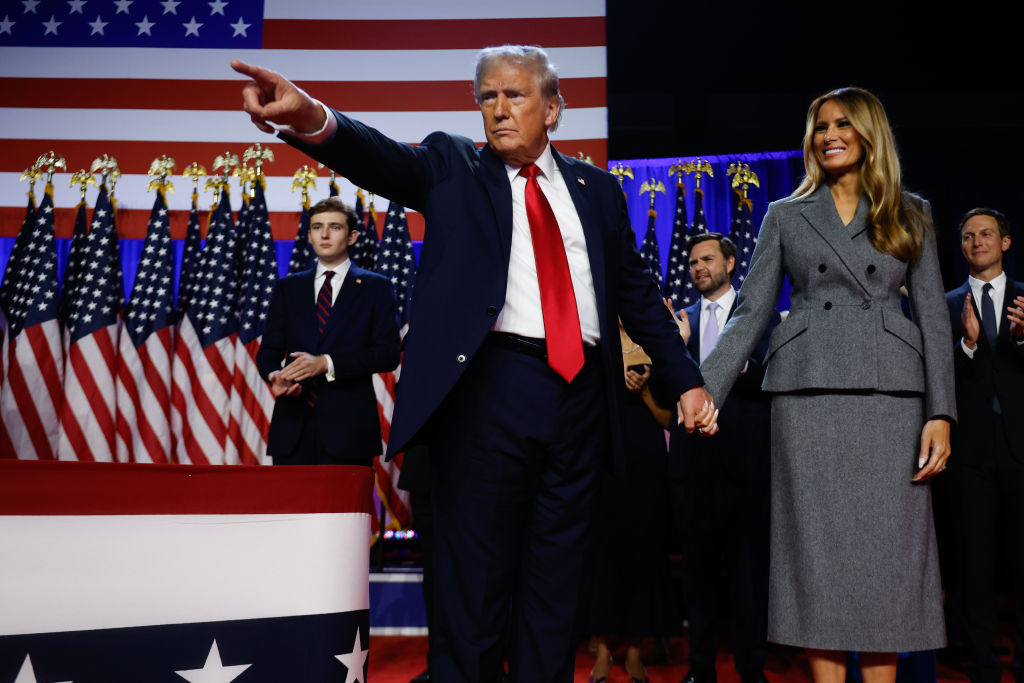
Biden will go down in history as a failed one-term president. But he was the only Democrat who beat Trump. Harris will blame sexism and racism for her defeat, as she did when her first presidential campaign flamed out in 2019. But even with a billion-dollar war chest this year, she was unable to overcome her glaring flaws. She gave a decent speech at the Democratic National Convention in August and outfoxed Trump in their first – and last – debate. But she fluffed her lines in her biggest interviews and seemed unable to answer difficult questions.
She campaigned at times almost exclusively on the emotive topic of abortion and seemed to go out of her way to put off men, especially blue-collar men who tended to prefer Biden to Trump. One of the Democrats’ late campaign adverts, starring Julia Roberts, encouraged women to lie to their husbands about how they voted because the voting booth ‘is the one place where women still have a right to choose’. An odd pitch, to put it mildly.
The Democrats all but forgot that they are meant to be the party of the working man. Team Trump made the GOP the party of the forgotten man. Team Harris-Walz spoke more to working-from-home women and affluent college graduates. In other words, the people for whom ‘the system’, as Team Trump calls it, works. But a large majority of Americans feel their country is on the wrong track and the system works against them.
Harris’s campaign message was confused and confusing. ‘I’m not Joe Biden,’ she said. But as vice president, she also had to present herself as the continuity candidate: Bidenism with a fresher face. She posed as a force for moderation against extremes, yet her record as a senator put her far to the left of the American mainstream on culture-war issues.
As someone who seemed to have no knowledge of international relations, Harris stuck to the Biden administration’s line on Ukraine and Gaza. But voters tended to agree with Trump and his more eloquent vice-presidential nominee J.D. Vance: the world seemed safer with Donald in charge.
The economy seemed better off, too. In the 2022 mid-terms, anger at ‘Bidenflation’ and the exorbitant cost of living didn’t translate into a sweeping set of victories for the Republicans. But as Trump put it in that downcast campaign launch address: ‘The citizens of our country have not yet realised the full extent and gravity of the pain our nation is going through. They don’t quite feel it yet. But… I have no doubt that by 2024, [they] will.’ The results proved his point.
Harris seemed to go out of her way to put off men, especially blue-collar men who preferred Biden to Trump
An even bigger Democratic mistake was to ignore what has always been Trump’s strongest campaign issue: the crisis at America’s southern border. Since Biden took office, more than seven million illegal immigrants have entered the United States.
Democrats blamed Trump and the Republicans in Congress for ‘putting partisan politics ahead of our national security’ and blocking Democratic-led efforts to control the problem. Then, in June, Biden finally issued an executive order to stem the flow of undocumented migrants and limit asylum. If his administration had listened to voter concerns and acted sooner, Harris would have been in a stronger position. But she wasn’t.
Trump has been elected on a promise to deport millions of illegal immigrants. Vance, now the vice-president-elect, has also been clear that he is fully committed to that policy. The Trump 2.0 immigration agenda is bound to generate waves of international outrage. The UK government will come under pressure to denounce the incoming administration as a far-right tyranny. This could further exacerbate tensions between Labour and Trumpworld, especially after the fuss over 100 Labour activists being sent across the Atlantic to canvas for Harris. Moreover, if Trump and Vance move quickly to end the war in Ukraine, British politicians may feel compelled to denounce Republicans for rewarding Vladimir Putin’s aggression.
But 2024 is not 2016, and Trump can no longer be dismissed as a freakish aberration from politics as usual. He is the new normal.
Will the British political establishment be shrewd enough to recognise Trump’s mandate? ‘It’s almost certain that the UK now has a pro-British president,’ said Nigel Farage. ‘Labour must roll out the red carpet.’
A more final point about Trump 2.0 is that he will be 78 at his inauguration – 159 days older than Biden was when he became Commander-in-Chief in 2021. On the one hand, that could mean that Vance, as vice president, will do much of the executive legwork. On the other, it means Trump doesn’t have to govern for re-election. ‘That means he can focus on things that matter in the long term, like debt,’ says an adviser. This could be Trump’s greatest challenge yet.
Watch more on SpectatorTV:
Kamala Harris finally concedes defeat
US Vice President Kamala Harris finally took the stage at her alma mater, Washington, DC’s Howard University – a day later than anticipated, to deliver a 12-minute concession speech. She walked out at 4:24 p.m. ET Wednesday, somewhat ironically, to the chorus of Beyoncé’s ‘Freedom’:
Freedom, freedom, I can’t lose
Freedom I can’t lose
‘The outcome of this election is not what we wanted, not what we fought for, not what we voted for – but hear me when I say that the light of America’s promise will always burn bright as long as we never give up and as long as we keep fighting’, Harris said.
She added: ‘I am so proud of the race we ran and the way we ran it. We must accept the results of this election. Earlier today I spoke with President-elect Trump and congratulated him on his victory. I also told him that we will help him and his team with this transition and that we will engage in a peaceful transition of power.’
The Vice President did however strike a defiant note in her remarks.
‘While I concede this election, I do not concede the fight that fuelled this campaign’, she said. ‘This is not a time to throw up our hands – this is a time to roll up our sleeves.’
The university’s quad was set to be the scene for her election night speech yesterday, before thousands of students from America’s oldest historically black university. But it became apparent at around midnight that she would not be addressing the masses – attendees had started peeling off in droves an hour before, to get some rest before the following day’s classes.
There had been a real festival atmosphere at Howard earlier on in the night. Thousands of students were standing or sitting in the quad. OutKast, Missy Elliott and Beyoncé blasted from slightly tinny speaker stacks; all-age sororities took part in coordinated dance lines; on the riders, the zoomers were all glued to their phones. What there wasn’t, conspicuously at least, was a monitor displaying the results as they came in, at first. Was the plan to carry Kamala to victory on vibes in the face of… votes?
There were big boos from the crowd when they finally got CNN on the screens, just as the network called Texas and a number of other states for Trump. This was followed by a lot of screaming as they showed leads for Kamala in Pennsylvania and Michigan. Alas, it didn’t last.
It wasn’t all doom and gloom, however. There were some cheers from the Howard crowd on Tuesday night for the victories of Angela Alsobrooks for the US Senate seat in Maryland and Lisa Blunt Rochester in her US House race in Delaware, the first African-American women to hold those offices. This was swiftly followed by exasperation as enfants terrible Ted Cruz and Josh Hawley held their Senate seats in Texas and Missouri respectively.
‘I can feel the anxiety in the crowd’, Abby Phillip said on CNN a little later, up on the press rider as they cheered behind her. Yes Abby, it’s a college campus.
Nineteen-year-old Madison Lyman is a fresher here voting in her first presidential election. She’s from Kansas City, Missouri, but cast her ballot in DC. ‘It’s exciting to be a part of history and see Kamala Harris embrace such an important part of her personhood on the world stage’, she told The Spectator at around 10 p.m. ET. ‘I pray that she wins.’
Her friend, 18-year-old Matilda Molokela, is an economics major from South Africa. While she’s not eligible to vote, she did have some thoughts about her countryman Elon Musk. ‘He’s chronically unserious’, she said. ‘There’s so much else he could be doing with his money… especially in South Africa.’
The Democrats now have many questions to pose themselves as a party: should Biden have announced he’d be a one-term president in 2023? Should we have had a primary process then – or in July after he stepped down? Should Harris have done more media earlier on? And should she have made a bigger deal of what she was actually running on and the departures she planned to make from Biden administration policy? Perhaps the biggest of all: ‘how did we blow it?’
The top election takeaways from Trump’s beatdown
President Donald Trump will be the 47th president of the United States after a historic political comeback and complete annihilation of his opponent, Vice President Kamala Harris. Harris called Trump to concede this afternoon after failing to appear at the campaign’s planned victory party at her alma mater, Howard University, in Washington, DC. Instead, she delivered her concession speech there this afternoon. More on that below the fold. Biden is also said to have called Trump to congratulate him and express his desire for a smooth transition.
It was a relatively short night compared to most predictions, with Trump sealing victory a couple of hours after midnight (although the result seemed obvious by that point). Trump not only won the campaign’s preferred path of Sun Belt-plus-Pennsylvania, but he also took back Michigan and Wisconsin. Yes, the madman swept the seven swing states. Trump cited his decisive victory, plus predictions that Republicans will have a multiple seat majority in the Senate, as giving him a “mandate to lead” with his America First agenda. Decision Desk HQ also gives Republicans a 91 percent chance of keeping the House majority.
A couple of top lines from Trump’s win:
- Democrats got high on vibes and forgot the fundamentals. Harris was the vice president of a highly unpopular administration, a heavy majority of voters say the country is on the wrong track — and voters cited the economy and immigration as top issues. Harris might have been “brat” but she didn’t tell voters what she would do as president — particularly what she would do differently from Biden — and arguments about Trump’s personality and character defects were already tested in 2016. That attitude is even weaker when inflation has prices up more than 20 percent
- The RNC deserves a lot of credit for its election integrity program, which boasted hundreds of thousands of lawyers and volunteers. They notched several notable court victories ahead of Election Day (listed in Monday’s DC Diary) that ensured clarity over the rules and thus quick counting of votes. This was a far cry from the madness of 2020, even as turnout hit record highs
- Trump outsourced a lot of his ground game to third party groups, like Elon Musk’s America PAC and Charlie Kirk’s Turning Point Action. A lot of the GOP establishment was skeptical of this strategy, but it obviously paid off. These groups had tons of money and volunteers and focused mostly on turning out low- and mid- propensity voters, allowing the Trump campaign and RNC to make sure they were hammering the base
- Latinos and black voters moved significantly toward Trump. Latino voters swung twenty-five points toward Trump; he ended the night with 45 percent of the Latino vote. Trump nearly doubled his support with black voters. These groups were motivated enough by the economy and immigration to abandon any loyalty to the Democrats, and younger voters within these groups expressed some discomfort with the party’s shift to the left on cultural issues
- Turnout in urban city centers and among women voters was lower than expected this cycle, signaling that fears about Trump dismantling democracy and enacting a national abortion ban (contrary to his public statements) were not major motivating factors
- Young men — the ‘bro vote’ — were a big factor for Trump. He only lost men under thirty by two points to Harris after embarking on a male-dominated podcast tour. In Michigan, he outright won voters under the age of thirty. Some of Gen Z is very ‘woke,’ but plenty of them view being Trump supporters as the rebellious, countercultural move — think ‘sticking it to the man.’ Others reject the two party system entirely, embracing independent media and third-party candidates
- Trump significantly increased his vote share with Catholics, especially in the Rust Belt states. He won them overall by fourteen points, doubling his 2016 margin against Clinton. His advantage with white Catholics was even greater, hitting 60 percent support. Harris attempted to sway evangelical voters against Trump on issues of personal morality when she probably should have focused on the traditionally more politically liberal Catholics. Catholics make up about a quarter of the population in Pennsylvania and Wisconsin and about 17 percent in Michigan. I’ll be writing more on the breakdown of religious voters this election cycle in this week’s edition of Culture Shock, so stay tuned
-Amber Duke
On our radar
UKRAINE FIRST The Biden White House is planning to send the last $6 billion remaining in aid to Ukraine ahead of Donald Trump taking over the presidency in January. Trump and his allies have signaled opposition to the current level of funding of Ukraine’s war with Russia.
RFK PROMISES VACCINE ACCESS Robert F. Kennedy Jr., a member of the Trump transition team who has promised to “Make America Healthy Again,” promised voters that he was not planning to “take vaccines away from anybody.” Instead, he said Americans should have access to more scientific studies surrounding vaccines so they can make more informed decisions.
SMITH STALLED OUT Special counsel Jack Smith is reportedly in talks with the Department of Justice about how to wind down his cases against former president Donald Trump now that he was won the presidency. Trump had said he would fire Smith “in two seconds” if he returned to the White House.
GOP performs well down the ballot
President-elect Donald Trump completed what his allies are already billing as the most historic comeback of all time — but the 2024 elections provided Republicans with no shortage of good news in lesser-profile down ballot races.
There were some bright spots for Democrats, including in New York, where they defeated incumbent Representatives Marc Molinaro, Brandon Williams, and Anthony D’Esposito, in Maine, where Representative Jared Golden looks poised to hold on and in Maryland, where the state’s popular former Republican governor Larry Hogan couldn’t outrun Trump by enough in his Senate campaign against Angela Alsobrooks.
But virtually everywhere else you look, Republicans won.
The GOP looks poised to take the trifecta: the White House, House and Senate. Thanks to Trump’s strength, the party is poised to net more Senate seats than even the most optimistic party hacks could have predicted. While Eric Hovde looks likely to lose in Wisconsin and Rogers conceded in Michigan, Sam Brown is on the verge of a massive upset in Nevada.
On the House side, even Republicans who were written off ended up winning outright: Representative Don Bacon outperformed Kamala Harris by almost double digits to hold onto his suburban Nebraska House seat, even though polling suggested he was a dead man walking.
In other down ballot news, Democrats did flip the North Carolina lieutenant governor’s seat, which Mark Robinson vacated for his doomed gubernatorial campaign. Republicans flipped the lieutenant governor’s seat in deep-blue Vermont and the attorney general’s office in Pennsylvania. Elsewhere, Republicans flipped the Michigan House and in a final humiliation to Governor Tim Walz, Republicans ended the Democrats’ unified control of Minnesota by fighting to a tie in the state House.
Liberals did score several victories on abortion ballot measures, while Republicans defeated such measures in Florida, Nebraska and South Dakota. Republican allies defeated virtually every ballot measure that would have implemented ranked-choice voting.
While the results we know look better for Republicans than expected, they could see further gains cemented by the time we publish our next diary Friday.
–Matthew Foldi
Harris concedes at Howard
Vice President Kamala Harris finally took the stage at her alma mater, Washington, DC’s Howard University — a day later than anticipated, to deliver a twelve-minute concession speech.
She walked out at 4:24 p.m., somewhat ironically, to the chorus of Beyoncé’s “Freedom”: “Freedom, freedom, I can’t lose / Freedom I can’t lose.”
“The outcome of this election is not what we wanted, not what we fought for, not what we voted for — but hear me when I say that the light of America’s promise will always burn bright as long as we never give up and as long as we keep fighting,” Harris said.
“I am so proud of the race we ran and the way we ran it,” Harris said. “We must accept the results of this election. Earlier today I spoke with President-elect Trump and congratulated him on his victory. I also told him that we will help him and his team with this transition and that we will engage in a peaceful transition of power.”
The vice president did however strike a defiant note.
“While I concede this election, I do not concede the fight that fueled this campaign,” she said. ”This is not a time to throw up our hands — this is a time to roll up our sleeves.”
The university’s quad was set to be the setting for her election night remarks yesterday, before thousands of students from America’s oldest HBCU. But it became apparent at around midnight that she would not be speaking — and attendees started peeling off in droves to get some rest before the following day’s classes.
–Matt McDonald
College students self-soothe post-election
After a long election night, I couldn’t wait to head to Georgetown University — where some of the nation’s most coddled, yet supposedly politically astute, folks get their degrees. Specifically, to the Self-Care Suite the university’s McCourt School of Public Policy had for the poor students to decompress.
The first words I heard when I got there: “Do you want some vegan nachos?” I did not accept the offer, but hot cocoa though? Yes please. I sat in the room for a while, trying not to look suspicious. I looked down glumly for three minutes. Eventually, a nice lady came to me and asked me how I was feeling. “Alright,” I said, sounding discouraged. She said nothing back, giving me a very understanding look. “Did you see that New York Post article, so embarrassing for them,” I overheard someone say behind me.
I then took one of the “Foldable Fortune Teller: Mindfulness” sheets and played with it for a while.The girl in front of me looked pensive; I mirrored her. I closed my eyes and then filled my sheet, which, the footnote informed me, came from a website called ChildTherapyGuide.com. While I was at it, I overheard some interesting commentary, as the students griped about their post-election concerns: access to abortion (in DC); gay friends in Ohio; whether government workers will be prevented from using the phrase “climate change.” The McCourt School is just a stone’s throw from Capitol Hill and a number of government departments where, you’d imagine, a number of its graduates hope to work one day. How will they cope?
–Juan P. Villasmil
Ukrainians brace for Trump’s return
‘Donald Trump is like the light at the end of the tunnel’, an American told me last night at the only Washington DC bar throwing a pro-Trump election party. For many Ukrainians, though, he’s more like the end itself.
Trump has called himself ‘good friends’ with Vladimir Putin. He said ‘Ukraine no longer exists’ and that ‘even the worst deal [with Russia] would be better than what is now’. Ukrainians got the hint and hoped for a Kamala Harris’s victory. But Americans have chosen, and now Kyiv will bend over backwards, trying to convince its biggest military backer not to abandon Ukraine.
Trump has called himself ‘good friends’ with Vladimir Putin
Volodymyr Zelensky was one of the first leaders to congratulate Trump this morning. ‘I appreciate President Trump’s commitment to the “peace through strength” approach in global affairs’, he said. ‘This is exactly the principle that can practically bring just peace in Ukraine closer’. Over the summer, Zelensky signalled he was ready to negotiate with Russia – but only if Ukraine entered the talks with a strong hand. Trump had once blamed the Ukrainian president for refusing to negotiate with Putin; now the tables have turned: it’s Putin who doesn’t want to stop the fighting. Zelensky hopes Trump will respond by sending more military aid to Ukraine.
In his victory speech last night, Trump declared he will ‘stop wars’ around the world: ‘They said “he will start a war”. I’m not going to start a war, I’m going to stop the wars’, he claimed. Vladimir Putin, who is currently winning, sees only one end to it: if the new US president halts all aid to Ukraine. Putin, as well as other Russian officials, has reportedly congratulated Trump on his victory through acquaintances, as officially America remains an unfriendly state. But even Moscow does not take Trump’s promises to end the war ‘in 24 hours’ seriously. ‘How will he do it? By threatening Putin? Zelensky? There’s only one way to end the war quickly – to cut off aid to Ukraine abruptly’, said the source in the Russian parliament.
There is no reason for Putin to enter talks soon. Last month, Russian troops captured 185 square miles of Ukraine’s land and now hold almost 70 per cent of the Donetsk region. The Kremlin will throw more people into the meat grinder to speed up the gains before Trump enters the office in late January. ‘The objectives of the Special Military Operation remain unchanged and will be achieved’, said Dmitry Medvedev, former Russian president. Putin’s peace terms are for Ukraine to remain neutral and cede four regions that Russia partly occupies (plus Crimea), including major cities like Kherson and Zaporizhzhia still under Ukrainian control. Zelensky can no longer use the small territory he holds in Russia’s Kursk as a bargaining chip: Russian troops have recaptured half of it, and fresh North Korean reinforcements will likely push Ukrainians to retreat.
Russia’s ‘peace’ demands go much further. This week, Radio Free Europe revealed the peace terms Moscow proposed to Kyiv in March 2022. The Ukrainian army would be reduced to just 50,000 troops, while Russia would limit the quantity of Ukraine’s armour and restrict missile development. Later drafts, from the final stages of the failed peace talks in April 2022, show that Russia also insisted on a veto over any international response to future attacks on Ukraine. This would leave Ukraine with no means to defend itself from the future invasion.
Trump may reject most of Putin’s demands and insist on the ceasefire along the 700-mile-long battle line instead. But there’s no stalemate to make such a deal possible: the frontline is collapsing, and Russian troops are advancing towards the West.
Today, Ukraine’s primary headache is not even Trump. Kyiv must find a way to halt the Russian offensive and stabilise the frontline now. So far, the US has delivered just 10 per cent of the $61 billion (£50 billion) aid package that was approved by Congress in April, according to Zelensky. Joe Biden has less than three months to send the rest for what may be Ukraine’s last chance to turn the tide.
Olaf Scholz calls time on Germany’s traffic-light coalition
Just as Germany, along with the rest of Europe, begins to process what Donald Trump’s return to the White House will mean, more instability is heading its way – this time domestic. This evening, German chancellor Olaf Scholz fired the finance minister and FDP leader Christian Lindner, kicking the FDP party out of government and bringing Berlin’s traffic-light coalition crashing down. The result: Germany is probably off to the polls.
Speaking at a hastily called press conference in the Bundestag following Lindner’s dismissal, Scholz announced that that he would be holding a vote of confidence in himself on 15 January. If that goes badly, the federal election – originally planned for 28 September – will be brought forward to March.
The federal election – originally planned for 28 September – will be brought forward to March
Earlier this evening, Scholz met with Lindner and Robert Habeck, the leader of their Green party coalition partner, in a last-ditch attempt to hammer out an agreement on the country’s budget for next year. Lindner’s dismissal marks the culmination of nearly a week of fevered speculation on the traffic-light coalition’s future as Scholz and his cabinet struggled to come to an agreement. Scholz had spent the past five days holding a number of talks with the FDP leader and Habeck. While a compromise had looked close before last Thursday, these crisis talks were prompted by an economic and budget policy paper Lindner sent the pair, reportedly outlining specific conditions to secure the party’s continued participation in the coalition.
At the press conference tonight, Scholz’s anger was palpable. Slamming Lindner as ‘irresponsible’ and ‘petty’, he said: ‘I do not want to subject our country to such behaviour. I would have liked to have spared you that.’ He accused his former coalition partner of regularly ‘blocking laws without regard to the matter at hand’ and ‘breaking trust’.
Interestingly, Scholz acknowledged the terrible timing of his government’s breakdown, calling Lindner’s decision to force his hand on the day of the US election incomprehensible. He accused the FDP leader of failing to grasp the seriousness of the challenges facing Germany in the coming years and the large amount of money needed to meet them. He would not, he says, agree to Lindner’s demands to make Germans choose between paying for ‘either security or cohesion. Either Germany’s future or the security of Ukraine’.
With the federal election bookmarked for next September and the FDP floundering at 4 per cent in the polls, Lindner’s angling for special conditions with the coalition was widely seen as an attempted strategy to pick a fight with the SPD and boost his party’s poll numbers in the process. Either Scholz and Habeck would concede to his demands for an ‘economic turnaround’ and give Lindner the win, the FDP’s logic went, or else the party’s leader could flounce out of the coalition, forcing a collapse that they could capitalise on in any future election.
Reports in the German newspaper Bild suggest that Lindner had indeed been planning a dramatic exit from the coalition at tonight’s meeting. The FDP leader had spent much of the past five days enjoying the rampant speculation, teasing reporters asking about the coalition’s future with vague responses such as ‘we will have to see what the SPD proposes’. Scholz taking the wind out of his sails by firing him may not have been what Lindner had in mind though.
What comes next remains far from clear. With the discussions on the budget breaking down and the FDP out of the coalition, Scholz has no parliamentary majority with which to pass a new economic programme. As such, Germany has no agreed economic direction for next year. While this is most likely to be a problem for whichever administration comes in next, in the interim period, the Germany will be entering 2025’s choppy waters economically unmoored.
More pressing for Scholz, as he himself recognises, the end of the traffic-light coalition is swiftly morphing into a larger crisis: one of his own leadership. At the meeting tonight, Lindner is reported to have said the traffic-light coalition had run out of road and that early elections should be called in January. Scholz apparently refused to entertain the suggestion; he will be peeved that by firing Lindner now, he will be forced to hold them early anyway.
Just under three years since he took office, Olaf Scholz’s time as Chancellor is coming to a sticky, premature end. The SPD is polling at a meagre 16 per cent, well below the conservative CDU and two points below the far-right AFD. It is highly unlikely Scholz will emerge from his confidence vote in January with his authority intact. Germany is in for a turbulent few months.
What comes after Trump’s decisive victory?
The candidate who said Americans should be “unburdened by what has been” is now a has-been. The irony will be lost on her.
Also lost was the traditional graciousness — and normative necessity — of conceding defeat clearly and publicly as soon as the loss is certain. When Donald Trump failed to take that step in 2020, after exhausting his court challenges, he violated that norm and deepened our national divisions. He deepened that chasm on January 6 and later by continuing to challenge the rightful winner. Those challenges threaten the peaceful transfer of power and undermine the public consensus that the winner holds office legitimately.
Kamala Harris learned from Trump’s mistake and repeated it. She should have conceded as soon as the winner was clear, as soon as the major news outlets said it was now certain. By then, everyone knew it, including her staff and the disheartened reporters at CNN and MSNBC.
Harris’s delay was shameful. She eventually made her concession speech Wednesday afternoon. Good. But embarrassingly late.
Pres. Biden should also have promptly called the winner and congratulated him. He didn’t, also waiting until Wednesday afternoon. He was asleep and apparently had been since the dinner hours for “Early Bird Special” finished. His slumber is a metaphor for the waning days of his presidency. We still don’t know how the White House staff covered for his cognitive decline for so long, why the mainstream media was so uncurious and whether Nancy Pelosi actually threatened to use the Twenty-Fifth Amendment to oust him if he didn’t quit the race. No one has asked her or asked about the rumor that Kamala Harris was on board with the putsch.
The failure of Harris and Walz to concede promptly was the missing element in Donald Trump’s generous and effective victory speech, just before 2:30 a.m. on Wednesday morning. Typically, those speeches begin by noting that the loser has called to concede defeat (applause), congratulate the winner (more applause), say it was a hard-fought campaign and fair election and that now our country should unite and move on from here.
Since Harris hadn’t yet phoned to say that, it was missing from Trump’s speech. Its absence is telling and was not his fault. A full-throated concession is vital to the peaceful transfer of power. That’s true for all elected offices in a constitutional democracy, none more important than the presidency.
Trump’s victory lap was replete with the positive themes of his campaign. It said nothing bitter or negative. He generously named and thanked the people who had worked on his campaign, inviting several of them to speak to the crowd at the West Palm Beach Convention Center and a sleepy nation watching the event very late at night.
The big question now: how much can Trump actually get done?
A lot, even if Republicans don’t win the House (which remains up in the air at the time of writing). Since Republicans will control the new Senate, all Trump’s appointments will be approved. That includes both his picks for the Executive Branch and those for the federal bench.
There are several crucial questions here. For the judiciary, the most important is whether several aging conservative justices on the High Court will retire, knowing Trump can replace them with a like-minded justice? Will they remember the long shadow of a very old Ruth Bader Ginsburg staying beyond the time when Democrats could replace her?
The question in the Executive Branch is whether Trump’s experience as president will lead to more effective control of that vast branch this time around. His basic problem is finding appointees who meet two criteria, not just one. They must be effective, competent administrators, able to control their agencies and they must also be committed to the administration’s agenda, not their next book deal or lobbying post. Meeting that double criteria is important not only for cabinet positions but for other senior administrators, the deputy secretaries and under-secretaries who supervise their agencies’ day-to-day business.
The most important cabinet positions are traditionally the secretaries of State and Treasury. Both will be critical again this time. But so will several more high-level positions. The most important are the attorney general, directors of the FBI, CIA and National Intelligence, the national security advisor, and the secretary of Homeland Security.
Homeland Security will be in charge of building the wall with Mexico, which was more promised than delivered during Trump’s first term, and organizing the deportation of illegal immigrants, which Trump has also promised. The deportations will begin with violent criminal gangs and will require prompt judicial hearings, not a notice to return in four or five years for a court date.
The real political problems won’t be the removal of these dangerous criminals. They will be the removal of illegal immigrants who committed no crimes other than entering illegally. There are millions of such immigrants, some who have lived in the US for years. The other problem is where to send them. That’s a special problem for violent criminals and the mentally ill. The countries that opened their jails and mental institutions to get rid of them won’t want to see them return.
Turning to the attorney general, he (or she) will need to thoroughly search the records of the previous administration to ensure all officials complied with the law and constitution. Obviously, the residual lawfare prosecutions will be dropped. Goodbye Jack Smith. The divisive question is: how far to go down the same, pernicious path of politically inspired prosecutions? The right answer here is “not one step. Go only as far as the evidence demonstrates clear, provable, intentional violations of law by public officials.” The lawfare must stop, not be replicated by the other side. The model here is the greatest attorney general of the modern era: Edward Levi, who cleaned up the mess after the Nixon years.
President Biden, or whoever is minding him, can help here. He should direct the Department of Justice to withdraw the current cases against Trump now rather than waiting for the new president to do so. He should urge state courts to do the same thing.
Biden would have a self-serving reason to take those steps, even though they would infuriate Democrats. The more generous he is to Trump, the more likely Trump will be to pardon Joe Biden for any potential offenses and either pardon Hunter Biden or commute his expected jail term. To understand the political cost, remember how President Gerald Ford paid for his wise decision to pardon Richard Nixon. Ford’s opening lines of his address to the nation, explaining that decision, are worth repeating, “My fellow Americans, our long national nightmare is over. Our Constitution works; our great Republic is a government of laws and not of men.”
Would that it were always so. During the first Trump term, the FBI and intelligence agencies played a crucial — and malign — role in undermining the president. They cannot be allowed the same, secretive, unfettered, self-interested discretion this time. The problem is stopping them without impeding their essential duties. Those agencies are extremely difficult to control and have strong outside support, thanks to their close ties to Democrats in Congress, the Washington Post and New York Times. That’s why strong, fair-minded leaders for those agencies are crucial and why they must root out the partisan hacks at the mid- and lower-levels.
Next: foreign policy. There are really two big problems here. One is the ongoing warfare in Ukraine and the Middle East. The other is the trade war that is virtually certain to emerge with Europe, Mexico and China as Trump begins imposing the high-tariff regime he has promised, mainly to restore American manufacturing.
These are large, complex and vexing issues that deserve their own treatment. But we can say a few things briefly.
First, it is worth remembering that Trump lacks the power to impose a peace settlement on Ukraine, which has fought tenaciously to regain its territory. Yes, the US and its European partners can threaten to withhold weapons, ammunition and intelligence assets. That will get the warring parties to the table, but it will not ensure a stable peace if it leaves Putin’s regime in control of Ukrainian territory. They will want to retake it. He will want to expand from that base.
Trump may have more success in the Middle East, doing what he did last time: building an anti-Iran coalition, primarily around Israel and Saudi Arabia, without putting boots on the ground. But the huge decision will be about Iran’s efforts to build a deliverable nuclear bomb. Taking out those facilities deep underground will almost certainly require American military assistance, which would draw the US into a very dangerous conflict. One question is whether Trump can use credible threats against Tehran to get most of what he wants without taking full-scale military action.
On trade, the key point is to understand that Europe and China will both fight back by imposing counter-tariffs on American exports. Mexico will fight back by refusing to help with border security. Trump’s hard task will be to revitalize American manufacturing without sinking into a trade war.
Finally: what happens to the losing party?
There are mostly unanswered questions here, and only the beleaguered rump of the Democratic Party can answer them.
The first and most obvious questions are “why did Harris lose?” And, “in retrospect, could anything have been done differently that might have changed the outcome?”
Second, what issues do Democrats themselves think were most costly to them in the battleground states? Republicans know the answer for their side. It is reproductive rights and the stringent limits some states have imposed on abortions. What issues pose ongoing problems for Democrats?
Third, how will Democrats cope with the shifting alignment of voting blocs? The most worrisome for them are Hispanics and working-class whites. (For Republicans, it’s the loss of many women and upper-middle-income voters, mainly on social issues.)
That raises the 64,000-Bitcoin question: how big and wrenching will the coming changes in the Democratic Party be? The problem is that the progressive wing is strong, deeply entrenched in California and the Northeast and will fiercely resist changes that would move the party back toward the center and the long-gone days of Bill Clinton. The people left standing in the defeated party are disproportionately from the most ideologically committed states and districts. They will be pitted against top Democrats from “purple states,” who know those far-left positions won’t win.
The Democrats’ temptation will be to blame their loss on one bad candidate, one bad pick for vice president and dreadful “wrong track” numbers for the current administration, which are hard for a member of that administration to escape.
The overriding questions for Democrats whether they can move beyond blaming personalities (Biden and Harris), consider fundamental issues and reshape the party to address them.
The question for the incoming administration is whether it can accomplish most of the ambitious agenda Donald Trump has promised. He has pulled off the most astounding political comeback in American political history. Now, can he pull off a successful administration?
Kemi’s childish PMQs debut left a lot to be desired
Slightly childish and she didn’t win. That’s how Kemi Badenoch fared during her first bust-up with Sir Keir Starmer at PMQs. She began with a snippy reaction to his gag about the Tory party’s penchant for changing its commander-in-chief. Sir Keir said that Kemi was the fourth leader he’d faced in less than five years. She took this personally.
‘Thank you for that almost warm welcome,’ she carped. She then quoted David Lammy’s comment about Donald Trump. ‘A neo-Nazi woman-hating sociopath,’ Lammy had said, before his promotion to foreign secretary. She asked Sir Keir to apologise. An easy question to duck and Sir Keir took the opportunity to pose as an international power broker. He said that he and Lammy had recently joined Trump for a statesmanlike dinner where they discussed matters of global significance.
She’d be better off as a gossip columnist than as a front-line politician
Kemi fired back by asking if Trump had thanked Sir Keir for sending crowds of ‘north London Labour activists’ to campaign against him. She left that hanging in the air and moved to Labour’s reputation for ‘student politics.’ She recalled that during Trump’s first presidency, Labour MPs signed a petition preventing him from addressing parliament. She called on Sir Keir to invite Trump to visit parliament ‘during his next visit.’
Sir Keir flung the insult back at her. ‘A masterclass in student politics,’ he quipped. She responded by accusing him of avoiding questions and ‘just reading the lines the officials have written for him.’ This attack felt over-rehearsed.
‘If she’s going to complain about scripted answers,’ said Sir Keir, ‘it’s probably best not to read that from a script.’ Good point. Well made. No comeback from Kemi.
She retorted that he was all ‘chat, chat, chat’ and that he couldn’t build our alliance with America. Then she fell apart completely. On defence spending, she claimed that the Chancellor hadn’t mentioned the topic in last week’s budget. What? Rachel Reeves went into more than enough detail. And she made it clear that she wants to spend like a drunken pirate. She committed 2.5 percent of Britain’s GDP to Nato and she announced an extra £3 billion a year to fund our proxy war against Russia. Did Kemi not hear these pledges being made in the house last Wednesday? Perhaps she’s being advised by a sixth-form politics student who started work this morning.
Sir Keir was so surprised by her blunder that he didn’t exploit it immediately. That was her only stroke of luck today. She sharpened her claws once again and urged Sir Keir to ‘change course’ or risk becoming ‘a one-term leader.’
Kemi evidently has a knack for personal invective but her grasp of policy seems shaky. She’d be better off as a gossip columnist than as a front-line politician.
She was grandly patronised by Sir Ed Davey of the Lib Dems, who stood up and beamed at her like a bishop handing a silver sixpence to a chimney sweep. He congratulated her on becoming the Tories’ first black female leader, as if being female and black were disabilities that Kemi had heroically overcome.
Sir Ed used his questions to flaunt his credentials as a world trade expert. But he doesn’t know how negotiations work. Trump has talked about levying duties on imports from Europe and Sir Ed took his words at face value. He can’t see that threatening tariffs is not the same as imposing them. In any case, Sir Ed regards Trump’s rhetoric as an opportunity to reverse Brexit. He urged Sir Keir to ‘get rid of the damaging trade barriers with Europe put in place by the Conservatives’. (This type of corruption is known in America as ‘democracy between elections.’) Then Sir Ed took aim at Trump’s future defence policy. He criticised the president-elect for praising Putin as ‘a genius’ and for encouraging him to ‘do whatever the hell he likes.’ Once again, Trump is exaggerating for effect and not articulating policy positions. Sir Ed finished by denouncing Trump as ‘a huge threat to national security in the United Kingdom.’ Crikey. Sir Ed sounds as if he’s ready to declare war on the United States. Hopefully, it’s just sabre-rattling. But with the Lib Dems, you never know.
The winners and losers of the 2024 election
Every election has winners and losers that extend beyond the politicians themselves, but in this particularly unique situation, the sheer number of outside individuals, movements and institutions who can be categorized as winning or losing based on last night’s sweeping result for Donald Trump and Republicans is astounding.
Winner: the bro army and its defenders. The decision to lean so hard into appealing to the American manosphere, with its testosterone-fueled UFC events and a litany of podcasts hosted by comedians with mass appeal to young men, ran the risk of turning off female voters or seeming to only prioritize the frat vote. But it proved absolutely correct — and not just the Joe Rogan interview, though that was a key step in the journey. Recognizing that young men of all ethnicities were gettable on a bigger scale than Republicans had reached in the past was a feat of genius on the part of the Trump campaign, and many politicians will learn from the strategy and try to emulate it. As other elements of communication have broken down, the world of bro podcasts is now a replacement for engaged talk radio, and a direct avenue for appealing to a disaffected portion of the electorate that appreciates respect.
Loser: the “we have nothing to offer but abortions, abortions, abortions” portion of the left. Fueled in part by their overperformance on the issue in 2022, there were many on the left who seemed only interested in hammering away on their demands for unlimited deaths for unborn infants, ignoring all other subjects along the way. The single issue abortion voter exists on both sides, but they’re only part of the coalition, and the failure of multiple ballot initiatives on the subject shows that it has lost some of its salience in the years since the shock of Dobbs. What’s more, the unwillingness on the Kamala campaign’s part to sound any moderate notes was a warning sign for religious believers. Harris plummeted in support among Catholics in part because of her insistence that Catholic hospitals, too, would be forced to perform abortions and her failure to have any note of compromise even for late-term abortions. For something that was supposed to be central to her appeal, abortion may well have cost her more than it benefited her in every swing state.
Winner: Silicon Valley. The technology kings — Elon Musk chief among them, but others as well — come out looking prescient in their treatment of the former president’s campaign. Mark Zuckerberg boosted Trump after his assassination survival, the tech investor class was emphatically on his side and Jeff Bezos’s refusal to let the Washington Post endorse in the final weeks shows they understood the moment better than others, particularly better than…
Loser: Hollywood. Celebrities totally misjudged the power of their popularity and appeal to voters. The idea that Taylor Swift would move votes in some significant way seems laughable in retrospect, as do all the other many celeb-driven attempts to impact the election for Kamala. They may like your music and stream your movies, but that doesn’t mean anyone thinks you’re in touch with who they are. And late night hosts fell into the same category — the pompous attitudes of Stephen Colbert and Jimmy Kimmel, the lectures of John Oliver and blatant spin of Saturday Night Live had no truck with the American people, who tuned them out for their comedic betters. The people who think they direct the culture, if they ever did, just don’t anymore.
Winner: Republicans who made peace with Trump, even uneven and contentious peace. Brian Kemp, Mitch McConnell, Ron DeSantis, Nikki Haley and yes, the king of them all, J.D. Vance all made peace with Trump after he had seemingly made himself too toxic four years ago to have a political future, and they reaped the benefit — especially Vance, who was critical of Trump even after his 2016 election and managed to go from near-NeverTrumper to the man’s vice president. Many of them had to swallow their pride to do this, but it is the only way any of them were going to find a path forward in a party coalition that is unified around Trump and his agenda for the foreseeable future. Pour one out for Mike Pence.
Loser: Liz Cheney and the neocon movement. Distinct from the Lincoln Project anti-Trump grifters, the neoconservatives — Cheney chief among them — tried to find a path toward influencing Trump in his first term, but failed to achieve the kind of power they wanted and could see Trump trending away from them steadily, firing John Bolton and ditching the generals they favored to keep him in line and away from steps like withdrawing from Afghanistan. The path forward closed for them, so Cheney, Adam Kinzinger and others joined with Democrats to instead try and exact revenge on Trump staffers through the January 6 hearings and multiple acts of lawfare, seeking ruin for their political enemies. But their decision to cross over fully into the Democrats’ coalition now leaves them holding the blame for their failure and inability to bring along Haley voters or others (under the foolhardy belief they had any coattails electorally). The lie that this was just about protecting the nation from Trump instead of score-settling was shown in Cheney and Kinzinger endorsing Democrat Colin Allred in Texas against Ted Cruz — a backing that worked out so well, Cruz beat Allred by nearly ten points.
Winner: Mark Halperin, Substack and guerrilla media generally. This was the election where outside media sources really did seem to take over the conversation regularly, driving alternate narratives about the most important stories of the day. Halperin was ahead of the curve on Joe Biden’s mental decline, Substackers repeatedly revealed embarrassing aspects of the Biden-Harris administration, and solo reporters and small entities did reporting on the economy, crime and the border that could take flight just as quickly as a legacy media piece — including exposing many aspects of the government-digital censorship approach that shocked many people with its blatant disrespect of the first amendment.
Loser: CBS News. You could put this at the feet of a number of different entities, but consider just how many botches CBS had in the closing months of the campaign — the 60 Minutes interview edit, the botched debate and shutting off of JD Vance’s mic, the hair-on-fire coverage from Norah O’Donnell and Margaret Brennan, and of course the embarrassing fallout from the morning show interview with Ta-Nehisi Coates were all marks of a network that exposed itself as far more partisan than once thought in the course of 2024. There are a great many media losers this cycle, but CBS could be the biggest one in terms of going from a relatively inoffensive network for Republican viewers to one that is anathema.
Loser: Nancy Pelosi and Chuck Schumer. The bet they made pulling the ripcord on Joe Biden looks appallingly bad in retrospect, and revisionist history will suggest in the minds of Americans that he just wasn’t as bad as he really was in the end. Getting rid of him looks like a terrible miscalculation that, even if it couldn’t have won them the White House again, could’ve minimized the damage and perhaps kept key Senate seats such as Pennsylvania and Ohio. But the choice was made, and now it’s a legacy-defining decision for both of them.
Winner: Joe Biden. Still the only man to beat Donald Trump. Get him an extra tapioca to celebrate today with a smile.
Full list: the Cabinet members who blasted Trump
Donald Trump has won the US election, and will become the 47th president of the United States. But while the Republicans celebrate, the Labour lot may not be quite as happy. Starmer’s army has a history of being less than cordial about the president-elect, as new Tory leader Kemi Badenoch noted today at PMQs. Did Foreign Secretary David Lammy apologise for his comments about the US leader? Would Sir Keir Starmer apologise on his behalf? Er, not quite. And no wonder – there are more than a few comments to apologise for. To jog readers’ memories, Mr S has assembled a list of the things Cabinet members have said about the new President. Talk about ageing badly…
Keir Starmer, Prime Minister, 19 June 2018: ‘Humanity and dignity. Two words not understood by President Trump.’
Angela Rayner, Deputy Prime Minister and Levelling Up Secretary, 9 November 2020: Rayner applauded ‘all the activists and organisers across the USA who worked day and night [and] fought Trump’s voter suppression’.
Wes Streeting, Health Secretary, 26 July 2017: ‘Trump is such an odious, sad, little man. Imagine being proud to have that as your president.’
David Lammy, Foreign Secretary, 26 September 2017: [Trump] is a racist KKK and Nazi sympathiser.’
Ed Miliband, Energy Security and Net Zero Secretary, 10 November 2016: ‘The idea that we have shared values with a racist, misogynistic self-confessed groper beggars belief.’
Rachel Reeves, Chancellor, 20 June 2018: ‘The Prime Minister should speak for Britain at #PMQs today and condemn the barbaric forced removed of young children from their parents by Trump’s administration. Heartbreaking to see from a once great democracy.’
Yvette Cooper, Home Secretary, 13 July 2018: ‘Trump’s appalling behaviour’… ‘Watching Trump in recent days has been truly, truly chilling.’
Pat McFadden, Chancellor of the Duchy of Lancaster, 6 January 2021: About the Capitol Hill riots: ‘Terrible and distressing scenes from Washington DC. The culmination of the Trump presidency.’
Shabana Mahmood, Justice Secretary, 30 January 2017: ‘Boris Johnson should be clear that #Trump has enacted a #MuslimBan.’
Jonathan Reynolds, Business Secretary, 12 August 2016: ‘We can’t just make stuff up to make ourselves feel better. That’s Trump-esque.’
Liz Kendall, Work and Pensions Secretary, 17 February 2017: ‘Trump & Putin don’t want “real” news, they want silence.’
Louise Haigh, Transport Secretary, 31 January 2017: ‘Donald Trump’s policy is wrong on a basic moral level. Govt should condemn in the strongest terms.’
Peter Kyle, Science and Tech Secretary, 21 October 2017: ‘People like Trump only divide, never unite, even in opposition.’
Hilary Benn, Northern Ireland Secretary, 30 November 2017: ‘As well as deliberately sowing division, Donald Trump demeans the office of President of the United States.’
Ian Murray, Scotland Secretary, 30 November 2017: ‘I asked the Home Secretary if President Donald Trump’s promotion of far-right, extremist propaganda on Twitter constitutes a hate crime.’
Lisa Nandy, Culture Secretary, 13 July 2018: ‘Welcome Donald Trump, human rights nightmare. Good to see Amnesty UK leading the protest #TrumpVisitUK.’
Darren Jones, Chief Secretary to the Treasury: 9 November 2016: ‘Regardless of outcome, the US election being this close w/ someone as bad as Trump means there’s a longer term problem for the centre left’. 6 June 2022: ‘Maybe Donald Trump, Scott Morrison and Boris Johnson can get together for golf and reminisce about the failures of divisive right wing populism.’
Jo Stevens, Wales Secretary: 29 March 2020: ‘We must all call out anyone copying Trump’s cesspit of racism’. 13 October 2019: ‘Voter suppression. Made by Trump & brought to you by @BorisJohnson.’ 25 September 2019: ‘This Tory Cabinet is well and truly infected by Trump and his far right toxicity.’
Steve Reed, Rural Affairs Secretary: 8 December 2015: ‘Donald Trump – not just a clown but a dangerous clown.’ 9 November 2016: ‘President Trump, a terrifying day for the world and for everyone who values democracy and freedom.’ 29 November 2017: ’Trump retweets far-right anti-Muslim hate messages, what a repulsive slimeball.’ 18 July 2019: ‘Trump is a disgrace to his country and a threat to democratic values everywhere, it’s terrifying to see the Conservative Party marching the UK to the same dark destination.’
Anneliese Dodds, Women and Equalities Minister, 23 April 2019: Signed a text that said the British parliament ‘deplores the record of US President Donald Trump, including his misogynism [sic], racism and xenophobia’ as well as his ‘sharing of online content related to a far-right extremist organisation in the UK.’ 4 June 2019: Dodds tweeted: ‘Thanks to BBC Oxford for having me on earlier to discuss Trump’s state visit. Unacceptable red carpet rolled out for someone who locked up Mexican children, ‘grabbed’ women & instituted racist policies.’
An audacious and daredevil band: the Surfrajettes reviewed
For most people – once Brian Wilson had turned his back on the sea and started off down the lonely road to genius – surf music means either (or both) of two things: the Surfaris’ ‘Wipeout’ or Dick Dale’s ‘Misirlou’. Punchy, propulsive tunes, in other words, that make you feel like you’re on your way to the toughest party in town, or at least very much on your way to something – always driving forward, fast. The Surfrajettes are like that; their version of the Spice Girls’ ‘Spice Up Your Life’ is a revelation, turning an inoffensive (if admittedly banging) global dancefloor-filler into something that could plausibly soundtrack a rumble in a pool hall.
It was a cover that first brought them to public notice in 2018, when their winningly slinky take on Britney Spears’s ‘Toxic’ went viral (as of this writing, 7.2m YouTube views). But most of what they do is original material, even if it sounds like it isn’t. The crowd was full of hipsters scratching their actual beards as they tried to work out ‘Who did this one?’ The answer, thrillingly, was nearly always ‘only the Surfrajettes’.
Formed in Toronto in 2015, the band has got through more drummers than Spinal Tap and almost as many bass players, but guitarists Nicole Damoff and McKenzie ‘Shermy’ Freeman have been a constant. Their Sixties styling — beehives, mini-skirts and go-go boots – and conspicuous personal hotness often seem to attract more attention than the music, but they seem resolutely untroubled by this. And while such thrift-store-raiding shenanigans are usually the preserve of the self-consciously kitsch or (nooo!) ‘kooky’, they resolutely aren’t that either.
They’re also resolute in their loyalty to the music they love, which is instrumental. How many people must have told them, by now, that they could have a monster hit if only one of them would open their mouth and sing? It must take a certain obstinacy to keep on rockin’ down a path that so many others have declared a commercial cul-de-sac, although Damoff insists, ‘We all have decent voices – it would be nice to do one song with four-part harmonies and mess with people.’ But I like them fine as they are, as I’ve long thought that there’s something inherently intelligent about instrumentals; they’re presuming that we’re clever enough to fill in the emotional blanks ourselves, without some lachrymose crooning poltroon spilling their guts about falling out with their fella.
When I see them at Brighton’s Dust nightclub, the only vocals come from the audience – during that Blondie cover – and there is absolutely no messing. In the space of just over an hour they play around 20 songs, with minimal banter, to a capacity crowd that keeps trying to dance but simply can’t, because there’s just too much of it. My idea of a good live performance has always been something that sounds incredibly close to the original record but with a tiny handful of mistakes sprinkled in, just so it’s clear they aren’t literally robots, and that’s exactly what you get with the Surfrajettes. The band are all ridiculously on point, and any fears that a whole set of instrumental music might prove a bit much are soon dispelled as they race from one tune to the next.
Although it’s all indisputably Sixties surf music, with absolutely no anachronistic frills, the tunes are all so lively and different from one another that it’s impossible to get bored. They all smile a lot but mainly at each other, which feels like a good sign. No one’s trying to look cool as such but Damoff in particular has what you might call resting cool-face, a sort of listless smoulder that just naturally occupies her features when she’s concentrating. Very much the Ally Sheedy to Shermy’s Molly Ringwald, it almost looks like she’s thinking, ‘Not this again!’ every time she launches into a new solo, but as soon as it gets going there’s a little smile that seems to say, ‘Oh, you mean this old thing…?’
The encore is, inevitably, Britney’s ‘Toxic’, but it segues more than a little unexpectedly into the Lancasters’ ‘Satan’s Holiday’ – which was itself based on Grieg’s ‘In the Hall of the Mountain King’, so I went home feeling well cultural. It’s a sly reminder that however rigid their formula may appear to be, these gals (appropriate in this context) still want to surprise you – and maybe, at some unspecified date, to mess with you. Because although in theory they’re retro, there is the distinct whiff of futurism about their audacious and daredevil sound – driving forward, fast.
END
Badenoch puts the punch back in PMQs
It was a strong start for Kemi Badenoch in her debut performance at Prime Minister’s Questions (PMQs). After the obligatory pledge to be a ‘constructive’ opposition, the newly-crowned Tory leader began by asking Keir Starmer about the day’s big story – the American election result. Badenoch’s first three questions were variations on the theme of Trump and how much Starmer was looking forward to working with him. She raised the perennial question of David Lammy. Had the Prime Minister apologised to Donald Trump for the Foreign Secretary’s ‘derogatory’ and ‘scatological’ past comments about him? Starmer, predictably, did not answer.
A score draw then – but a decent outing by the new Leader of the Opposition
The effectiveness of Badenoch’s lines was evidenced in the uncomfortable silence from the Labour benches. Most, instinctively, loathe Trump yet are bound to remain mute by the demands of government and realpolitik.
Badenoch then moved on to a visit by the president-elect. Half the current cabinet, she pointed out, had previously signed a motion saying Trump should not speak in Westminster Hall. Could the Prime Minister show that Labour are now more than mere ‘student politicians’ by inviting Trump to speak here on his next visit? Starmer got some cheers by suggesting that it was Badenoch ‘who is giving a masterclass on student politics’. But the exchange highlighted the extent to which America will be a long-running sore for Labour over the coming years.
Starmer proved stronger when the focus shifted to the Budget. The Tory leader provoked bemusement on the government benches after telling the House that ‘his Chancellor’s Budget did not even mention defence’ – to which Starmer noted that it did. Badenoch closed by turning her attention to farming, committing her party to reversing the ‘cruel family farms tax’. The substance of the matter was overshadowed by her criticisms of Starmer’s ‘scripted lines’. When Badenoch appeared to glance at her notes, she was met by a barrage of ‘Reading! Reading!’ from the boisterous benches opposite. It was left to Starmer to deliver the punchline: ‘If she’s going to complain about scripted answers, it’s probably best not to read that from a script’.
A score draw then – but a decent outing by the new Leader of the Opposition (LOTO). Yet the rest of the session illustrated the mountain that Badenoch has to climb, facing a Labour majority of 163. At times it felt more like LOTO questions than PMQs as four Labour backbenchers queued up to attack her over past comments on issues like partygate and maternity pay. Starmer sought to play the role of statesman, greeting such original lines of inquiry with a mix of sorrow and dismay. But it was clear the Labour whips had done their work – as evidenced by the cheers which greeted every witticism by the PM. The extent of the ‘Get Kemi’ operation was demonstrated at the end of the session when Lucy Powell, the Leader of the House, stood up to raise a point of order on Badenoch’s defence comments. The Speaker batted it away contemptuously.
Starmer had opened the session by welcoming Badenoch: ‘My fourth Tory leader in four and a half years.’ He himself will know well the challenges facing a new leader of the opposition – and how it takes time to grow into that role over many weeks and months. It is a tough road ahead but Badenoch began that difficult task today.
Listen to more on Coffee House Shots:
SNP members slam Swinney’s support of Kamala
It’s not been First Minister John Swinney’s year. Not only did his Westminster group fail fantastically at the July poll to cling onto their seats, now the SNP leader has found out he backed the wrong horse at the US election. Talk about a bad bet!
Last month, Swinney lent his support to Kamala, telling Scottish voters:
People in the United States of America should vote for Kamala Harris, and I have not come to that conclusion only because Donald Trump is opposed to Scottish independence.
And with today’s result comes criticism of the First Minister’s decision to wade into the matter at all. Stewart McDonald, former SNP defence spokesperson, said that the Trump win was ‘another wake-up call for Europe and the UK when it comes to defence and security’, adding:
The Scottish government should think seriously about how it can add to this… What this election shows is the folly of ministers and other elected parliamentarians publicly endorsing one candidate over another, as these things can come back and haunt you. The government needs to be more hard-headed in its approach to foreign relations.
Former SNP health secretary Alex Neil told Steerpike: ‘It’s not always wise for a foreign head of government to make adverse comments about candidates in another country’s elections’. A senior SNP figure also told the Times that Swinney’s endorsement was ‘f***ing stupid’, while another Nat remarked to Mr S: ‘The First Minister should focus on his own country before he looks anywhere else!’ Straight to the point…
It comes after Trump spoke last week on the constitutional question, proclaiming: ‘I hope it stays together. I hope it always stays together.’ Meanwhile, a Norstat poll for the Times revealed that of all the countries in western Europe, Scotland had the most Trump supporters – with a quarter of Scots backing the president-elect for the win. And Spectator subscribers were also on the money, with 55 per cent predicting a Trump victory. It’s certainly not the first time the SNP administration has been caught out of the loop, eh?