-
AAPL
213.43 (+0.29%)
-
BARC-LN
1205.7 (-1.46%)
-
NKE
94.05 (+0.39%)
-
CVX
152.67 (-1.00%)
-
CRM
230.27 (-2.34%)
-
INTC
30.5 (-0.87%)
-
DIS
100.16 (-0.67%)
-
DOW
55.79 (-0.82%)
Like that poor dog, Kristi Noem turned out to be untrainable
When Kristi Noem disclosed she once shot the family dog, Cricket, because Cricket was “untrainable”, the world wrote her off as unfit to be Donald Trump’s 2024 running mate. According to a new book, her dog-killing ruthlessness was, in fact, one of the key reasons Trump picked her for Homeland Security Secretary. It may have helped that Trump doesn’t like dogs.
Now that uncompromising approach has been her downfall. Trump has finally snapped and fired her for overshadowing his administration’s immigration achievements – achievements she has made – by turning public sentiment against ICE. There was the crackdown in Minnesota and the protester killings, but also the spending of hundreds of millions of dollars on unsanctioned ads, not to mention rumors that she is apparently sleeping with her advisor. Just like poor Cricket, Noem turned out to be untrainable.
Trump is in no way backing down. He is replacing a firebrand with a firebrand
Her final misstep came at a calamitous appearance at the Senate Judiciary Committee on Tuesday. Noem lied about the President signing off a $200 million ad campaign, featuring herself on a horse urging illegal immigrants to self-deport. She also potentially committed perjury in the process. “I never knew anything about it,” Trump told Reuters on Thursday when asked about the adverts.
Trump was also said to be furious about Noem’s non-answer when she was asked if she was having an affair with her top advisor Corey Lewandowski, who is married. Noem’s husband – a more understanding man than the President is – watched as she floundered and told lawmakers “I am shocked we’re peddling tabloid garbage in this committee.”
But Trump was shocked with her performance and he posted on Truth Social on Thursday that Noem would be replaced by Senator Markwayne Mullin of Oklahoma. Which was clearly news to Mullin. “It happened quick,” the slightly befuddled looking senator told the press. It was unclear if Noem knew she had been fired before she delivered a scheduled address in Nashville or if she found out on the stage.
Whether it was the alleged corruption or adultery that was the final straw, the reason her neck was anywhere near the chopping block was her handling of Operation Metro Surge in Minnesota. Noem managed almost singlehandedly to turn immigration – an issue that propelled Trump to the White House – into a net loss for Republicans.
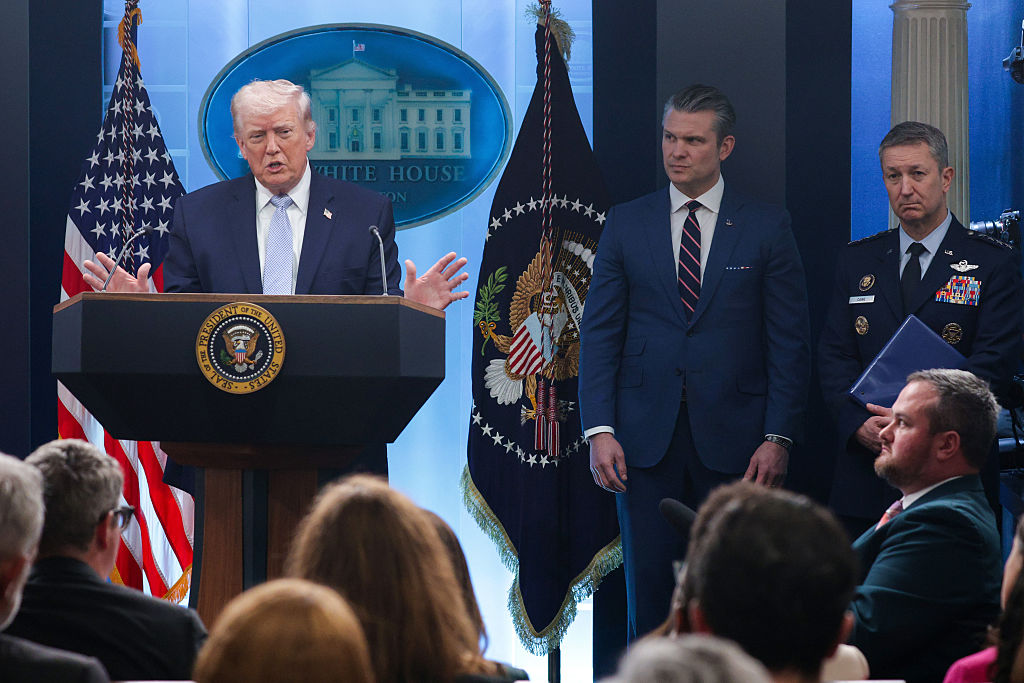
Trump stepped in after Renée Good and Alex Pretti were shot dead by federal agents and Noem combatively branded them both “domestic terrorists.” White House border czar Tom Homan was dispatched to Minnesota to take over. Americans were already unhappy with the new confrontational ICE tactics ordered by Noem. A poll found that 47 percent believed ICE was making the country less safe, compared to 37 percent who said ICE was making it safer. And 46 to 43 percent said they would support abolishing ICE altogether. Noem was becoming a midterms risk.
That Noem survived so long was down to the fact that she had achieved what other administrations had considered to be the impossible: the southern border is effectively closed, migrant releases in the US have been at zero for nine consecutive months and drug seizures are down dramatically. Three million illegal immigrants have been deported, ICE arrests have doubled and the number of illegal immigrants in detention is at an all-time high.
Trump spoke proudly of her achievements at his State of the Union address: “We now have the strongest and most secure border in American history, by far.” But behind the scenes his fury with Noem was building. Allegations of wasteful spending and corruption go well beyond just one ad contract. Noem and Lewandowski have also been accused of using a luxury 737 MAX jet, with a private cabin in back, for their own travel, while claiming it was being used for deportations.
As he pushed her out of DHS, Trump did hand Noem a consolation prize – in all likelihood to spare his own embarrassment at caving to the negative headlines. He made her the Special Envoy for The Shield of Americas, a new coalition of countries in Latin America that will work together to help secure the Western Hemisphere, according to the White House. Marco Rubio is her boss now. Trump hands him all his thorniest problems.
Trump is in no way backing down. He is replacing a firebrand with a firebrand. Noem’s successor, Mullin, a married father of six, is a rancher, businessman and Cherokee Nation citizen. He is also a former mixed martial arts fighter who is known by colleagues to be pugilistic.
Congressional Democrats might find they get even shorter shrift from Mullin than Noem. The Democrats are currently trying to exploit what happened in Minnesota by blocking a DHS funding bill until changes are made to immigration enforcement operations. Mullin, who it appears will be confirmed on a party-line vote, is close to Trump and will continue pursuing the same tough-nosed immigration policies – just without the circus that Noem brought to town.
It is noteworthy that Trump 2.0 has been remarkably loyal to his team. It took him 409 days to find his trigger finger. At the same point in his first term, he had already fired or forced out 21 people from his cabinet and the White House.
We shouldn’t expect this to be the start of a bloodletting. Trump believes he has assembled a team of winners; Noem no longer had a place in that company because, by almost every metric, she had become a loser. Noem might even understand. She wrote that Cricket “was dangerous to anyone she came in contact with” and putting a bullet in her head “had to be done.” Trump clearly felt the same.
Is it wise for Spain to goad Donald Trump?
Spain’s refusal to allow the United States to use its military bases at Morón de la Frontera (Seville) and Rota (Cádiz) for its war on Iran, arguing that the US-Israeli attacks are ‘unilateral military actions outside the United Nations charter’ has brought the simmering conflict between Pedro Sanchez, Spain’s socialist Prime Minister and President Trump to a head.
Sanchez’s carefully calculated strategy has been to position himself as one of the US president’s leading opponents on the world stage
On Wednesday Sanchez followed up by delivering a stunning rebuke to Trump. Speaking for ten minutes on national television, he said that his government’s position could be summed up in four words: ‘No a la guerra’ (No to war). He described the attacks on Iran as a flagrant violation of international law that threaten to plunge the entire Middle East into terror, hinting that the real aim of the war is to line the pockets of a plutocratic oligarchy. He went on to demand – he was at pains to emphasise that he was demanding – that hostilities cease immediately ‘before it is too late’. It was an eloquent, impassioned plea that seemed to come from the heart: pacifism has deep roots in Spain.
Meanwhile a furious President Trump has lost no time in announcing that his administration is cutting off all dealings with Spain which he has described as a ‘horrible’ and ‘unfriendly’ ally. ‘We are going to cut all trade with Spain,’ he clarified: ‘Spain has absolutely nothing that we need other than great people but they don’t have great leadership.’
This is not the first time that Trump has described Spain’s left-wing administration as ‘terrible’. Prime Minister Sanchez went out of his way to infuriate President Trump at last June’s Nato summit when he was the only one of the 32 leaders to refuse to increase defence spending to 5 per cent, arguing that actually 2.1 per cent would be quite sufficient. The two leaders are in opposite corners on a whole range of issues including Gaza (Sanchez misses no opportunity to refer to Israel’s ‘genocide’), trade with China (‘You’ll be cutting your own throat,’ US Treasury Secretary Scott Bessent warned when Sanchez became the first world leader to visit Beijing after the tariff war broke out) and immigration as well as diversity, equity and inclusion regulations.
Sanchez for his part relishes taunting Trump, promising, for example, that rather than ‘Drill, baby, drill’ it’s going to be ‘Green, baby, green’. He has also claimed that the European Union is going to ‘Make social media great again’; when he announced plans to ban under-16-year-olds from social media, Elon Musk called him ‘a tyrant and traitor to the people of Spain’.
Indeed, Sanchez’s carefully calculated strategy, ever since Trump’s re-election, has been to position himself as one of the US president’s leading opponents on the world stage. He likes to frame Trump’s presidency as part of a dangerous global rise in far-right populism that it is his duty to confront. Presenting themselves as heirs to the Republicans who fought against General Franco during the Spanish Civil War, Spain’s socialists, led by Sanchez, suggest that they are uniquely well-placed to understand and resist what they describe as a ‘fascist threat’.
This narrative serves as a useful justification for Sánchez as he clings to power. Against all the odds he has now been prime minister for nearly eight years. With his fragile minority coalition government beset by serious corruption scandals, there is enormous pressure on him to call a snap election. But Sanchez has sworn to see out his term (a general election is not due until August 2027). He suggests that it is his moral duty to remain in office as long as possible since an early election would, opinion polls indicate, lead to a right-wing government that included Vox – a party with close ties to Trump.
Meanwhile, standing up to Trump plays well with the Spanish electorate. A YouGov poll last year showed that 81 per cent of Spaniards regard Trump unfavourably and, in this profoundly pacifist country, that figure has surely risen over the last few days. In any case so far Trump’s bark has been worse than his bite. After Sanchez refused to increase Spain’s defence spending, Trump threatened to make Spain pay ‘twice as much’ in tariffs but he has not yet followed through on that threat. And on Tuesday José Manuel Albares, Spain’s minister for foreign affairs, announced confidently that the Spanish government doesn’t believe that there will be any reprisals for preventing the US using its bases in Spain. The Spanish government thinks that the deeply interconnected structure of European supply networks will make it difficult for the US to single out Spanish goods without hurting other EU countries.
But if Washington is bent on punishing Spain it has of course a well-stocked toolkit at its disposal. Spain’s Achilles’ heel could, for example, be energy: in January the US supplied 44 per cent of Spain’s liquefied natural gas. Despite his repeated promises Sanchez might have to go to the polls early if soaring energy prices force his hand. And it has been suggested that the €33.7 billion investment in Spain that Amazon recently announced could also be in danger.
On Thursday, Trump’s press secretary Karoline Leavitt claimed that Spain, having had time to reflect on the President’s words, had come to its senses and decided that it would, after all, cooperate with the US military. The Spanish government, however, swiftly and categorically denied that that was the case, doubling down on its total opposition to this war.
Sanchez has clung to power in the hope that something will turn up to prevent what otherwise looks like certain defeat in the coming general election. If this war spirals out of control, as he confidently predicted that it will during his television address – he referenced the Second Gulf War and its aftermath – then, he also predicted, the world will see that he was right all along.
On the other hand, this time Trump may well follow through on his threats to punish Spain – after all, as Bessent has said, Spain is putting ‘American lives at risk’. In that case, it may well turn out that Sanchez has just made a very big mistake.
Two bets for Sandown before Cheltenham next week
Mondo Man and Wreckless Eric head the market for tomorrow’s big race at Sandown, the Betfair Imperial Cup Handicap Hurdle (2.27 p.m.), and a good case can be made for each of them landing the spoils.
Mondo Man, trained by the father and son Moore team, is well handicapped over hurdles based on his flat form and, as a five-year-old gelding, his best days are surely ahead of him. However, odds of around 3-1 for a 22-runner handicap make zero appeal.
Wreckless Eric, trained by the father and son O’Neill team, is well handicapped based on his run in this race a year ago when he was beaten only half a length by Go Dante, who will also be in the field tomorrow. Wreckless Eric re-opposes on 8 lbs better terms with Go Dante but that’s largely because he has run so poorly in three starts this season. That makes odds of no bigger than 13-2 on Wreckless Eric look skinny too.
I was tempted to put up Ooh Betty each way at 22-1 after her win at Ascot but she ran in this race last year off the same rating (132) as she will tomorrow and made no show, eventually finishing eleventh. On balance, I am happy to watch this race with no money down.
I prefer to put my hard earned on two horses at big prices in the European Breeders’ Fund Betfair “National Hunt” Novices’ Handicap Hurdle Final (Sandown, 1.50 p.m.). The first is the Jamie Snowden-trained CINQUENTA, who has been aimed at this race since hacking up in the qualifier at Market Rasen early last month.
Connections say that Cinquenta’s future lies as a chaser next season but hopefully this six-year-old gelding can land this £45,000 pot on the way. Back him 1 point each way at 16-1 with Paddy Power, paying five places.
My other fancy at even bigger odds is GET ON GEORGE, who has to be forgiven a poor runwhen pulled up at Doncaster last time out. However, that came at a time when the stable was a little out of sorts having started the season so well. Now Joel Parkinson and Sue Smith’s yard is back among the winners so back Get On George 1 point each way at 33-1 with BetVictor or Coral, both paying five places.
As usual with long-range ante-post betting, I have a mixed portfolio of good and bad bets looking forward to the Cheltenham Festival next week. My biggest disappointment is that my huge fancy Laurens Bay has picked up an injury and will miss the meeting and, almost certainly, the rest of the season.
However, I will put up one more bet now that Paul Nicholls’ TUTTI QUANTI has been supplemented for the Unibet Champion Hurdle on Tuesday (4 p.m.). I would fancy him more strongly on heavy ground, which he is not going to get, but he is still a real improver judged on his easy victory under top weight in the William Hill Hurdle at Newbury.
I am very happy with my first bet in this race – the mare Golden Ace each way at 16-1 – but I will go into the Champion Hurdle double-handed. Back Tutti Quanti 1 point each way at 20-1 with bet365.
That price comes without the Non Runner No Bet (NRNB) comfort blanket but surely all this six-year-old gelding needs to do is stay sound until Tuesday to run now that he has been supplemented. If the rain stays away, the course will almost certainly water to ensure “good to soft” going for the opening day.
I will be tipping horses daily at Cheltenham next week with my blog due to go up shortly after 9am on all four mornings of the Festival, starting on Tuesday. Good luck to one and all for the battles that lie ahead with the old enemy, the bookmakers.
Pending:
1 point each way Cinquenta at 16-1 for the EBF Betfair “National Hunt” Novices’ Handicap Hurdle Final, paying 1/5th odds, 5 places.
1 point each way Get On George at 33-1 for the EBF Betfair “National Hunt” Novices’ Handicap Hurdle Final, paying 1/5th odds, 5 places.
1 point each way Sober Glory for the Supreme Novices’ Hurdle at 12-1 NRNB, paying 1/5th odds, 3 places.
1 point each way Romeo Coolio at 16-1 for the Arkle Chase, paying 1/5th odds, 3 places.
1 point each way Mambonumberfive at 20-1 for the Arkle Chase, paying 1/5th odds, 3 places.
1 point each way Konfusion at 20-1 for the Ultima Chase, paying ¼ odds, 4 places.
1 point each way Golden Ace at 16-1 for the Champion Hurdle, paying 1/5th odds, 3 places.
1 point each way Tuttii Quanti at 20-1 NRNB for the Champion Hurdle, paying 1/5th odds, 3 places.
1 point each way Laurens Bay at 25-1 for the NH Novices’ Chase, paying 1/5th odds, 3 places.
1 point each way Derryhassen Paddy at 25-1 for the Brown Advisory Chase, paying 1/5th odds, 3 places.
1 point each way La Conquiere at 16-1 for the Mares’ Novices’ Hurdle, paying 1/5th odds, 3 places.
1 point each way Helnwein at 33-1 NRNB for the County Hurdle, paying ¼ odds, 4 places.
1 point each way Haiti Couleurs at 14-1 for the Cheltenham Gold Cup, paying 1/5th odds, 3 places.
1 point each way Resplendent Grey at 50-1 for the Grand National, paying ¼ odds, 4 places.
Last weekend – 1.8 points.
1 point each way New Order for the Grimthorpe Handicap Chase at 8-1, paying 1/5th odds, 4 places. 3rd (Rule 4. 25p in the £ deduction). +0.2 points.
1 point each way Spectacularsunrise for the Morebattle Handicap Hurdle at 11-1, paying 1/5th odds, 5 places. Unplaced. – 2 points.
2025-26 jumps season: running total – 7.785 points
2025 flat season: + 84.12 points on all tips.
2024-5 jumps season: – 47.61 points on all tips.
2024 flat season: + 41.4 points on all tips.
2023-4 jumps season: + 42.01 points on all tips.
2023 flat season: – 48.22 points on all tips.
2022-3 jumps season: + 54.3 points on all tips.
Total for six full seasons of tipping: + 126 points
Britain needs to defend its Gulf allies
On Wednesday, the Prime Minister announced that the UK will send four additional Typhoon fighters to Qatar, an acknowledgement that Britain has not done enough since the US and Israeli strikes on Iran to support its partners in the region. Indeed, our Gulf allies, as Tim Shipman reported this week, are said to be ‘furious’ about Britain’s hesitant response, with ‘the Emiratis, Kuwaitis, and even the Canadians… all asking, “What the fuck are you doing? Whose side are you on?”’
As Iranian missiles hit the Palm Dubai, we even saw the disgusting moral spectacle of politicians on the left (I’m looking at you Ed Davey) gloating about expats who had the temerity to leave the UK tax regime. The message from both the government and many in the commentariat was clear: this is Trump’s war, and not our problem.
This is very much our war, and we have thrown away all our leverage
What these politicians forget is that the fate of Britain is intrinsically linked to the Gulf. This is very much our war, and we have thrown away all our leverage.
The Kingdoms of the Gulf were brought into the world by Britain. Yet our relationship with them is not just historic – London is the playground of the Gulf elite, while some 300,000 British nationals live in the region. It is Brits – not Americans nor continental Europeans – that form the core of the western expat community in the UAE.
Our economies are also deeply intertwined. British consultants fill the board rooms of Riyadh, Doha and Duba, while tens of billions flow into everything from real estate to the Premier League. And London is still the prime actor in insuring the tankers now stacking up around the straits of Hormuz. Even without the short-term spike to energy prices, the economic impact of a collapse of the Gulf economy would be felt in the pockets of every British citizen.
But our foreign policy – both now and in the past – has been to turn away. Last year’s Strategic Defence Review barely mentioned the Middle East. It was driven by the British academic Fiona Hill, a defence expert who has focused her career on Russia. Dr Hill is a talented academic, rising from a working-class background in the north to presidential advisor in the US, a trajectory worthy of a British Henry Kissinger. It is unfair to criticise her for her focus on Russia, much as it is unfair to criticise a hammer for viewing every problem as a nail. But her leadership should have been balanced by experts on the Middle East, Africa and East Asia. As a result, we now have a strategic defence policy which could just as easily have been designed for Poland, Estonia or Germany. Britain’s wider priorities have been ignored.
The reality in the Gulf reflects this. Britain had no warship in the region for the first time in half a century. The Type 45 destroyer with air defence capabilities which we have committed to send still sits in Portsmouth with visible scaffolding on the deck. The Prime Minister, a man terrified of international law, did not allow the US to use our air bases on Diego Garcia and Cyprus for strikes on Iran, alienating the Americans. Keir Starmer is a master at conference calls – he presses the speak button with all the portentousness of a man launching the nuclear deterrent. But his dithering has meant we are no longer at the top table as the US and Israel pursue the most consequential war in a generation. Meanwhile, our soft power in the Gulf, which is enormous, has been destroyed in a matter of days.
It is clear that Britain has just as much to lose from the war in the Gulf as it does in in Ukraine. At this moment of global peril, it is time to turn and change our strategy. Russia is a clear and present danger to our islands and Ukraine must be supported, but we have mispriced our strategy. While Britain’s intervention, especially in the early stages of the conflict, was vital in preventing the fall of Ukraine, it is unclear if it has really given us the political leverage that we hoped for in Europe. Britain has done the right thing in Ukraine, but both failed to gain a top seat at the European military table while neglecting our historic global relationships.
It is time for Britain to revitalise its commitment to the Gulf in the months and years ahead. We should not abandon our European allies, but recognise that our history and economy mean we have interests beyond the continent.
By committing to once again take on a share of the burden of defending the Gulf we can, perhaps, regain some relevance and influence in this region before it is too late. If we do not reorientate, to paraphrase Tennyson’s ‘The Charge of the Light Brigade’ – someone has blundered.
Trump isn’t the greatest threat to the special relationship
Britain’s refusal to fully back the United States over strikes on Iran has triggered an unusually public transatlantic row. It has also revived an old question about the future of the so-called ‘special relationship’.
When Donald Trump returned to the White House last year, many in Westminster doubted Keir Starmer could build a workable relationship with him. The two men could hardly be more different in temperament or politics, and predictions of an early rupture were widespread.
For a time, however, Starmer appeared to defy those expectations. Britain weathered Trump’s latest tariff wars better than most countries, and the Prime Minister seemed to have found a cautious way of managing Washington’s unpredictability. But the dispute over Iran suggests that fragile equilibrium may now be breaking down.
At the diplomatic level, the special relationship is spoken of reverently. Yet beneath the rhetoric there has long been unease in Britain about the country’s closeness to Washington.
In Donald Trump’s world, legitimacy is something Washington believes it can supply for itself
Critics have long worried that Britain behaves less like an equal ally than a dependable auxiliary. The sentiment was captured in the 1986 song 51st State by New Model Army, mocking the idea that Britain had become an appendage to the United States. The anxiety resurfaced during the Iraq war, when Tony Blair was widely caricatured as George W. Bush’s ‘poodle’. Two decades later, the argument persists. What has changed is the context: the dispute over Iran suggests Britain may no longer be willing – or able – to follow Washington so readily.
Yet the more interesting question may be the opposite one. If Britain is no longer automatically lining up behind the United States, does that mean the special relationship is weakening? Or does it reflect something deeper about how the relationship itself is evolving?
For most of the post-war era, the partnership between London and Washington rested on a simple bargain. The United States provided overwhelming military power and global leadership. Britain, in return, offered diplomatic alignment, intelligence cooperation and – crucially – political legitimacy. When Britain joined American interventions, it signalled that Washington was acting as part of a coalition rather than alone. During the Cold War and the decades that followed, this symbolism mattered.
But that model assumed a particular kind of American leadership, one that valued alliances not only for their capabilities but also for the political cover they provided. The return of Donald Trump suggests that assumption may no longer hold.
Trump has never been sentimental about alliances. His approach to international politics is far more transactional. Instead of asking whether allies lend diplomatic support, the question becomes what they actually contribute: do they spend enough on defence, share the burdens of power and bring capabilities the United States finds useful? In that world, historical ties matter less than tangible strategic value – and Britain must demonstrate that it remains a partner worth having.
This is where much of the debate in Britain misses the point. The central question is not whether Britain chooses to support the United States politically, but whether it still possesses the national power required to matter in the partnership.
For decades, Britain could rely on a combination of military capability, diplomatic reach and economic weight that made it a natural partner for the United States. Today that position is less secure. Economic growth has been weak, productivity stagnant and investment lagging behind competitors, while Britain’s armed forces have steadily shrunk and the military has fallen to levels not seen for generations.
The crisis in the Middle East offered a telling illustration. After a drone strike hit the RAF base at Akrotiri in Cyprus this week, Britain announced it would send the destroyer HMS Dragon to reinforce air defences in the eastern Mediterranean. Yet the ship was not ready to sail immediately, and critics argued it should have been deployed weeks earlier as tensions escalated. The delay prompted comparisons with countries such as France, which had already moved faster to reinforce the region.
This episode reinforced an uncomfortable perception: Britain still talks like a global security actor, but increasingly struggles to act like one. But the deeper issue is not only military weakness. In a transactional alliance system, influence flows from national strength across several domains at once. Military capability matters, but so do economic dynamism, technological leadership and industrial capacity. Countries that command these assets are treated as partners; those that lack them become followers.
Britain still possesses formidable advantages: world-class universities, a powerful financial centre, a strong scientific base and a global diplomatic network. Yet many of these strengths have eroded as productivity stalled, industrial capacity shrank and investment in advanced technologies lagged.
In Washington these things matter: the American administration respects countries that bring real capabilities to the table. A Britain that leads in emerging technologies, maintains credible military power and sustains a dynamic economy is a Britain that America will want as a partner. A Britain that cannot project power or sustain technological leadership will find its influence diminishing, regardless of how often politicians invoke the special relationship.
The irony is that the steps required to sustain the relationship with Washington are largely the same steps Britain should be taking anyway in a more competitive global order. Rebuilding defence capability, investing in technological leadership, and strengthening economic dynamism are the foundations of national power in the 21st century.
The real question, then, is not whether the special relationship survives the latest quarrel between London and Washington. It is whether Britain can adapt to the way the relationship, and the world itself, is changing.
For much of the post-war era, Britain’s value to the United States lay partly in political support and diplomatic legitimacy. But in Donald Trump’s world, legitimacy is something Washington believes it can supply for itself. What matters instead is capability – and here the irony is uncomfortable for London.
Britain is already under criticism for its shrinking armed forces, delayed deployments and chronic underinvestment in defence. Yet the special relationship can only endure if Britain does precisely what the new strategic environment already demands: rebuild military strength, technological capacity and economic resilience. In that sense the future of British–American relations depends less on diplomacy than on whether Britain gets its own house in order.
The uncomfortable truth is that the greatest threat to the special relationship is not Donald Trump. It is the possibility that Britain may cease to be a country America actually needs.
Energy inflation is the last thing Rachel Reeves needs
A few weeks ago I thought a March interest rates cut was ‘near certain’. Inflation was coming down and Bank of England rate-setters’ concerns about wage growth were being replaced by fears that higher rates were contributing to rising unemployment.
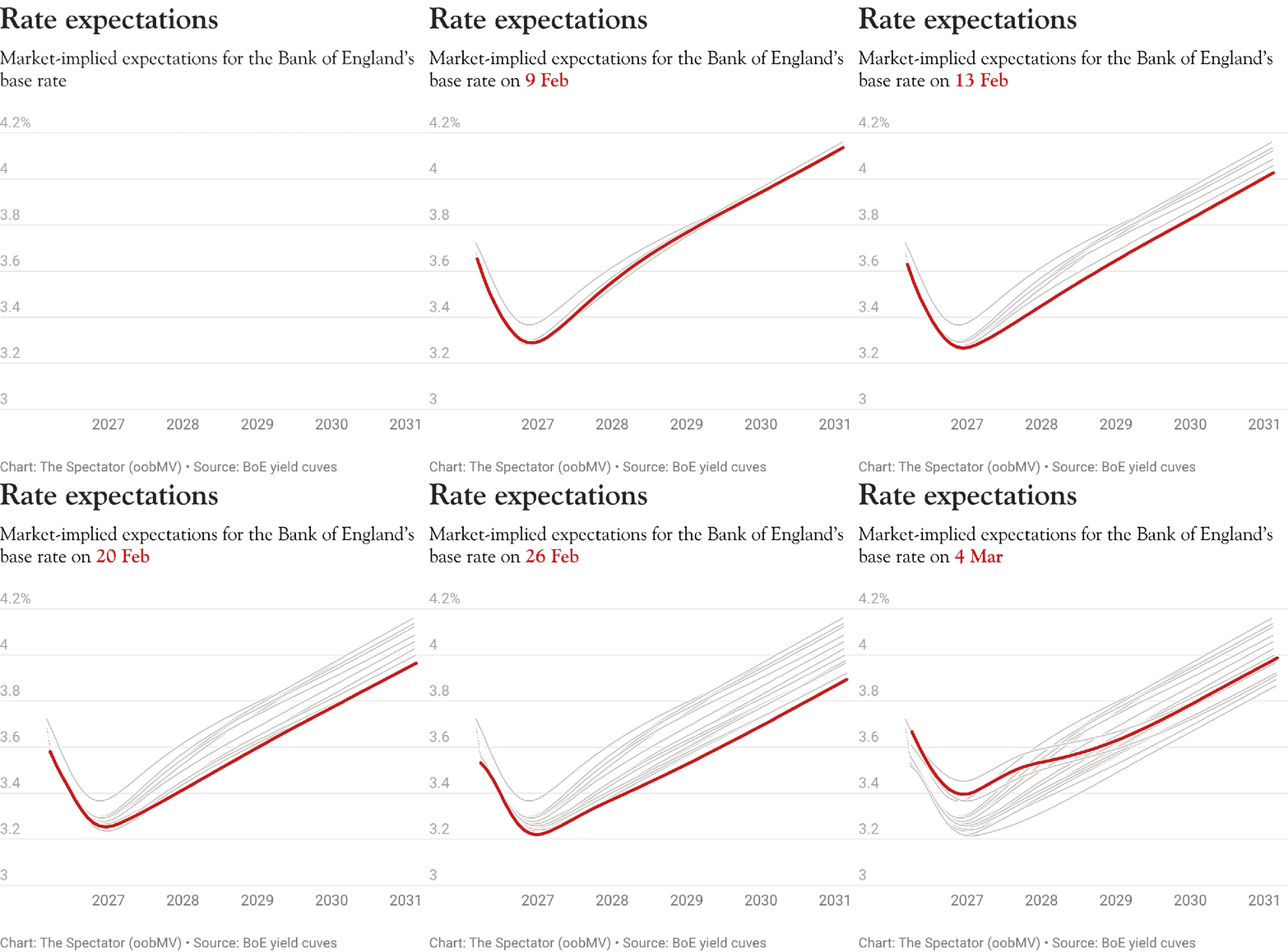
In my defence, markets agreed: they priced the chances of a cut at over 80 per cent. But since then, the world – and markets – have changed. The graph below shows something called the ‘overnight index swaps’ curve. Without getting too deep into the mechanics, it can be understood as a proxy for where traders think interest rates are heading. As you can see, the line had been steadily dropping before Donald Trump’s action in Iran sent it shooting back up – implying that a March rate cut has become much less likely.
The reason is obvious: the inflationary effects of rising energy prices. Consultancy firm Oxford Economics released an updated model of energy markets to clients yesterday and found that oil is likely to remain $15 a barrel higher than previously expected while gas prices have climbed 30 per cent. The result is global inflationary pressure of around 0.3 to 0.4 percentage points by the final quarter of this year.
But, as Oxford Economics’ client note points out, not everywhere will be hit equally. ‘The rise in inflation (and adverse effects on growth) will be greater in the Eurozone and UK,’ the economists conclude. That’s because of how exposed we are to wholesale gas prices.
In fact, Britain comes out pretty terribly in the new model: ‘In the UK, the effect of our updated energy price assumptions on CPI inflation is relatively high and (compared with our previous forecast) we will be lifting our CPI inflation forecast for Q4 this year by about 0.5 percentage points.’ In other words: a new cost of living crunch could be on the way.
It is far less likely the MPC cut rates when it next meets
Because of how the energy price cap is calculated, households won’t actually experience rising energy bills until July. However, the effect on inflation expectations could be immediate. That is something that explicitly worries members of the Bank’s Monetary Policy Committee (MPC), who believe that higher household expectations of inflation lead to stronger wage demands. It also increases the chances that the government feels it has no choice but to offer expensive price-capping support – as Liz Truss once did to the tune of hundreds of billions.
The net result of this chaos is that it is now far less likely the MPC will opt for a rate cut when it next meets on 19 March. Indeed, if gas prices don’t come down significantly over the next few months, another cut this year could be off the table entirely.
That is going to create a whole world of pain for Rachel Reeves. Having seemingly given up on ‘growth, growth, growth’, the government’s focus had shifted to tackling the cost of living. That looked like a sensible strategy when inflation was expected to fall sharply and the Chancellor could point to rate cut after rate cut. Not so any more.
The Iran war is showing no sign of slowing
Israeli and American military operations against Iranian targets intensified over Thursday, while Iran and its proxy militias across the region sought ways to retaliate across a widening geographic arc.
The day began with reports of expanding hostilities around Iran’s borders. Early in the morning, Iranian positions in eastern parts of the country – including areas around Zahedan near the borders with Pakistan and Afghanistan – were reportedly struck, with air-defence systems activated in response. Opposition sources claimed the targets were military facilities in a region with a strong Sunni Baloch population that has long opposed the Iranian regime.
At roughly the same time, the conflict appeared to spill into the South Caucasus. An Iranian drone struck near the airport in Nakhchivan, an Azerbaijani exclave bordering Iran, according to reports circulating online. Azerbaijan, which maintains close security ties with Israel, was suddenly drawn into the war’s orbit as a direct target of Iranian fire.
Within Israel itself, air-raid alerts sounded across several regions, including the greater Tel Aviv area, after the detection of launches toward the country. Israeli aircraft simultaneously carried out strikes in southern Lebanon, signalling the continued expansion of the campaign against Iranian-backed forces there.
The Lebanese front became a focal point of the day’s developments. The Israeli military issued unprecedented evacuation orders for several large neighbourhoods in the Dahieh district of Beirut, widely regarded as Hezbollah’s stronghold, instructing residents to move immediately north or east. This was the largest civilian evacuation warning ever issued by the Israeli army. More than 420,000 Lebanese have evacuated from southern Lebanon so far, while tens of thousands more civilians have evacuated the Dahiyeh area in less than one day.
The warnings appeared to foreshadow a major escalation. Lebanese officials said the death toll from Israeli strikes since Monday had reached 102, with more than 600 wounded. Meanwhile, an Israeli officer and a soldier from the Givati Brigade were reported wounded during fighting in southern Lebanon later in the day.
The Lebanese government itself took a striking political step amid the crisis. Officials announced that any presence of Iran’s Islamic Revolutionary Guard Corps on Lebanese territory would be considered illegal, with members subject to arrest if discovered. The Lebanese president also reportedly asked France to intervene diplomatically in an attempt to prevent a major Israeli attack on Dahieh.
Reports in Iraq said the Iraqi army had dispatched counter-terrorism units to the Najaf desert following claims that American forces had landed in the area. According to unverified reports circulating locally, clashes between US and Iraqi forces had taken place there a day earlier, leaving one security officer dead and two others wounded. These accounts were not independently confirmed, but they underscored the volatility spreading across the region.
Another unverified report from Iraqi channels claimed that a US fighter jet had crashed in Basra province, with local authorities searching for the pilot after the aircraft went down. Iraqi police later acknowledged that personnel were searching for an American pilot who had parachuted into the region.
Meanwhile, the air campaign against Iran itself continued to gather momentum. American and Israeli aircraft were reported striking missile launchers, military airfields and other strategic facilities across the country. Footage released by US Central Command showed B-52 bombers taking off for operations against Iranian targets.
Reports from Tehran described repeated explosions and air strikes in the capital and surrounding areas. Israeli officials said the campaign had expanded beyond missile sites to include Iranian fighter jets on the ground. Although Iran spent decades building underground missile infrastructure, US and Israeli aircraft have still been able to strike launchers once they emerge from shelters after Iranian air-defence systems have been disabled.
The fighting has spread across multiple fronts
On the diplomatic front, Iran informed Washington that it was prepared to begin discussions on ending the conflict. At the same time, China announced it was sending a special envoy to the region and called for an immediate halt to military operations in order to safeguard global shipping routes and oil supplies.
Yet the broader international picture suggested the crisis could still widen further. Australia announced it was deploying military units to the Middle East, while heavy US transport aircraft continued arriving in the region carrying additional equipment and personnel. Kremlin spokesman Dmitry Peskov said of the conflict: ‘This is not our war,’ warning that fighting in the Middle East would destabilise the entire region. Western leaders urged Iran to return to negotiations over its nuclear programme as the only viable path to a lasting settlement.
Facing continued criticism from the US and at home for the UK’s slow and relatively limited military response, British Prime Minister Keir Starmer continued to make vague, non-specific statements, insisting the best path forward would be ‘to reach an agreement through negotiations with Iran, in which it will give up its nuclear ambitions’.
By nightfall the picture remained one of a an evolving war showing no signs of ending soon. Strikes were reported at Iranian Revolutionary Guard facilities in Bushehr, while explosions were heard across parts of Tehran. Military transport aircraft and bombers continued moving into position across the region, suggesting preparations for sustained operations.
Within less than a week, the fighting has spread across multiple fronts, from Lebanon and Israel to Iran, Iraq and the Caucasus, drawing in new actors and pushing the Middle East to recalibrate alliances in what has become one of its most volatile moments in years.
America’s last war in the Middle East
Win or lose, Donald Trump has begun the last war the United States is ever likely to fight in the Middle East. That might sound wildly optimistic, but what it really means is that war with Iran has been decades in the making. If the mission succeeds, it will mark the end of an era. And if it fails, this war will have exhausted what’s left of America’s willingness to remake the region by force.
It’s not just that Iran puts the case for regime change to the ultimate test. America’s relationship with Israel is also on trial. That relationship has been strained lately by the war in Gaza – which for the first time began to shift American public opinion in favor of Palestine over Israel – and by the rise of radically anti-Zionist and outright anti-Semitic influences on the political left and right alike. Demographic changes are also working to loosen the ties between America and Israel, as white Christian baby boomers are succeeded by the least white, least Christian generation in American history, a cohort that does not feel the affinities for Israel that older Americans do.
President Trump is at war with Iran because he feels he has to be, not because he wants to be
This war is an ideological watershed as well. Although in one sense it’s the fulfillment of neoconservatives’ dreams, it was only possible because Donald Trump defeated the neocons in the Republican party and established a new line of credit, so to speak, for foreign-policy interventionism. Trump was never a straightforward peacenik, but his criticisms of the forever wars waged by his predecessors gave non-interventionists cause to throw in with him. Foreign policy restraint may have been less basic to MAGA’s ideology than tariffs and the restriction of immigration, but the three elements seemed to fit together as rejection of global liberalism, the reigning ideological orthodoxy since the “end of history” in the 1990s.
But in Trump’s second term he’s gone beyond the negation of the old liberal globalism to build a new activist ideology of his own, marked by a willingness to use military force to compel adversaries to make deals. The idealistic component of liberal interventionism – including the liberal interventionism of past Republican administrations – is missing. Trump doesn’t seem concerned to promote democracy; his aim is simply to bring about adversaries’ submission to America.
And it’s clear that the western hemisphere is the Trump administration’s primary concern and the focus of this new foreign-policy ideology. The administration’s successful capture of Nicolás Maduro and forcible reorientation of the relationship with Venezuela is the archetype of the kind of intervention Trump would like to undertake – and he seems, at various times, to have hoped that the conflict with Iran could have followed the same pattern. Iran might have completely submitted after the war with Israel and America last summer, or the killing of Ayatollah Khamenei at the start of this war might have done what the removal of Maduro did in Venezuela. But if this war does, at last, achieve satisfactory results for Trump, his next target will be closer to home: Cuba.
President Trump is at war with Iran because he feels he has to be, not because he wants to be. He would rather acquire Greenland or force Cuba to do business. This is why America did not initially join in Israel’s war with Iran last June. Trump is strongly pro-Israel and has been throughout his presidencies, but he would prefer that Israel, and other regional allies, be responsible for securing the submission of the troublemakers in their own neighborhood. And Israel has in fact been very successful in destroying its enemies since the massacre perpetrated by Hamas on October 7 three years ago. Hamas and Hezbollah have both been crippled. But to prevent them from regenerating, Israel had to take on their state sponsor – Iran.
The Israelis have a genuine fear of Tehran’s nuclear program, but quite apart from the danger of a nuclear weapon being used against Israel, a nuclear-armed Iran would have a strong enough deterrence to prevent Israel from retaliating against Tehran’s sponsorship of terrorism. A nuclear Iran would be free to engage in much more sponsorship of terrorism, a prospect that’s stomach-churning not only for Israel but for every state in the region. So Israel was prepared to go to war last year to prevent Iran from developing nuclear weapons capacity.
What Israel discovered, however, was that Iran’s conventional missiles are a powerful deterrent in themselves. Israel alone could not speedily bring Tehran to heel. So the Trump administration stepped in to finish the task, bombing Iran’s nuclear facilities into inoperability. With that victory quickly achieved, the Trump administration turned its attention back to the western hemisphere.
Yet the Israelis saw this, with good reason, as only a delay, not a resolution. If anything, the 12-Day War had proved just how formidable Iran’s missiles could be, and obviously Tehran would seek to strengthen that deterrence so that the next time, Israel would have an even tougher job trying to attack Iran’s nuclear program. The missiles enable the nuclear research, and nuclear weapons will enable more terrorism. Israel would soon have to go to war again, not only to stop Iran from rebuilding its nuclear facilities, but to stop it from restocking and upgrading its missiles and drones as well.
If Trump had not gone to war this year, another Republican would have done so later
The same reasoning behind the Trump administration’s involvement in last year’s Israel-Iran war drove the administration into this year’s conflict: Israel by itself might or might not be able to strip Iran of its offensive capabilities, and if Israel could prevail at all, it would be a protracted campaign.
Ironically or not, Trump’s exit strategy for the endless Middle East conflicts is to empower Israel (and Arab states that have learned to get along with Israel) to deal with the region’s chief troublemaker – but that turns out to be a project that demands America’s intervention. Because Trump had pledged that Iran would never have a nuclear weapon, and because continuing development of Iran’s missile program would eventually reach a point where even America would be within range, the President is now waging the war that Bush Republicans longed for, but didn’t dare launch.
But this doesn’t mean neoconservatism is reborn. The state of mind – and the state of the world – that made possible the Persian Gulf War in 1991 and the invasion of Iraq in 2003, has passed, never to return. In 1991, the end of the Cold War more than balanced that lingering “Vietnam Syndrome,” which made Americans leery of foreign interventions. America seemed to be the world’s last superpower, as the Soviet Union’s empire crumbled and China’s rise was yet remote. History with a capital H seemed to be on America’s side, and the swift victory over Saddam Hussein in Kuwait only added to that impression.
The Gulf War was the beginning of a long war – not a Cold War, but a series of hot wars to police and promote the “liberal international order.” Neoconservatives and other hawks saw no limit to what they might achieve in using force to topple dictatorships and plant democracy in new lands, including the Middle East. The only problem was the 1991 war hadn’t gone far enough: it left Hussein in power in Baghdad. That was unfinished business that would have to be seen to. And in 2003, with the George W. Bush administration still riding high in the polls after the 9/11 attacks two years earlier, the hawks in the Republican party got the chance to tie up the loose ends of 1991 by bringing regime change to Iraq.
Yet the propaganda of the time emphasized that Iraq was only one member of what Bush, using the words of his speechwriter David Frum, styled the “Axis of Evil.” Iran was also a member, and the neoconservative case for war with Iraq applied equally to war with Iran. It just wasn’t practical at the time. The war would even have the same basic rationale: Hussein’s supposed quest for weapons of mass destruction – including, it was suggested, nuclear weapons – was the proximate rationale for the regime-change war in Iraq. Afterward, the prospect of Iran’s developing nuclear weapons became an argument for going to war there, too. Obama tried to blunt that argument with the “Iran Deal,” but in fact the Joint Comprehensive Plan of Action, or JCPOA, conceded the argument: Iranian nuclear aspirations were an international concern that the United States would have to take the lead in addressing.
The JCPOA itself was, therefore, only delaying the inevitable. Sooner or later either Iran would violate the agreement or an administration that wanted to go to war would make a case that Iran had violated the agreement, much as the UN inspections regime that was meant to monitor Saddam Hussein’s WMD development became useful in making the case for war in 2003. If Trump had not gone to war this year, another Republican would have done so later – not J.D. Vance, perhaps, if he won in 2028, but if he lost, the party would have been ready to return to the hawks.
Trump has preempted that by becoming a hawk himself. If he succeeds in Iran, however, he won’t be restoring the global liberal dream long entertained by the neoconservatives and, in a different way, by the Democrats. His vision of America First isn’t noninterventionism, it’s a version of hegemony that’s more regional than global and more pragmatically mercantilistic (for lack of a better word) than ideologically liberal or democratic. His program means more interventions in the Americas, and doesn’t rule out military actions elsewhere. But its horizons are narrower than those of the neocons and liberal internationalists.
No other Middle East wars are on the Trumpian horizon
No other Middle East wars are on the Trumpian horizon. And no regime other than Iran’s inflames the spirits of those Americans who are old enough to remember the humiliation inflicted on the nation by the hostage crisis of 1979. Americans of that generation are aging out of the population year by year, in any event. The passions that involve us in foreign conflicts in the future will be those of a younger cohort.
And if the Iran war goes badly – as badly as the Iraq War did for Bush – Trump’s new style of interventionism will be repudiated by voters as thoroughly as Trump’s own election repudiated the neoconservatives. MAGA itself, as well as Israel’s standing with the American public, will be collateral damage. And what comes next will be an even more radical phase in domestic politics. For a republic like ours, war always has a home front.
The real reason Greens are gaining ground
It was only a matter of time before an ultra-progressive, hard-left party with a fondness for voguish identity politics, enthusiasm for multiculturalism and morbid obsession with Israel came to preeminence in this country. This inevitability is the consequence of a demographic time-bomb just waiting to make its effects known.
It’s no surprise that the Greens offer hope to that portion of a generation
As a YouGov survey has revealed this week, the Green Party has now overtaken both Labour and the Conservatives to take second place in the polls, two points behind Reform UK. Their support now stands at 21 per cent, up four points in the week since their historic win in the Gorton and Denton by-election. The polls also show that the Greens are the most popular party among voters under 50, especially those aged between 18 and 24. It was also the most popular among women, backed by 23 per cent of female voters.
That last statistic is telling. It’s well attested that young, middle-class women are the section of society most inclined to hold hyper-liberal opinions, while generations Y and Z are overall more likely to support trans rights, display allyship with immigrants and refugees, and voice solidarity with the people of Palestine and Gaza.
Ten years ago, this was the demographic who were being instructed in ultra-progressive dogma at school, or who were entering academia, where their skewered view of the world and fantastical take on the human condition became further entrenched. It was at university where they learnt about the evils of Western ‘civilisation’ – those contemptuous inverted commas being mandatory – the unconscious racism built into the minds of white people, and the unique European crime of colonisation, with Israel now standing as the epitome of that villainy.
Those school children and students of ten years ago, with their highly moralistic, Manichean politics and otherworldly theories on gender and race, are now the voters of today. They are also our first post-literate generation, a demographic which doesn’t read newspapers, which doesn’t read books willingly, who instead get their politics on their smartphones from emotive TikTok videos devoid of nuance, depth and context. This is the demographic with a reduced attention span that doesn’t even listen to radio bulletins or watch the news from reputed broadcasting organisations.
A generation which has been taught that all knowledge is relative has got what it wanted: news with no pretence at impartiality, propaganda masquerading as reportage from partisan activists and bad faith actors. All of this depthless and dubious content, delivered with breathless hyperbole, reinforces the notion that the world can be clearly divided into good and bad people and forces.
It’s no surprise that the Greens offer hope to that portion of a generation who believe they are on the side of the angels against the forces of evil and hate. This is a party that relies on emoting, slogans and the repetitious focus on its enemies befitting any low-grade demagogic outfit from history, one which appeals to base instincts and the lowest common denominator. By inveighing against ‘apartheid’, ‘Zionism’ and ‘billionaires’ they draw on those inclinations forever found on the hard left: envy, resentment and the thirst for vengeance.
Only since the party has raised its profile under Zack Polanski has it been subject to greater scrutiny. As a consequence, many people, especially those who read newspapers, are now attuned to the nastiness that dwells within. Yet at the same, much of the post-literate generation still thinks, like Polanski and their new MP Hannah Spencer, that this is the outfit which represents niceness and ‘hope not hate’, as they endlessly reminded everyone before last week’s by-election.
Spencer’s victory speech exposed the vacuity of their ‘kind politics’, and indeed the entire babyish belief that the world would be perfect if only everyone would stop being so horrid. There she spoke, with bottom lip trembling, of the ‘hope and a chance to do things differently’, that ‘everybody should get a nice life’, exhorting repeatedly the imperative to be ‘nice’.
That word, along with ‘kind’ and ‘belief’, takes centre stage in the ultra-progressive lexicon because it encapsulates a politics devoid of substance or cerebral engagement. The Greens place their faith instead on ‘vibes’. They are conspicuously light on policy – they scarcely appear to have proper proposals on the environment these days, let alone a recognisably green agenda – and where they have specified what they will do should they get into power, their plans betray either economic illiteracy or a species of student-union, libertarian utopianism, whether it be open borders or legalised drugs and prostitution.
Many people in the mainstream left and right, those mature in age or mind, recoil in horror at policies that would entail economic ruination and social catastrophe. Perhaps their new-found acolytes don’t care. Or perhaps, more likely, they are too ignorant to understand, hoping naively that ‘being nice’ will instead carry the day.
Emmanuel Macron is having a good war
It is not just Donald Trump who believes Keir Starmer has failed to channel Winston Churchill. Now Cyprus have given the Prime Minister’s leadership a tongue-lashing.
Kyriacos Kouros, the country’s high commissioner to the UK, has drawn unfavourable comparisons between the responses of France and Britain to Iran’s drone attack on the RAF base on Cyprus. ‘The French are coming,’ said Kouros. ‘The least we expect is the Britons to also be present since, as I said, we are not only defending Cypriots on the islands.’
According to the Times, Bahrain and the United Arab Emirates are also less than impressed with Britain’s conduct in the Middle East since Israel and the US launched Saturday’s attack on Iran. Their main beef is Britain’s delay in allowing American aircraft to use their joint bases to conduct strikes against Iranian targets. On Thursday, France announced that some of its airbases in the Middle East were temporarily hosting American aircraft ‘as part of our relationship with the United States’. A French military spokesman said: ‘These aircraft contribute to the protection of our partners in the Gulf.’
The dithering of Starmer, forever fretting about ‘international law’, is in marked contrast to the decisiveness of Emmanuel Macron. It’s almost as if the French President – who has a habit of bashing Britain – has spotted an opportunity to humiliate perfidious Albion.
As Trump was busy tearing a strip off Starmer on Tuesday for being ‘unhelpful’, the president praised France for their response to the war in the Middle East. They had been ‘great’, he said.
A few hours later, Macron addressed France in a television broadcast. He tut-tutted about the legality of the US/Israeli strikes and said he ‘cannot approve of them’. But in his next breath the president announced he was despatching the aircraft carrier the Charles de Gaulle and its strike group to the Mediterranean. The group includes fighter jets and air defence systems. Furthermore, said Macron, a frigate was scheduled to arrive off Cyprus later that evening, which it did.
The President vowed to ‘continue this effort as long as it is needed’, because France’s ‘credibility’ is on the line. He added: ‘Cyprus, an EU member state, a country with which we have signed a strategic partnership… requires our support.’
Britain is sending a destroyer to Cyprus, HMS Dragon, but it won’t be ready to sail until next week as it has recently come out of maintenance.
Not long after Macron addressed the nation on Tuesday evening, the first flights organised by his government arrived in Paris from the Middle East. On board were French nationals who had been stranded in the region since the conflict began. There have been many more arrivals since.
Britain had hoped to evacuate the first of its nationals from the Middle East on Wednesday night. Unfortunately the aircraft, charted by Starmer’s government, failed to depart from Oman. A Foreign Office spokesman blamed ‘technical issues’. One of the passengers described the aborted airlift as a ‘shitshow’.
Macron, to use military parlance, ‘is having a good war’. On Monday he visited the Ile Longue naval base in Brittany, which is home to France’s four nuclear submarines. In an address to personnel, Macron announced the expansion of the country’s nuclear arsenal from its existing total of 290 (Britain has an estimated 225 nuclear warheads). ‘To be free, we have to be feared,’ proclaimed the president.
Last year, Trump mocked Macron. He appears to have changed his tune
Macron is frequently accused of having few if any convictions. He has one, which has been a constant since he was elected president in 2017: namely that Europe must stand militarily on its own two feet. Not long after he came to office, Macron gave a speech at the Sorbonne in which he declared: ‘Our aim needs to be ensuring Europe’s autonomous operating capabilities, in complement to Nato.’
Naturally, he wants France – the only nuclear-power in the EU – to be running the show. He has made a good case this week, acting with firmness and alacrity and even impressing Trump.
Last year, Trump mocked Macron for his foreign policy, saying he ‘always gets it wrong’. He appears to have changed his tune this week. Marine Le Pen has also endorsed Macron’s position, describing his television address as ‘both brief and factual,’ adding: ‘He expressed the entirely legitimate defence of French interests, in particular the protection of our compatriots and our military bases.’
Macron is no Charles de Gaulle, but he respects his military and recognises its importance. The same can’t be said of Starmer. International law will always be his obsession.
We don’t need Islamo-fashion
When the ghastly Lynda Snell of The Archers ‘did’ fasting last year at Ramadan to suck up to the new Muslim family in town, I thought this kind of thing had got about as silly as it was possible to be. But reading about what happened last week at London Fashion Week took the gluten-free cake.
Non-Muslims either choosing or being compelled to celebrate Muslim holidays has been going on for some time. Understandably if disagreeably, with its Muslim mayor, London splurges on the celebration of Ramadan, decorating Piccadilly – the heart of the city – with 30,000 (sustainable) lights. In the unlikely setting of Carinthia, Austria, an ‘open iftar’ invites all citizens to break the Ramadan fast and eat together – even if, as non-Muslims, they haven’t fasted, which seems to be missing the point a bit.
In fact, you could say that Ramadan has become fashionable, with quite a few non-Muslim public figures observing it, often getting around the fact that they generally have no time for religion by adding a ‘self-care’ spin, banging on about gratitude, self-discipline or – even worse – ‘solidarity’ with Muslim communities. One doesn’t expect rigorous thinking from TikTok influencers but it’s interesting that they’d never dream of doing the same with the poor beleaguered British Jewish community, who have seen anti-Semitic speech and violence rise to unprecedented levels since the Hamas pogrom took place in Israel three years ago. They could always start with the Jewish festival of Purim, when you have to dress up to make yourself look ridiculous – second nature for many social media show-offs.
Talking of which, it may seem strange that fashion – by the nature of which everything is loved for a few months and then derided as so-last-week – is the latest branch of public life to find Ramadan hip. Panted the Guardian excitably: ‘British-Yemeni designer Kazna Asker deliberately paused her presentation at sunset to share iftar with the models, who were also fasting, as were the interns and many of the staff… Programming this pause into one of the fashion industry’s most tightly scheduled weeks was deliberate.’
As a student, Asker was the first to put hijab-clad models on the catwalk in 2022; she says this was inspired by her upbringing in Sheffield and not seeing ‘modest fashion’ reflected in a ‘cool way.’ Maybe because it’s simply not very ‘cool’ to showcase at one’s leisure – having grown up a free woman in a Western country – a garment which millions of women the world over are literally forced into?
I do remember gushing features about ‘modesty dressing’ a few years back, during which the then-editor of Cosmopolitan, Farrah Storr, enthused about the fashion for covering up. She was especially pleased because she felt that she would no longer be expected to get her ‘bingo-wings’ out when the sun shone. It was around this time that the likes of Emma Watson and Victoria Beckham were seen sporting floor-skimming numbers covering every inch of their bodies; I must say that I cynically saw this, like the clean-eating craze, as a way for stars whose skeletal frames have been savagely dissected on social media to hide from accusations of anorexia.
It’s interesting that they’d never dream of doing the same with the poor beleaguered British Jewish community
So perhaps the idea of Islam and the covering-up it demands of women partnering with fashion – where eating disorders are rife – isn’t so nutty after all. Or maybe Asker is a high-profile example of those clowns who believe that The Religion Of Peace (in which what men and women are allowed to do is far more binary than in any other belief system) and gender fluidity are natural allies. The Guardian could hardly contain its excitement that ‘Asker disrupted traditional gender codes. One female model wore a jambiya – the Yemeni dagger belt historically reserved for men – integrated into a structured power suit.’ I was taken by the photograph of one of her male models, very pretty, hand on hip, wearing a head-wrap with a huge bunch of flowers attached, like he’d just had his first look at Morrissey on Top of the Pops waving a load of gladioli around. Try walking down the street like that in a Muslim-majority country, mate!
This kind of thing having its moment because of a combination of cowardly cultural cringe and the ceaseless desire of the fashion industry to find new ways of making women look ludicrous while paying handsomely for it. There’s also the matter of huge amounts of money which women from the filthy rich Gulf states – forbidden as they are from expressing themselves in any other way – spend on clothes to be taken into consideration.
As with the unspeakably stupid Swedish female MPs – Sweden’s self-declared ‘first feminist government in the world’ – who chose to wear the hijab when they visited Iran some years back, the woman-hating imams of mosques worldwide must be wetting themselves with glee that certain sections of free-born Western women are doing their disgusting work for them by willingly taking on the mantle in a world where the brave women of My Stealthy Freedom risk their lives in order to feel the sun on their faces. Or look at the laughing young mini-skirted women in photographs of Iranian universities with no inkling that the slavery of the compulsory hijab was just around the corner – though hopefully, that will soon be history, too.
There’s a poignant social media meme showing the national dress of women before and after their countries were conquered by Islam; the beauty, colour and diversity of the former, including Yemen, are replaced by uniform shrouds. The likes of the free-born, autonomous Asker (whose ‘mood-board’ as featured in Vogue even showed photographs of women wearing the burka, where even the eyes are covered by a mesh) have more than a hint of the Marie Antoinette playing at milkmaids about them – and are easily as silly as Lynda Snell.
The impoverished aristocrat’s guide to the cost-of-living crisis
According to a YouGov survey earlier this year, the cost of living tops the list of public concerns at 54 per cent before immigration and asylum (49 per cent), health and the NHS (43 per cent) and the economy (33 per cent). According to the Independent, half of Britons have under £25 left at the end of the week and 79 per cent say the cost-of-living crisis has negatively affected their wellbeing. But here – at long last – is where the impoverished aristocrat comes out on top.
Often found lurking in the depths of rural England, the impoverished aristocrat is more than used to weathering bad economic climes. Both they and their ancestors have dealt with a fair few cost-of-living crises in the past. No heating is not a problem for them as they are used to wearing more jumpers than the Michelin man, shutting off rooms and taking refuge by the Aga instead. As long as they can make a mean cup of tea, cup-a-soup and the odd baked potato with lashings of beans and cheese, that will ‘be more than enough’.
An impoverished aristocrat will never be upset if they can’t go on a shopping spree. Shopping, in their opinion, is frightfully common. Never introduce them under any circumstances to Primark, they might have the first anxiety attack of their life. Retail therapy is strictly confined to Waitrose for whiskey and Aldi or Lidl for just about anything else apart from possibly tea bags. Meat should be bought from a butcher too; they’re not taking any chances on feeble pledges on plastic packaging.
An impoverished aristocrat will keep their clothes for a lifetime; garments will be thrown out only if more than half of their surface area has been eaten by moths and even then, it’s up for debate. They might buy a new jumper at Burghley Horse Trials once a decade but that’s pushing it and only if the man who is selling has dropped his price again because it’s 5 p.m., raining and he wants to go home.
An impoverished aristocrat will never mind if they don’t go on holiday. The whole concept of the holiday is fairly plebeian to them – it might even bring them out in hives. They don’t understand why anyone would want to put up with the faff of boarding a plane, let alone sitting in close proximity to someone who might have a tattoo, bad breath and pay for the privilege.
If the impoverished aristocrat feels like a change of scene, they just call a friend and announce they are coming to stay. Much easier and cheaper, plus they can catch the train if they’re going to Scotland. And why would they ever stay in a hotel unless it was a Relais & Châteaux and their billionaire friend was paying? A Relais & Châteaux is the only hotel that will bring you a cup of tea in bed after all. They leave the booking of hotels to others and rarely stay in them unless someone else has organised it.
Often found lurking in rural England, the impoverished aristocrat is more than used to weathering bad economic climes
The impoverished aristocrats don’t have to worry about keeping up balloon payments on their swish car because they don’t – and never have – owned a nice car. Their car is at least 15 years old, and even that’s relatively new by their standards. A Subaru Forester, an old Toyota RAV4 or a boxy gold Volvo circa 1999 will do nicely. Their cars are a health hazard and always have been. They’ve never had a car valet-cleaned and they’re still finding banana skins that Tottie discarded on the school run ten years ago when she was at prep school. In fact, last week, they found a frightfully useful shopping list that reminded them of an excellent upside-down cake recipe. If someone had cleaned the car, that shopping list would never have seen the light of day.
They are quite happy to do without a cleaner – their house will just be dustier than normal. A bit of dust and dirt never hurt anyone, neither will a spot of dog poo, which they will simply hoover up off the carpet in a jiffy. The cleaner also used to hoover up ladybirds which was frightfully annoying as they have an important role in the garden. The roses would go to pot without them.
And what about the expensive gym membership that has to go? Well, this is something that the impoverished aristocrat cannot sympathise with. The concept of paying to battle with some horrible piece of equipment whose sole purpose is to make you sweat is an anathema to them. Sweating like a pig is thoroughly unedifying and what’s wrong with walking around the estate or garden, for goodness’ sake? No, the impoverished aristocrat can take her five dogs on a walk (she won’t have less than five) before running – sorry drawing – herself a bath with a few drops of Penhaligon’s bluebell bath oil essence that her nephew Jolyon bought her before coming to stay last Christmas.
The only thing that will keep them up at night is the thorny issue of school fees. The impoverished aristocrat will sell the family silver, portraits and not eat for a month if necessary. A private education is about the only thing they care about, apart from their dog Badger and whose turn it is to do the flowers at the church on Sunday. If you see a bottle of Comte de Senneval champagne in Lidl, or ‘Leedles’ as they call it, do grab it; they’ve had to give up drinking Bollinger but the count’s dupe is nearly as good and about a third of the price.
Does Trump really have ‘whatever it takes’ to win in Iran?
With Operation Epic Fury in its sixth day, it is hard to tell how long the current United States military campaign against Iran will last. It may not be swift; yesterday, the Senate rejected a resolution to halt further action. Meanwhile, President Trump has been alarmingly indifferent to the question:
Whatever the time is, it’s OK, whatever it takes. Right from the beginning we projected four to five weeks, but we have the capability to go far longer than that. We’ll do it.
Secretary of Defense Pete Hegseth struck a different note with reporters: “This is not Iraq, this is not endless.” Yet he has refused to rule out deploying ground forces to Iran and later said, “We have only just begun to fight.” In fairness, it must be hard to draw up a timetable for success when you are not wholly clear why you started a conflict to begin with.
The challenge is maintaining adequate stockpiles
The opening phase of the conflict has demonstrated the staggering military superiority the United States and Israel enjoy over Iran. It is not just a technological advantage but a logistical one: careful thinking about air bases and ready availability of air-to-air refueling meant that 400 US and Israeli aircraft were able to carry out 1,500 sorties within the first 12 hours of the operation: roughly one air strike every three or four hours by each aircraft.
Iran is unquestionably overmatched. Hegseth, with the characteristic playground-bully aggression which accompanies his fundamental inadequacy, boasted that:
This was never meant to be a fair fight, and it is not a fair fight. We are punching them while they’re down, which is exactly how it should be.
Yet this encapsulates a problem which Western nations have faced before, for example when countering strikes by Houthi militia against shipping in the Red Sea over the past two and a half years. They can deploy exquisitely capable, almost faultless defenses against rockets, missiles and drones, but the countermeasures they have are elaborate, expensive and time-consuming to manufacture.
There are three principal ways of intercepting incoming ordnance. One is to use air-to-air missiles fired by combat aircraft; there are also ship-borne surface-to-air missiles like Raytheon’s RIM-156 and RIM-174.
The third option is to rely on ground-based systems, Lockheed Martin’s Patriot MIM-104F PAC-3 MSE missiles and THAAD (Terminal High Altitude Area Defense) interceptors. Both rely purely on kinetic energy (“body-to-body” contact) to destroy targets, although earlier Patriot versions carry a small high-explosive warhead. Their performance is astonishing. In the first five days of the conflict, the UAE’s Patriot and THAAD batteries intercepted 172 out of 186 Iranian missiles fired and 755 of 812 Shaheed drones.
This sophistication comes at a price. A THAAD battery comes at a price of around $2 billion and each interceptor costs $12.7 million. Meanwhile, a Patriot battery is between $1 billion and $2.5 billion, and every individual missile is in excess of $4 million. By contrast, an Iranian Shaheed drone can cost less than $50,000.
Cost is not the only problem. As well as the United States, Patriots are operated by Jordan, Kuwait, Qatar, Saudi Arabia and the UAE, the last two of which also have THAAD batteries. Qatar, too, is procuring THAAD. These weapons are vital to the security of America’s allies in the Middle East, and most of the Gulf monarchies have sufficiently deep pockets to make them a justifiable investment.
The challenge is maintaining adequate stockpiles. In last June’s 12-day war against Iran, the US is believed to have launched around 150 THAAD interceptors from a total of 632 believed to be in its possession. Production is scheduled to quadruple over the next seven years – but only from 96 to 400 interceptors annually. Meanwhile Lockheed Martin only produces 600 Patriot missiles each year. There have been numerous reports of Gulf states becoming anxious that collectively they and the United States could run out of missiles. Meanwhile, Iran is estimated to have several thousand missiles and several thousand more drones.
President Trump has dismissed this notion, blustering on Truth Social that America has “a virtually unlimited supply of these weapons.” That cannot possibly be true, though it is marginally less nonsensical than Hegseth’s ejaculation that “the only limits we have in this is President Trump’s desire to achieve specific effects on behalf of the American people.”
Whether or not the US has enough Patriot and THAAD missiles to defend against Iranian strikes is a microcosm of a wider issue. The West has entered a new phase of asymmetric warfare, one which does not necessarily play to its advantages. Shooting down a $50,000 drone with a $4 million interceptor is insane and unsustainable. Directed-energy weapons – lasers – offer one way out, with the US Navy trialing the Helios high-energy laser and the Royal Navy planning to install DragonFire on a handful of warships in 2027. We are not there yet.
It is a wider mindset: for decades, the US, with Britain trying to follow suit, has lavished tax dollars on the most sophisticated equipment available, with little regard to the range of possible adversaries. “Good enough” has never been good enough, yet it has resulted in, at best, ties in Vietnam, Somalia, Afghanistan, Iraq and Yemen. And no one thinks the current administration is in learning mode. Over by Christmas, anyone?
‘Whose side are you on?’: how Keir Starmer alienated Britain’s allies over Iran
The American-Israeli attacks on Iran were publicly called Epic Fury, but behind the scenes it is Britain’s handling of the war which provoked that reaction – not just from Donald Trump but from the UK’s allies in the Gulf. A Labour peer was in Washington when the first missiles slammed into Tehran on Friday evening and Keir Starmer refused to voice support. A member of the Trump administration told the peer: “Britain used to not contribute that much, but you were a good ally. Now you’re contributing nothing and you’re not even a good ally.”
A version of events has quickly become established: a Prime Minister with a near-religious belief in international law hid behind the advice of his Attorney General, Richard Hermer, that the attacks were illegal.
Starmer came under colossal personal pressure from Trump in a series of bullying phone exchanges
The truth is more nuanced and highlights Starmer’s weakness. When the crunch came, in a National Security Council (NSC) meeting on Friday, the Prime Minister was not able to carry his own cabinet. While he did not want Britain to join the military action, he did think there was a case for allowing Trump to use the bases at Diego Garcia and RAF Fairford to launch the attacks. However, he was blocked by an alliance of Ed Miliband, the Energy Secretary, Chancellor Rachel Reeves and Yvette Cooper, the Foreign Secretary.
Hermer’s ruling – that international law does not permit preemptive strikes unless there is an “imminent” threat to Britain – was already established when the Americans contacted UK officials on February 11 to ask about the use of the bases – 17 days before the offensive began, 17 days in which Britain could have done much more to prepare. The request was not that Britain join the decapitation strikes but help to protect Gulf allies from likely Iranian retaliation. “It was the view of almost everyone that it was not legal for the UK to be involved in the initial attack because there was no imminent threat to the UK from Iran,” a senior government source says.
Starmer came under colossal personal pressure from Trump in a series of bullying phone call exchanges which one source, with Whitehall understatement, calls “scratchy.” Another source says: “Trump was very angry, demanding, ‘Why won’t you let me use the bases?’ We frequently talk about being shoulder to shoulder with the Americans but, as far as he is concerned, when it mattered to him we were not.” Matt Collins, the deputy national security advisor, was dispatched to talk to Elbridge Colby, the US undersecretary for war, and “got both barrels” as well.
On Friday, ministers attending the NSC were briefed that Iran would “fire back at our allies in the region” and “we can then be involved” to help defend them. “That then turned into a massive political argument,” a senior security source says. “The Prime Minister was the person arguing in favor of the UK providing the bases to enhance the US capability” to attack Iranian missile sites. The source characterizes Starmer’s position as: “Once Iran starts firing missiles at its neighbors, we need to do everything we can to help prevent that.” Using Diego Garcia “allows the US to significantly enhance the rapidity [with which] they can hit targets.”
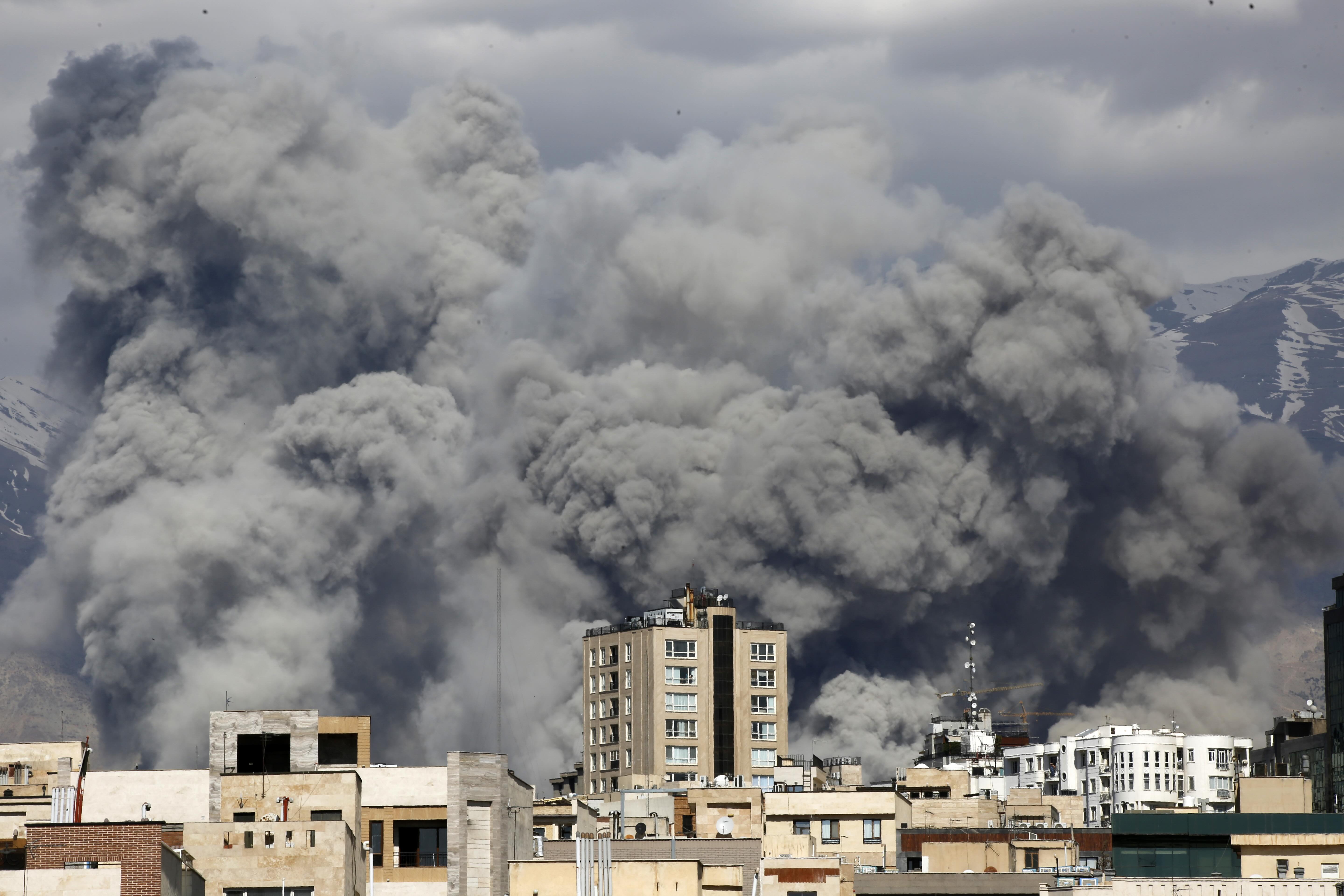
Starmer was supported by John Healey, the Defense Secretary, but “Reeves and Miliband made it quite difficult for the Prime Minister.” The discussion came down to the legality and whether “a positive relationship with the United States of America was a good thing right now for the party. And many people concluded that it was not.” When asked what role the Labour defeat in the Gorton and Denton by-election played, because the Green party mobilized Muslim voters, a close aide of Starmer says: “Zero.”
But security sources are clear that Miliband, in particular, took a “petulant, pacifist, legalistic and very political” approach, questioning why the UK should support the US. “He fundamentally doesn’t like Trump, and he doesn’t like this Iran thing,” one says. As Labour leader in 2013, Miliband thwarted attempts by David Cameron to bomb Syria after the Assad regime used chemical weapons; many in Westminster regard this as a shameful episode. “He probably thinks it was a success,” the source adds.
Cooper adopted the “cautious approach of the Foreign Office… de-escalate, negotiate, de-escalate, negotiate,” based on reports she was getting from Oman that talks with Iran over its nuclear program were making progress. She was only prepared to support basing requests if the conflict moved into “phase two”: the Iranians targeting Britain’s Gulf allies. This position was supported by Reeves and Shabana Mahmood, the Home Secretary.
When Healey faced the TV cameras on Sunday morning, Hermer’s advice and the impasse in the NSC prevented him from saying whether or not Britain backed the targeted killing of the Supreme Leader Ayatollah Ali Khamenei, the world’s leading terrorist sponsor. A colleague says: “Healey was uncomfortable with what he was being told to say,” because British citizens were in the firing line, “but John is not someone who throws his toys.”
On Sunday afternoon there was a second NSC meeting in which Britain’s approach changed. The Americans had tabled an “official ask” on Saturday that the two air bases be used only to attack the missile sites, plus “the manufacturing of the missiles and the command and control for the missiles.”
That came after Air Marshal Sir Richard Knighton, the chief of the defense staff, spoke to his American counterparts. “He’s been working really hard to explain to the US what is legally possible and to help the US shape their request,” a senior defense source says. “Hermer worked with [Knighton] to determine the art of the possible. And the request became the art of the possible.” Healey also repeatedly spoke to his opposite number, Pete Hegseth.
This time the NSC agreed that the basing request be granted. Downing Street’s official line is that the situation changed when Iran began firing missiles at hotels and other civilian sites in Dubai and Bahrain. An attack on the Bahraini capital Manama narrowly missed killing British military personnel stationed there. But it is also the case that Starmer and his ministers were shocked by the undiluted fury of their Middle East allies that more had not been done to protect them.
Jordan was “fucking furious,” a former minister with friends in Amman says. “The Emiratis, Kuwaitis, and even the Canadians are all asking, ‘What the fuck are you doing? Whose side are you on?’” The Emiratis pointed out that Britain was failing to help protect the 240,000 British citizens living in Dubai and Abu Dhabi.
After the initial US request, Britain could have sent two Type-45 destroyers, which have air defense capabilities, to the eastern Mediterranean to protect Cyprus and Jordan. Instead, some military assets were withdrawn. “The Cypriots are incandescent,” a security source reveals. Only on Tuesday did it emerge that HMS Dragon will deploy – 20 days after the first US request for support. The only available Astute class submarine was near Australia. It passed through the Gulf area a few weeks ago and it could have been kept there “as a contingency,” a former commander says.
Ministers, officials and military officers all regard Hermer as an impediment to Britain’s national security – both because of his doctrinaire approach to international law and because he reinforces Starmer’s legalistic instincts. “Bring back Suella!” says a member of the National Security Secretariat – a reference to the former attorney general Suella Braverman, who asserted parliamentary sovereignty over international treaties.
“Every senior minister receives legal advice,” says the former defense secretary Ben Wallace. “It is advice, it is not direction. However, under this government, Lord Hermer has become the power in the land where his advice becomes the rule.” A former mandarin adds: “There’s a lot of frustration in the professional national security gang because they feel that Hermer is essentially running the entire policy.” Others point out that when Starmer was in opposition, before Hermer was his legal advisor, he backed air strikes on Houthi militias, who had done less to menace Britain than Iran. Security officials now fear Britain is “in an incoherent position” by allowing the US to use our bases to attack Iranian missile sites as an act of self-defense but refusing to launch such attacks ourselves. One calls it “unconscionable” and accuses Starmer of “free riding.” A former defense chief brands it “reprehensible.”
Britain has actually done more than most to help, deploying F-35 jets and giving missile interceptors to allies. But by dithering on Friday, Starmer has received no credit. He was totally out of step with key allies. Mark Carney and Anthony Albanese, the leaders of center-left governments in Canada and Australia, openly backed the attacks. “We seem to have been blindsided by what they were going to say,” an official admits.
‘The UK is kept safe by three things: nuclear weapons, NATO and having America as our principal ally’
Friedrich Merz, the German Chancellor, dismissed international law as “having relatively little effect,” arguing: “This is not the time to lecture our partners and allies.” Some 60 percent of the increase in European defense spending comes from Germany, while Britain slips down the list of net contributors to NATO.
On Monday, when Starmer suggested that Trump did not have a “thought-through plan” for Iran, Emmanuel Macron announced an increase in the French nuclear arsenal and the deployment of nuclear-armed aircraft to European allies. “To be free, one needs to be feared,” he said.
A former defense chief says: “The UK is kept safe by three things: nuclear weapons, NATO and having America as our principal ally. We’re just about keeping the nuclear show on the road, but we are reneging on our NATO commitments and we’re weakening the relationship with our principal ally.”
It is easy to see why a US diplomat told me this week that Starmer is “not exactly Margaret Thatcher redux.” Trump went further, informing reporters that he was “disappointed with Keir” and telling Merz the PM “is not Winston Churchill.” The only No. 10 point of contact with Israel is Jonathan Powell, the national security advisor. Starmer and Benjamin Netanyahu do not speak. The fear is that the Americans will now cut out Britain and strike a deal of their own with Mauritius for the use of Diego Garcia. “This has put fuel in that tank,” a former national security official says.
It is hard to escape the conclusion that Starmer’s need to placate his party has been put before the strategic interests of the country. He did at least get credit from his MPs, who remain haunted by the Iraq war. When he addressed MPs on Monday evening, Calvin Bailey, a former RAF officer and the MP for Leyton and Wanstead, got to his feet and said: “In March 2003 I flew combat missions into Iraq. I want to thank you, Prime Minister, for doing right by our service personnel.”
In Whitehall, however, there is a fear that the intensity of Labour’s feelings is matched by their irrelevance. A former Downing Street advisor says: “The way we’ve behaved towards our allies in the last week means no one cares what we think and we have zero capacity to shape things.”
Why is the wine industry dying?
Most wine columns resemble recipes from Larousse Gastronomique or Mastering the Art of French Cooking in this way: they have happy endings. This column, alas, proceeds with a melancholy burden. The world of wine, it pains me to report, is in the doldrums. Is it because of a new infestation of phylloxera, the blight that devastated French vineyards in the 19th century, or some other pest? Is it some novel tyranny of teetotalers, outlawing the production and consumption of wine? No. It is something closer to original sin or what Immanuel Kant on a dreary afternoon called “the crooked timber of humanity” out of which nothing straight can be fashioned. In short, it is the news that the wine industry itself is dying. Why? Because its chief support and prop of its prosperity, drinkers in that demographic known to budding statisticians as boomers, are themselves popping off to reap their rewards.
A recent story in the New York Post broadcast the upsetting news. “A lot of people have a misconception that the boomers are drinking less,” said one Sonoma County vineyard owner. “This cannot be emphasized enough: it’s not because the boomers are drinking less, it’s because there are less boomers.” Grammarians will bristle at the phrase “less boomers” when the chap clearly meant “fewer boomers,” but for once we can let the solecism pass. Emergencies not infrequently intrude upon linguistic decorum. Cecily Cardew, in The Importance of Being Earnest, acknowledged as much when she noted that Algernon’s letters to her after she broke off their engagement were “so beautiful, and so badly spelled.” High emotion can intrude upon orthography that way, perhaps especially when one is, as was Cecily, the author of the letters in question.
But I digress. The first point to take on board is that there are fewer Gen Xers than there are (were?) boomers. Let me pause to avail myself of that bottle of 2015 Bollinger Champagne I had put aside for just such an occasion. We have mentioned Bollinger before in these chronicles. At some point, I went on about Bollinger R.D. (“R.D.” for “récemment dégorgé” – recently disgorged.”). I won’t repeat what I said then, only noting that first, that is one of my favorite Champagnes; and second, those bubbles are expensive. The ordinary vintage stuff is, too. And 2015, though not the star that 2012 was, still glitters brightly in the firmament of wine.
It was a hot, dry year, but the fruit prospered. The cépage of this noble potation is 60 percent pinot noir and 40 percent chardonnay. It takes only a sip to make you realize why this particular Champagne appears in no fewer than 15 James Bond films. It primed Bond, James Bond, for derring-do. It will do the same for you. I return to my previous narrative by mentioning that this Champagne will set you back about $180. Perhaps I should also note that, being a gift, this particular bottle set me back nothing. What, your friends do not bestow expensive bottles of Champagne on you? Have you considered upgrading your friends?
The relevant fact, however, is that, according to a story in London’s Sunday Times, cost is another factor in the declination of the wine industry and, indeed, in the consumption of alcohol generally. Apparently, many young’uns are turning to marijuana. Some say it is cheaper. And, being plant-based, it might be mistaken for kale. “They have,” that story continues, “been told this drug comes from a plant which means it snuggles nicely in the warm underbelly of the socialist, woke, anti-meat agenda. It’s kale in a Rizla,” i.e., rolling paper. In conclusion, says the paper, weed is
Cheap. Fun. And healthier than booze. But is it? When I was at school no one had mental health issues. There were kids that had what we called ants in their pants and others who were a bit miserable occasionally, but these things could be cured with a bit of light bullying over a nice pint.
Today, you’re weird if you don’t have a mental health issue of some kind.
But here I go again, digressing. Fortunately, I have finished with that bottle of Bollinger and am now prepared to move to a recent discovery that it pleases me to share with you. It is a delightful chardonnay from the southern Mâconnais from the house of Domaine Romanin. Its AOC (no, not that AOC) is Mâcon Solutré-Pouilly, which is nestled in and around Pouilly-Fuissé. The commune of Solutré-Pouilly lies at the foot of “the Roche,” a famous limestone spur and Grand Site de France. The 2023 from Domaine Romanin, which you can find for about $25, is a rich, beguiling yellow color and features a light, floral, aromatic nose. It is surprisingly complex and lingers nicely in the mouth.
Were I of an evangelical disposition, I might consider distributing cases to the smoking dens of the young. I feel certain I could count on a few converts. They would need to work quickly, though. The wine’s freshness begins to deliquesce after just a few years.
The glorious versatility of Dijon mustard
Not just salami, air conditioning and dental fillings: among their many contributions to civilization, the Romans also gave us Dijon mustard. Somewhere about the 4th century, it seems, the vinegar makers of Dijon were granted the right to use the exclusive mustard recipe composed by Palladius, son of Exuperantius, Prefect of the Gauls (or so Samuel Chamberlain informs us in his Bouquet de France of 1952).
Palladius was one of those fascinating Roman gentleman-farmers who are also poets and scientists. He owned farms in Italy and Sardinia and had a particular interest in fruit trees. He penned a popular treatise on agriculture that stayed on the best-seller (or at least most-read) list until well into the Middle Ages. It explained farming methods throughout the calendar year, wrapping things up with an 85-couplet poem about plant grafting, in elegiac verse.
In France, where they feel that salad is plain lettuce with vinaigrette, mustard is the star of every dressing
In case that résumé wasn’t impressive enough, some say Palladius went on to become a bishop (dropping off his daughter in a Sicilian convent) and got to Ireland ahead of St. Patrick, moving on to Scotland when the Irish proved unwelcoming. But perhaps there were several Palladii about in the late Roman Empire and the chroniclers got their signals crossed along the way.
Be that as it may, Palladius was undoubtedly a benefactor of the human race, if only for having persuaded the Dijonnais to start making mustard. The recipe should be in the public domain by now, so hopefully outraged Dijonnais won’t sue for copyright infringement if we share it: grind one sextarius (about 2 ½ cups) of mustard seeds in a pestle and mortar. Mix in five pounds of honey, one pound of olive oil and one sextarius of strong vinegar. Grind them all together, diligently, and use.
The secret of mustard lies in the chemical reaction that occurs when the crushed seeds come into contact with liquid. Enzymes in the seed then react with organic compounds called glycosides to become hot mustard oil. According to food blog Yuko’s Table, this is why, when a hot mustard burns through your sinuses and brings tears to your eyes, drinking water brings no relief – it simply makes the mustard burn with increased fieriness. (Yuko suggests exhaling instead.)
Adding acid to the mix, however, stops the chemical reaction and stabilizes the mustard, which is why vinegar is an essential element. By halting the chemical reaction, the vinegar preserves the pungent flavours, though they do eventually fade after the mustard jar has been open for a while.
Dijon mustard is one of the kitchen’s most useful condiments, after butter and salt. It’s good with everything savory: chicken, salmon, meat, sandwiches, cheese sauce. In France, where they generally seem to feel that salad is plain lettuce with vinaigrette, it is the star of every dressing (olive oil, wine vinegar, salt and a dab of mustard).
The Romans called it “mustard” because when they first made it, they mixed unfermented grape juice – “must,” from the Latin mustum – with the ground mustard seeds, and got a burning flavor (ardens), hence must-ardens. The vinegar was a later addition and also worked as a preservative.
Mustard was a generally appreciated condiment in the Middle Ages, and Samuel Chamberlain tells us that a feast put on by the Duke of Burgundy in 1336 for the King of France entailed the consumption of no less than 300 quarts of mustard. One of the Popes of Avignon even had a papal mustard-mixer, though the story was that he’d been asked to grant a title to a nephew he considered utterly inept. He backhandedly obliged by naming him premier moutardier du Pape.
From this anecdote came the beautifully dismissive Gallic version of “all that and a bag of chips”: “Il se prend pour le moutardier du pape” – he thinks he’s the pope’s mustard-maker.
So essential is Dijon today that grocers and chefs around the world went into panic mode when shortages hit in 2022. Canada – the world’s chief mustard-seed producer – had been hit by a drought, which destroyed much of the 2021 crop.
You can’t use just any mustard seeds to make Dijon: they must be brown and black, not the yellow variety used in American hot-dog mustard. A limited amount of the brown and black seeds are cultivated in France, but late frosts in April 2021 put a significant dent in that already small amount.
After much of Canada’s crop died of heat, war broke out between the other two producers, Russia and Ukraine, meaning no backup supply was available.
The price of the small amount of mustard still available from Canada became astronomical. Then the war in Ukraine drove up the price of glass jars – and energy prices skyrocketed too, thanks to Europe’s heretofore reliance on Russian gas. Between high costs and shortage of supply, French mustard-makers simply became unable to maintain their rates of production.
So essential is Dijon that grocers and chefs around the world went into panic mode when shortages hit in 2022
Retailers started to limit shoppers to one jar per family after hoarders began stocking up. In many places, shelves sat empty for months. The Dijon is back now, but in smaller quantities and sometimes with less variety. Efforts to restabilize the supply chain are ongoing. Canadian, Russian and Ukrainian production is all back up. France is trying to grow more of its own seed as well.
An indication géographique protégée – Moutarde de Bourgogne – was launched in the Dijon area in 2009 to support local mustard-growers. Mustard from the area must be made exclusively according to traditional methods, using Burgundy-grown mustard seeds and Burgundian white wine. The result is a spicy mustard with a strong taste of blanc de Bourgogne.
The World Mustard Championships (held at the National Mustard Museum in Middleton, Wisconsin) have named Pommery de Meaux (made near Paris) the world’s best mustard. Those who are short and afflicted with delusions of grandeur may find they prefer Grey Poupon – Napoleon’s favorite.
But when nobles came to visit in Dijon, the only mustard allowed on the table was Maille – allegedly to preserve dignity, as it wasn’t hot enough to make anyone cry. The blue-bloods knew what they were doing. As the slogan goes, “Il n’y a que Maille qui m’aille.” Only Maille cuts the mustard.
An ambassador is the American version of a nobleman
America is, famously and proudly, a republic. Everyone is equal before the law. No earls or dukes or even knights of the realm. And a good thing, too.
Er… not so fast. As one of the magazines devoted to Palm Beach life recently pointed out, there is one honor available to citizens of the United States that is much coveted because, as with princes, dukes and earls, the honorific comes before the recipient’s full name – and, like nobility (but not in Andrew Mountbatten-Windsor’s case), it is conferred for life. That title is “ambassador.”
While Palm Beach residents agonize over the status of dogs, they are losing their love for cats
Most presidents make so-called “political appointments,” usually good friends who have been supportive, either financially or intellectually, of either the president himself or of his party. Donald Trump is no exception, meaning that Palm Beach life, is, as one observer put it, “lousy with ambassadors.”
These include billionaire businessman John Arrigo, the United States ambassador to Portugal; investment banker Warren Stephens, ambassador to the Court of St. James’s in London; Kimberly Guilfoyle, former prosecutor and Don Jr.’s ex, ambassador to Greece. Then there’s Charles Kushner who, by way of his son and daughter-in-law, Jared Kushner and Ivanka Trump, is the new ambassador to France; and Somers Farkas, society figure and wife of department store heir Jonathan, who is ambassador to the Republic of Malta.
The title of ambassador is clearly something sought after, coming as it does before one’s name and lasting for life – unlike “The Honorable,” which can be used for judges, or government officials, but applies only while those individuals are in office, not for life. Cynics, of whom we have no shortage in Palm Beach, dismiss some of the appointments to smaller countries (Barbados, Malta, Denmark, Iceland) as mere flim-flam, or “payback.” Said one former but unnamed ambassador in Palmer magazine, “Smart people are appointed to important countries, but some are so weak, uninformed, and unworthy, they’re laughable.” He did not name any names or indicate what important or unimportant countries he was referring to, but added: “It all comes down to having the money to buy influence… influence runs through the veins of Palm Beach.” He did concede at first: “It’s not entirely about the money.” Then, after a pause, he added: “But it’s about the money.”
But everyday life here is certainly not only about the money. News-wise recently, it has been raining cats and dogs.
Dogs first. An issue has arisen over when pets are not pets. It is not unusual for condos and cooperatives to have “pet-free” rules, which is an attraction for many. But Palm Beach, which is always ready to talk about how rich its inhabitants are, is less ready to talk about how old substantial numbers of those inhabitants are, and how common it is to be widowed and live alone. Many of them now claim dogs and cats as “emotional support” creatures, not pets. As a result, many “pet-free” condos and cooperatives are actually crawling with cats and dogs, making life even more fraught and divisive than it already is for older residents.
The number of feral cats took a huge leap last year, according to the 2025 annual report of Palm Beach Island Cats, an organization that monitors the population of such animals. According to an address given to the town council by David Leavitt, the organization’s president, the island’s feral cat population rose by more than 60 percent last year, from 372 in 2024 to 604. At the same time, the number of feeding stations dropped from 67 in 2024 to 48 in 2025.
Some 600 feral cats on a small island is extraordinary – but remember, “feral” doesn’t just mean “wild.” The number includes those that have turned wild having been formerly in captivity or domesticated. In other words, it does not put the residents of Palm Beach in a good light: while they agonize over the status of dogs, either as pets or emotional support creatures, it would appear they are losing their love for cats – either not looking for them after they go missing or not caring for them properly in the first place. We have no population of feral dogs, as far as I am aware.
February in New York: where dreams come to die
I probably sound naive, but February always struck me as a month that should be full of hope – brimming with the type of optimism that comes from new beginnings.
At least here in New York, though, it was grim. Everything feels more expensive. Everyone’s temper seems as short as the blink-and-you’ll-miss-them daylight hours. And then there’s the weather.
The streets are flanked like an Arctic military checkpoint by car-sized mounds of calcified brown snow. The kind of snow that has visible layers, like a geological cross-section of urban neglect. The kind that has already gobbled up who knows how many small dogs. The wind is so ferocious, it makes that chemical skin peel you’ve been targeted for on Instagram look pleasant.
New York does sleep. And thank goodness it does. Because living here is exhausting
And it was through this landscape of icy despair that I was recently walking, when the snide algorithm on my phone’s music app decided what I really needed to hear was Kim Carnes’s “Bette Davis Eyes.” If you’re familiar with the lyrics, you might recall that the woman in the song has hair that is “Harlow gold,” lips that are “a sweet surprise” and hands that are “never cold.” But most offensively, she is “as pure as New York snow.” Pure snow! Imagine!
After I’d finished scoffing, I started to think: what other musical crimes have been committed against New York City? What other egregious misrepresentations have been made under the guise of poetic license? Once I started paying attention, the deceptions piled up like the snowbanks – layered and dirty. Is New York the most musically lied-about city in the world?
Let’s start where we have to, with Frank Sinatra, patron saint of “Your dreams will come true if you step off a Greyhound in Midtown.” He croons that this is the city that “doesn’t sleep.” I’ve seen entire subway cars asleep at 3 p.m. on a Tuesday. I’ve seen people slumbering on park benches and in office bathrooms. There’s always someone conked out by the Duane Reade near my apartment. New York does sleep and thank goodness it does. Living here is exhausting. Amid the all-night sirens and the radiators in the prewar buildings that make that horrible clacking sound, we need to seize the opportunity for shut-eye whenever we can.
There’s the Pogues’ “Fairytale of New York,” a ballad that I unabashedly adore but one that would also have you believe the city is a twinkling backdrop for romantic dysfunction, where even the drunk tank sparkles with possibility. Sting, in “Englishman in New York,” portrays a city that is a quaint, quirky wonderland of civilized eccentrics quaffing coffee. Bless him. Of course, the eccentrics are still here, only they’re now shouting at traffic cones.
Thanks to Alicia Keys’s “Empire State of Mind,” I’ve waited six years to feel “brand new,” but the streets have mostly made me feel wary of stepping in dog poop. Do the “big lights” inspire me? Sometimes, but I’m also concerned about unnecessary energy consumption. Climate change, anyone?
Taylor Swift told us that New York’s been waiting for us. Patience is not a character trait I’d associate with this city. And what, exactly, is a “New York State of Mind?” For me it’s a nonstop push and pull of wanting to get the hell out and never ever wanting to leave: a recipe for constant existential angst and emotional vertigo. Is that what you meant by that, Billy Joel?
The greatest lie of all might be the musical insistence that New York is a place where dreams magically crystallize. Sometimes they do, but at least in winter, nothing crystallizes here like the disappointment of another day of sub-freezing temperatures.
Still, the songs keep coming with their promises and whatever chord progression you need to get out of bed in the morning. I can’t help listening to them and loving them, and maybe that’s the trick: lies dressed up as hope. The alternative might be a mass exodus to Miami. And that would be really sad.
Kid Rock’s political evolution
The celebrity circles surrounding the second Trump administration are pretty thin. Sylvester Stallone, Jon Voight, Adam Sandler’s close friend Rob Schneider and a scant few others support the President in ways loud and quiet. But other than pop star Nicki Minaj, whose residence in Trumpistan has caused a lot of head-scratching, no entertainment celebrity occupies a more prominent place in the MAGA firmament than the musician Robert Ritchie, better known to the world as Kid Rock. “I call him Bob,” Trump once said.
Kid Rock, the second most famous white rapper from Detroit, has long been in Trump’s social circles. He was a guest at Mar-a-Lago before either he or Trump became political figures. Though he grew up in Romeo, Michigan, an affluent rural town about 40 miles from Detroit proper, Kid Rock has often referred to himself as a “son of Detroit” and owns a clothing brand called “Made In Detroit.”
The bizarre video featured Kid Rock and RFK Jr. doing push-ups, playing pickleball and sitting in a sauna
He made his name as a DJ and rapper in the late 1980s and early 1990s, releasing an album called Grits Sandwiches for Breakfast. That album, along with a band called Twisted Brown Trucker, didn’t quite take. But Kid Rock exploded in 1998 with a diamond Atlantic Records release, Devil Without a Cause, which included breakout hits such as “Cowboy” and “Bawitdaba.” These successes made him a star in the late-1990s rap-metal explosion.
Almost immediately afterward, he switched gears and became a Southern rock artist, releasing a duet with Sheryl Crow. This phase culminated in a massive global hit, the 2008 song “All Summer Long.” He also became a tabloid figure: he started dating Pamela Anderson in 2001, married her on a yacht in St. Tropez in 2006 – and she seems to have filed for divorce just four months later. But politics loomed large.
Kid Rock has always claimed that he’s libertarian in his views. He supports abortion rights and same-sex marriage. He called Bill Clinton a “pimp” (in a good way) onstage at Woodstock in 1999 and performed at Barack Obama’s 2009 inauguration. Despite flying a Confederate flag on stage in the 2000s as part of a tribute to Lynyrd Skynyrd, he said he never raised that flag with “hate in my heart” and accepted an NAACP Image Award in 2011.
Then came his real political shift. He endorsed Mitt Romney in 2012 and Ben Carson in 2015. When Trump ascended to the political sphere, Kid Rock became one of the first celebrities to back him, saying the US needed a businessman to run the country. “I’m digging Trump,” he said. Performing at an RNC-adjacent event in Cleveland in 2016, he ended his set by saying, “I love black people, I love white people, but neither as much as I love red, white and blue.”
During Trump’s first term, Kid Rock was an occasional sideshow. He appeared at the White House in October 2017, posing in front of a photo of Hillary Clinton alongside Ted Nugent and Sarah Palin, in an early version of the kind of trolling that would come to epitomize Trump’s presidencies. He teased a run for the Senate in Michigan, even launching a merch line. “If Kid Rock for Senate has got some folks in disarray, wait till they hear Kid Rock for president of the USA!” he said in a joke campaign speech.
His bid for the White House proved to be a publicity stunt – but when Trump ran again in 2024, “Bob” was by his side. He performed on the final night of the Republican National Convention, changing the lyrics of his 2000 hit “American Bad Ass” to feature Trump’s name. “Ladies and gentlemen, get ready for the most patriotic bad-ass on earth, President Donald J. Trump,” he said, introducing Trump from the stage.
Trump has put Kid Rock to frequent use during his second administration. Last year, he began engaging in a very public flirtation with Lauren Boebert, the MAGA-friendly Representative from Colorado, and engineered a dinner with Trump, UFC chief executive Dana White and comedian Bill Maher, a longtime Trump critic. “Trump is the type of person you have to meet to understand,” Kid Rock said.
Kid Rock’s role has ramped up in 2026. In late January, he testified in a Congressional hearing about unscrupulous practices in the concert-ticket industry, excoriating the Live Nation-Ticketmaster monopoly. “I love God. I love this country, I love live music and sports and I believe music fans and artists have been getting screwed for far too long by the ticketing system,” he said. “I’m in a unique position to testify, because unlike most of my peers, I am beholden to no one – no record companies, no managers, no corporate endorsements or deals. To put it plainly, I ain’t scared to speak out.”
On Super Bowl Sunday, he closed out Turning Point USA’s alternative halftime show. He urged the audience to read the Bible and give their lives to Jesus Christ. People noticed that his performance was out of sync with the audio broadcast. He later admitted that the performance was pre-taped. The next day, his cover of country artist Cody Johnson’s “’Til You Can’t” hit number one on the iTunes chart.
Most bizarrely, on February 17, Health Secretary Robert F. Kennedy Jr. posted a video on Instagram, captioned: “I’ve teamed up with @KidRock to deliver two simple messages to the American people: GET ACTIVE + EAT REAL FOOD.”
The 90-second clip, titled “ROCK OUT WORK OUT,” featured Kid Rock and RFK doing push-ups, riding stationary bikes, playing pickleball, sitting in a sauna, and, in RFK’s case, taking a cold plunge in jeans. They drink glasses of whole milk while lounging in an indoor grotto.
“If there’s one thing we could all come together with in this country,” Kid Rock said about the video, “it should be food and being healthy.” That’s not a very bad-ass message from the man who once wrote the lyrics, “Bawitdaba, da-bang, da-bang, diggy-diggy-diggy.” But we all have to start living healthy at some point, I suppose.
MAGA shouldn’t try to build a new moral order
Americans increasingly suspect that the entire social order is a sort of elaborate swindle. Billions of their taxpayer dollars were found to have gone to mysterious “learing centers” with no students. Federal agencies have paid $2.8 trillion in such mistaken transfers since 2003, according to government figures. There is serious discussion about whether a clique of pedophiles was ensconced at the highest levels of society. When asked, “Do you think the system is rigged in America?” 70 percent of citizens reply “Yes.” They are waiting for someone to tell them what has gone wrong and who is to blame.
So naturally, America’s populist movement has decided that what the moment really calls for is religious Pharisaism and family values. According to the supposedly more highbrow parts of MAGA-land, America’s real problem is disenchantment and postmodernism. The reason people are unhappy is because they are irony-poisoned and atomized – possibly under demonic influence. They are addicted to doomscrolling and are being mentally frazzled by the internet.
MAGA should be destroying things for the sake of it – offering discord, a burning-away of the deadwood
It is taken for granted by various factions, some gathered around J.D. Vance, that they only have to wait for Trump to get out of the way so that they can commence the real work of populism: the moral revival of America. There is pious angst about the psychological effects of porn and calls to ban it. Jonathan Haidt wants the youngsters kicked off social media for their own good. There are mass conversions to Catholicism.
To these people the enemy is, above all, nihilism: the belief in nothing at all. Shortly after Charlie Kirk’s death, the right-wing publisher Jonathan Keeperman declared that the suspected gunman, Tyler James Robinson, was motivated by “pure, perverse nihilism.” Matt Walsh tells us in the Daily Wire that the “Democrats have adopted nihilism. They do not believe human life has any inherent worth or purpose.”
This will be news to Americans, who live under the most rigorously enforced public doctrine this side of the 17th century. You will – still – be fired from most jobs for disagreeing with certain egalitarian ideas. As we have seen with Trump 2.0, it is still taken for granted that a judge can countermand the policies that the people have just voted for – such is the belief in a transcendent“natural law” that is more important than their wishes.
The country is patrolled by militant ultraloyalists made up of people such as Tyler James Robinson, willing to use violence to defend the ideas that are still accepted by those in power almost everywhere.
The American people feel, obscurely, that something has gone very wrong, but there is still a great deal of habitual deference to the system. As the Epstein saga shows, they are still in the bad habit of blaming their problems on the ill will of individuals. Meanwhile the mood is restive. The public wants to see institutions dissolved and powerful people brought low, and they are not so fussy about the particulars.
The only person who really grasps this is Donald Trump. He has always styled himself as a cynic who can see through the lies that society tells about itself. All his political rivals used to beg him for donations, he says, and anyone who doesn’t exploit the country’s tax code is a sucker. Even now, in his full pomp, Trump still takes a certain satisfaction from exposing such contradictions.
Henry Kissinger cast him as “one of those figures in history who appears from time to time to mark the end of an era and to force it to give up its old pretenses.” Trump thinks the old ideas and the old institutions are bankrupt but does not know what should replace them; in the meantime he thinks they should give way to a new age of expediency where America is ruled by his will alone. His instrument, “The Deal,” is a perfect example. He believes in little and does not imagine how anyone else could, and so thinks that everyone can be bought. He often seems blasé about what will happen after he is gone. He is, if not quite a nihilist, then at least a scoffer and misanthrope in the extreme.
This has been the secret of his success. Trump has achieved supreme power not as a “Christian nationalist” but as a jaded insider who reached a hand out to the mob. He has offered them catharsis; he has never moralized. No one realized how much they would enjoy the humiliation of a fairly harmless functionary like Jeb Bush until it was performed for them live on television by Trump.
According to the pollster Rasmussen, Trump was never so popular with the young as when he detonated USAID. Trumpism has found success because it is America’s version of Jacobinism: the great disenchantment of society. The “dissident” intelligentsia now proposes to replace this with another go at the 1990s politics of the moral majority.
I propose the opposite. What American society really needs is more irony, more disenchantment, more postmodernism and nihilism; it needs to accelerate those forces that Trump unleashed.
MAGA’s objective is not to create a new moral settlement but to destroy the existing one. Its task is to gleefully show the American people that all the reigning values are false and that all the institutions are broken. Like DoGE during Trump’s first months back in power in 2025, MAGA should be destroying things almost for the sake of it. It should offer discord, rebellion, a general burning-away of the deadwood.
The way to win politics in the 2020s – not just elections, but the allegiance of the young and the ambitious – is to convince the people that their latent desire to destroy society is best served by you. MAGA should now fulfill its destiny and oblige them.