-
AAPL
213.43 (+0.29%)
-
BARC-LN
1205.7 (-1.46%)
-
NKE
94.05 (+0.39%)
-
CVX
152.67 (-1.00%)
-
CRM
230.27 (-2.34%)
-
INTC
30.5 (-0.87%)
-
DIS
100.16 (-0.67%)
-
DOW
55.79 (-0.82%)
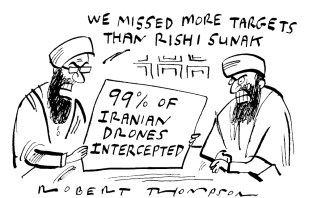
Sunak loses another Tory MP over claims of misused funds
It’s a day ending in ‘y’ – which means it’s more bad news for Rishi Sunak. The beleaguered Tory premier had a relatively good day on Wednesday, celebrating falling inflation and a punchy performance in parliament. But today’s Times brings news that another Tory MP has lost the party whip while its claims about alleged misuse of campaign funds are being investigated.
Mark Menzies, the MP for Fylde since 2010, is facing allegations that he made a late-night call to a 78-year-old aide asking for help because he had been locked up by ‘bad people’ demanding thousands of pounds for his release. According to the Times, £14,000 given by donors for use in Tory campaign activities was transferred to Menzies’ personal bank accounts and used for private medical expenses.
Menzies is also said to have called his former campaign manager at 3.15am in December, claiming he was locked in a flat and needed £5,000 as a matter of ‘life and death’. The sum, which rose to £6,500, was eventually paid by his office manager from her personal bank account and subsequently reimbursed from funds raised from donors in an account named Fylde Westminster Group, it is alleged. The Conservative party is now looking into the claims and says it is taking them seriously.
A spokesperson for the Chief Whip, Simon Hart, said last night that: ‘Mark Menzies has agreed to relinquish the Conservative whip, pending the outcome of an investigation.’ For Rishi Sunak, it never rains but it pours…
Candidates debate
The grace of a snowflake lies in its outward simplicity, which on closer inspection reveals a sublime complexity. Chess endgames beguile me in much the same spirit. The examples below both occurred at the Fide Women’s Candidates tournament, which is currently approaching its conclusion in Toronto.
Just a few moves earlier, Anna Muzychuk had an extra pawn in a rook endgame, which was being patiently guided to victory. Lei Tingjie has sacrificed her rook to reach the diagram position, pinning her hopes on the passed g-pawn to salvage a draw. Crucially, her king can shepherd the pawn while also impeding the approach of the White king. Time is of the essence.
Anna Muzychuk–Lei Tingjie
Fide Women’s Candidates, April 2024
53 Rd5+? This natural move throws away the win. The correct idea was to place the rook behind the pawn with 53 Rg8!, though why that matters is not immediately obvious. After 53…g4 54 Kf7! Kf4 White must ignore the bait on f6 and aim for the h-file with 55 Kg6! and here 55…g3 56 Kh5 Kf3 57 Kh4 g2 58 Kh3 arrives just in time, or 55…f5 56 Kh5 Kg3 57 Rg7! waits and then 57…Kh3 58 Kg5! swaps sides yet again: 58… g3 59 Kf4 g2 60 Rh7# Kf4 54 Kxf6 g4 55 Rd4+ Kf3 56 Kf5 g3 57 Rd3+ Kf2 58 Kg4 g2 59 Rd2+ Kf1 59…Kg1! was neater, using a little trick: 60 Kg3 Kh1! 61 Rxg2 stalemate 60 Kf3 g1=N+ Check! The threat of Rd2-d1# makes this underpromotion a necessity. 61 Ke3 Black must tread carefully, but should not lose provided her knight stays in the king’s orbit.
Nh3 62 Rh2 Ng1 63 Rf2+ Ke1 Draw agreed at move 75.
A few rounds later, Muzychuk was defending with knight and pawn against rook, but this time the missed opportunity turned in her favour. With extra White pawns to contend with, her defence is far from easy, e.g. 53…e5+ 54 Kd5 concedes critical ground. There was a narrow path to a draw with 53…Nh2! 54 Rc3 Ng4 55 Kc5 f5! with just enough counterplay, but Muzychuk stepped the other way.
Nurgyul Salimova–Anna Muzychuk
Fide Women’s Candidates, April 2024
53…Ne5? 54 Rc3? Evidently, both players judged the pawn endgame after 54 Rxe5 fxe5+ 55 Kxe5 Kf7 to be a draw. But White wins with 56 Kf4! Kg6 57 e5 Kh6 and now the subtle sidestep 58 Ke3! seals the deal, ensuring that after 58…Kg6 59 Ke4! it is Black’s turn to move. Then 59…Kf7 60 Kd4 Kg6 61 Kc5 Kf5 62 Kd6 wins. Kf7 55 Kc5 Ng6 56 Kd6 Nxh4 57 Rh3 Ng6 58 Rxh5 Nf4 59 Rh7+ Kg6 60 Rh1 Kf7 The game lasted another 60(!) moves, but the result was never in doubt. Draw agreed
No. 797
White to play. Makkar-Cherniaev, 4NCL Spring GM, March 2024. White is a pawn down, but his pieces are well placed. How did he strike a decisive blow? Answers should be emailed to chess@spectator.co.uk by Monday 22 April. There is a prize of £20 for the first correct answer out of a hat. Please include a postal address and allow six weeks for prize delivery.
Last week’s solution …Bd4! wins a bishop by force: 2 Qxd4 Qxf3 3 Qf2 Qd1+ 4 Re1 Qxd6 and Black went on to win comfortably.
Winner Ben Hale, Flimwell, East Sussex
Spectator competition winners: Chaucer goes to Wimbledon
In Competition No. 3345, you were invited to submit a report on a popular sporting event as it might have been written by someone who is not first and foremost a sportswriter. In a high-class field, David Silverman, the Revd Dr Peter Mullen and Ben Hale were unlucky to lose out on the £25 which goes to the winners below:
It is the usual nightmare. I select a horse of those milling at the start of a steeplechase. I opt for the grey, committing immediately a humiliating crime against the form book Father scrupulously maintained. No steeple materialising from the winter gloom, I grow anxious how the race can be completed before it is commenced. The beasts set out at the wordless behest of a figure on a rostrum. They are guided by the insistent hands and elbows of jockeys, ancient, weatherworn children holding whips in ominous reserve for the closing stages. The race extends over several miles, the prominent performance of the grey horse increasing the certainty of its ultimate failure. A darker horse ridden with presumptive confidence looms always in cool pursuit. Hulking fences winnow the runners and my grey falls, to howls barely recognisable as mine, at the last. I instruct Max Brod: incinerate my betting slips.
Adrian Fry/ Kafka
When that in sommer with his gentil sonne
Folkes make a pilgrimage to Wimbledonne
They gatherre in a mounde lik manye ants
To see yonge ladyes show hir underpantes.
And also menne hir play with furrie balle
And listenne carefulye when judges calle.
Lik fiendes they runne and jumpe with naked thighyes
To rousse a chere or else to winne a prize.
And muche distressed they are if they shoodde het
The litel furrie balle againste the nette.
Bothe yongen too and olden com to watche
What folkes informe me is a tennis match.
Butte tho I tried to seeke for reasons why
The motley crowde hir cam, confused am I.
Frank Mc Donald/Chaucer
Still to be left, left in the channel, ball from outfield to infield, carried on boot, left and cross, no more, he gave up, that’s how it seemed, dribble and a cross, asprawl after tackle, impossible he should go on, that’s how it seemed, cross to the right, always to the right, ground wet and receptive, the crowd restive, breath held tight, into the area, that’s how it seemed, but how if he feints, to the right, that’s how it seemed, swerve and dink, slowing to halt, still and not still, that’s how it seemed, voices whispering in stands, rain in faces, but why to the right, right and no other, net in sight, impossible he should shoot, yet tackle and sidestep, left and a zigzag, impossible that he would, that’s how it seemed, nous and a nutmeg, ball still spinning, VAR forgotten, onside not offside, goal and the Cup.
Bill Greenwell/ Samuel Beckett
You may wonder why the Wooster brain cell has legged it to jolly old Qatar to offer words of wisdom on a football match. I find myself in this somewhat rummy situation thanks to a regrettable wager with young Bingo Little. I’ll spare you the details, but suffice it to say that when I toddle in after a leisurely lunch, I find our chaps have just scored something called an equalizer. ‘Good-oh!’ I say, ‘We’ll jolly well thwart these French chappies, eh?’ Jeeves looks thoughtful. ‘I fear, sir, our left flank may be vulnerable… indeed, they’ve scored another goal.’ ‘Great Scott! Good egg!’ ‘No, sir, I think you will find a favourable outcome was achieved by the opposing team…’ Can’t say I’ve grasped this game yet, dash it. Waking from a brief post-prandial snooze, I notice Jeeves is a tad downhearted. ‘The penalty, sir. He missed it.’ Jeeves is inconsolable.
Sylvia Fairley/ P.G. Wodehouse
Those of you familiar with my work might think my talents lie elsewhere but when asked to report on the Open, claret jug and all, I’m like, why not? As an old paramour of mine, who collects golf courses and has handled a few jugs in his time, once said: ‘You gotta think big.’ So suitably attired in open crotch plus fours, I’m here at Trumpberry where much fancied Spaniard Maximo Machismo makes full use of his whippy shaft and thrusts in front. Handsy South African Retief Goosem is lucky to get relief in the rough and go down in one while Dutchman Magnus Koch comes from behind with a late surge. Local hero Roger Mee keeps his end up but is disappointed with his 69, blaming a lack of feel round the hole, something I’m able to help him with later. Full disclosure. Golf isn’t cool. It’s hot!
Sue Pickard/Stormy Daniels
Mr Lucas J. Davenant stepped on to the balcony of the executive box, into the noise, stink and cold of the big soccer match. He would have preferred to be among the sweat and trivial fanaticism of the crowd but, up here, they served drinks, big, cold, carnivorous American-style drinks. His host, Gunsby, was indulging the pretence that he could shout into his phone privately. Davenant loved money and vulgarity. Here was plenty of both. The stadium was a beehive where each group knew its role. He stood enthralled by the uncomprehended, intricate waggle-dance of the players. The big African defender floored his man and there was a drama of waving arms, anger, dismay, pleas, consultations. Play on. This guy was pulling down millions to floor his opponents. Davenant decided to track the big African defender and pick a fight. He needed the taste of blood in his mouth.
Frank Upton/ F. Scott Fitzgerald
Something – the search for duality, or an atavistic craving for a pie – compelled me to make the savage pilgrimage to Wembley, my mood labile, with an inchoate sense of transgressive pleasures to come. I yearned for the epiphanic, ancient purity of England (vs Belgium) or to be cradled in the holiness of match-passion. A taut, swollen, sinuous rut. With a ball. Rapt beneath the strangely numinous beauty of the arch, I felt a tingling disquiet as the ‘playful rainbow-cross update’ was visible on England’s charcoal-coloured shirts. With glazed fury I witnessed a detumescent rearguard acquiesce. Somebody flapped an appendage at a clearance, gifting a present to a Belgian. Somebody, tormented by the burden of himself, fell over. But somebody’s haunches gleamed as he notched a penalty kick, and somebody’s deep-seated desire for parity rose like the sap in a sycamore.
And, at the end of the day, four lads scored.
Richard Spencer/ D.H. Lawrence
No. 3348: A tale of one city
You are invited to submit an extract of up to 150 words in which Charles Dickens writes about today’s London. Please email entries to competition@spectator.co.uk by 1 May.
2650: Detention for history
One of the unclued entries is responsible for a quotation that makes up the others (two of three words, one of two words).
Across
1 Precious metals Cook nearly left (1,6)
6 Netball players in mid-court for three quarters? (7)
12 Another one bites the dust, recipe being trapped wind (7)
14 Biting an animal’s brought about this? (5)
15 Married in mostly passionless times (5)
16 Caught this lassie forming a dance party? (6)
17 Top cops needing person to stop suspect (6)
19 Identifiers for Ben and James (minor characters) (9)
21 New ____ could be synthesised by men or women? (7)
24 Farmyard bird made a meal of the Spanish cagebird (9)
26 Mineral of singular red type (9)
29 Salt’s pay for late shift announced (7)
30 Bitter calm Englishman on vacation’s drunk (9)
32 Think to conceal dislike without aspiration (6)
33 Wicket taking your spin (6)
35 Ian’s pets having time for number of openings (5)
36 Father takes hurried breath (5)
37 Treat animal badly – this one? (7)
38 Director and good man leaving Chiltern town without power (6)
39 Saw, with many points (7)
40 Issue alien with a title that’s rejected (7)
Down
1 Wearsider leaves capital with mother before noon (3,4)
2 What’s festering in rank leggings? (5)
3 College maintains college processes (4)
5 European imperialist revived Yankee charm (6)
6 Bridge to abridge (8)
7 A testee finally errs, plying this? (6)
10 Disc is silver covering scrap metal (7)
13 I covered ground I’ve broken up (8)
20 I won’t bite Sir Anthony and Sir Henry (8)
25 Painting dismissed as potboiler? (3-5)
26 Tried to slip into extremely sensuous garment (7)
27 English packs note indecent whistler (7)
28 Plain ones leaving place with Tube (6)
29 Nod head, worried (6)
31 Old woman traps black snake (5)
34 Sound distressed to lose good horse (4)
Download a printable version here.
A first prize of £30 for the first correct solution opened on 6 May. There are two runners-up prizes of £20. Please scan or photograph entries and email them (including the crossword number in the subject field) to crosswords@spectator.co.uk, or post to: Crossword 2650, The Spectator, 22 Old Queen Street, London SW1H 9HP. Please allow six weeks for prize delivery. The dictionary prize is not available at present.
2647: Pabulum’s last bow – solution
The theme word is MARCH. The examples are CROWN IMPERIAL (1A/22) and COLONEL BOGEY (26/33). The March sisters from Little Women by Louisa May Alcott, Jo, Meg, Amy and Beth, appear in SOJOURN (12), OMEGA (34A), CRYPTOGAMY (10) and BETHINK (28). ALCOTT (in the third column) is to be shaded. Title: (pabulu)M + arch (defined).
First prize Pam Bealby, Stockton-on-Tees
Runners-up Chris Edwards, Pudsey, Leeds; Richard Andrews, Ashford, Middlesex
The triumph of Katharine Birbalsingh
There are two questions that need to be asked of any society: what is it that is going wrong; and what is it that’s going right that should be done more? It’s only natural to focus on the first question – not least because it is easier. But it is the second question that should be asked more.
Whenever I think of the few things that are going well in Britain, I think of the Michaela Community School in Wembley, London. I have visited the school a couple of times. It sits in one of London’s most deprived communities. Set up under the era of Michael Gove’s free schools scheme, it is the creation of Katharine Birbalsingh. Pupils are almost all from non-advantaged backgrounds.
The school’s success is a rebuke to a whole class of malevolent or criminally inept educationalists
Whenever she is profiled in the media, people tend to write about Birbalsingh as ‘Britain’s strictest headmistress’ or similar. The implication skews towards the negative. Commentators, especially of the left, like to suggest that there is something a bit suspect about this striving for discipline and excellence. ‘Shouldn’t the kids be allowed to let it all hang out a bit more?’ is a frequent note, hit by people who have either forgotten what their own education involved or like to gloss over the advantages they have had in life.
Happily, Michaela’s success has been demonstrated beyond all doubt. Last year, Ofsted rated the school as ‘outstanding’, noted that the pupils’ behaviour is ‘exemplary’ and that the school has an ‘exceptionally rich curriculum, which prepares pupils exceptionally well for the next steps in education’. All of which is very good – but the proof is in the grades. For the last two years the school has received the country’s highest Progress 8 score – which tracks how well secondary schools improve performance after primary school. Pupils at the school achieve twice the national average in GCSE performance and in the English Baccalaureate. An astonishing 82 per cent of its sixth-form students go on to matriculate at Russell Group Universities. In other words, if you have a huge amount of cash and want to send your child to an expensive private school in Britain, you’d be better off saving the money and moving to Wembley.
So why should Michaela have been the subject of so much opprobrium? Even before Birbalsingh had found the site for her school, people tried to stop her. A different London Labour council had the perfect site available, but when the council found out what it was for, they sold the site to someone else. It has been the same at every turn. Trade unions have had their members protest outside the school and harass staff and pupils. Every attempt has been made to take Birbalsingh and the school out. The case that hit the headlines this week was just the latest.
It started because a Muslim pupil claimed that the school wouldn’t allow her to practise Muslim prayer rituals at the school. Strangely enough, this pupil’s family were able to bring a legal case against the school. I wonder where the money and inspiration for that came from? Perhaps someone can find out.
Of course, the reason why the pupil was not allowed to bring Islamic prayer rituals into the school was that the school is a non-faith school. All pupils and parents agree when signing up to the school that they understand the school’s ethos and that religion must be left at the school gate. There are plenty of good reasons for this, in the Islamic space in particular. Around half of the school’s pupils are Muslim, and reportedly most of the Muslim parents at the school were appalled at the case.
As they should be. I have spoken to pupils at other schools in London who have told me first-hand about the sort of pressure which is applied once Muslim pupils get into this kind of escalation. It starts with a Muslim girl who wears the hijab questioning girls of Muslim origin who do not, and proceeds from there. Before you know it, you have allowed a system of shame culture to embed in the school. That then becomes the seedbed for bullying and worse.
The past year must have been torture for the teachers. The case, which dragged on for months, could easily have been the end for Michaela. If the school had lost, everything would have fallen apart. And not just for that one school. It would have signified that schools could be bullied into changing their principles because of one set of parents who had clearly either not understood the school they were signing their child up for, or who understood it very well and wanted to pull the whole thing down from inside.
Happily, the High Court this week ruled against the people bringing the case. The 83-page judgment said that the claimant had ‘at the very least impliedly accepted’ the rules of the school. The court accepted the school’s claim that allowing dozens of Muslim girls to pray in the school playground risked ‘undermining inclusion’ among pupils. Birbalsingh welcomed it as a ‘victory for all schools’, as indeed it is. But how was this case even brought, under a Conservative government which is meant to care about such things?
More importantly, I go back to my original question. Why should life have been made so difficult for the staff, teachers and parents of this demonstrably outstanding school? And why are there not hundreds of Michaela schools all across the country? (If you want one answer, look not far from Michaela, where a school set up by a Labour party adviser in the same period has plummeted down Ofsted’s rankings. Its founder will be advising the next Labour government.)
Why do people not celebrate Michaela and want more children to have the same education? The reason is that Birbalsingh and her school show up the utter failure of their critics. Michaela’s success is a rebuke to a whole class of malevolent or criminally inept educationalists. People who can’t build tear things down. If only we could become a nation that builds.
Inside the new Arab-Israeli alliance
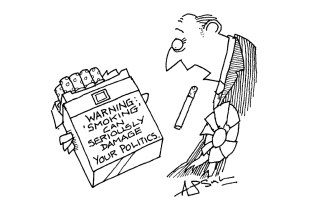
As Jordanian fighter jets shot down Iranian drones heading for Israel on Saturday night, there were joyful cries of Allahu Akbar on the ground as some people lent out of their windows to cheer the drones they thought were getting through. King Abdullah II was depicted on social media wearing an Israeli military uniform complete with the Star of David and he must dearly wish that Israelis would shut up about their ‘new strategic alliance’ with old enemies like Jordan, Egypt and Saudi Arabia. Jordan’s foreign minister was forced into an unconvincing declaration that they would shoot down anyone’s drones, not just Iran’s. Yet, the important fact remains: this is the first time, as far as anyone can remember, that Jordan’s armed forces have fought to defend Israel. It’s a new Middle East.
Remember, a friend said, Jordanians are conservative Sunnis: ‘They dislike Iran as much as they dislike Israel’
The new Middle East – the tentative alliance between Israel and the most important Arab states – has endured despite six months of Arab audiences being saturated with pictures of Palestinian children in Gaza torn apart by bombs or, lately, emaciated from hunger. The Arab street is unhappy but it has not exploded. A friend in the Jordanian capital, Amman, sat up all night on Saturday listening to the whoosh of missiles and the roar of jets overhead. He emerged from his apartment to find that most of his neighbours supported what the Royal Jordanian Air Force had done on the king’s orders: ‘If you invade our airspace, we will shoot you down.’ He lives in a smart neighbourhood of Amman but he thought the rest of the country agreed, albeit by a thin majority as two-thirds of Jordanians are of Palestinian descent. Still, he expects the king’s support to hold up even if Israel bombs Iran. Remember, he said, Jordanians are conservative Sunnis: ‘They dislike Iran as much as they dislike Israel.’
The conflict with Tehran is certainly far more important to the Saudi leader, Mohammed bin Salman (MBS), than the Israeli-Palestinian struggle, even if the war in Gaza makes that difficult for him to state openly. There were claims this week that the Saudi air force had – like the Jordanian – shot down Iranian drones. That was according to one report from an Israeli news agency and it hasn’t been confirmed. Regardless, the Saudis host the American planes and radars that would have done the job. And, like Jordan, the Saudis have been members for at least the past three years of an informal coalition set up by the US military to deal with the threat of missiles and drones from Iran and its proxy armies.
Israel and Saudi Arabia have been sending their supreme military chiefs to regular meetings hosted by US Central Command, Centcom. An account of those meetings speaks of a ‘genuine rapport and comradery’ developing between the most senior officers from these two countries without formal diplomatic relations. The top commanders from Egypt, Jordan, Qatar, Bahrain and the United Arab Emirates also sat around the same table with the Israelis. There has been intelligence sharing. It’s apparently crude, officers from the different countries in the coalition having to phone Centcom’s operations centre in Qatar when they spot a threat, but the principle has been established. Israeli and Arab pilots have flown together on exercises that imagine drones skimming across the Red Sea. The unprecedented co-operation seen at the weekend was rehearsed.
Before Hamas launched its pogrom on 7 October, MBS had been edging towards political normalisation with Israel. As he told Fox News: ‘Every day we get closer.’ He wanted – and still wants – to join the Abraham Accords, the agreement by the UAE and Bahrain to recognise Israel and open diplomatic relations. The Accords were negotiated by Jared Kushner, Donald Trump’s much-mocked son-in-law. It may have been because the young Kushner was advised by Henry Kissinger, or perhaps because he had been underestimated all along, but the Accords were an astonishing breakthrough. They could today form the basis for a new peace in the region. President Joe Biden has been desperate to get an Israeli-Saudi peace deal. That now depends on ending the war in Gaza.
Joel Rayburn, who used to run Iran policy on the US National Security Council, is one of those who believes Iran orchestrated the Hamas attacks last October precisely to stop the Saudis formalising their relations with Israel: ‘The Iranian regime manufactured a conflict with Israel and is attempting to use that conflict to consolidate control in several key countries in the Arab world.’ Rayburn explains that Iran has used its expeditionary army, the Islamic Revolutionary Guard Corps, or Quds Force, to run militant groups around the region: Hamas and Islamic Jihad in Gaza; Hezbollah in Lebanon; several Shia militias in Iraq. He also says the Quds Force has been smuggling weapons into Jordan and the West Bank. Until three weeks ago, the general in charge of these operations was Mohammad Reza Zahedi. Then Israel killed him, and half-a-dozen other senior Iranian officers, with a missile attack on a building in the Syrian capital, Damascus – the reason Iran struck directly at Israel last weekend.
Rayburn says that, given his command, he believes Zahedi was one of the masterminds of the 7 October attacks and would therefore have been an important target for the Israelis: ‘It’s not like the Israeli strike came out of the blue.’ How is it that Israel has managed to hang on to its Arab allies despite such an obviously risky and inflammatory move? Because Iran had been engaged in a ‘broad campaign’ of escalation in the region, using the Quds Force. ‘They have ratcheted up the pressure in an extremely provocative way…The Arab capitals aren’t blind. They’ve seen for years that there’s an increasing Iranian regime militant threat to their stability and their security. They’re threatened by a common enemy to the Israelis. That’s the basis of this coalition, it’s a defensive coalition.’
The reaction in Tehran to the events of the weekend had a curious echo of the Six-Day War in 1967 when Israel was attacked by an Arab coalition that included two of the countries it now calls allies, Egypt and Jordan. On the second day of the war, Israeli jets obliterated almost the entire Egyptian air force as it waited on the ground. Despite this, Egypt’s military commander sent a message to the Jordanians claiming to have destroyed 75 per cent of Israel’s planes and ordering them to join a march on Tel Aviv. Egypt’s leader, Gamal Abdel Nasser, repeated these lies to save face, though he knew the truth was evident. Iran’s leaders have shown a similar wish to avoid confronting unpleasant realities. Their rhetoric is of ‘crushing revenge’ against the ‘Zionist entity’, despite the fact that the only casualty from the hundreds of drones and missiles was an unlucky ten-year-old Bedouin Arab girl in the Negev.
Iran was given a clear demonstration of Israel’s military and technical superiority on Saturday – the ‘win’ that Biden fervently hopes Israel’s Prime Minister, Benjamin Netanyahu, will take. But it may well be that by the time you read this, Israel will have sent bombers flying over Jordan to carry out a punitive strike against Iran. The Israeli public are demanding more than a token response. Israelis know they can only ever lose one war. They believe they may have to fight that war unless deterrence is restored. So Iran is having to shed one of its shibboleths. As Rayburn puts it, the regime has always operated on the assumption that it will never have to defend itself at home while using its proxies to carry out attacks around the Middle East. The leadership in Tehran miscalculated by launching missiles at Israel from its own soil.
One report from the Israeli cabinet meeting held to decide what to do said that if the discussions were uploaded to YouTube, four million people would be at Ben Gurion airport trying to flee. The most hardline member of the cabinet, the Minister of National Security, Itamar Ben-Gvir, issued a statement saying Israel had to show it was ‘prepared to go berserk’. This is a revival of Richard Nixon’s ‘madman theory’, the belief that deterrence depends on your enemies thinking you will do something crazy if provoked. Except that Nixon sent signals – leaks of ranting conversations; an order to put US forces on alert – while the Israelis seem intent on sending bombs.
The next steps would probably unfold with an awful logic. Iran could be expected to turn to Hezbollah, its militia in Lebanon, which has tens of thousands of missiles pointed at Israel. However good Israel’s air defences are, they could not catch every one of those missiles. The Middle East now seems one or two miscalculations away from disaster, a wider war. The Arab states that stood by Israel at the weekend certainly have not signed up for that. The next casualty in Israel’s conflict with Iran might be its new coalition of Arab allies.
Watch Paul Wood and historian Charlie Gammell discuss the Arab-Israeli alliance on Spectator TV:
What was it like to be nouveau riche in Pompeii?
Frescoes are always the lead story in reports of the latest finds from Pompeii, but they are only a part of a much bigger picture.
Before it was destroyed in ad 79 Pompeii had been a flourishing port town (the explosion of Vesuvius altered the whole landscape) with a population of around 11,000, offering trading facilities to inland towns like Nuceria and Nola. It produced a huge variety of foodstuffs and far more wine than it needed, which it exported around the Mediterranean, as it did garum, a favourite Roman fish-based sauce, produced by the local Scaurus family. Plentiful foreign coinage testifies to the extent of its external connections (as does an ivory statuette of an Indian goddess). The whole Naples region was dotted with the villas of the Roman elite, who in the summer decamped there in numbers from smoky, malaria-ridden Rome: they required, and paid for, high-class services from the locals.
So too did the Pompeian elite. The exquisite frescoes on the walls of their homes testify to their good taste and to the existence of fine painters in Pompeii (there is evidence of different subject specialisations in the workshops). Equally fine is the glassware, but there are also good-quality everyday examples, serving Pompeii’s middle classes. They and the poor lived in tenements, many of them in rented-out extensions to the houses of the rich. Shops and workshops (dyeworks, perfume, pottery, etc.) were squeezed in between these properties, providing a whole range of goods and services in an expanding retail economy. There were two theatres, a gladiatorial arena and 800 shops (160 selling cheap food and drink), all attracting business. Further, the skeletal remains of those killed by Vesuvius suggest a population in decent health, many living to a good old age. All in all, Pompeians seem to have lived well above subsistence level. This was an entrepreneurial urban world, into which the nouveaux riches (many of them freed slaves) were easily absorbed. No wonder a graffito announced salve, lucrum: ‘Hail, profit!’ – until Vesuvius buried the lot.
The Spectator’s letters page is hazardous
Question time
Sir: Your leading article ‘Sense prevails’ (13 April) is a valuable précis of the Cass Review into NHS gender treatment. However, it also raises several questions. How are the actions of these individuals, groups and organisations different from those of others who have been found to have acted unprofessionally, causing harm to patients who were entitled to place trust for their health in them? Where was the ethical and executive management oversight within the NHS? What other unproven ‘treatments’ are being carried out under the ever-growing demands for more money to be allocated to the NHS? Finally, what sanctions are to be meted out – or will we be fobbed off with the perpetrators’ handbook: ‘Lessons have been learned’?
David Blackwell
Chesterfield
Shrinks rapped
Sir: In your leading article last week, you rightly note that ‘medical professionals should have been alerted’ to what was going on at the Tavistock Clinic. Quite so. The Royal College of Psychiatrists surely has a governance role here. Its silence has been deafening.
Noel Scott, retired consultant psychiatrist
Belfast
The doctor will see you now
Sir: I share some of Laurie Graham’s concerns (‘Cosmetic surgery’, 13 April) about the NHS. I live in North Wales, where the Betsi Cadwaladr University Health Board has been in and out of special measures. But my GP surgery has introduced a brilliant online triage system called ‘Klinik’, where one can type one’s requests or concerns in detail. It is so much better than Laurie Graham’s 8 a.m. ‘scrum’ or ringing a jammed switchboard. I have accessed Klinik three times in the past year and have always had a quick and appropriate response, two of which were face-to-face GP appointments within 24 hours.
As for communicating with the local hospital, I have had the best results when using email, but only once I know the email address of the person with whom I need to communicate. I have had to ask for those, but it is better than playing telephone tag to secure an appointment.
The internet is not the answer to everything, but if used imaginatively and wisely it should offer a few quick wins to a cash-strapped health service.
James Harris
Wrexham
Tale with a twist
Sir: As Olivia Potts speculates (6 April), the origin of the pretzel is attributed to Christian monks. The story goes that in the early 7th century, an Italian monk had some left-over bread dough that he was preparing for Lent. He rolled it into ropes and twisted them into the shape of arms crossed across the chest in prayer, before baking them. His fellow monks used the twisted bread as a pretiola or ‘little reward’ for children who came to church to learn their prayers.
Kay Bagon
Radlett, Herts
Culture gap
Sir: Mary Wakefield’s thoughtful conversation with Rob Henderson (‘Abuse of privilege’, 6 April) raises the important question of how we can change the culture to better champion children. How can we, for instance, bring back shame for fathers who abandon their families?
What is not mentioned is perhaps the ultimate example of a culture sidelining children: abortion. If kids growing up in institutions and foster homes have no power and visibility, how much more vulnerable are the unborn? But Henderson is on to something when he suggests ‘people are almost repelled by the weakness of children’. It’s a bleak diagnosis of a culture that portrays them as an economic inconvenience instead of marvelling at how such weakness can turn a parent’s life upside down in the most amazing ways.
Jon Wainwright
Cliburn, Cumbria
Peerless suggestion
Sir: Dot Wordsworth (6 April) raises the increasingly common solecism in the addressing of peers. It is not just the FT which makes use of the ‘Lord David Cameron’ format – the BBC is a regular offender. An oddity is that this incorrect form is rarely used in connection with peeresses. Ennobled women are much more generally referred to as ‘Baroness Thatcher’, or ‘Warsi’. Perhaps it might be an advantage to accord male peers with their peerage degree – most commonly Baron. Thus David Cameron might be referred to as ‘Baron Cameron’. If his given name were inserted it might be less offensive to protocol.
Joshua Garner
Wells, Somerset
Paying the price
Sir: I had not imagined The Spectator letters page to be a place so conducive to physical travail and/or financial hazard. Unfortunately, my better half – a Sussex girl, born and bred – saw Timothy Smith’s letter about a walking trip on the Downs (6 April). The resulting clamour to follow suit could only be diverted with the promise of a costly trip to the opera at Glyndebourne.
Tom Stubbs
Surbiton, Surrey
Good companions
Sir: After reading the common sense by Charles Moore (Notes, 13 April), I turned the page to read the superb poem by Ben Wilkinson, and burst into tears having just a few weeks ago said goodbye to my Jack Russell, Chester, who was nearly 15. This week I have taken a new four-legged companion, a five-month-old Patterdale cross. I keep feeling I have betrayed Chester, but everybody says: No, you gave him a good life – now move on with Jonno. Thank you for the poem, Ben.
Brian Gable
Hereford
When was the world’s first drone attack?
Attack of the drones
The world’s earliest drone attack goes back further than you might think. On 12 July 1849 the Austrian military launched unmanned balloons over Venice, which they hoped to recapture after the city had declared itself a republic the year before. Suspended beneath each of the balloons were bombs containing up to 30lb of explosives, with timed fuses primed to deposit them over the city. The raid was not a success. Some exploded in mid-air, others failed to reach their target because the wind changed direction after the balloons had been launched. Some even blew back over the Austrian forces. A second attempt involving 200 balloons was launched on 22 August. A few exploded in the city but again most missed their mark. In spite of minimal damage, the Venetians surrendered two days later.
Damage limitation
Which are the best- and worst-behaved countries in Europe, judging by the damages awarded by the European Court of Human Rights between 2012 and 2022? (In euros)
Highest
Turkey – 151.8m
Italy – 133.2m
Romania – 74.6m
Albania – 50m
Greece – 21.9m
Slovakia – 23.1m
Ukraine – 20m
France – 10.2m
Lowest
Denmark – 135,000
Sweden – 159,000
Ireland – 178,000
Finland – 270,000
Czech Republic – 343,000
Netherlands – 385,000
Iceland – 417,000
Estonia – 424,000
Source: Council of Europe
Crop tops
The NFU warned that wheat yields could be down by 15 per cent this year due to the wet winter. Is climate change affecting production? Average wheat yields over the past century (tonnes per acre):
1924-33 – 2.4
1934-43 – 2.5
1944-53 – 2.8
1954-63 – 3.7
1964-73 – 4.2
1974-83 – 5.3
1984-93 – 6.8
1994-2003 – 7.7
2004-13 – 7.7
2014-23 – 8.2
Source: Defra
Even Orwell’s Thought Police didn’t go as far as Trudeau
You’d assume the reaction to the SNP’s new hate crime laws would make other authoritarian governments hesitate before introducing similar legislation. Humza Yousaf has become a laughing stock and his approval ratings have fallen by 15 points. But apparently not. The new Irish Taoiseach, Simon Harris, is determined to railroad through the Criminal Justice (Incitement to Violence or Hatred and Hate Offences) Bill, Donald Tusk’s government in Poland wants to introduce a new law that would make it a criminal offence to ‘defame’ a member of the LGBT community and Justin Trudeau is pressing ahead with an Online Harms Bill that makes our own Online Safety Act seem like the First Amendment. It’s as if all these ‘liberal’ leaders are saying: ‘You think Humza Yousaf is the West’s foremost opponent of free speech? Hold my beer.’
The Canadian proposal is, by some distance, the worst. It’s so dystopian, even George Orwell and Philip K. Dick failed to anticipate it. Discrimination is already banned under the Canadian Human Rights Act, but the new law will expand the definition of ‘discrimination’ to include online speech ‘likely to foment detestation or vilification of an individual or group’. To those worrywarts who are anxious about the risk that this new law might be weaponised by woke activists, the government has said that ‘detestation’ and ‘vilification’ are not the same as ‘disdain’ or ’dislike’, which will still be permitted (thank you, Mr Trudeau), or speech that ‘discredits, humiliates, hurts or offends’.
In Canada the authorities will be able to place people under house arrest for ‘hateful’ things they haven’t said
Which raises the question: who gets to decide what speech falls foul of this new standard? And what qualifies them to make these Solomon-like judgments, parsing the difference between ‘dislike’ (acceptable) and ‘detest’ (verboten)? That job will fall to a new national agency called the Digital Safety Commission, comprised of five commissioners and an army of bureaucratic busybodies, which will have the same powers as a federal court, save for the fact that it won’t be bound by ‘any technical or legal rules of evidence’. (Points to Kafka for anticipating that.)
Under the bill, anyone can accuse you of the ‘communication of hate speech’ and if the Canadian Human Rights Tribunal finds you guilty it can order you to pay up to $20,000 to ‘any victim’ and $50,000 to the state (on pain of imprisonment). No limit on how many times a malefactor can be ordered to pay these fines, obviously, so bankruptcy looms for Jordan Peterson. And it isn’t just stuff you’ve posted after the new law comes into force you can get into trouble for – oh, no – but anything you’ve posted, ever, dating back to the dawn of the internet. In other words, it’s a gold-embossed invitation to offence archaeologists to do their worst, with the prospect of a $20,000 reward if they hit paydirt. The only way to protect yourself is to go through all your social media accounts and painstakingly delete anything remotely controversial you’ve ever said.
Although, that won’t protect you from another clause in the bill – and this is where it trips over into as yet unimagined dystopian territory. If the courts believe you are likely to commit a ‘hate crime’ or disseminate ‘hate propaganda’ (not defined), you can be placed under house arrest and your ability to communicate with others restricted. That is, a court can force you to wear an ankle bracelet, prevent you using any of your communication devices and then instruct you not to leave the house. If the court believes there’s a risk you may get drunk or high and start tweeting under the influence – although how is unclear, given you can’t use your phone or a PC – it can order you to submit regular urine samples to the authorities. Anyone who refuses to comply with these diktats can be sent to prison.
Pretty extraordinary, no? Margaret Atwood, who’s no slouch when it comes to dystopian satire, describes the bill as ‘Orwellian’, but even the Thought Police in Oceania didn’t punish people for things they might say rather than things they’d said. This is more reminiscent of Philip K. Dick’s Minority Report, except in that novel the police only arrest people they think are about to commit serious crimes like murder and only after a suspect has been identified by a ‘precog’ who can literally see the future. In Trudeau’s Canada, by contrast, the authorities will shortly be able to place people under house arrest for ‘hateful’ things they haven’t yet said on the say-so of a police ‘intelligence’ officer. If that’s the future, God help us.
I think the time has come to set up a Canadian Free Speech Union. If you’d like to help, email me on tobyyoung@freespeechunion.org.
The Battle for Britain | 20 April 2024
It’s no wonder Manchester City are top of the league
Well it was fun while it lasted, the closest three-way race for the Premier League in history, a title challenge as exciting as anything you will see on Netflix. It’s not over yet but it certainly feels like it. With six games to play, there’s still many a slip… But deep down even their most ardent supporters find it hard to see Arsenal or Liverpool getting past the seemingly unstoppable Manchester City now.
It’s amazing what you can do when you’re owned by one of the richest countries on the planet
City have another stage in their haul of silverware in their sights on Saturday with an FA Cup semi-final against Chelsea at Wembley. Chelsea could be brilliant or rubbish or anywhere in between. City are likely to field a second-string side, having bigger fish to fry. But a second-string City is much better than most teams.
City are a beautiful team to watch. They could even rest Rodri, their best player, at the weekend and still dismantle Luton 5-1. How do they do it? A brilliant rotation policy, razor-eyed ruthlessness and some of world’s best players: it’s amazing what you can do when you’re owned by one of the richest countries on the planet and managed by the best coach.
Even so, the most devoted City fan should be getting slightly twitchy as an extremely large elephant is beginning to make its way into the room. City face more than 100 charges of breaching financial fair play rules over the nine-year period 2009-18, as well as several breaches of the Premier League’s profitability and sustainability rules (PSR), 2015-18. The charges relate to a variety of issues including sponsorship revenue, ‘operating costs’ and a few questions over Roberto Mancini’s pay packet. It’s over a year since the charges were laid and the saga has a long way to play out, while Forest and Everton have been hit hard with massive points penalties for their financial misdemeanours. It’s easy to feel sorry for them, but Everton certainly have been dreadfully run for years.
Meanwhile, a natural successor to Pep Guardiola has burst on to the European scene like a rocket. A couple of years ago, Xabi Alonso, the fluent, cerebral Liverpool, Real Madrid and Bayern Munich midfielder, was managing Real Sociedad’s seconds. Near the end of 2022 he left for Bayer Leverkusen, perennial Bundesliga also-rans, then languishing at the foot of the table. Now led by Alonso, they have smashed the German title by the massive margin of 16 points, overwhelming poor Bayern who had won the title every year since about 1847.
It is a colossal achievement and Alonso is now in demand all over Europe – not least by Liverpool, who wanted him to succeed Jürgen Klopp. I think he would be a better fit at City when Guardiola decides to step aside. He is thoughtful, creative, highly popular and widely admired. And speaks excellent English.
Poignantly, the death of ‘Deadly’ Derek Underwood, England’s most successful spin bowler in Test history, was announced on the same day that Sunrisers Hyderabad battered a blizzard of sixes to reach 287-3 in the Indian Premier League, the highest ever T20 total. At first sight there is little in common between the remorseless accuracy and flight of Underwood’s brisk left-arm spin (or was it slow-medium pace? He just smiled if you asked him). But the levels of skill, strength and stamina are pretty similar if you want to smash a quick-fire century like Travis Head or take six wickets for 45 to win the Headingley Ashes Test as Underwood did in 1972. I know which I would rather watch, though it’s pretty certain that Underwood would have made a fortune in the IPL. He was born in Bromley, where David Bowie was growing up at the same time. With his pleasant looks, easy charm and irresistibility to the opposite sex, ‘Deadly’ was the David Bowie of cricket.
Dear Mary: How do I choose who to sponsor for the London Marathon?
Q. For the past couple of years, many of my sons’ friends have been gamely running the London Marathon for good causes. I received more than 15 emails this year, all asking for sponsorship. As much as I’d like to respond in the affirmative, I am not in a financial position to sponsor more than two at the most. They all know each other, so how do I go about choosing which ones to sponsor?
– R.B., London SW9
A. Send out a group email saying that, as you aren’t able to give generously to each one of them, you will put all their names into a hat and the first two that you pick out will benefit. This way everyone will know your intentions are good and their requests haven’t just been ignored. They will also note how many others are petitioning and how unfeasible it would be for you to comply with this form of crowdfunding in reverse.
Q. Last year my husband and I celebrated our ruby wedding anniversary. We had organised a dinner in London for 100 of our closest friends. We spent hours planning the seating but during the evening, as we were having drinks, an Australian couple whom we have known for years turned up as a surprise. They had flown over specially. We had not invited them as surely no one invites friends who live abroad on the off-chance they might be in the country? Obviously we were thrilled but we couldn’t be nice to them as all we could think about was where they were going to sit. The tables were round and seated ten so it was difficult to fit them in. What do you think we should have done?
– Name and address withheld
A. Dear Mary turned to her Australian culture expert, who insists: ‘Australians have a different approach to social life, thinking nothing of driving more than three hours to drop in on someone for a surprise drink. They are also thick-skinned. So if you had said it was lovely to see them and “You have a drink with us now and go out for supper and come back for the dancing later”, they would not have taken offence.’
Q. I work for a charity but when I ask friends to be on the committee to help raise money they say yes enthusiastically, only for me to discover they don’t turn up to meetings or help with the address list. They only want to get the best tickets for the event which committee members are entitled to. What do I do?
– Name and address withheld
A. Work with what you have. When an offender misses a meeting immediately schedule in a one-to-one telephone call with them. Extracting some names and favours this way is better than extracting nothing at all.
‘Five stars, no notes’: Arlington reviewed
Arlington is named for the 1st Earl of Arlington and his street behind the Ritz Hotel. It used to be Le Caprice, which was opened in 1947 by the Italian Mario Gellati, who would not, by the new rules, get into Britain now, but this is not a column about pain. In 1981 Le Caprice was taken over by Chris Corbin and Jeremy King, and it became the most fashionable restaurant in London. Princess Diana dined here and when Jeffrey Archer was released from prison, he ate here.
None of
these dishes could be improved. Five stars, no notes
After an interregnum from Richard Caring, under which Le Caprice closed in 2020 – it could not compete with Caring’s mad themed restaurants across Piccadilly – Jeremy King, who is more emotional and skilful than most restaurateurs, returned here. Le Caprice was his first restaurant. ‘It is in my DNA, my very soul,’ he has written, ‘I cannot contemplate it without emotion.’ He renamed it Arlington because Caring’s Caprice 2 cannot be ruled out. I last ate here in 2016 when it was Caring’s Caprice and it felt ghostly and necrotic: Madame Tussauds but you eat the waxworks.
Corbin and King lost their restaurants, which were among the best in London, in 2022, and this is part of a renewal. King has poured all his love into Arlington, and it has the air of a wedding or family reunion. He understands that diners are seeking love, not breadsticks – the breadsticks are incidental – and now they have it back and are delighted. King is an old-fashioned restaurateur, and he walks between tables. Hedge funds don’t do that. They can’t. They don’t have legs, and they don’t live here anyway.
Arlington glows like Oz, but I have examined the before and after photographs on Instagram: King documented the rebirth. ‘1981 reimagined #NotLeCaprice’ is his tagline. It is bright-lit and monochrome with a mirrored bar and black leather stools, and it is filled with David Bailey’s portraiture: beautiful Michael Caine; Barry Humphries trying to conceal his intelligence and failing; Peter Sellers trying to conceal his rage, likewise failing; Joan Collins and Steven Berkoff looking as if they are off to a bunk-up at the Ritz. Homage works if the present is as well-loved. The strange and the familiar are in balance and, due to this careful alchemy, it is full on a Sunday night.
The food is classic British cuisine, and it is expertly done. We have a round shepherd’s pie. They bring Lea & Perrins sauce unasked – they plonk it down – and this is when I know this is a perfect restaurant. Then salmon fish cake with sorrel sauce; tuna loin and white asparagus; chicken Milanese with rocket, parmesan and mash; crème brûlée; a rhubarb crumble; then hokey pokey, which is a sundae by another name. None of them could be improved. Five stars, no notes.
I struggle to understand why these are such great restaurants, and I think this: you might meet Michael Caine, it is true, but you will also meet yourself when happy. King has a gift for involving all in his dreamworlds. I don’t ask why, but I long to meet his childhood self.
He is also a trendsetter. When he opened the Wolseley in 2003, every new opening in London for a decade was, or seemed to be, a grand European café: London was a city of them, and it incited a small schnitzel boom. Maybe the 1980s aesthetic will return now, and with it an economic boom: it’s the only indication I have found so far. Keir Starmer, who should eat here, as should you (it’s £50 a head if you are thrifty) can only hope so.
Amol Rajan is right to change his ways on ‘aitch’
My husband thought it brave and manly of the BBC’s Amol Rajan to resolve publicly to change his pronunciation of the letter-name aitch. He’d said haitch all his life, but declared in a blog: ‘Dear reader, I’m here to tell you: it’s aitch.’ This attracted wide attention. He also announced that biopic is pronounced bio-pic, not bi-opic. That is true too, but attracted little attention.
Amol Rajan is 40 and took an English degree at Cambridge, but has only just caught up with the eighth letter in the alphabet. Still, we all have blind spots. The key to the mispronunciation haitch is hypercorrection. Children were so often told to pronounce their initial aitches that when it came to the letter’s name, they felt there must be one there too.
Mr Rajan says: ‘Haitch is actually listed as a variant in the Oxford English Dictionary.’ He provides a link to Brewer’s Dictionary of Irish Phrase & Fable, which is not the same thing. There it says the pronunciation ‘haitch rather than aitch is a distinctive feature of Hiberno-English’.
Aitch is a funny name for a letter, when the others are so dull. Michael Rosen has said that we owe its name ‘to the Normans, who brought their letter hache with them in 1066. Hache is the source of our word hatchet: probably because a lower-case H looks a lot like an axe.’
I don’t think that is true. The Normans might have used the Old French word ache for H, though not because it named a hatchet but, like Spanish ache, it derived from the late Latin for H, accha or ahha.
The classical Latin had been ha. Before the Norman Conquest, Aelfric had written an English grammar. He said ‘h and k geendiað on a’ – h and k end in a. In other words H was ha.
After the Conquest, until Shakespeare’s time, the English name was ache, pronounced not like belly-ache but like ash. This turned into aitch as early as 1623.
It surprises me haitch is increasing. Jeremy Butterfield, editor of Fowler’s Dictionary of Modern English Usage, thinks haitch will prevail, ‘unspeakably uncouth though it may appear’.
My (surprisingly) decent proposal
‘Like being chained to a lunatic.’ That’s how a man feels in relation to his libido. And the lunatic latches on to anything, irrationally, and without warning. In Cambridge recently I dropped into a lecture given by a beautiful historian, Lea Ypi, from Albania, whose discourse included this observation about revolutionaries: ‘Once they attain power they lose all interest in revolution.’ Good point. Her blonde hair spilling over her shoulders absorbed far more of my attention than her political reflections and I was desperate to speak to her afterwards, but I had no way to orchestrate a meeting.
She raised one eyebrow at me suggestively. This was the cue for negotiations
Instead, I headed for the rougher end of Cambridge, near the railway terminus, where the misfits and outcasts gather. I’d already arranged a social rendezvous at a private business location. Here’s how it works. You hand over a roll of banknotes to a concierge at a desk who ushers you into a softly lit room where your companion awaits you. Mine was petite, black-haired and buxom. ‘Shea,’ she called herself. She looked Chinese rather than Irish but you never know these days so I asked her which part of Ireland she came from. ‘Shanghai,’ she told me. I lay naked on the couch and she rubbed hot wax into my shoulders (a ritual that gives these assignations an air of medical respectability). A moment later she ordered me to flip on to my back as she dimmed the lights and raised one eyebrow at me suggestively. This was the cue for negotiations.
The money at the desk stays at the desk and Shea makes a separate deal with the client. Her opening bid was the same as the cost of my overnight hotel so I made a lower offer. Twenty pounds less. She accepted it. Then a crisis emerged. I’d surrendered most of my cash and I was down to one measly fiver. Not enough. And I’d just forfeited my ATM card to a greedy machine that gobbled it up. As for my uncooperative iPhone, I’ve never convinced it to pay for anything.
I offered to fetch my laptop from my hotel and to transfer the money when I got back. But Shea didn’t like that idea. She refused to let me leave, fearing that my lucrative custom might slip through her fingers. This struck me as bizarre. Where else would I go? I couldn’t imagine a better pastime than a brisk workout with the lovely Shea who was about 48 years old, I would guess, and had a crooked smile which I find far more attractive than those ultra-white Hollywood teeth that look like pieces of Lego. At her suggestion, we went ahead anyway and the issue of payment was left unresolved. I appreciated that. She trusted me.
As we got dressed afterwards, she complimented me on my old walking shoes. ‘Thank you,’ I said, feeling baffled that she’d chosen to praise my sorry-looking boots rather than my lean and toned physique. Then she turned shyly towards me with her pale tummy exposed. ‘I’m fat,’ she said mournfully. I sprang instantly to reassure her. ‘Not fat. Beautiful,’ I said, smoothing my palm tenderly across her stomach. ‘Lovely, pretty, gorgeous,’ I added, spraying out synonyms in the hope of finding a word that lay within the compass of her understanding. She seemed satisfied. As we padded about, tugging our clothes back on, I realised we were like a long-married couple observing the conventions of mutual respect and co-operation. We’d known each other for 17 minutes and yet the grooves of domestic harmony, so etched into the human character, brought our disunited interests together and gave our small talk an air of ease and familiarity.
As we tugged our clothes back on, I realised we were like
a long-married couple
‘Back in ten minutes,’ I told her. She looked at me uncertainly, without smiling, as I left. When I got back she was at the front desk about to depart for the evening. She might have been any suburban housewife en route to play bridge or to hear a performance by an amateur Handel society. And she was surprised to see me, which I found disheartening. She thought I was a swindler. I opened my laptop and asked her to put her bank details into my Santander account on the ‘new payee’ page. She spelled her name ‘Xe’ as it turned out. And her second name had just three letters. Her sort code and her reference details indicated that she held an account with HSBC. But of course. Her local bank.
I invited her to type in the fee that I owed and she entered the lower amount with the £20 discount. I gallantly deleted this and offered the larger sum she had initially quoted. She giggled and stroked my elbow affectionately. This casual caress made me feel heroic and magnificent for some reason. One last detail was needed. ‘Payment reference.’ I suggested ‘fun’. But Shea, or Xe, had other ideas. ‘Wedding gift,’ she said, laughing and rubbing my shoulder again. Was this a marriage proposal? Sort of, yes. But I pretended she’d just made a throwaway joke. My bank approved the payment and she smiled as I headed for the door. ‘See you next time,’ she said. ‘I’d like that,’ I said. No doubt she spoke insincerely but I didn’t. I meant it, privately, secretly. The lunatic I’m chained to is invisible, thank God.
Lefties don’t know anything about farming
The artists and hippies are re-wilding their land, which is to say doing nothing at all to it and watching it fill up with brambles.
The builder boyfriend and I are un-wilding our land, which is to say pulling out every bramble we can find and cutting back the overhanging tree branches.
‘Seven hundred trees,’ she said, sipping her fresh mint tea, her artisanal walking crook propped against the wall
We have nothing in common with the hippy English blow-ins who come to West Cork, of course. However, I have made friends with a few of the local lefties, including a very nice lady who lives down the lane whom I cannot help but like since she brought me honey from her bees.
She is an artist and deplores hunting and shooting, but in such a melodramatic way – ‘Darling, I cannot bear death!’ – as to make it entirely endearing. So I keep my mouth shut while she is holding forth about the savagery of farming and the barbarity of pest control because she is such good value.
We go to art gallery cafés on the edges of peninsulas where we drink organic tea and admire place mats adorned with wildlife. Mugs and coasters with cuddly squirrels and friendly foxes on them are for sale in these craft-shop cafés. It’s wondrous escapism.
My friend wears a Ukrainian lapel badge but it could be worse. She’s not waving a huge Palestinian flag while caterwauling ‘From the river to the sea’ like most of the English women around here.
I told her I couldn’t be doing with that, to mark her cards, because if she did start warbling about Gaza then we would have to fall out. But to my delight she said: ‘Darling, I so agree. These regimes…’ And she made her ‘I can’t bear death’ face.
We were sitting in a gallery café having a lovely chinwag about nature one morning when she suddenly declared: ‘I planted 700 trees during lockdown.’
I gulped my Earl Grey hard to stop myself choking on it. ‘I’m sorry?’ I said. ‘You planted what?’
‘Trees, darling – 700 trees.’
My hearing is going, I thought. This lady has a few acres of land around her cottage. I asked her to say it again. ‘Seven hundred trees,’ she said, sipping her fresh mint tea, her artisanal walking crook propped against the wall beside her.
I continued to shake my head. But no matter how many times I got her to say it, she had, or believed she had, planted 700 trees.
I came home and walked around our bottom paddock where the thoroughbred and pony were grazing, and I surveyed the brambles around the perimeter.
I went and fetched the BB, telling him to bring his gardening tools and we began cutting the undergrowth back. It was a satisfying job pulling out thorny tendrils and exposing bare earth that would green up. The BB has already tackled more than half the overgrown boundaries, pruning and clearing.
As I pulled at the brambles with my gloved hands, I kept thinking: ‘Where on earth has she put 700 trees?’
I know the left have a love affair with trees that knows no bounds, and 700 of them planted by one person could know no boundaries either.
Blimey, I thought, I hope she hasn’t gone around planting trees just anywhere. While our house was unoccupied she might have sneaked a few in here. Maybe she chucked a dozen saplings over the hedge. It made my chest tight to think of it.
When I imagine 700 trees all I can think of is the amount of cutting back involved. This is how I know I’m not a lefty. I see a tree and I see branches that need pollarding.
The left have never been able to grasp that a tree is something that needs maintenance, and not just in order to look nice, but to thrive. In the same way, they seem incapable of grasping that without the cultivation known as farming there are no green fields. Green is not what nature looks like if you leave it to itself. Green is not what nature looks like if you leave it to lefties.
My friend has a paddock that is one -tangled impenetrable brown mass of thorny thicket. Down the lane from her lives another blow-in, an Australian chap whose half an acre is covered in a giant white polytunnel.
He walks by our house on sunny days and lets his young daughters stick their tiny hands through the farm gate to push grass into our horse’s mouths. So far the cobs have not bitten their fingers off but the BB said it was only a matter of time. We had to put a disclaimer notice up.
It quotes an Irish law indemnifying farms by warning people not to come in. I wish it said: ‘No lefties past this point, unless by arrangement.’
The magic of Aintree
However hard some people try to make it a business, jump racing remains a sport and the Grand National its greatest race. Two fences out this year 20 horses were still in contention, ten still seemingly in with a serious chance of winning. As Ruby Walsh noted: ‘If that doesn’t convince people it’s a wonderful sport I’m not sure what will.’ Of the 32 starters 21 finished. Four horses unseated their riders and seven were pulled up but not one fell.
The Grand National
will remain a great race. But it is changing
Still in the battle two out were the three ‘story horses’. Latenightpass was point to point trainer Tom Ellis’s first runner under Rules, owned by his mother and ridden by his wife Gina Andrews. Kitty’s Light has been a beacon of hope, rallying Welsh trainer Christian Williams and his wife as their six-year-old, Betsy, battles leukaemia. Then there was Ain’t That A Shame, ridden for the sheer love of the game by 40-plus amateur David Maxwell. The honours went to I Am Maximus, trained by Willie Mullins, owned by J.P. McManus and ridden by an ice-cool Paul Townend who must have had white paint down his left-hand boot, so close had he kept to the running rail. But Kitty’s Light finished fifth, the first British-trained horse home. Ain’t That A Shame outran all expectations in a highly creditable sixth place and Latenightpass only faded in the long run-in to finish 12th. They didn’t win but they played their part in the Aintree tale.
I go to Cheltenham’s Festival to revel in the sheer quality of the talent, equine and human, on view. But I go to Aintree for fun. Nobody expresses it better than Tiger Roll’s now retired jockey, Davy Russell. He told a race-day lunch of going apprehensively to a top trainer for instructions on his first ride for him, who said: ‘Just go out and enjoy yourself.’ For the next 20 years he did, feeling he’d ‘been given a free licence in the pleasure park’.
Asked about Kitty’s Light’s chances, Davy declared with the generosity which is special to jump racing: ‘I’d willingly give back one of my Nationals for Kitty’s Light to win it’, adding: ‘Christian is great gas and great craic.’ So he is: just don’t listen to his 66-1 tips. Davy paid tribute, too, to the Liverpool crowd who so relish what is undoubtedly their Festival with a connection that the Aintree management works hard to maintain. Retiring chairman Nicholas Wrigley and his Jockey Club team deserve credit for that and for steering through tricky times post-Covid and after Rose Paterson’s tragic death.
They also do all the bells and whistles so well at Aintree and if you can’t enjoy yourself on Ladies Day watching the selfie-snapping girls parade down the pink carpet to the Red Rum enclosure, some wearing little more than a wisp of silk, a few feathers and a bucketful of bravado then you’ve no blood in your veins. Practicality shows with friends stooping to adjust each others’ wardrobe malfunctions – flimsy ankle straps not built for walking – like a cluster of RAC roadside mechanics.
One reveller met another version of that practicality in the early hours at a Liverpool night club. As his vitality sagged he enquired admiringly of a dancing partner’s stamina: ‘When do you go to bed?’ ‘Depends when I’m asked,’ she replied.
David Maxwell’s sixth place on Ain’t That A Shame gave particular pleasure. As we talked, shortly before he went out to tackle the National, he was cool enough to reflect on the wider world, musing that when AI took over and destroyed all our jobs then Liverpool was well equipped to become a natural hub for the entertainment we would need.
As for riding in the National: ‘The great thing about this sport is that we’re allowed to do it. We’re not breaking any laws and things that you do in sport nobody can take away from you.’ We were joined by Sam Waley-Cohen, victor in the 2022 National on Noble Yeats and like David a highly successful entrepreneur. It was as they began talking of races and fences that you saw that special glint in their eyes.
The Grand National will remain a great race. But it is changing and I worry whether it will continue giving us those story horses. A few years ago Kitty’s Light, who last season won three long-distance handicap chases, the Eider, the Scottish National and the Bet365 Gold Cup, would have been an obvious National winner. But last Saturday he was beaten on merit by four Irish-trained horses, all of which had previously won Grade Ones.
The easing of the National fences, the field size limit of 34, ownership economics and the Irish domination are making it harder for the little guys to become part of its great history and more likely that the big battalions of Willie Mullins and Gordon Elliott will dominate its future. But they’ll still have to work at it: Willie had run 48 horses in the National since his previous success in 2005.