Life

In search of the perfect martini

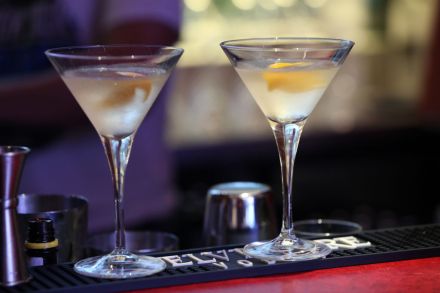
“I like bars just after they open for the evening,” Terry Lennox tells Philip Marlowe in the early pages of The Long Goodbye. “When the air inside is still cool and clean and everything is shiny and the barkeep is giving himself that last look in the mirror to see if his tie is straight and his hair is smooth. I like the neat bottles on the bar back and the lovely shining glasses and the anticipation. I like to watch the man mix the first one of the evening and put it down on a crisp mat and put the little folded napkin beside it. I like to taste it slowly. The first quiet drink of the evening in a quiet bar — that’s wonderful.” They’re drinking gimlets — gin and Rose’s lime juice — which some people, though not me, consider a type of martini.
martini

Literary festivals are no fun

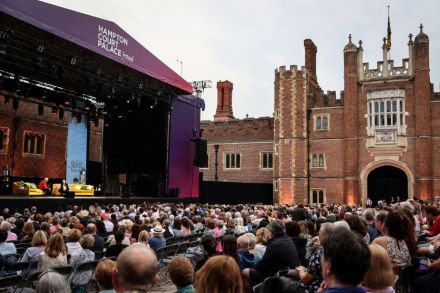
This is the season when literary festivals start to happen all over the UK. From the highlands of Scotland to the South London lowlands of Deptford, there are book festivals for every taste and tribe. Festivals devoted to crime fiction, women writers, LGBTQ writers and young novelists. Even old Marxists are having their own summer festival. I’m thinking of starting a literary festival for neglected and bitter writers like me who don’t get invited to literary festivals. I ask myself: why should I care? But I do. I spend long nights of self-torment scrolling through the lists of people appearing at various festivals and shouting at my laptop screen: who the fuck is he? What has she written? Why is Bono there and not me? For heaven’s sake, who invited Minnie Driver?!

How the NCAA twisted women’s sports

This has been a banner, or perhaps baneful, year for women’s intercollegiate sports, what with trash-talking basketballers, record TV ratings and biological men swimming in the distaff pool. But the focus on celebrity female athletes only emphasizes the degree to which the NCAA has twisted women’s sports into a depressing duplicate of the Y-chromosome side of the street. It wasn’t supposed to be this way. The pioneers of women’s collegiate — not necessarily intercollegiate — athletics conceived and promoted a healthy and democratic ideal that was antithetical to what they saw as the elitist, corrupted and sloth-inducing male version.

sports

The Age of Unreason

The present time, which has justly been called the Age of Unreason, is also an exceptionally confused and neurotic one. Indeed, it is unreasonable because it is confused and neurotic, a fact that its blind faith in liberalism and science make it unable to recognize. Confronted by what it views as the existential crisis of climate change caused by human activity, progressive liberalism promotes the widening illusion that Homo sapiens is actually and morally responsible for endangering “the planet”; that humans can accomplish anything, including reversing and even halting the process, supposing they have the moral will to do so.

unreason

At home with Jacob Rees-Mogg

Before I arrived at Gournay Court, Jacob Rees-Mogg’s seventeenth-century home in Somerset, I’d missed the main event. Beforehand, I’d asked the Conservative Member of Parliament to lean in to whatever our photographer asked — and somehow, before I turned up an hour late, she managed to get him in a nearby field feeding sheep from the palm of his hand. He didn’t seem to mind. In fact, there were only a few times he said no to our increasingly deranged demands. Once was after we asked him to get up on the humongous dining room table, spread his legs and act natural. “Well, I couldn’t possibly do that,” he replied. When you drive up to Gournay Court, you encounter what I can only describe as the quintessential British upper class. Think afternoon tea at the Savoy.

Rees-mogg

The joy of missing out

As I write this the coronation of King Charles hasn’t happened yet, but I’m having great fun watching the procession of those who have been royally snubbed by royalty. Only a thousand people have been invited to the King’s coronation in Westminster Abbey and a lot of other people — dukes, earls, A-list celebs, actors, society figures — are pissed they didn’t make the cut. The British press reports daily on the latest person to be “snubbed.” So far the snub scorecard is as follows: Prince William is snubbing his brother Harry. Harry is snubbing everyone. His wife Meghan is snubbing Charles and President Biden is snubbing Britain.

invited

Michael Cimino’s gift to cinema

In the spring of 1981, I committed what the entertainment press of that day regarded as an act of self-abuse: I bought a ticket and sat through Michael Cimino’s epic flop Heaven’s Gate, and then I went back for another viewing before the universally reviled film ended its one-week run at the local cinema. In the four decades since, I have abused myself in similar fashion four or five more times. Heaven’s Gate is a 200-minute-plus mess of beautiful incoherences and stupefying contradictions, its pattern set by a gorgeously preposterous prologue in which forty-something actors Kris Kristofferson and John Hurt waltz across the greensward as newly minted Harvard graduates, class of 1870.

cimino

The dangers of faux-education

François-Marie d’Arouet (1694-1778), commonly known as Voltaire, devoted his life to waging intellectual warfare against Christianity — the Catholic Church and Catholic culture in particular — along with its historic political and social allies, royalty and monarchy, which he condemned as a monstrous entity in his famous battle cry“Écrasez l’Infȃme!” Given his aims as a polemicist, a deist and a republican, Voltaire did not misconstrue the enemy whose destruction he called for.

education

Pet portraitist Mimi Vang Olsen marches to the beat of her own drum

Mimi Vang Olsen operates in the West Village equivalent of a goldfish bowl. Every day, the eighty-five-year-old pet portraitist settles in a chair in her studio-cum-storefront on Hudson Street and gets to work, painting dogs, cats and the occasional guinea pig. Tourists stop to peer inside, cooing over a haphazard display of postcards and paintings. Locals tap on the glass to wave hello. During the pandemic, curiosity intensified: Vang Olsen’s shop became an Instagram sensation after she attached a blue mask onto a pug portrait hanging in the window for some much-needed levity. Vang Olsen, however, is nonchalant about the attention. She doesn’t have a cell phone or social media.

vang olsen

Make love, not culture war

I think I know how to end the culture wars at a stroke. My solution can be summed up in a simple slogan: make love, not culture war. Or, to put it another way — poke the woke. Let me explain. I have a new woman in my life and not just any woman. I have a Woke Woman. That’s right: a full-on, vegetarian, eco-activist, kill-the-rich, bisexual, transgender-defender and social justice warrior. She’s also a shrink. And not just any kind of shrink, but a Lacanian shrink! They’re the followers of the French psychoanalyst Jacques Lacan. In the UK we have a soccer team called Millwall that all the other fans hate. Millwall fans have a song that goes, “No one likes us, we don’t care!” Lacan therapists are the Millwall of therapy — nobody in the therapeutic community likes them.

culture war
hess

How Karl Hess went from Mr. ‘Ultra-Conservative’ to supporter of the New Left

Some of the more interesting political figures of our day — Tulsi Gabbard, Glenn Greenwald, Tucker Carlson — crossed the street to find new friends, but few in our history have ever switched teams with the dramatic flair of Karl Hess, the centenary of whose birth we will toast this May 25. Born in Washington, DC to a beautiful switchboard operator and a rakish Filipino millionaire, Karl Hess quit school at fifteen and embarked on a career that turned into an anti-career. He was a police reporter, a Newsweek editor, a corporate flack, a Republican ghostwriter, and, ultimately, Barry Goldwater’s speechwriter and traveling companion during the Arizona senator’s 1964 presidential candidacy.

literary

The death of the Western literary tradition

A regular reader of Le Figaro for some years, I have been noting the frequency with which the editors print articles relating to the Académie française, founded by Cardinal Richelieu in 1634 for the purpose of acting as the protector and patron of the French language, fixing its usage and giving it exact rules to make it competent to deal clearly and elegantly with the arts and sciences. It was decreed that the academy should consist of precisely forty members, and that upon the death of any one of them the candidate to replace him should pay court to the remaining thirty-nine to be selected to fill his numbered seat. The sitting forty were known as “les Immortels.

The sex lives of writers

A fellow writer recently asked me if I would prefer to be famous as a great writer or famous as a great lover. I said a great writer because, well... that’s what you’re meant to say, isn’t it? My friend chose great lover. Why? “There are lots of great writers,” he explained, “but men who are great in bed are rare. And besides, great writers aren’t sexy anymore.” I used to think that when male writers — and I mean novelists, critics, journalists — complain about how literature has lost its cultural significance and that no one cares about the printed word anymore, what they really mean is: no one wants to shag me. And I suspect that they’re right. The era of the Great Literary Sex God is over.

writers

The paradox of political power

Since the founding of the Republic, the average American, if asked to express in a single word what his country stood for, would likely have answered “Freedom!” (or “Fweedom!” as the childe Kamala spake all those many years ago). The so-called American Dream, a concept dating from the 1930s, has always been materialist in nature. H.L. Mencken predicted that the socialists would ultimately fail in their attempt to transform the United States into a Soviet paradise on the North American continent for the simple reason that every American hopes to become a millionaire before he dies. Almost a century later, money is being progressively eclipsed in the pantheon of national values by power.

power

Ernest Hemingway’s Idaho playground

In Ketchum, Idaho, heart of the skiing mecca of Sun Valley, my wife and I found ourselves on Picabo Street — the avenue leading to the Warm Springs ski lodge, that is, not the 1998 Olympic gold medalist in the women’s supergiant slalom. We walked past a “private residence club” denominated The Hemingways, which called to mind the author’s complaint that Sun Valley boosters were using him for public relations purposes. “I love Idaho,” Hemingway wrote Peter Viertel in 1948, but “when they are having pictures painted of you and hung in real estate promotion offices it is past time to blow.

ketchum

Underwater yoga: taking wellness to the extreme

I’m holding a respectable tree pose on a sun-bleached jetty above St. Lucia’s turquoise waters. It’s the sort of place you drift off to mentally when you are midway through a peaceful meditation in a reassuringly mildewed London yoga studio. This time, though, I’m actually here and ready to embark on one of the latest wellness trends: a holistic diving experience in the Caribbean complete with breathing exercises and underwater yoga that will allow me to reach “whole new levels of relaxation” and, one hopes, enough spiritual transcendence to get me out of the water if things don’t go to plan. But there are boat engines roaring, tourists being herded on and off and an unusually aggressive coastal wind is picking up, along with the tide.

yoga

My new life of relative poverty

As I write this, London is so cold that I’m wearing a large, heavy, World War Two Russian army jacket, a wool hat, two pairs of thermal socks, long johns, a scarf and fingerless gloves that allow me to type — the kind Fagin wore in the film Oliver! — and I’m still freezing. But I won’t turn on the central heating because it costs too much. But then, everything these days costs too much, so I’m making radical cuts in my expenditure. How radical? I now make one cup of tea, instead of a pot of tea with three bags. I’ve had to cut back on expensive organic foods — but I’ve kept the expensive organic sex lubricants. I think they call this genteel poverty — or is this gentile poverty?

poverty

The unfortunate ubiquity of smartphones

Arlington, Virginia Wandering through suburban Washington, DC's National Airport — I always liked the libertarianish ex-congressman from South Carolina Mark Sanford for voting against renaming it Ronald Reagan Airport on the grounds that the nomenclatorial decision belonged to locals, not Congress — I was refused service when trying to buy a bagel. It wasn’t because of my race, gender or vaccination status; rather, the eatery in question, which had no cash registers, accepted orders only from smartphones. As I have never owned a cell phone of any kind, let alone a smartphone, I was outta luck. I couldn’t plead food insecurity, to borrow the silly euphemism of our day, for soon enough I would be dining on the nine almonds that constitute an airline repast.

smartphones

Transhumanism is the most dangerous idea in circulation today

When asked at a 2004 Foreign Affairs symposium to identify the most dangerous of all contemporary ideas, Francis Fukuyama — no doubt to the editor’s surprise — did not cite the heretical view, held by many of his critics, that the end of history is not yet, nor indeed is anywhere in sight. Instead, he chose the concept called transhumanism for that honorable nomination. Whether or not transhumanism is the most dangerous of all current mental constructions, it is certainly among the silliest, demonstrating the degree of intellectual insanity to which the fear of mortality is capable of driving educated people who ought to know better.

transhumanism

Stuck in a love triangle with a shrink

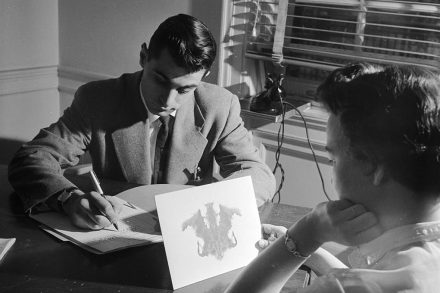
I’ve met someone. The One. And now I’m in love. It’s a lunatic love, driven by insatiable lust. She’s funny. Smart. Sexy. I’d say she was perfect for me but there’s one major problem — she has another man in her life and refuses to give him up. Let’s call him The Other Man (TOM). She sees him five times a week and tells him all her secrets. I only get to see her once a week and she tells me she loves this man because he listens to her. She is in my bed and he is in her head — by which I mean TOM is her therapist. The One talks about TOM when we’re in bed, and he talks about me during her therapy. I talk about him — and her — to my therapist. My life at the moment isn’t imitating art; it’s imitating bad Woody Allen.

therapist