Life

The story of Vince Maney

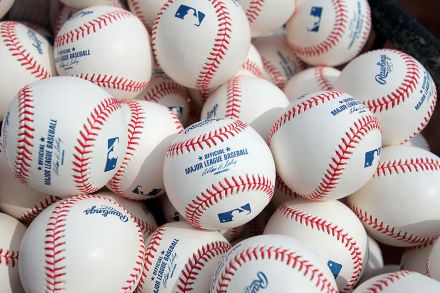
Batavia, New York  'Tis spring, and if a young man’s fancy lightly turns to thoughts of love, as Tennyson opined, an older man’s reveries turn — no, not to lawn-mowing — to baseball. Not, in my case, to the grotesque parody of the American game on display in the major leagues, with their automatic extra-inning runners and TV timeouts and $100-plus tickets, but to the sandlot, the high school or college field, the amateur and independent and minor-league ballparks built on a human scale and played in with joy, even in error, by mere mortals.

Maney
canyon

A canyon caper

Lavender Canyon, Utah Spring, and the Manhattanite’s fancy turns to thoughts of West Palm Beach. Me, 2,000 miles away in Wyoming, mine turns to the slickrock canyon country of southeastern Utah some 600 road miles southwest from Laramie, a trip that requires a stayover in a motel along the way to relieve the horses and rest ourselves before continuing on to God’s country by way of Grand Junction, Colorado, and Moab, Utah; within recent memory raucous with the shouts of uranium miners, ranch hands come to town and whores, today the playground of mountain bikers, runners and rafters from Salt Lake City and its environs.

My initiation into breastfeeding

The most fastidious of us prepare for the marathon of our first labor and birth, but still fail to wrap our minds around the unpredictable onslaught of intense sensations that breastfeeding brings. I knew that only a genuine catastrophe would prevent me from birthing my baby at home with a midwife, and I didn’t leave the prospect of using formula as a feasible outcome in any possible world. Despite this, I had no idea that my initiation into breastfeeding would amount to psychospiritual martyrdom. The distinctively American cultural complaint that nursing women (or “chest-feeders” as we are now called) must not discuss the importance of breastfeeding from fear of offending formula users need not apply here, but the benefits of breastfeeding are numerous.

breastfeeding
regrets

My biggest regrets

Regrets, I've had a few, but unlike Mr. "My Way," mine are enough to mention. (Didn’t Hoboken Frank at least regret slapping Ava Gardner or hanging out with Joey Bishop?) “When you see the end of things coming close and staring at you,” as Jason Robards tells his son in Ray Bradbury’s filmic adaptation of his own novel, Something Wicked This Way Comes, “it’s not what you’ve done that you regret — it’s what you didn’t do.” (For good or ill, cataracts prevent me from seeing the coming end.) Surely some missed opportunities are worth missing. For instance, I doubt if any of the awestruck Lou Reed fans whom the rock’n’roll coprophage famously invited to defecate into his mouth regretted turning down the chance.

revenge

The age of mass revenge

Journalists have never been noted for originality in their choice of metaphor, so readers must be wearied by now of hearing that the world is on fire. Skeptics will observe that the flames have been more or less constant for well over a century, as the major powers and their allies, satellites and acolytes maneuver to establish, or reestablish, global power or hegemony. In fact, the present crisis extends well beyond the collapse of the international order that prevailed since 1945. The situation is actually far more complicated, the world today being infused with a generalized and simmering anger that extends beyond the great powers to include middling and minor ones everywhere, their societies and their various elements.

Meeting Eric Ripert, chef of America’s best restaurant 

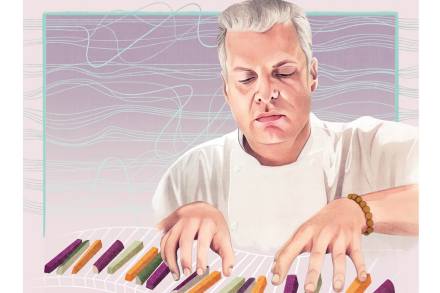
For Eric Ripert, cooking is like jazz. Ad-libbing, balance, motion. “One day the garlic is very pungent, one day it is not pungent. One day the onion is very juicy and sweet, one day it’s less, so you have to adapt all the time,” says the celebrated chef, who is the co-owner of Manhattan’s Le Bernardin, a close friend of the late Anthony Bourdain and a TV personality in his own right. “So, it’s very similar to music — I do not play the same notes all the time, I take a lot of freedom and liberties. Because I can.” Ripert is French but has — like his storied restaurant — become a New York institution. The chef lives on the Upper East Side with his glamorous, dark-haired wife Sandra (a real-estate broker who is Brooklyn born-and-raised, of Puerto Rican descent).

Ripert
friends

My friends keep dumping me

T.S. Eliot was wrong. April is not the cruelest month — January is. It’s cold and bleak and days end in premature darkness. And worst of all, it’s the month when friends start to dump you. OK, maybe not you, but definitely me. Here was my January dump tally: two ex-girlfriends, one lover, five friends (three I thought were close friends) and one person I never wanted to be friends with in the first place. And get this: I do what’s called “befriending” for a local charity. It involves calling people who feel lonely and isolated on the phone and talking with them. The woman I’d been befriending for over two years suddenly said to me, “Please don’t call me anymore. This relationship isn’t working for me,” and just hung up. There were no thanks. No goodbye.

presidents

An introduction to presidential grave-hunting

Where better to talk about dead presidents than over beer and wings at Jim's Saloon in East Pembroke, New York, three days before Millard Fillmore’s birthday? Across the table from me is Pat Weissend, a convivial bank manager and former museum director who has visited the gravesites of all thirty-nine dead presidents and all but two of the forty-three dead vice presidents of the United States. (The hard-to-get veeps are Walter Mondale, whose ashes have yet to be interred under the cold hard Minnesota ground, and Nelson Rockefeller, whose private and inaccessible burial spot is the Holy Grail of the grave-hunting community.

digital

The digital habit

In an era that claims to value the authentic, the direct and the natural, the word "processed" has negative connotations, as in “processed” food. Nevertheless, it describes exactly how perhaps nine-tenths of the human race — including, I imagine, the lost Indian tribes of the Amazonian wilderness — experience reality these days, which is to say processed through electronic media, social media and the oxymoronic smartphone.

Does boxing still matter?

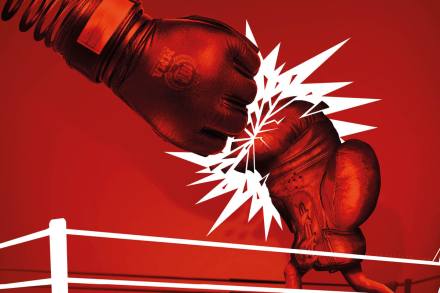
Quick — can you name boxing’s heavy-weight champion? If you’re like most readers, you drew a blank. If you’re a sports fan you may at least have heard of Ukraine’s Oleksandr Usyk, who holds three of the world’s four heavyweight title belts. Usyk has a good story: an Olympic gold medalist in 2012, now unbeaten and untied in twenty-one pro bouts, he took time out from training to serve as a soldier in his country’s war with Russia. The fourth title belt, symbolizing the WBC’s heavyweight crown, belongs to England’s Tyson Fury (yes, he’s named after Mike Tyson). The 6’9”, 278-pound Fury is also undefeated, with a record of 24-0-1. His parents are Irish Travellers; Fury proudly calls himself the “Gypsy King.

boxing

Drinking during pregnancy just isn’t the same

There are many cruel ironies in life. One of them is getting pregnant (and intending to keep it) at just the age at which you begin to understand how and where to drink good booze and feel justified in spending money to do so. So, finding myself with a bun in the oven just after my forty-first birthday this summer, I had to bring to a screeching halt the habits of the last few years: drinking really good wine, sometimes quite a lot of it, fairly regularly. Indeed, I spent the first week of pregnancy in the Languedoc drinking a bottle a night, plus the odd gin and tonic, because of course I didn’t know. Just last year I made a special journey to an industrial park outside Brussels to collect six bottles of 2013 white Bordeaux — it was that good.

pregnancy

Why have parties suddenly gotten good?

Not long ago this month’s column would have been one long gripe about how the party — as a forum of fun — was finished. Partygoers, I would have moaned, had become more interested in big names and networking than in actually talking to strangers and having fun and blah... blah... blah. But something unexpected has recently been happening in London: people are throwing great parties again, and they are actually fun. I know, fun is one of those words that are so insipid and infantile I feel embarrassed using it. And yet the absence of fun from adult social life is a source of sadness. Even an old grump like me has been having a good time. I went to a party full of young, pretty, clever posh girls in Chelsea and they loved me — and I loved them!

parties

Remembering George Eastman

George Eastman, founder of Eastman Kodak and benefactor of Rochester, New York, told my late friend Henry Clune (1890-1995 — and no, that’s not a typo) that he had never laughed until he was forty — and the camera tycoon wasn’t exactly a chuckle-factory in his old age, either. Eastman put an end to the grimness with a bullet to his head in 1932. He left a suicide note that read, “My work is done — Why wait?” Clune, star reporter of the Gannett newspapers, habitué of poolhalls and burlesque palaces and country clubs, a man who read Macaulay for enjoyment and composed panegyrics to strippers and barkeeps, occasionally visited the “lonesome little old man” in his home or office. (Henry’s mother had coated photographic plates for Eastman’s fledgling company in 1881.

eastman

New York is a people pleaser’s hell

Oh, New York, New York. So nice they named it twice. It never sleeps. It’s New York or nowhere, they say. And also — start spreading the news — it’s a people pleaser’s hell. I’ve written for this magazine before about the absurd hurdles I’ve encountered as a British-sounding expat trying to come to grips with the salespeople and baristas of the Five Boroughs. I’ve described the well-meaning individuals who can’t — for love nor money — figure out what I want when I order a “water.” “Oooh wah-der!” they’ll eventually exclaim in a voice laced with pity for the poor foreigner, presumably just off the boat. But over the last few months I’ve become painfully aware of an even more inhibiting feature of this city.

New York
gardner

Remembering John Gardner

"Art begins in a wound, an imperfection,” said the late novelist John Gardner, one of the last American writers to grow up on a farm, “and is an attempt to either learn to live with the wound or to heal it.” Gardner’s wound was more gaping than most: on April 4, 1945, the eleven-year-old was driving a tractor hauling a two-ton roller called a cultipacker. His six-year-old brother Gilbert fell from the tractor’s hitch. John turned around just in time to see his brother’s skull crushed under the huge implement. (Marge Cervone, a Gardner family friend, told me that “Gilbert was the kind of kid who would never hold on.”) “He was not to blame,” said John’s mother. “Nobody could have stopped that thing happening.

intellect

A history of intellect

It has it been widely noted that, as Western culture generally has grown steadily more materialistic in its values and interests (as if it were ever anything else, ungenerous critics might suggest) over the past half-century, it has become simultaneously more abstracted in its mental habits and orientation? Chesterton described a paradox as truth standing on its head to draw attention to itself. In this instance, we have an obvious example. But it’s a good question how this particular one came to be. Ancient Greece was an intensely intellectual world of ideas that were firmly grounded in empirical reality and in observed and confirmable truth.

Glashütte

Visiting Glashütte, the small town in East Germany that has mastered time

The view from my top floor room at the Steigenberger Hotel de Saxe looked out at the great dome of the Frauenkirche. It’s a huge Baroque church in the center of Dresden; I first saw the building on foot, when failing to find a local restaurant on my first night there. I turned a corner to see it towering above me. It looks like it’s always been there, but the original was destroyed in 1945, under the infamous British firebombing, and reconstruction only finished in 2005. I was eventually directed to the restaurant, past the Oktoberfest stands that began sprouting up during my visit in late September. However beautiful the town, I was not here for “Florence on the Elbe” and its grand buildings, but for smaller, more delicate wonders from a nearby town. And so, at 8 a.m.

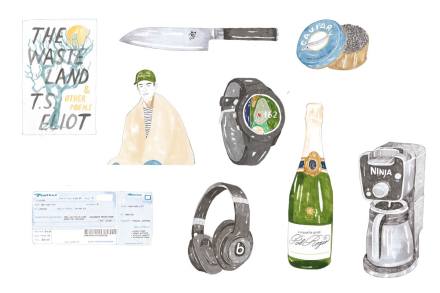
The Spectator’s 2023 Holiday Gift Guide

Matt McDonald, Managing Editor I am much better at buying gifts for others than I am at coming up with ideas for what I want: I’ve always valued experiences and memories more than material things... which isn’t very Christmassy or helpful. That said, I best unwind outside of work by going to the cinema and turning my phone off — replacing “bad screen” with “good screen,” if you will — and so getting me a MoviePass so I can watch Dune Part Two in IMAX next year at cut-price would be worthwhile. For others... the best thing I regularly get my Irish-ish cousins is items of clothing in one of our family tartans. Scarves for the ladies, ties for the gents.

gift