Food and Drink

Truffle shuffle

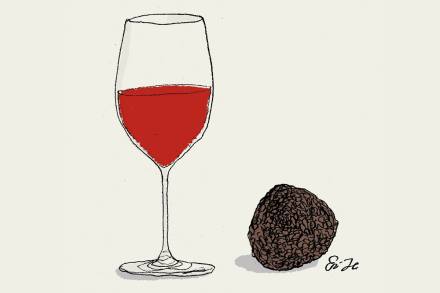
Regular readers may recall the trip we took to St. Émilion on the right bank of the Gironde-Dordogne river system a while back. It being truffle season, some enterprising chaps organized a dinner revolving around that delectable fungus and one of the very best wines from St. Émilion, Château Angélus, a Premier Grand Cru Classé A, and its second label, Carillon d’Angélus. Note the bell motif: a single bell features on the label of Château Angélus, three on that of Carillon d’Angélus, so named because in the vineyards one can hear the bells from three neighboring churches ringing out that prayer to Mary (Angelus Domini nuntiavit Mariæ...) in the morning, noon and around vespers. Those of you who were along for our last foray to St.

truffle
Easter

How eggs became the symbol of Easter

Thirty feet in the air off a northern Canadian highway stands the giant Vegreville Easter egg, rotating gently in the wind. The egg is eighteen feet wide, nearly twenty-five long and designed to turn with the breeze like a weathervane. It is decorated in a traditional Ukrainian pysanka pattern with thousands of gold, black and white aluminum triangles, for the egg is an homage to the Ukrainian immigrants who settled the area long ago. It is a technical feat: the tile- cutting technology developed to produce the mosaic on the egg’s curved surface was later used to tile the exterior of the Space Shuttle. Whatever day of the year you may spy it, it is undeniably an Easter egg.

comments

The delight of reading the New York Times Cooking comments

The cardinal rule of the internet may be “never read the comments,” but in at least one corner of the web, the rule should be never to skip them. I’m talking about the New York Times Cooking blog and app, the most-used resource in my kitchen. NYT has more than 20,000 recipes in its database. Many of them sport hundreds of “community notes” left by passionate home cooks. In my years using the app, I’ve noticed a few trends in the comments. The most famous NYT Cooking comment annotates the classic recipe for Katharine Hepburn’s brownies. The commenter gushes about the recipe before veering into a story about sharing her brownies with a German acquaintance. The note ends with a twist: “Eventually, she moved to the US and stole my husband!

The rise of English wine

Sometimes, I pretend that I worked the wine beat thirty or forty years ago. I picture myself in formal wear, kicking back in gilded settings, sipping perfectly aged first growth, trading bons mots with winemakers. We’d spend hours solemnly considering the slow, steady, seemingly eternal rise of wine culture, and how inevitably it would soften the cruder edges of society. It would be so merry, yet cerebral — but also something we could feel good, even morally superior, about participating in. Instead, I’m in 2024 wearing yoga pants and guzzling mineral water (must hydrate!) by myself holding Zooms with winemakers, sweating over the fact that scientists say climate change imperils up to 73 percent of the world’s current wine-growing regions.

wine
Bentwood

New Buffalo’s Bentwood Tavern is an unapologetically tasteful beach town bar

Near the lake in the quaint beach town of New Buffalo, a rotating sign carries the silhouette of a shaggy mutt. A line forms near the door for the boring beachy fare, churned out at factory pace. The souvenir hoodies are out the door as fast as they can print them; the Stray Dog has become a destination in itself. I’ve seen their signature motto — Sit! Stay! — everywhere from Santa Barbara to Brooklyn. You probably have too. And don’t get me wrong, the Stray Dog is great at being what it is: the quintessential beach-town bar. But I prefer it here, half a mile south, in the uncelebrated version of a beach-town bar. There’s no merch store, no zany southwest eggrolls, no Jägermeister dispenser, no television. Just ten velvety bar stools and endless respite.

coal

The wonder of cooking with coal

The grandest compliment ever paid me came near the end of a small dinner party last winter from guest and friend Jeffrey who, on settling into an old wing chair as his host stoked the fire with coal, remarked: “I feel like I’ve just stepped into an Evelyn Waugh novel.” It was, he said, the coal. About as close as anyone these days will have come to a domestic coal fire is the screen image of one in Downton Abbey or its predecessor, Upstairs Downstairs. Those television “fires” were all actually gas ones made to imitate the look of coal. In Waugh’s time in houses like that, they all would have burned the real thing.

gluten

The possibilities of gluten and dairy-free cooking

My sister recently gave up gluten and dairy on doctor’s orders. In a show of support, my whole family has been exploring ways to make shared meals more tolerable for the poor woman, suddenly deprived of the two best food groups. We’re revisiting family recipes for breakfasts, sides and desserts: my grandmother’s strata, with its layers of cheese-soaked bread, is out altogether, while mashed potatoes go without butter and pie goes without crust. It’s easy to make your first GF/DF meal. The first time my sister came over for dinner after starting her new lifestyle, we smoked a pork shoulder and ate it with mayo-based coleslaw and baked beans: a classic BBQ! Meat and potatoes are GF/DF, as are stir-fried veggies and rice, and bacon and eggs.

winter

A Champagne winter

Most readers will come to this column in February. “That’s the dead of winter,” you say (if you are in the Northern hemisphere, anyway). But I write at the absolute nadir of daylight. For some years now, I have kept a daylight diary. I generally start in mid-October and go through the return of daylight-saving time in March. It takes that long to convince me that summer really is on its way back. When I started, I simply noted the time the sun rose, when it set and how much daylight we had that day. I eventually got a little more elaborate, noting the phases of the moon and such, and making very brief annotations about significant events. Every year (so far), it’s been a story with a happy ending.

A craft beer revolution in Grand Cru Country

If the dozens of cartoonish stereotypes that flood my mind when I think of France — grand Bordeaux estates, snails and frog legs dripping in garlic butter, elegant women striding down the Champs-Élysées, a glittering Eiffel Tower at night — a stein of hoppy beer is nowhere to be found. France is not known for its pints. And yet, much to the concern of its vineyards and winemakers, that could be changing. “There has been a real explosion of breweries all over France in the past few years,” says Alexandra Berry, a Paris-based beer and hops sales consultant and the author of From Earth to Beer: The Expression of Terroir in a Glass. “General sales in wine have started to decrease in France in part because the industry has started to seem a little dated and overrated.

beer
new year's

How to plan a suitable feast for New Year’s

It is commonplace that the December run-up to the holiday season (aka the Christmas season) is heavy with festivity. The well-lubricated office Christmas parties of yore were legendary, while at home the domestic calendar brimmed with all sorts of communal gaiety. This all occurred during Advent, which in the old Christian dispensation was a penitential season. Except when among the most devout, I was never able to see that this much dampened the fun. As the marketers now see it, the season of getting and spending stretches from somewhere around Halloween right up to Christmas when, all of a shameless sudden, it’s on to Valentine’s. This leaves New Year’s curiously — sometimes on the coldest night of the year — out in the cold.

Orwells

Orwells, a place to get away from it all

On the edge of Glasgow’s West End, the posh bar scene melts away for just a moment at Elderslie Street, where Orwells has sat since the 1980s — though the location has hosted a pub since 1877. To give you an idea of the bars I usually frequent: until moving to Scotland last year, I did not. Bars were not a place I passed time. Bars are expensive. The company is unpredictable, the menus too often full of candy-colored cocktails with “funny” names like “Screaming Orgasm” that taste like anything but. Yes, I know I sound like a killjoy. My drink of choice: a $15 handle of Burnett’s lovingly tipped into a slow-sipped White Claw in the comfort of a friend’s home. You will not find trendy concoctions at Orwells. On my first visit, Eighties hair metal blared from the jukebox.

madeira

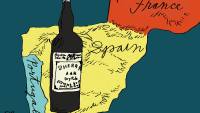
Madeira, our onetime national drink

Does America have a national drink? It once did — not officially, quite, but in fact. And what was that national potation? Madeira. The wine, John Hailman writes in Thomas Jefferson on Wine, “symbolized to Americans a common patriotism and spirit of independence.” It was, he continues, the “mother’s milk of the American Revolution,” the “virtual national beverage after the Revolution.” Madeira was used to toast the signing of the Declaration of Independence. Jefferson dispensed it at his inauguration. Washington, Hamilton and Benjamin Franklin all loved the stuff. John Adams remarked that a few glasses of Madeira made anyone feel capable of being president.

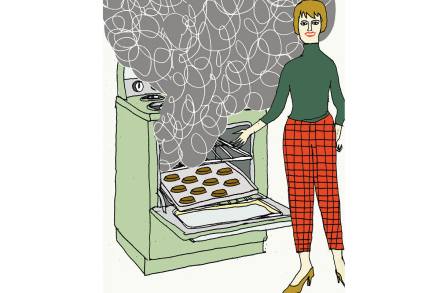
Baking mistakes: my Christmas clangers

In a world full of muffins, they say, be a cupcake. As an inspirational saying, it’s a good effort. But handsome is as handsome does: for solid worth, texture and deliciousness, give me the muffin every time. I remain open-minded and willing to be proven wrong, but it seems to me that however gloriously frosted, sprinkled, beflowered or bedazzled the exterior of a cupcake may be, its interior texture is always trying, in a socially anxious sort of way, to be cake. All the icing in the world can’t hide the strain. Allow me to suggest an alternative: in a world of Christmas cookies, be homemade shortbread. The last word in simplicity, shortbread is the Hermès scarf of the cookie world. It has confidence, identity, classical elegance.

Christmas
mortons

Cigars, steak and (alleged) corruption at Morton’s

While Republicans make a symbolic point of permitting smoking in the Capitol complex whenever they’re in power, no one’s lungs really seem to have been in it since John Boehner held the speakership. Back rooms in Washington aren’t what they used to be. So it’s nice that the oddly named Morton’s The Steakhouse — which as a Chicago-based chain is now really Morton’s The 65 Domestic and International Steakhouses — is one place where Washington’s journalists and politicians can still enjoy the complex aromas of cigars, steak and corruption. One person whom it’s almost unavoidable to see at Morton’s is the recently deposed chairman of the Senate Foreign Relations Committee, SenatorBob Menendez.

roman

Surviving the holidays with Alison Roman

The holidays are here. If you’re like me, you may view the year’s major baking season with slight dread, not because you’re a Scrooge, but because you lack confidence, patience or skill as a baker. Recipe developer and cooking influencer Alison Roman has written a cookbook for people like us, who find the “science” of baking frustrating compared to the “art” of cooking. The cookbook, Sweet Enough, affirms this preference; in a section called “What I Hate about Baking,” Roman lists gripes: “I hate when I mess up and feel like I wasted hours of my life.” Same. But this book, written with non-bakers in mind, is for the most part flexible and forgiving, and may well become your companion this December.

Sherry

A very Sherry Christmas

Early on in his classic Notes on a Cellar Book, the literary scholar George Saintsbury writes that “no reasonable person should quarrel if we begin with Sherry, even as the truly good and wise usually do at dinner.” That was in 1920. Can you imagine anyone writing that today? The answer is no. But that only tells us how fickle are the revolving fashions of taste. For us, Sherry is an antique taste, quaint if not fusty. By and large it’s something that maiden aunts drink between knitting projects and jumble sales. At its best, Sherry has a fading academic aroma. When I was in graduate school, I had a semester-long tutorial on Plato with the eminent Platonist Robert Brumbaugh.

In praise of corn, a Thanksgiving essential

The Indians, as we innocently called them in the days of my youth, put their name to it: “Indian Corn.” Somehow, “Native American” or “First Peoples Corn” just doesn’t do it, so here let us observe this now-verboten usage. Technically, Indian Corn (known as calico or dent corn too, for its coloration and dents in the kernels) is one variety of maize, first cultivated, they say, in Mexico thousands of years ago. Columbus, who called the natives “Indians” because he was looking for India, brought back seeds to Europe in the 1490s; they did not take. The Plymouth colonists in the 1620s, from whose early travails the American feast of Thanksgiving emerged, grew Indian corn courtesy of the local Wampanoag tribe. It no doubt helped them survive when the English peas ran out.

corn