Food and Drink

The rise of avocado anxiety

When the gastronomes of the future come to choose the food that best represents our age, they will choose the avocado. The ubiquitous fruit is everywhere: in smoothies, on toast, served at breakfast, lunch and dinner, on t-shirts and all over social media. It represents our ingenuity in supplying exotic fruit to every corner of the globe all year round, our obsession with “clean” eating, our aspiration to eat brunch and our love of anything that — even passingly — tastes a little bit like butter. But it also represents our greed, our hypocrisy, our vanity and our overwhelming anxiety.

avocado
Lambert

Cooking with a country music star

A few years ago, I came across a delightful bit of Americana in Hobart Book Village in the Catskills: Naomi’s Home Companion, a 1997 cookbook/ scrapbook from Naomi Judd, the late matriarch of the famous country music family. Because I’m not a country listener and I don’t eat a lot of meatloaf, I didn’t buy the book, its kitsch appeal notwithstanding. Nineties fashion may be back, but its nutritional standards are permanently out of style. Right? I thought of that old Naomi Judd book when a new cookbook landed on the New York Times bestseller list: Y’all Eat Yet? Welcome to the Pretty B*tchin’ Kitchen by country music star Miranda Lambert. The book purports to share recipes from Lambert’s downhome roots and humble upbringing in East Texas.

David bruce

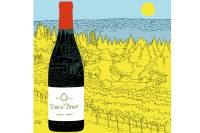
David Bruce, a doctor in the vines

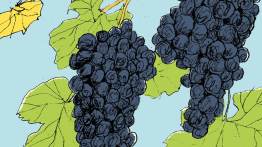
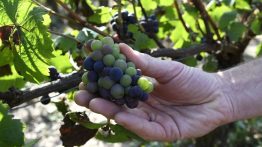
Every good vintner deserves a good origin story. David Bruce, the founder of the eponymous winery in the Santa Cruz hills, has one of the best. When he was at medical school at Stanford in the 1950s, he chanced upon Alexis Lichine’s classic book The Wines of France. Lichine said some fancy and evocative things about the great wines of Richebourg in Burgundy. Bruce padded down to a wine shop in San Francisco and collared a bottle of 1954 Domaine de la Romanée-Conti Richebourg. “The minute I opened this bottle of wine,” he recalled, “the whole room was pervaded by this floral, spicy aroma.” Here’s the kicker: “I remember thinking, I guess you get what you pay for.” Oh yeah? He paid $7.50 for the bottle.

Where to drink in Miami

Ask anybody who’s really been in a band what being a musician is like, and they won’t tell you about the moments that make it into the Hollywood biopics. To them, the experience is not the hero-shot onstage, or the girls they picked up after a killer set, or anything you saw in Ray or Bohemian Rhapsody. The reality of being in a band is of driving from place to place. Think of Bob Seger’s baleful “Turn the Page” with its opening lyric setting the place: “On a long and lonesome highway, east of Omaha,” where he’s “ridin’ sixteen hours and there’s nothin’ there to do.” This raises an issue of where to drink in Miami.

Miami
olive oil

A dispatch from the olive oil capital of the world

It was an extraordinary sight. For three days, and about seventy kilometers of hiking, there were just endless olive trees covering the fields, hills and mountains stretching to the horizon of the small Spanish province of Jaén. Tucked away in the southern region of Andalusia, this is the country’s powerhouse of olive-oil production. Many people assume Italy or Greece are the largest producers of olive oil. That’s a result of good branding and name recognition, a Jaén-based olive grower told me. After he pulled up alongside me in his dusty car, we walked through the endless olive groves as I was given a tutorial on olive oil production. Spain is the world’s top producer of olive oil.

wine drinkers diary champagne

A drinker’s diary

It is a crisp, beautiful spring day as I write. The air is light and clear. The skies are a color I have always thought of as Virgin Mary blue, punctuated here and there by attractively arranged puffs of clouds at their whitest and least threatening. The greens of the verdure are at their most flashing and emerald-like. That freshness will be enveloped by summer fullness by the time you read this, a contingency that makes me conclude that something like an abbreviated wine-diary — some of what Kimball drank during the month of May — might appeal to the connoisseurs and aficionados of the column. Let’s start at the tip-top.

Italian cooking lessons in the home of a Venetian chef

My mother advised that I get a plain wedding ring. Diamonds, she said, interfere with a woman’s ability to knead dough. “But I don’t knead dough,” I protested. “You will when you’re married.” I guffawed. And yet there I was, four days into my marriage, in an Albanian chef’s Venetian home, being told in no uncertain terms that while my husband Nick could keep his ring on, mine would need to come off. We had arrived in Giudecca, an island in the Venetian lagoon, by water bus, having spent the day in Padova. There, we’d visited the Basilica di Sant’Antonio, home to first-class relics of the great saint — bones, lower jaw, incorrupt tongue and cartilage from his larynx.

Venetian
swizzle

A parting salute to the swizzle stick

We live in the age of takeaway-everything, a phenomenon amplified since the late, great plague by another barbarism: the drive-thru. You need no longer even get off your derrière to collect the goods. Just lower the power window, flash your phone, then “grab-and-go.” That this is a powerful cultural proposition the conga-line of cars filling multiple lanes at your local Chick-fil-A, where they have it down to a science, will attest. I recall my first innocent meeting with drive-thru, then called drive-in, in 1959 when a bank in the small town where my family lived cut a hole in the wall and installed the requisite sliding drawer. Things have clearly gotten out of hand since. Not all takeaway is created equal.

salad

How to become a ‘salad freak’

Imagine a summer morning in Southern California. You rise with the sun in a palm-shaded bungalow and stroll to a nearby farmers market, where the tables spill over with heirloom tomatoes, sweet corn and cartons of juicy strawberries. Your canvas tote filled with the season’s bounty, you return to your sun-dappled kitchen to prepare a farm-to-table feast for all your friends while listening to your favorite vintage records. Sigh. This is the dreamy lifestyle purveyed by Salad Freak: Recipes to Feed a Healthy Obsession by Jess Damuck (Abrams, 2022). I’ve always aspired to be the kind of woman who can “just toss something together,” making a light, fresh, delicious dish with ease, rather than worrying that something will catch fire if I leave my post by the stove.

horace

What to do when you only have modest wine on hand for a decorous guest

So, I’ve have been rooting around in Horace’s Epistles, which are full of amusing things. They really are not “epistles” in the conventional sense, since they were make-believe letters, artfully wrought jebux d’esprit that employ the convention of addressing a friend in order to entertain not (or not only) that friend (who may or may not exist) but one’s readers. Horace wrote two books of Epistles, one circa 21 BC when he was in his early forties, one a decade later, a few years before his death in 8 BC at the (it seems now) tender age of fifty-six. One that caught my eye when sitting down to write this column was Epistle 1.

restaurants

The quest for child-free dining

The people who follow my social media know that I’m not kidding when I say that restaurants should ban children. You can’t avoid kids in certain fast-food or large outdoor-patio situations, but on the whole, children in restaurants are a horrible war crime. So when Nettie’s House of Spaghetti, a red-sauce joint in Tinton Falls, New Jersey, announced in February that it would be banning kids, my inbox flooded with the story. “We love kids,” the restaurant wrote. “We really, truly, do. But lately, it’s been extremely challenging to accommodate children at Nettie’s. Between noise levels, lack of space for high chairs, cleaning up crazy messes and the liability of kids running around the restaurant, we have decided that it’s time to take control of the situation.

Making a home through food

At the age of sixteen, chef and restaurateur Forough Vakili, now forty, left Iran to meet a brother she barely knew, eventually settling in America. She didn’t return for eleven years. As a member of the minority Baháʼí faith, which teaches the value of all people, regardless of gender or religion, Vakili had hit a wall in her homeland. “I came here so I could continue my education,” she says, when we speak over Zoom. “We didn’t have many rights back in Iran — there wasn’t a lot offered for us after finishing high school.” It was in Vienna, waiting for her American visa, that Vakili reconnected with her brother for the first time since she was a toddler. Six months later she moved in with him, his wife and three daughters in Atlanta.

Vakili
lucien

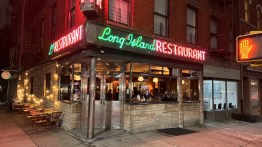
Lucien, the best bar in New York for writers

When I search my memory for a favorite bar, I’m struck by thoughts about bars of legend that I can only fantasize about. My drinking life is a tale of three cities — Chicago, New York and Paris — but since I’ve spent most of my adulthood in New York, it’s hangouts in Manhattan, some long gone, that first come to mind. And establishments where writers and reporters liked to drink hold for me a privileged position. I wish that I could have bought a cocktail in the 1930s for the tragically brilliant novelist Dawn Powell at the now defunct Lafayette Hotel in Greenwich Village, or at the nearby Brevoort Hotel on Fifth Avenue and 8th Street.

Basque

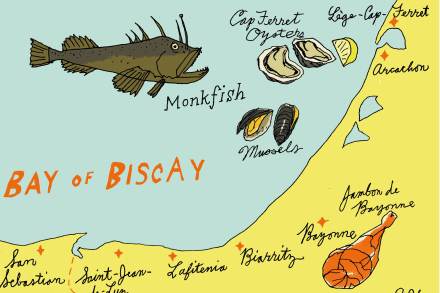
In praise of burnt Basque cheesecake

Spring, as Chaucer pointed out, occasionally has the curious effect of making people “long on pilgrimage to go / And palmers to be seeking foreign strands / To distant shrines renowned in sundry lands.” The May morning may come when you find it in your heart to pick up the pilgrim’s staff and wend your way along the paths of olden Spain to Santiago de Compostela. There are several ancient ways to reach the distant shrine of St. James, and if you are a lover of the road less traveled, you may find yourself drawn to the Camino del Norte, which begins in the western Pyrenees of the Basque country, then hugs the long beaches and jagged cliffs of the Atlantic shoreline through Cantabria and Asturias before curving inland through Galicia to the Apostle’s tomb.

food porn

The trouble with food porn

Food porn, an exaggerated photographic representation of how food supposedly looks, has been with us since the 1970s. Today, it is as ubiquitous as “traditional” porn and just as sad. It disorders our senses. Food tastes and smells, only thirdly does it look. Youthful gazing through the bakeshop window is one thing; seeing food mediated through the photographic image is quite another: it titillates but does not nourish. It has been a steep fall from the innocent old days of “Oh boy, that looks good!” exclaimed in the real presence of home-prepared meatloaf or macaroni-and-cheese, not in response to a picture of it. This disordering of our senses manifests in two ways.

loire

The Loire Valley is the place for bargain hunters

North of Cognac and Bordeaux, due west of Burgundy, the valley of the Loire River, attended on the second half of its journey east by the Cher River, stretches from the Pays Nantes and the Atlantic Ocean to Orléans in the heart of France. It is not quite right to say that this area is like Hamlet’s “undiscovered country from whose bourn no traveler returns,” but it’s my sense that Americans tend to overlook it in favor of its flashier neighbors. This is a pity, not only because the Loire Valley boasts lots of excellent wine, but also because the region still offers many conspicuous bargains, something you will look long and hard for in Bordeaux or Burgundy.

Don’t spare us the asparagus

Asparagus inspires gentle thoughts, or so said Charles Lamb in an essay about grace before meals. Other vegetables had come to pall on him, but a noble affection for asparagus still lingered in his heart, a reminder of simpler and more innocent times. One can only surmise that he didn’t much care for the vegetable. Who feels melancholically virtuous when eating greens? People who don’t really like them, that’s who.

asparagus

The wonder and mystery of Mexican cooking

Mexican food is my comfort food. My devotion stems from memories of my mother’s enchiladas. I used to love watching her fry the tortillas in oil. They would bob about like lily pads, sizzling gently. Then when the bubbles formed with little pops, Mom would lift each tortilla out of the hot oil and place it on a paper towel. At the same time, she’d be heating salsa roja on the gas stove and, when it was ready, she would dip a spoon in the pan and put a dollop on a tortilla, swirling the spoon to coat the whole tortilla, then turn it over and do the same on the other side. She was such a careful cook, and neat. The bowls of fillings sat ready and waiting on the kitchen island, each with its own spoon.

mexican