Features

Kamala Harris’s Orwellian future

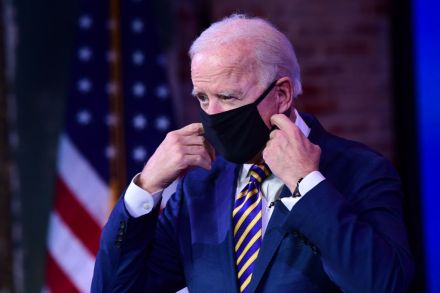
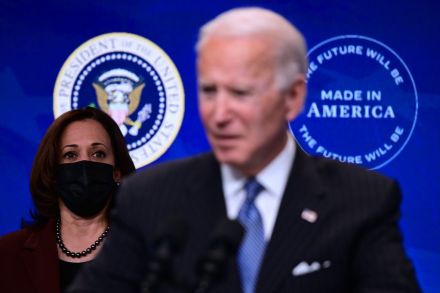
Do you suppose that Kamala Harris is a student of Jane Austen? The contingency, as Jeeves was wont to observe, is remote. Yet there is at least one passage from Pride and Prejudice that I’d wager Harris would appreciate. Towards the end of the novel, after she has accepted Mr Darcy’s proposal of marriage, Elizabeth confides the news to her sister Jane. Knowing how cordially Elizabeth had disliked Mr Darcy in days past, Jane is appalled. ‘Oh, Lizzy! it cannot be. I know how much you dislike him.’ ‘You know nothing of the matter. That is all to be forgot. Perhaps I did not always love him so well as I do now. But in such cases as these, a good memory is unpardonable. This is the last time I shall ever remember it myself.

kamala harris

Go figure

When I worked in a skyscraper in Midtown Manhattan rather than on my couch in Pennsylvania, I used to go skating in Bryant Park on clear winter mornings, for the fresh air and light exercise. A troupe of figure skaters claimed the center of the ice in the pre-tourist hours, commanding everyone’s admiration: they used the tight space to execute tidy jumps and corkscrew spirals without crashing into graceless pedestrians-on-ice like me. Now COVID-related restrictions have left me with buckets of free time where commutes and happy hours used to be, and I’m looking to learn a new hobby.

figure skating

Capital punishment

I was distracted from the argument of the second report by Peter Navarro into the 2020 election, which someone had demanded I read, by it suddenly bursting into capital letters: ‘Prong One dramatically INCREASED the amount of absentee and mail-in ballots... Prong Two dramatically DECREASED the level of scrutiny... This pincer movement resulted in a FLOOD of illegal ballots.’ So it went on: ‘to dramatically INCREASE’, ‘to dramatically DECREASE’, ‘illegal ballots able to FLOOD’, ‘INCREASE the flood’. It was like trying to listen to an interview on television while a photo-bombing cat kept whizzing past on a skateboard. I had an idea I had seen something like this before.

capital
oligarchy tech capitalist pigs

Oligarchy in America

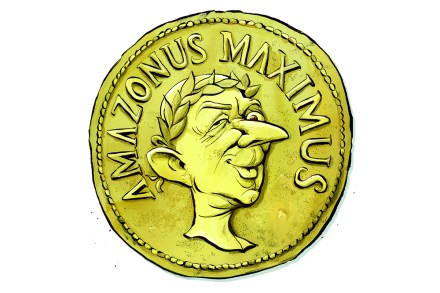
The fog of the Trump wars is lifting, the road from COVID-19 rising before us, the outlines of the 21st-century American system emerging. Like the bankruptcy in Hemingway’s The Sun Also Rises, the change has happened ‘Gradually, then suddenly.’ The age of the democratic republic is over, the age of the American oligarchy beginning. Oligarchy is the ‘rule of the oligos’, the few: the concentration of wealth and power in the hands of a self-sustaining elite. It sounds quaint, classical even, as though it couldn’t happen here because it already happened there. But it has, in fact, already happened here. Augustus Caesar, who made himself Rome’s first emperor in 27 BC, would recognize the symptoms of our American novelties.

Manchin of the moment

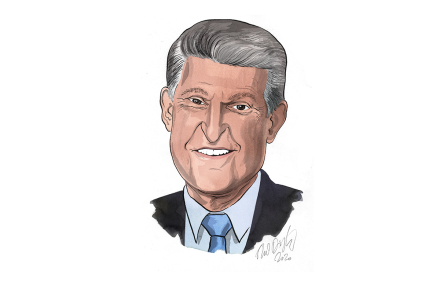
Joe Manchin could be the most powerful man in the Senate. The senior senator from West Virginia is the last Democrat hanging onto federal office in a state that twice voted for Donald Trump by 40 points, but he doesn’t always toe the party line. Of the ‘defund the police’ movement that gained traction on the Left over the summer, Manchin says, ‘Defund my butt.’ If you were unsure about federal funding of his posterior, he went on to elaborate: ‘We do not have some crazy socialist agenda, and we do not believe in defunding the police.’ Manchin described a Democratic proposal to continue trying to impeach Trump after the 45th president leaves office as ‘so ill-advised’. Yet he did not vote to acquit Trump in his Senate trial last year.

manchin

When migrants come, their culture does too

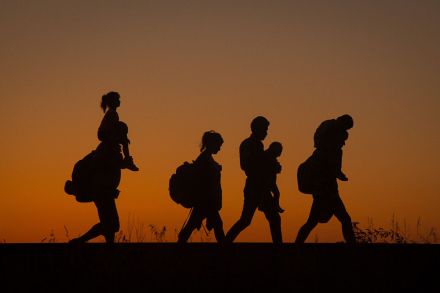
The challenge of integrating immigrants from the non-western world is not new to Europe. But a large influx of new migrants over the last decade, and a significant increase in harassment and sexual assault against women across multiple European countries, make it one that Europe can no longer avoid addressing. This story has its origins in the decades of economic recovery after World War Two, when many European countries faced a growing worker shortage for industry work. ‘Guest worker’ programs were created, notably in Germany, on the assumption that such workers would return home. But many workers preferred to stay in Europe and pursued family reunification. Jobs and welfare entitlements made Germany preferable to Turkey, France preferable to Algeria.

migrants

Well, whatever, never mind

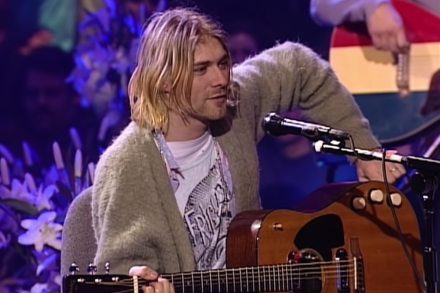
I’ve been thinking a lot about the lyrics so indelibly burned into my brain from ‘Smells Like Teen Spirit’, the song that made Kurt Cobain famous and Nirvana a global phenomenon. Even the Nevermind album’s cover image, the naked baby chasing the dollar on a string underwater, was prescient. If any-one predicted our reality-show president, our escalating stupidity and our race to rock bottom, and had the understanding that we could amuse ourselves to death, it was Kurt.

kurt cobain never mind

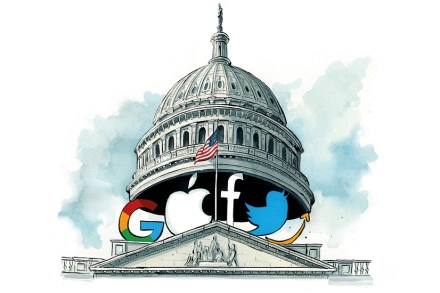
The tech supremacy: Silicon Valley can no longer conceal its power

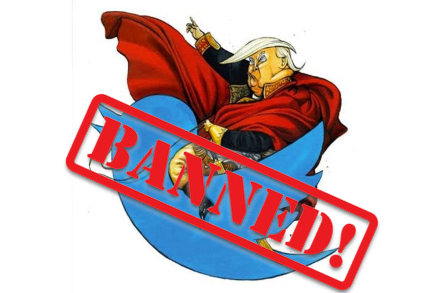
‘To see what is in front of one’s nose needs a constant struggle,’ George Orwell famously observed. He was talking not about everyday life but about politics, where it is ‘quite easy for the part to be greater than the whole or for two objects to be in the same place simultaneously’. For years before the 2020 election, nearly all American conservatives were in favor of standing up to Big Tech — but most were also against changing the laws and regulations enough to make such a stand effective. And yet the threat from Silicon Valley was literally in front of our noses, day and night: on our cell phones, our tablets and our laptops. Writing in the London Spectator more than three years ago, I warned of a coming collision between Donald Trump and Silicon Valley.

tech

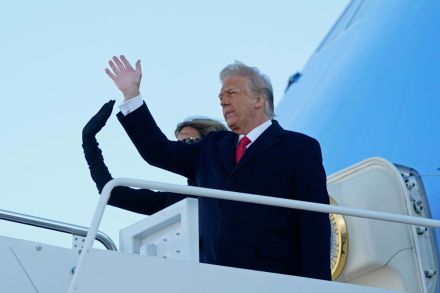
Trump’s legacy

How important is any one human being? In War and Peace, Tolstoy discusses the significance of Napoleon Bonaparte. The Corsican artilleryman-turned-emperor might have brought all of Europe to its knees, but to Tolstoy the great man was a mere cork bobbing on the ocean of history. So it is with Donald Trump as he exits the American political stage, five and a half messy, sordid years after his arrival. The Trump era may be the most memorable period of American history since the 1960s. Certainly, he has inspired more newspaper column inches than any man in living memory. But how important was the man himself? This might at first seem an asinine question. The evidence for this president’s special place in American and even world history seems compelling.

legacy

Biden, Blinken and the Blob

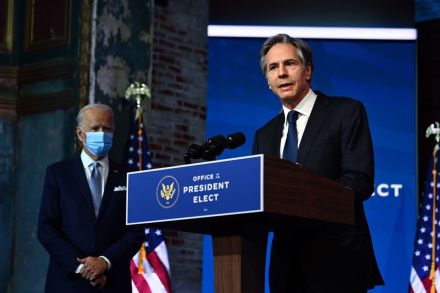
Regarding America’s role in the world, Joe Biden’s ascent to the presidency offers this bit of prospective good news: the random flailing about of the Trump era will end. No more diplomacy conducted via Twitter. A modicum of consistency and predictability might once more become emblems of American statecraft. Some version of normalcy will be restored. While all this will be welcome, it prompts a fundamental question: will a return to pre-Trump normalcy suffice as a response to the challenges that Biden is about to inherit? After all, the post-Cold War version of normalcy — the policies as pursued by presidents Bill Clinton, George W. Bush and Barack Obama — created the conditions that gave rise to Donald Trump in the first place.

biden blinken blob war syria iran ukraine hamas
twitter trumpism

Is Trumpism toxic?

Matt Labash Chris, thanks for stepping with me inside the squared circle, the Octagon or whatever they call the place where the kids like to fight these days. (The Capitol Rotunda?) Ordinarily, in one of these types of dialogues, this is the part where we’d exchange pleasantries, make throat-clearing small talk, and tell each other how much we admire each other’s work. But let’s skip it, because I’m feeling a bit vexed. Can’t quite put my finger on why. Oh yes, I just flipped on ‘MSDNC’ and opened my Failing New York Times, and now I remember: because I’ve been watching my country set ablaze, and Donald Trump and his faithful Trumpsters are holding the flamethrower.

No to policing the world

What will a Joe Biden foreign policy look like? It’s difficult to say. There is, after all, no Biden Doctrine, no voluminous body of work hashing out the Biden sensibility. Biden might have served as vice president, but he never seemed anywhere near the center of the policymaking apparatus. He was a fixture on the Foreign Relations Committee, but he was never one of the Senate’s bright international thinkers the way his friend John McCain was. So what then? About the best you can say about Biden’s foreign policy positions is that they’ve been scattershot.

policing biden foreign policy
wokeyleaks

Introducing Wokeyleaks

A regular column by an anonymous whistleblower operating deep within heart of the Social Justice Movement that is the entertainment industry. To protect their identity, they will go under the code-name ‘They/Them’. Wokeyleaks will also function as a confidential news leak organization for any other sources who wish to divulge classified information (and hilarious anecdotes) about woke culture without fear of getting canceled. My disillusionment with the Social Justice ‘left’ was less a road to Damascus moment and more death by a thousand cucks. It was when a friend told me that ‘people are concerned about your use of POC hand emojis on Instagram’. Apparently, it’s ‘the equivalent of blackface’ (it’s really not).

America’s Yeltsin moment

The end of the Cold War was as great a shock to US politics as it was to the Soviet Union’s. The Soviet regime didn’t survive, of course, and late 2021 will mark 30 years since the USSR dissolved. Mikhail Gorbachev had tried to save the Soviet system through reform. The Communist hardliners who briefly deposed him in the summer of 1991 tried to save it by rolling back reform. Neither sufficed — the regime, and the party and ideology at its heart, had lost their legitimacy irrevocably. The first US presidential election after the collapse of the USSR almost rendered the same verdict on the regime in Washington. The 1992 election saw a populist challenge to President George H.W. Bush from within his own party.

yeltsin

A honeymoon in Berlin

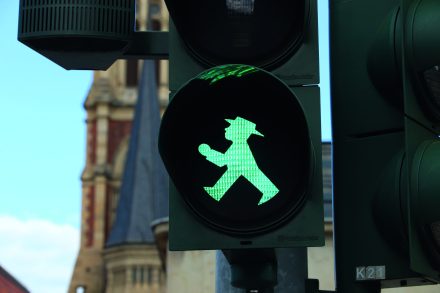
In December 2019, I arrived in Berlin by train. I was just married and on honeymoon. The most precious item in my luggage was my Interrail ticket. My husband and I hoped to visit as much of the Continent as we could in three weeks. We did not know that soon such a trip would be impossible, thanks to the infamous virus from China. We were keen to see what remained of the Berlin Wall. One of the longest still standing parts is on Niederkirchnerstrasse, next to the site of the former headquarters of the SS and the Gestapo, now home to the Topography of Terror, an indoor and outdoor museum dedicated to the Nazi era.

berlin

Buckle up for Biden and the Blob

With any change of power in Washington, it is routine to ask which policies will endure and which will change. Yet the incoming Biden administration proposes neither new policies nor the revival of old ones. It promises, rather, an existential transformation following the traumatic ordeal of President Donald Trump. What is being brought back, we are told, is the concept of ‘expertise’ itself. Biden’s return to normalcy will be a re-empowerment of America’s bureaucratic class, so rudely ignored and pushed aside during the four-year time of troubles. Nowhere is this narrative more powerful than in foreign policy.

foreign policy blob

Are we back in the Obama White House?

Like most Greek stories, the tale of Pandora’s box is fraught with ambiguity. Most of us, when we first encounter the story, learn that it is a fable about the dangers of curiosity, not unlike the story ‘of man’s first disobedience, and the Fruit/ of that Forbidden Tree’. As Eve sneaked the apple, so Pandora took the lid off a box that she was forbidden to peek inside. Bang! Death, illness, famine and all the other miseries of the world escaped to blight man’s life, leaving behind only hope as a sort of consolation prize. But is hope a consolation? Or is it a subtler, more insinuating evil?

obama white house china joe biden

The family gap

In a speech to the Federalist Society in November, Supreme Court Justice Samuel Alito reiterated his concern that ‘in certain quarters, religious liberty is fast becoming a disfavored right’. Small wonder that the subject was on his mind. A week earlier, the Court had heard oral arguments in the latest religious-liberty case, Fulton v. City of Philadelphia. In it, Catholic Social Services — one of some 30 agencies used by the city to place foster children in private homes — claimed religious exemption for its policy of placing kids in traditional mom-and-dad family settings. So far, one might think, so unremarkable: a Catholic agency conforms its good works to Catholic principles. But what about nontraditional couples — like those of the same sex?

family

End game: the blurring line between fantasy sports and the real thing

For millions of fans, the only thing more important than the NFL from September to January is fantasy football. In the US and Canada alone, there are an estimated 59 million fantasy sports players — one-sixth of the entire population. These players spend an average of seven hours a week — almost a full working day — consuming fantasy content, according to Andrew Billings, an expert in fantasy sports at the University of Alabama. The rise of much modern sports — most obviously cricket — is inextricably linked to gambling. So it is with fantasy sports. It’s the numbers, stupid! Then obsessing over stats. With sports gambling illegal in most states until a Supreme Court ruling in 2018 overturned a federal ban, the fantasy world filled the void.

fantasy

The long legacy of looting

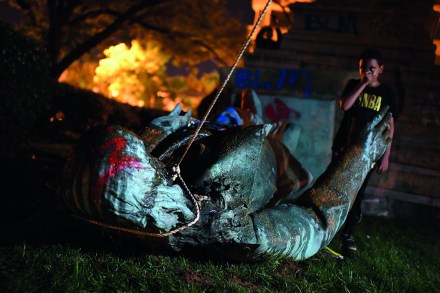
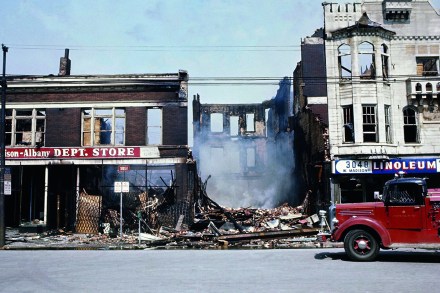
The causes of violent rioting and looting are complicated and often include real, unaddressed grievances. One thing is clear, though: looting has few winners and many losers. The losers in the long run are often those breaking the windows and making off with the bling. Many of us are trying to get a handle on the unrest we’ve witnessed in 2020. History doesn’t repeat itself, and, pace Mark Twain, it may not even rhyme, but sometimes a little context helps, if only to suggest possibilities. The considerable scholarly literature on the ‘race riots’ of the 1960s is mostly sympathetic to the rioters. It excuses or at least countenances violence because its authors share what they perceive to be the rioters’ goals: racial equality, social justice and the like.

rioting chicago