Features

The coldness of K Street

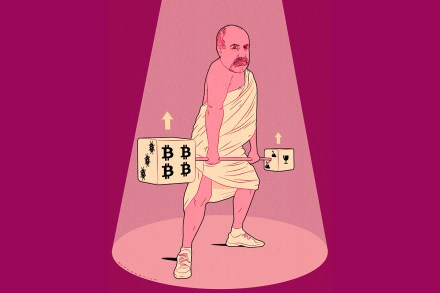
You couldn’t miss him as you strolled down K Street. He wore a fedora and boxy suits, was not afraid to imbibe as he worked, and paced the capital’s most infamous stretch chain-smoking cigarettes. He arrived in Washington in the Nineties as a traveling salesman and would have kept right on traveling were it not for that checkout girl. For three decades, he put the road behind him and went to work erasing any trace of the street from the brogues, Oxfords and, in the final decade of his life, the slip-on monks and bit loafers ubiquitous among the graceless lobbyists of the twenty-first century. K Street may have become too busy to tie shoelaces, but its denizens were never too busy for a happy-hour stop with the self-proclaimed “Godfather of Shine.

k street

Walking Hanoi

I let the roosters wake me at 4:30 a.m., since it’s already 88 degrees out, will be 100 by noon and I want to get in my full fifteen-mile walk without suffering heat stroke. My intended route is from my small rented apartment in southwest Hanoi, due east to the banks of the Red River, then back again, or maybe something else entirely. My plans are always rough, the daily walks changing depending on what I see, who I meet and what strikes me. That is why I walk, rather than drive or bike: so I can change stuff up on the fly — and let events, people and things I find along the way determine where I go. The only things that stay constant are aiming for between ten and twenty miles a day, and never using cabs.

hanoi

What John Durham has proved

In May, when a federal jury acquitted former Hillary Clinton campaign lawyer Michael Sussmann of one count of lying to the FBI, the cadre of politicians, pundits and activists that comprise what they consider a “resistance” to Donald Trump’s presidency were brimming with indignation at the insult of its having gone to trial at all. The Sussmann prosecution was the first case from special counsel John Durham to go to trial. Durham was appointed in 2019 to investigate the FBI’s investigation of the Trump campaign’s connections to Russia. And it took only a few hours for the jury to rule against him.

durham

Inflation is the great destroyer

In the summer of 1981, the American air traffic controllers’ union PATCO rejected a salary and benefits deal that had been put forth by the Reagan administration. What happened next lives on in the annals of Republican lore and in labor movement horror stories: PATCO opted for an illegal strike. More than 12,000 air traffic controllers walked off the job, and in one of the most successful union-busts in history, Reagan fired almost all of them. That’s the official account anyway. But there’s much more about the strike that’s less known, or at least misunderstood. For example, did you know that PATCO had actually endorsed Reagan for president in 1980, finding Jimmy Carter too intransigent?

biden

The great White House replacement

I like it when I can endorse the other side. It makes me feel like I’m part of the big happy family of man instead of just another snarling partisan. So it was with gratitude that I absorbed David Axelrod’s recent observation about Joe Biden on CNN. Pay attention now: Axelrod was the chief strategist for Barack Obama’s presidential campaign and what he doesn’t know about the emotional weather of the left is not worth knowing. “There is this sense that things are kind of out of control,” quoth Axelrod when asked about the Big Guy™, “and he’s not in command.” Right you are, Dave! My only question is: what took you so long? Of course, Axelrod’s devastating admission was not a disinterested or impartial judgment. Nothing Obama’s main men say is that.

abortion

Asking a rabbi about abortion

When the Roe news broke, my thoughts — myopically — turned not to the millions of Americans who were rejoicing, or the millions of Americans who were mourning, but to a social engagement I had coming up a few days thereafter. The intimate dinner would be populated by a few friends and family on both sides of the aisle, with very different perspectives on abortion and, obviously, very different reactions to the news. I was dreading it. Imagine my surprise when, over steaks and haricots verts, the conversation was productive, the rhetoric thoughtful, and the passions cool... most of the time.

criminal

The cost of decarceration

As grown up as I felt at nine, whenever my parents let me walk to school, the corner store or Prospect Park with friends, I’d have been lying through my teeth if I denied sometimes feeling afraid — even in the little slice of Brooklyn I called home. But it wasn’t the New York Police Department or endemic racism that made me anxious. In the 1990s, getting mugged or beaten up in my own neighborhood always felt like more than a remote possibility. That sense of wariness was dull and could easily be forgotten if I was distracted. But it was always there, just under the surface. That anxiety disappeared when we moved to a mostly white town in suburban Long Island. At school, no one looked like me.

As goes Florida…

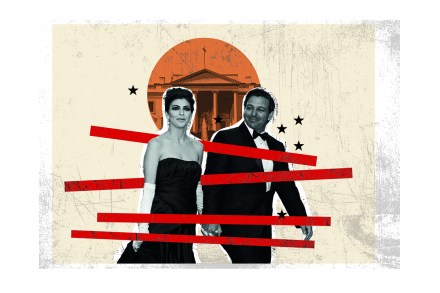
Do you remember Rebekah Jones? Don’t worry, we’d forgotten about her too. At the height of the pandemic, she resigned as a low-level functionary in Florida’s public health bureaucracy and accused her state’s governor, Ron DeSantis, of cooking the books on Covid. There was never much evidence to back up Jones’s claims of data manipulation, but that didn’t stop her becoming a pandemic-era media darling. She was given seemingly endless airtime on cable news while newspaper profiles heralded her as a brave whistleblower. Boosted by this favorable coverage, the kooky data scientist even announced a congressional run. But it is now as clear as could be that Jones was wrong.

florida

A sunshine state of mind

“I thank God for this place.” It might seem a weird thing to say, unapologetically earnest and deeply uncool, but, in Florida, it’s very common to overhear someone saying exactly this. On the beach. By a pool. In a restaurant. At the checkout line at Publix. Some other phrases you hear a lot: “I wish we had made the move sooner.” “I feel like I’ve added years to my life.” “Living the dream.” “Another day in paradise.” It is a unique moment in Florida’s history. The feeling of gratitude is very real. Millions of people seem to have woken up one day and decided they had to become Floridians right away. I am among them. How many exactly is unclear. The US Census estimates 221,000 people moved to Florida between July 2020 and July 2021.

big sort

Undercover in DeSantis’s Disney World

Recently The Spectator sent me undercover inside Ron DeSantis’s Disney World. Allow me to explain. Back in April, Florida lawmakers voted to dissolve the so-called Reedy Creek Improvement District. Reedy Creek, for those unfamiliar with the seamy world of crony capitalism, was a self-governing enclave within Orlando, Florida, run by the Disney corporation. It had been set up to allow Disney World to effectively function as its own nation-state, setting its own rules, levying its own taxes, even administering its own public services. Reedy Creek was established in 1967. It was part of Walt Disney’s original vision for his parks, which was exceedingly ambitious, seeing, for example, EPCOT Center as growing into its own autonomous futuristic city.

disney

Is Miami really on the rise?

My lunch spot in suburban Miami-Dade County, El Palacio de los Jugos — the Palace of the Juices — is the kind of Cuban joint that specializes in monstrous portions served up by some of the finest mamacitas on the planet. The black beans and rice can be overly greasy and the tropical jugos sickeningly sweet, but one frequents the palace for the only-in-Miami atmosphere; the food is incidental. On any given day there, you’ll run into a construction worker chatting up the gals from the Asian massage parlor next door. Young bros roll up in souped-up Hondas and scarf half a dozen empanadas before rushing off to cook up their next low-level con. The Cuban old-timers sit around, as they’ve done for decades, slamming cafecitos and denouncing los comunistas.

Miami
speech

Who will stand for free speech?

The primary feeling is a sense of dread. The oily scent of torches set aflame is in your nostrils, and the glint of pitchforks in moonlight appears on the horizon. You have, either accidentally or intentionally, said something that aroused the anger of a mob. Those of your friends who enjoy a good scrum send you laughing messages; those who are born afraid of such things ask quietly if you are all right. Your name is trending nationally and, amid it all, you worry it will never end. This is an experience that too many Americans have had in the era of social media.

warp covid origin pandemic

Why Operation Warp Speed worked

On Friday January 3, 2020, Dr. Robert Redfield, director of the US Centers for Disease Control and Prevention, phoned Alex Azar, secretary of the Department of Health and Human Services. With the words, “we have a problem in China,” Redfield broke to the secretary and those of us on his immediate staff news that was about to change the world. At the time, neither Redfield nor anyone else knew much about the characteristics of the virus that would become known formally as SARS-CoV-2, but he knew enough to sense that we needed to respond, and quickly. Thus began an odyssey of pandemic response actions, strategies and regulatory processes that would consume HHS, where I worked, along with much of the rest of the administration, until Inauguration Day 2021.

newborn

Greetings from the Newborn Bubble

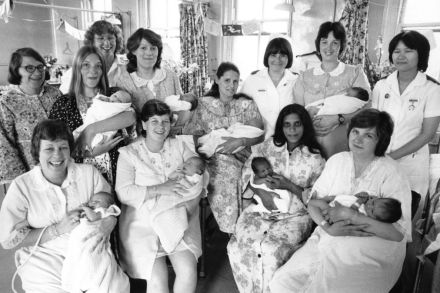
I’m writing this from a place outside time, day, night or sleep. It’s a place filled with magic, milk and boobs on constant display. I’m writing from the Newborn Bubble. My baby, Matilda, was born a month ago and my brain is mush. So if this column ends up being little more than disjointed images and memories, incomplete sentences and trains of thought that get started but never leave the station, know that I am in a postpartum daze. I’ve started to write this piece literally dozens of times: my current view is a baby who passed out looking at her high contrast card. Her onesie is stained with spit-up. Is she breathing? My current view is a sleeping baby in a dock-a-tot, it’s 10:33 a.m. I should be sleeping because she is — but I can’t. Is she breathing?

cattle

The last cowboys

This Memorial Day I found myself at a grassy spot along La Prele Creek, resting my horse and having lunch out of the back of a Ford Explorer, with an eclectic group of new friends who had also volunteered to help the Cross family on their annual spring cattle drive. It was day two of the four-day feat, and John Ralph, one of the Crosses’ neighbors, sacrificed his own pressing chores to reinforce the cavalry. “Is this typical, for neighbors to help each other?” I asked the soft-spoken stockman, his blue eyes accentuated by a grizzled beard, bright beneath the brim of his worn hat. “Yes. Used to be a lot more of it,” he said. “Now there’s a lot less neighbors.” The Crosses have lived near Douglas since 1883.

Sheryl Sandberg leans out

There’s a revealing moment at the very end of “Why We Have So Few Women Leaders,” a 2010 TED talk delivered by Facebook’s then-chief operating officer, Sheryl Sandberg. After expounding on her vision of a world in which 50 percent of CEOs and heads of state are women, Sandberg shares a more personal dream: “I want my daughter to have the choice not just to succeed, but to be liked for her accomplishments.” Now, as Sandberg leaves Facebook’s parent company Meta after fourteen years, she leaves behind a mixed and controversial record in her public life. Sandberg has earned success, but she hasn’t won much public admiration.

chicago

Chicago is coming apart

There are two ways to think about Chicago. The depressing one is to follow the news. These days it’s pretty bad. In mid-May, two people were killed and seven wounded when a gunman fired into a crowd outside a McDonald’s restaurant on the Near North Side. I know the McDonald’s well. I went to high school nearby, and my three children attended the elementary school across the street. Once scruffy, the area is now affluent. Overlooking the murder site is a seventy-five-story tower where condos sell for up to $6.1 million. The building’s developer described the shootings as “isolated to [that] location.” If only. In fact, it was the tenth mass shooting in the city this year, CBS News Chicago reported.

Middle Ages

The culture war over the Middle Ages

There is a war afoot, here in late civilization, over the meaning and legacy of the Middle Ages. Two distinct fronts have emerged from either side of our political spectrum. On the left, in the academy, medievalism is being diversified out of existence, its defining Western characteristics relegating it to a smaller place in a global mosaic. On the right, a certain breed of new conservative is reclaiming the Middle Ages as a keystone period in which order and reason ruled, instead of the swivel-headed “scientism” of pure observation brought on by the Enlightenment. The ground upon which this battle is joined is the traditional Anglosphere understanding of the medieval period, roughly the fifth to fifteenth centuries ad, a period most commonly thought of as the “Dark Ages.