Books and Arts

The bloody decade: think America’s divided now? Try the 1970s

Late on the afternoon of November 29, 1984, Susan Rosenberg and Timothy Blunk were loading boxes into a blue Oldsmobile Cutlass sedan and a U-Haul trailer parked at a self-storage facility in Cherry Hill, New Jersey, not far from Philadelphia. The boxes were heavy, so despite the autumn chill and the wind, Rosenberg and Blunk were working up a sweat. Both wore glasses as part of their disguises. Blunk had an ill-fitting wig that he barely managed to keep on his head. An FBI wanted poster called Rosenberg armed and extremely dangerous, and the Bureau wasn’t wrong. On the front seat of the Olds, purses held semiautomatic pistols — an Interarms Walther PPK .38 caliber and a Browning Hi-Power 9mm. They were both fully loaded.
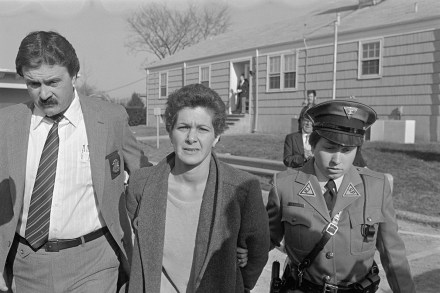

susan rosenberg

It’s different for girls

‘Buy pink baby clothes,’ Kim Jiyoung, the protagonist of this best-selling South Korean novel is told at the obstetrician’s office. Jiyoung’s mother responds: ‘It’s OK, the next one will be a boy.’ There are numerous births in this book. Births of girls are met with disappointment. The births of sons are celebrated. When Jiyoung is born in 1982, ‘abortion for medical problems had been legal for 10 years...aborting females was common practice as if “daughter” was a medical problem’. Her younger sister is ‘erased’.

jiyoung
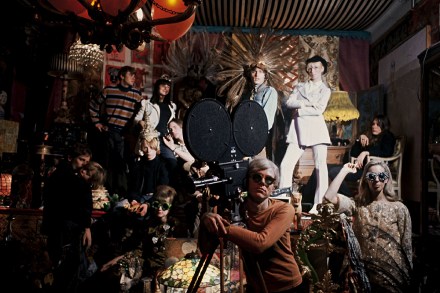
warhol

Magus of mass production

‘If you want to know all about Andy Warhol,’ the artist said in the East Village Other in 1966, ‘just look at the surface: of my paintings and films and me, and there I am. There’s nothing behind it.’ This quotation re-appeared in 2002 on the US Post Office’s commemorative Warhol stamp. It’s fabulously fitting for a stamp that reproduced a self-portrait, but when scholars recently compared the audiotapes of the interview with the printed version, the passage wasn’t on the tapes. Warhol sometimes invented interviews from whole cloth. He answered questions with a gnomic ‘yes’ or ‘no’ or, refusing to speak at all, allowed proxies like his ‘superstar’ Edie Sedgwick to answer for him.

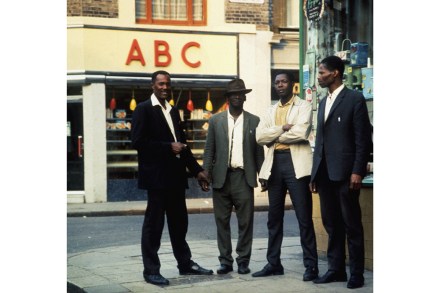
Cosmopolis

Every history of London, and there have been many, has looked at the importance of migration to the city. Failing to mention that would be as inconceivable as not mentioning the River Thames. Both, after all — one literally, the other metaphorically — flow directly through the city’s heart. In this new and scholarly study, the difference is that London’s history of migration — its patchwork of settlement, its Irish ‘rookery’, its ‘colored quarter’, Huguenot silk-weavers, Jewish street-sellers, German bakers, Italian waiters, Chinatown, Banglatown — is put center-stage. The movement of all these people to London, the city’s extraordinary national, then continental, then international pull, is the story.

migrant

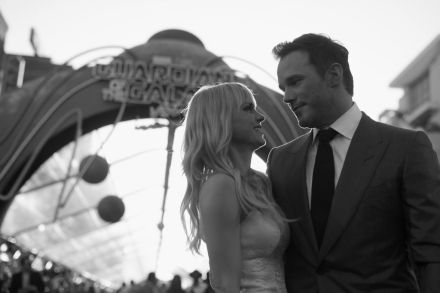
Conscious coupling

Most of the podcasts that sell relationship advice imply that romance is synonymous with sex. The theory of that equivalency has been a theme in the arts for centuries: Shakespeare, Flaubert, Thackeray and Tolstoy all exposed its follies and truths. Unsurprisingly, the podcast hosts have a less poetic, nuanced note than the classic writers, such as giving the advice: ‘If you’re having a dry spell, listen to us or break up.’ Tony and Alisa DiLorenzo are a Christian couple who have married for 23 years. Perhaps surprisingly, their podcast, ONE Extraordinary Marriage, depicts sex and romance as interchangeable. Tony and Alisa, who couple on the page in their co-authored book 7 Days of Sex Challenge, start each episode with a ‘hug’.

anna faris coupling podcasts
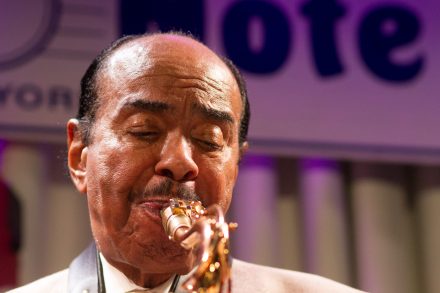
benny golson

Tenor badness

In Stephen Spielberg’s 2004 comedy The Terminal, Viktor Navorski (Tom Hanks) is a native of Krakozhia, a small eastern European country engulfed in civil war. When Navorski lands at JFK, he discovers that his passport is invalid as America does not recognize Krakozhia’s new regime. He’s stuck in the airport for months and unable to accomplish his mission: completing his father’s quest to obtain the autographs of all 57 musicians in Art Kane’s 1958 photograph ‘A Great Day in Harlem’, a who’s who of jazz greats (including Count Basie, Coleman Hawkins, Dizzy Gillespie and Thelonious Monk), captured on East 126th Street in daylight without their instruments.

Finger pickin’ good

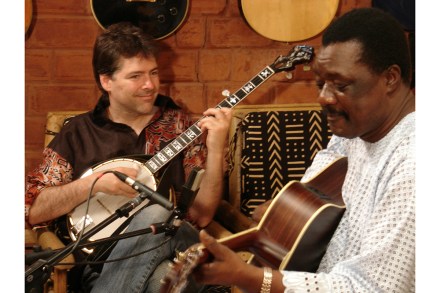
The banjo was present at the creation of jazz but, like the clarinet and the fiddle, it fell from favor, and for similar reasons. The saxophone and the electric guitar were easier to play, more expressive and much, much louder. The banjo was on the way out even as it was on the way in — in the Hot Five recordings of December 1927 that instituted the jazz solo as we know it, Johnny St Cyr played both banjo and guitar — but the banjo had somewhere else to go. The fleet-fingered took their four-and fivestringers to the hills — the Appalachians, for instance. There, the banjo thrived with those other refugees from early jazz, the fiddle and the steel-strung guitar. Metropolitan contempt caught up with it in the Seventies.

banjo

The refreshing darkness of Netflix’s Locke & Key

Don’t be put off by the slow first episode, which makes you fear it’s just going to be another of those so-so emo magical-fantasy adolescent dramas in which Netflix abounds: Locke & Key is superior, addictive and bingeworthy stuff in the league of, or possibly even better than, Stranger Things. It begins with an achingly clichéd scenario — family driving across America to seek new life in exotic location, kids bickering in the back, awkward high-school experiences awaiting them, etc. — and the familiarity never lets up.

locke & key
decadence douthat

Apocalypse soon

An age demands a name when it’s an age of upheaval. The name should describe the ills of society and even suggest their cure. Ross Douthat’s The Decadent Society aims to do exactly that — and succeeds in ways that he might not have intended. Douthat rejects the common view of decadence as Caligula-inspired orgies or Marquis de Sade-style perversion, or even excessive consumption of chocolate cake by women. For him, decadence is ‘neither empty of any judgment nor excessively deterministic’. He finds this sweet spot in the work of Jacques Barzun, who defined decadent times by their ‘deep concerns’ and ‘peculiarly restless’ mood.

metternich

Prince of Europe’s long peace

This is a giant Teutonic forest of a book, to be progressed through with determination as if by seasoned infantry; it is as far as biography can get from a Viennese waltz. But it has its rewards. It is an extensive and wellresearched chronicle of Klemens von Metternich’s monumental career — 39 years as foreign minister of the Austrian Empire, the last 27 of them also as state chancellor, and an extensive diplomatic career prior to all that. Wolfram Siemann presents and argues for a new and rather liberal interpretation of ‘the Metternich system’ instead of the normal view of Metternich’s influence as rigid and reactionary.

The human clay

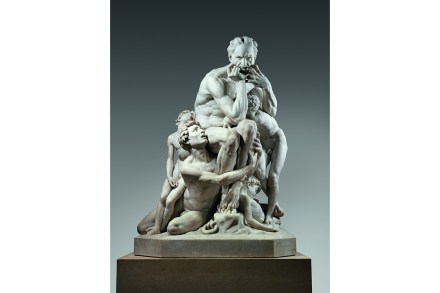
This article is in The Spectator’s March 2020 US edition. Subscribe here.The topics in The Necessity of Sculpture emerged randomly, thrown off by successive exhibition calendars and coming to range in time and place from ancient Mesopotamia to 21st-century Manhattan. As I made the selections, what began to take shape, beyond a conventional anthology, was a synoptic history of the art form. The title is a belated riposte to Ad Reinhardt’s famous dismissal, in around 1960, of sculpture as ‘something you bump into when you back up to look at a painting’.

sculpture

Mass appeal: Stanford in Stamford

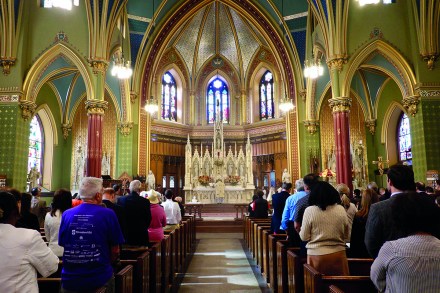
This article is in The Spectator’s March 2020 US edition. Subscribe here. The exterior of the basilica of St John the Evangelist in Stamford, Connecticut, looms large and gray. Built in 1875 by Irish immigrants who mined and hauled rocks from a nearby quarry, its interior bursts with greens, reds and golds. The saintly lives in its stained-glass windows are said to comprise one of the largest collections of its kind on the East Coast. I was one of 12 singers to perform here at the American premiere of the Mass in G Major by the Dublin-born composer Sir Charles Villiers Stanford (1852-1924). Stanford’s Mass was first performed at London’s Brompton Oratory in 1893, but, like The Spectator, it took its time coming to America.

stanford

Around the world in 49 days

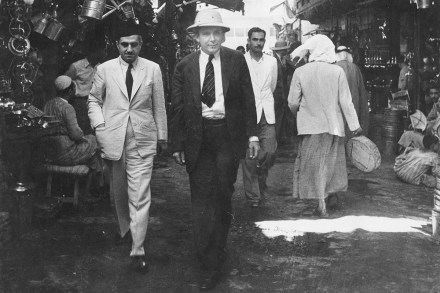
This article is in The Spectator’s March 2020 US edition. Subscribe here. No one remembers Wendell Willkie. If you don’t believe me, mention him as a man worth looking up at your next cocktail hour. Then watch as even well-informed acquaintances wonder when, exactly, you started taking an interest in adult-entertainment performers or bothered to locate the inspiration for Arrested Development’s hit ‘Mr Wendal’. Even the learned (and let’s throw in friends who subscribe to the New Yorker to even things out), will struggle to recall that Willkie was not only referred to as ‘Private Citizen Number One’ by FDR.

wendell willkie

‘All rock ’n’ roll starts and ends with Lou Reed’

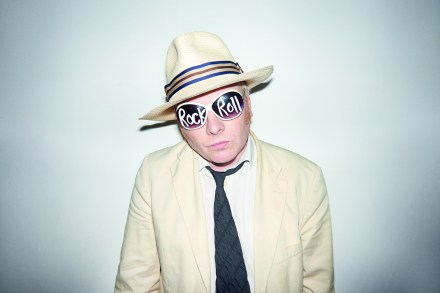
This article is in The Spectator’s March 2020 US edition. Subscribe here.March 2013 I have written a song called ‘Lou Reed, Lou Reed’. It’s a hymn to the man in the title — a petition, as Jim Morrison would have it, to the gods of rock ’n’ roll. The song runs for just two minutes and consists of a three-note, sub-moronic riff and a two-word mantra repeated 71 times. The two words are ‘Lou Reed’. The song isn’t a hit, but it does cut a bit of a dash. The song’s subject even hears it. I hear from someone who hears that he heard it that he likes what he heard. Then, in October 2013, the subject of my song dies. My song, a throwaway, begins a strange afterlife.

luke haines peter buck
kraftwerk

Uniform beats

This article is in The Spectator’s March 2020 US edition. Subscribe here. Right from the beginning, everything about Kraftwerk was odd. They had no frontman, they seemed to play no instruments and their strange, electronic music owed nothing to blues, soul or any of the other forms of music that underpinned 20th-century pop. Instead, a Kraftwerk gig consisted of four gauche-looking fellows from Düsseldorf standing in a row, each poking at a synthesizer while strange, apparently unconnected images appeared on screens behind them. A Kraftwerk album could be just as confounding. The cover of 1977’s TransEurope Express featured the band in suits and ties, looking more like the partners at an accounting firm than a pioneering electronica band.

An old master who still feels new

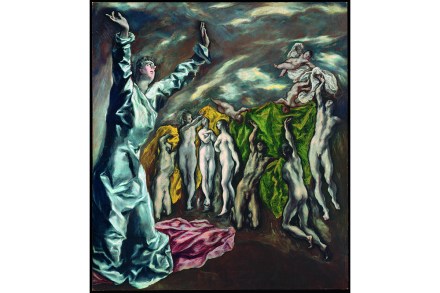
This article is in The Spectator’s March 2020 US edition. Subscribe here. Velázquez prized his work, but El Greco’s reputation fell quickly after his death in 1614. Another Spanish painter, Antonio Palomino (1655-1726), called The Greek ‘contemptible and ridiculous, as much for the disjointed drawing as for the insipid colors’. In the 1800s, ‘The Burial of the Count of Orgaz’, now regarded as one of his masterpieces, lay rolled up in the basement of a Toledo church.

el greco

Urbino legend

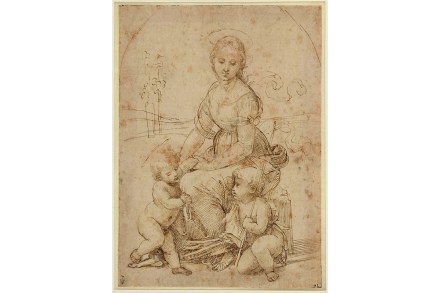
This article is in The Spectator’s February 2020 US edition. Subscribe here. At the time of his death on Good Friday, 1520, Raffaello Sanzio of Urbino was the most successful artist the world had ever seen. In terms of sheer skill, expert judges like the historian Paolo Giovio rated him third among the supreme trinity of Renaissance artists — after the stiffest imaginable competition, Michelangelo and Leonardo da Vinci. But in terms of worldly success, Raphael died as the unchallenged prince of artists. He was the favorite artist of the greatest patron in Christendom, the Medici pope Leo X. He had been commissioned to decorate the most prestigious monuments in Rome.

raphael

Finding the Lost Girls

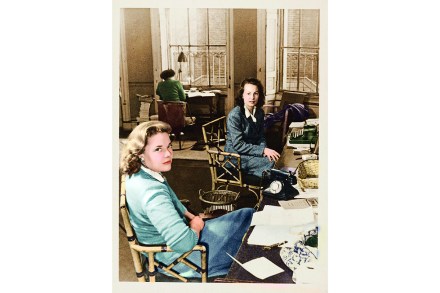
This article is in The Spectator’s February 2020 US edition. Subscribe here. Encapsulations of a particular art-world demographic nearly always fall wide of the mark. Just as there were plenty of people on hand in the 1950s to protest that the Angry Young Men were neither especially angry nor exclusively male, so countless chroniclers of interwar social life complained that the Bright Young People were neither bright nor young. But the critic Peter Quennell’s phrase ‘Lost Girls’ to describe the gang of female twenty-somethings who worked on the magazines and populated the parties of Blitz-era literary London carries an unmistakable tang of conviction.

lost girls

The prophetic Raymond Chandler

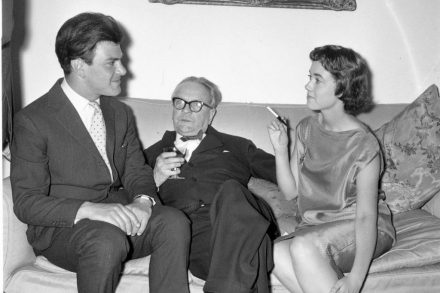
This article is in The Spectator’s February 2020 US edition. Subscribe here.Laramie, Wyoming In an age of extreme individualism complicated by racial sensitivity and class resentment, ancestry is an uncomfortable subject. But it remains a fact that a man’s ancestors are never irrelevant to who and what he is, though of course they determine neither. Raymond Chandler (1888–1959) said that he was conceived here in Laramie, before being delivered in Chicago following the usual interval of nine months. His American father deserted the family and his Anglo-Irish mother took her son to England, to be educated at Dulwich College.

raymond chandler

Cyrus the Great

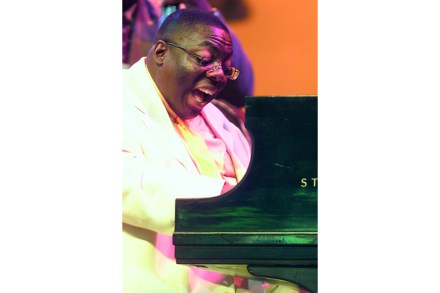
This article is in The Spectator’s February 2020 US edition. Subscribe here. Washington, DC has a proud jazz history: the birthplace of Duke Ellington where he made his first arrangements as a highs-chooler; the home of U Street, where joints like the Crystal Caverns and the Howard Theatre hosted Louis Armstrong, Billie Holiday and Count Basie. Today, jazz holds out in a few spots on U Street and in select clubs such as Blues Alley. A relative latecomer, founded in 1965 near M Street in the heart of hoity-toity Georgetown, Blues Alley touts itself as ‘the nation’s premier jazz and supper club’. Despite a menu featuring such delicacies as ‘McCoy Tyner’s Blackened Catfish’, the supper part can safely be labeled as hearty, but no more.

cyrus chestnut