The Wiki Man

Why no one wants their holiday to last forever

I have been on holiday for two weeks. Well, not quite. You see, a bloke I once met told me that, when you take a long holiday, it’s good to work for a couple of days in the middle, as the contrast will cause you to enjoy your holiday more overall. Since the bloke in question was the psychologist and Nobel laureateDaniel Kahneman, I decided to try this. Unexpectedly, it worked. The principle derives from an idea labelled ‘hedonic adaptation’: the notion that our level of happiness will return to a baseline over time, regardless of circumstances, when our environment remains constant. Put bluntly, it explains why nobody lives permanently on a superyacht, and why, after 14 days in Barbados, you are really quite chipper about the prospect of flying back to Dorking.

Why cocktails are superior to wine

I often argue that, in theory at least, well-made cocktails are indisputably better than wines costing 20 times more. My argument runs as follows. In making a cocktail, you can mix, in any combination you wish, any of the liquids known to humanity. In making a wine, you are stuck with using grape juice harvested by grumpy Frenchmen from scrubland east of the Gironde. Mathematically, the odds that the best drink you can generate derives only from a few bunches of such grapes is so small as to be infinitesimal. Besides, almost no one drinks grape juice, and nobody has ever seriously tried to sell non-alcoholic wine. If it really tasted all that good, these things would have taken off by now. Yet one reason people like wine is because our judgment is highly relative.

What do oven chips have to do with virtue signalling?

Why does virtue-signalling matter? It’s a fair question. After all, if people display virtuous behaviour, need we care about their motivation? I understand why some are irritated by the term; deployed unsparingly, it can be used to denigrate any act of decency. Yet, if the phrase is relatively new, the concept isn’t. Several of the best-known passages of the New Testament (The Widow’s Mite; the Sermon on the Mount) deal with the contrast between sincere acts of virtue and those driven by self-advertisement. No chant from a football crowd has ever converted anyone in the opposition stands Why is this distinction important? For one thing, cheap displays of virtue may crowd out more concrete actions.

The CV trick that guarantees you an interview

Sometimes the opposite of a good idea is, as Niels Bohr said, another good idea. But the converse is also true. The opposite of a bad idea can easily be an even worse idea. Something like this seems to have happened with the expansion of British higher education. When I left university in 1988, if you wanted a reasonable first job, a degree from a Russell Group university was probably sufficient but not necessary. Now it seems to be necessary but not sufficient. The result is that a large number of perfectly capable but non-academic people are excluded from having a stab at many jobs, where for all we know they could be brilliant. But it has also led to the emergence of bizarre and wasteful forms of hyper-competitive behaviour among those who play the credentials game.

Why I won’t buy a Tesla

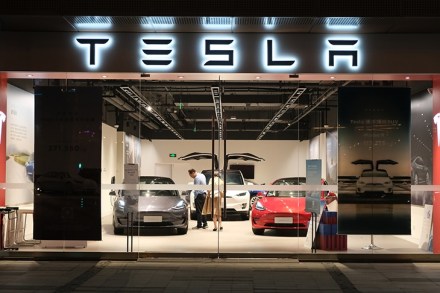
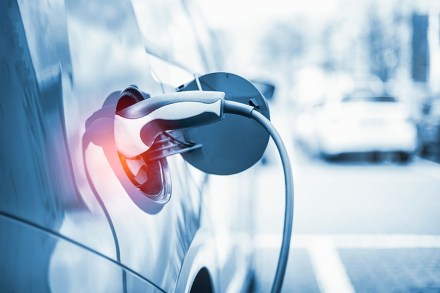
I loved the Ford Mustang Mach-E which I had on loan for four days. It was gorgeous to drive, and slightly saner than the Tesla Model 3 — in that some of the controls involve physical switches and buttons, rather than an on-screen interface. The only annoyance was a persistent whining noise. This came from my teenage daughter who endlessly delivered her strongly held opinion that a fat, 55-year-old advertising man shouldn’t be driving a Mustang. As I patiently explained, when you are a 55-year-old man, you don’t really buy a car for yourself, you buy it for your Jungian shadow-self. So whereas your real-life wife and children might not much like riding in a Mustang, your imaginary 26-year-old Colombian girlfriend thinks it’s fabulous.

Charging ahead: how to get the best out of an electric car

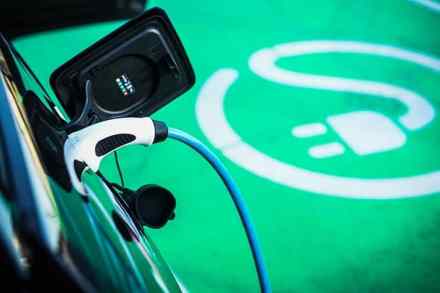
Where do you want to go? China or India? I have always found India infinitely more fascinating — for a simple reason. If you ask Sinophiles about China, they always quote statistics; Indophiles tell you stories. It’s fine to know that China has built 24,000 miles of high-speed rail track, or that its GDP is growing at an annualised rate of 8.27 per cent, but it doesn’t make me want to visit. It’s like reading an article about the film industry in the Economist: informative, yes, but it doesn’t make you want to go to the cinema. The electric car market is trapped in a similar numerical morass. The more you read on the subject, the more you wish you had a degree in electrical engineering. I suppose all technologies are like that in the early days.

Taking charge: it’s time to buy an electric car

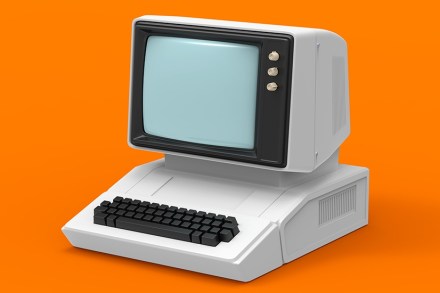
As a wise colleague once said: ‘Yesterday is a great time to buy a computer, because you have already enjoyed it for a day. Alternatively, buy a computer tomorrow. The computer you buy tomorrow will be both faster and cheaper than the computers available now. On no account, however, should you ever buy a computer today.’ One factor delaying our adoption of electric cars is that experience has taught us it pays to wait when buying anything with a plug. There is a huge impetus to buy property because, over time, your options get fewer and dearer. But when contemplating the purchase of an electric car we assume every year will bring a fall in price, an increase in range and a further boost in performance. And new models are being introduced all the time.

The social tyranny of singing ‘Happy Birthday’

Among the horrors, some aspects of lockdown were bizarrely less gruelling than expected; indeed for some people, the experience was mildly positive. It’s time to ask ourselves why. One possible explanation is ‘jomo’ — the joy of missing out. Much ostensibly voluntary human activity is not really voluntary at all. Like dressing for dinner in the 19th century, many elements of life are performative — things done to signal commitment or driven by social pressure.

The hidden cost of free technology

Back in late 2019 I met someone from Zoom who was visiting London. The company, then as now, offered free video-conferencing calls for up to 40 minutes, but charged a fee of around £10 a month to users who wanted longer calls. Towards the end of the conversation, I flippantly asked what I thought was a hypothetical question: ‘How much would you charge to give full Zoom access to the whole UK population?’ I didn’t think much more about it, but to my surprise they came back to me a few days later: ‘If you know anyone in the government who’d be interested in this, we’d like to talk.’ In the end, I never got round to doing anything, and then the pandemic hit, which solved their adoption problem overnight.

Video calls are the new penny post

Dear Sir, I beg to introduce myself to you as a clerk in the Accounts Department of the Port Trust Office at Madras on a salary of only £20 per annum. I am now about 23 years of age. I have had no university education but I have undergone the ordinary school course… I have made a special investigation of divergent series in general and the results I get are termed by the local mathematicians as “startling”. This was the opening of the letter written by the Indian maths prodigy Srinivasa Ramanujan to Professor G.H. Hardy at Trinity College, Cambridge in January 1913.

America isn’t speaking our language

I haven’t yet read the report published by the Commission on Race and Ethnic Disparities. But, looking at the recommendations, I think there is one missing detail. We also need some loose agreement on terminology attuned to the conditions of British English as distinct from American English. Let me explain. I would not dare to pronounce on what is acceptable terminology in Spanish, for the simple reason that I do not speak the language and certainly don’t understand the context. Without context, you can’t fully understand meaning. So I truly do not know whether ‘negrito’ is offensive or, as many claim, a term of affection. Perhaps it can be both. Certainly Spanish uses far more physical epithets than we do.

The genius branding of the ‘Oxford’ vaccine

I am writing with a mild pain in one arm, having received my first dose of the Oxford vaccine yesterday evening. Alongside the scientists, I must also applaud whoever had the wit to call this the ‘Oxford vaccine’, rather than simply naming it after a pharmaceutical company. I’ve never been asked to advise on the naming of any pharmaceutical brand, but as far as I can see the rules are that you first imagine the kind of menacing name a James Bond villain would choose for a front company, and then add a few extra Zs, Xs or other odd letter combinations, just in case the initial name wasn’t quite sinister enough. What does this do to the placebo effect, I wonder?

Here’s a clue: we should all be doing cryptic crosswords

I was once asked by a previous editor of the Times how to increase sales of the paper. I was slightly more circumspect, but the thrust of my argument was: ‘Don’t bother with all that news and opinion malarkey — just teach more people how to solve cryptic crosswords.’ My argument was simple. There are now 40,000 different places where I can obtain global news and metropolitan opinion, but there is only one Times cryptic crossword. ‘Play your cards right.’ I suggested, ‘and you can be the Bernie Ecclestone of cruciverbalism.’ Revive crossword-solving as a craze; create apps whereby two people can co-operate remotely on a single grid; run live competitions.

The economics of learning languages

There is a kind of conversation which sounds intelligent, and which makes sense at first hearing, but which deeper thought reveals to be stupid. A classic example of this is the dinner party trope where some poncy polyglot belittles the British or Americans for being terrible at learning foreign languages. The raw facts seem to bear this out. But further consideration reveals a reason behind this discrepancy. Seen through the lens of time, it is much harder to learn a foreign language if your first language is English than if it isn’t. How so? Well let’s imagine how a Swede, say, might approach the issue: 1. ‘Do I need to learn another language?’ 2. ‘What language should I learn first?’ Easy answers. 1. ‘Yes’ and 2.

The cult of London

The phrase ‘rich people’s problems’ has its uses. I once overheard a group in a Knightsbridge restaurant sympathising with a companion in tones fit for a bereavement or life-changing injury. ‘Oh, poor you!’ It turned out that their nanny had been ill for two days while they were in Zermatt, and that Farrow & Ball was temporarily unable to supply an obscure shade of paint. To be fair, there are problems unique to the seriously rich. Take Marci Klein, daughter of Calvin. Not only was Marci kidnapped aged ten, but she later complained that in the midst of any passionate encounter with a new boyfriend, she would suddenly find herself confronted with her own dad’s name in inch-high letters. The 99 per cent never have to cope with anything like that.

Our obsession with city living is out of date

In March last year, the world made an interesting discovery. We found that a high proportion of knowledge-work could be performed remotely. Significantly, this came as a surprise to everyone. It should be a source of mild shame that, for all their talk of innovation, very few companies or institutions had experimented with this possibility beforehand. Given that this technology might help solve the housing shortage, geographical inequality, intergenerational wealth inequality, the transport crisis, the pensions crisis, the environmental crisis and almost everything else people worry about, it seems odd that it attracted so little consideration until a pandemic forced our hand.

Will remote-working strengthen the case for HS2?

Soon after the pandemic hit, the world’s airlines turned off their pricing algorithms and resumed pricing flights manually. Everything the software had learned from people’s past behaviour was suddenly rendered irrelevant. The software had been created for a world of discretionary travel where demand was elastic. If a plane seemed likely to leave half-empty, the software dropped prices to fill remaining seats. In March this once-efficient approach failed spectacularly. The few people who were still flying were doing so only in desperation: everyone else was unwilling to travel at any price. Far from reducing prices to respond to a drop in demand, it now made sense to hike them.

Is it time to reopen technology’s cold cases?

One of the staples of crime drama is the ‘cold-case squad’. This allows programme-makers to add period detail to the scenes set in the past, while the present-day scenes can show implausibly attractive forensic scientists hunting for clues in a creepy location such as a long-abandoned children’s home (an activity obviously best performed during the hours of darkness by two people who separate in mid-search for no apparent reason). I have often wondered whether it is worth establishing a cold-case squad for technology and science, to investigate those lines of inquiry that went cold 50 years ago but would now repay further investigation; or inventions that suffered from a miscarriage of justice.

Will video-calling kill bureaucracy?

Having grown up in a family business, my earliest exposure to corporate life was often baffling. I remember the first time I presented some work in a client’s office 30 years ago. He suggested some small edits, and asked that they be enacted before he presented the work to his superior, who was called Dave. ‘I’ve got a window in Dave’s diary next Wednesday to present the work on up to him, so I’d like to have the changes made by then.’ Fair enough, I thought. Perhaps Dave was flying in from Chicago. Or maybe Dave was a highly elusive figure who only appeared in the building on Wednesdays during the hours of darkness. We agreed to the changes and I left his office.

The surprising brilliance of meal kits

Ford’s Kumar Galhotra once remarked that carmaking is 100,000 rational decisions in search of one emotional decision. You spend five years and billions of dollars perfecting the drive train, the suspension and the onboard software only for people to choose a car based on the number of cupholders or the fact that the satnav is voiced by James Earl Jones. I’m hardly immune to this myself. I recently decided I wanted a Tesla because it offers an ingenious function called dog mode. This is faintly absurd to begin with: it’s even more ridiculous when you consider that I don’t own a dog.