The Wiki Man

The ‘airport effect’ that’s ruining modern life

The phrase “computer says no” now has its own Wikipedia page. The first recorded use dates back to a Stasi-era 1970s East German film segment titled Der Computer Sagt: Nein. However, its idiomatic use arose in 2004 via a series of sketches in Little Britain, each illustrating an example of technology--enabled bureaucratic intransigence, typically flying in the face of common-sense human judgment. It is perhaps the 21st-century equivalent of “jobsworth.” To behavioral scientists, the phrase illustrates something known as “defensive decision-making,” whereby the primary motivation for a decision is not the likely quality of the outcome but the decision-maker’s often unconscious urge to use any available means to offload accountability for his actions.

The BBC’s shameful treatment of Top Cat

Films nowadays often come with advance warning of “smoking,” “partial nudity,” “drug use” or something called “language” (presumably to prevent alarming people unaware of the invention of the talkies). Yet language can be triggering. I know that from watching the BBC as a child, when two linguistic absurdities drove the seven-year-old me practically insane. One was the Blue Peter habit of referring to Sellotape as “sticky-backed plastic,” a phrase unspoken by anyone else in any other circumstances, except in parodies of BBC children’s programs.

The real reason we should be burning our own gas

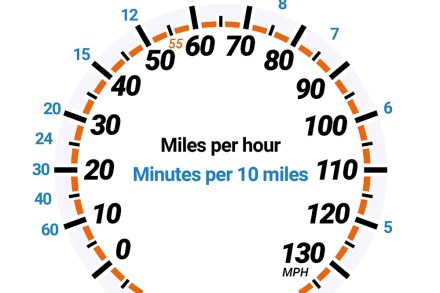
Regular readers of this column will be familiar with my promoting an idea called a “Paceometer.” Rather than presenting speed in, say, miles per hour (distance/time), it presents speed the other way round, in minutes per ten miles (time/distance). Created by the cognitive scientists Eyal Peer and Eyal Gamliel, the Paceometer shows something which is mathematically trivial but completely nonintuitive. Quite simply, the faster you are going already, the less time you save by going 10mph faster still. Accelerate from 20 to 30mph and you save ten minutes on a ten-mile journey. Accelerate from 70 to 80mph and you save just over a minute.

Why engineers beat lawyers

I once asked my friend, the engineer Guru Madhavan, why engineering faculties at most universities were outliers in containing more than a small minority of conservatives and political moderates. He explained it in a single sentence: “In engineering, you are peer-reviewed by reality.” ‘Legal’ thinking now precedes ‘engineering’ thinking rather than the other way around In any field where you are judged more by the quality of the outcome than the quality of your argument, there is a limit to the extent to which you can adhere to some all-encompassing ideological world view. If a bridge falls down, it is not a good bridge. The opposite is also true: in real life, if something works, you don’t always need a theory to explain why.

‘Life, Liberty and the pursuit of Happiness’ is genius marketing

I recently delivered a speech to mark the 250th anniversary of Adam Smith’s second-best book: An Inquiry into the Nature and Causes of the Wealth of Nations. The year 1776 was a momentous one for many reasons. It saw the installation of James Watt’s first steam engine, the recognition of Captain Cook by the Royal Society for his work in preventing scurvy and his departure on his final and ultimately fatal voyage. It witnessed the publication of Edward Gibbon’s The Decline and Fall of the Roman Empire and Common Sense by Thomas Paine.

Does The Spectator hate the Welsh?

This St. David’s Day weekend, I devote this column to a celebration of the world’s most under-appreciated ethnic group. Under-appreciated, certainly, in the pages of The Spectator, whose editorial policy suffers from a Pictish delusion that its readers are eager to hear of the appointment of a new procurator fiscal in Ayrshire, or political divides on Pitlochry council, while having zero interest in the finer country to the west. Sometimes mere exposure to Wales may be enough to inspire greatness, as in the work of Alfred Russel Wallace or Led Zeppelin Now in celebrating Wales, we need some ground rules. Since the Welsh are much more agreeable than other Celtic tribes, they are widely content to have sex with people from other cultures and ethnicities.

welsh