Sport

This looks like the greatest rugby side ever

British Lions fans of anervous disposition should avoid the telly of a Saturday morning. Live before your very eyes, as the southern hemisphere Rugby Championship unfolds, is the rebirth of an extraordinary new All Blacks side, now without Carter, McCaw, Ma’a Nonu and all. And, scarily, evenbetter than that World Cup-winning side. Warren Gatland, be very afraid. Our own Maro Itoje, the Saracens and England lock, wins every game he plays. The All Blacks win every game they play. How many players eligible for the Lions would get into the current Kiwi starting XV? Probably just Itoje. And how many from the rest of the world would get in? Again, probably just Itoje. It’s a thrilling prospect: the cream of British rugby taking on the world champions at the end of the season.


Club cricketers: Zimbabwe needs you

Make sure you tell everybody about Zimbabwe,’ said the lady at our block of flats in suburban Harare as we set off on the long journey to the Eastern Highlands and another match, this time at Mutare. We are a ramshackle and elderly cricket team, though we have pulled in a couple of youthful ringers, one an Oxford Blue and another a former Test-match 12th man. But it is a long time since a real England team toured this country — a few ODIs in 2004 I think. Gordon Brown blocked a tour of England by Zim in 2008, and I am told that David Cameron personally made sure that no England side came here. Understandably, perhaps, Cameron felt that a tour would offer some endorsement to Robert Mugabe, though he had no such reservations about doing deals with Saudi Arabia or China.

Our (nearly) golden summer

It seems like a long time ago, but back in the day, when Sir John Major launched the National Lottery, there was a fair bit of sanctimonious tut-tutting from the liberal establishment: it was a tax on the poor who couldn’t be trusted to spend their own money, it encouraged gambling, it was just a bit vulgar. And all that. Well, how’s that drivel looking now? A shedload of Team GB golds later, and how do those who sneered at the lottery feel about it today? Notwithstanding Britain’s staggering achievements, the Games are not perfect, of course: there’s too much track cycling and way too many swimming events. And possibly — whisper this — a bit too much rowing.

A gold standard of cheating

With the Olympics almost upon us our thoughts turn inexorably to the art of cheating. And while we should deplore all malignant efforts to gain an unfair advantage, cheating is an integral part of the Olympic story. After all, if, as Damon Runyon said, all life is six-to-five against, who can blame a few for trying to tilt the balance back a bit? Even the ancients did it. The Romans were said to have used their shields to reflect sunlight on to their testicles. This increased their testosterone, and performance levels rose. I wonder if this still works on everyday domestic tasks where performance can be a problem? Remember the Ukrainian sisters, Tamara and Irina Press, who picked up five track and field Olympic golds between 1960 and 1964?

Way off track

What’s going on with athletics? Do you know anything that’s happened in the sport this year? Has a sport ever so completely disappeared as ‘track and field’ — and not just because a large part of it has vanished into the maw of state-backed cheating, lying athletes and complicit FSB agents? Have we had the Bislett Games, that ever-present feast of record breaking athletics from my adolescence? Has the Weltklasse in Zurich, or the Olympics in one night as it was known, come and gone? Have the UK trials taken place? (That was normally an intense couple of days.) The answers are: yes; no, they’re coming up in September; and yes of course. But you see what I mean.

Wimbledon’s ultimate one-up man

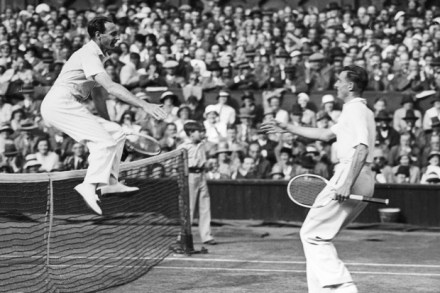
What a well-behaved Wimbledon. Apart from a bit of racket-smashing (most of the ladies), low-level swearing (Nick Kyrgios), tantrums (Kyrgios), and egregious non-trying (Kyrgios again, of course) it has all gone pretty-smoothly. So whatever happened to top-class gamesmanship? The master of this, you may be surprised to learn, was the greatest British player of all, the three-times Wimbledon champion Fred Perry. With great natural charm and remarkable good looks, Perry —who was from humble origins — fitted effortlessly into the very upper-crust world of 1930s tennis. His sexual prowess was on an Olympic scale and he bagged some of the most-beautiful women in the world, from-Marlene Dietrich downwards. And few seemed to have a bad word for him.

Blessed are the goalscorers

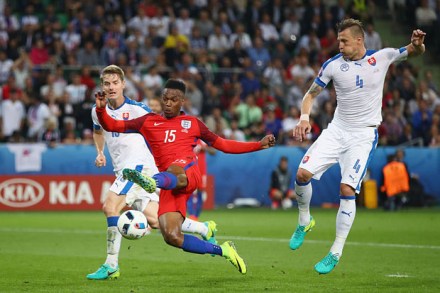
‘I am grateful to the gaffer for the opportunity and to God for letting me score,’ said Daniel Sturridge after his last-minute winner for England against Wales in Euro 2016 last week, a goal that certainly made me seriously question the Man Upstairs: I had invested quite heavily in the draw. What an enviable feast of attacking options Roy Hodgson has available at his fingertips for that tricky meeting in the round of 16 on Monday: Harry Kane, Raheem Sterling, Jamie Vardy, Marcus Rashford, Sturridge himself, of course, and God. Not to mention Wayne Rooney, who is better used in a deeper role, but could be pressed into service up front. Though not as an impact substitute for the last quarter, as against Slovakia: that might be a role more easily filled by God.

The pain of being second-best

The boys at Radio 5, bless ’em, are now including the EU referendum as part of their sports trailers. As in: ‘The European Championships; England versus Sri Lanka; Wimbledon; the EU Referendum; the Rio Olympics... don’t miss a second of this glorious summer of sport on BBC 5 Live.’ Nevertheless, the normally excitable world of sport has remained strangely immune to the dramas of the Brexit debate, though Sir Ian ‘Beefy’ Botham has put his considerable bulk behind the ‘outers’. Not surprising really. It was once said that cricket has the only trade union where the workers are to the right of the employers.

A blueprint for English cricket

No place for the faint of heart, Headingley, and certainly not for some sketchy Sri Lankan batsmen at the back end of a cold damp week in May with the two best seam bowlers in the world swinging away. Nobody liked it much on either side, which makes Jonny Bairstow’s big 140 all the more spectacular. Test matches in May are silly. This isn’t the hottest place in the world at any time. I mean, did you catch the opening of our very own IPL, or the Natwest T20 Blast as you might know it? While I watched Essex take on Surrey in the warmth of my sitting room, Sky’s Nasser Hussain and Rob Key were pitchside, fully togged up for Everest base camp. You practically got frostbite watching them. More than six Tests in an English summer is a bit much too.

The Foxes have little to teach us

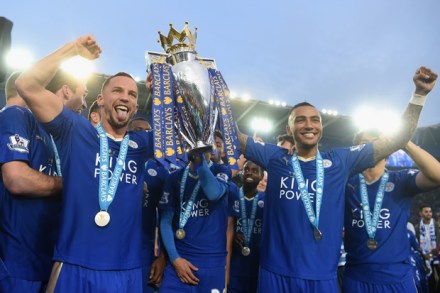
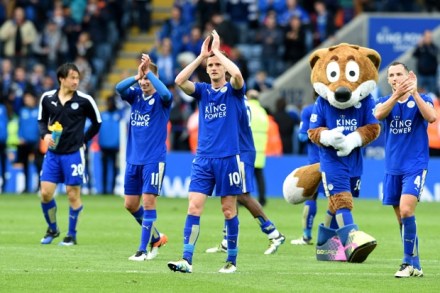
A few years ago a motivational speaker brought out a smart little book called Legacy: What The All Blacks Can Teach Us About the Business of Life. Everyone wanted to know how a tiny country miles from anywhere could dominate the world’s hardest team sport for so long. A lot of it, the book said, boiled down to humility, believing in the collective, going the extra yard, and, crucially, ‘no dickheads’. Better people make better All Blacks, was the message. Now the world is trying to learn from the Leicester City playbook.

A triumph for brutality

It’s always good to see a great con trick in action. Take Boris Johnson: not really the lovable quick-witted scamp with a good line in Latin gags and a few problems in the trouser department, but a ruthless opportunist with a dreadful attitude to women and a strong line in extreme rudeness to visiting presidents. Not what he seems at all. I’m beginning to feel the same about Leicester City. Wonderful story and all that: fairy-tale, Jamie Vardy, blah blah. Enough already. ‘Uncle’ Claudio Ranieri has brilliantly and charmingly pulled the wool over our eyes with his free -pizzas and ‘dingly-dong, dingly-dong’ stuff about waking up dozy players, all done in a comedy Italian accent straight out of a 1950s Sophia Loren flick.

Well done Danny, but Jordan will come back

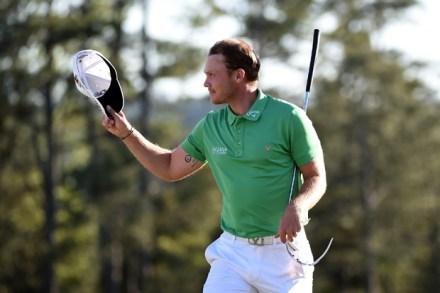
Well here’s a thing: we’ve just had the first English bloke to win the Masters. Sure, an Englishman has won it before, but not a proper English bloke with a tattoo and the easy patter you’d expect from the man who comes to fix your dishwasher. And there were five Englishmen in the top 14 at Augusta, not to mention a certain Northern Irishman. No one likes a jingoist, but as David Coleman might have said, it’s really quite remarkable. I absolutely love Danny Willett. He’s the ordinary guy from Rotherham, the son of a vicar and a maths teacher, who has just won the biggest prize in golf. He’s the kid from next door who has proved that with hard graft, luck and a loving family nothing is impossible.

Reasons to be cheerful, parts one, two, three…

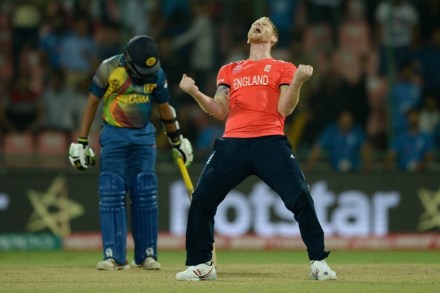
Well the sun is out, the sky is blue, and poor Boris Johnson is taking such a pounding from Matthew Parris and Petronella Wyatt that it makes the battle of Kursk look like an Easter Parade. Plenty to be cheerful about, then, and nowhere more so than in this blissful sporting spring. First, the T20 World Championship is producing cricket to make your hair stand on end. England’s men and women are racing through the tournament, and the men’s last- over win to beat Sri Lanka and reach the semis was spellbinding. England hadn’t reached three figures by the 15th over, but finished on 171. It was enough (just) after Sri Lanka’s captain Angelo Mathews led a brilliant fightback from 15 for four.

Jones the dragon-slayer

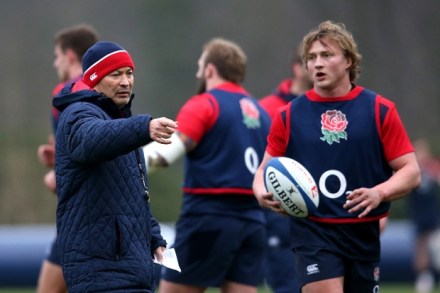
The return heavyweight bout between England and Wales lived up to its billing as the most thumping rugby match of the Six Nations. It was also the perfect result for both sides. England’s win brings the Grand Slam in sight, but Wales get to feel smug that they could have won if they had played on for a couple more minutes against an England team clutching at air with the bench emptied and the two leaders, Dylan Hartley and Chris Robshaw, withdrawn. There’s nothing the Welsh like more in the absence of a win than claiming the moral high ground. In a masterstroke of man-management, the England coach Eddie Jones — who will presumably soon be walking to work on water — singled out Robshaw as his player of the season.

Two big hitters leave the crease

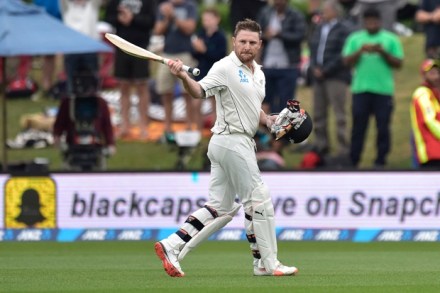
Two great men have just bowed out from their chosen trades and it is bloody sad. The New Zealand cricket captain Brendon McCullum and the journalist Hugh McIlvanney might not seem to have much in common but they both made the world a better, more joyful place. I sat up until the small hours a few of weeks back watching McCullum: it was his last Test, in Christchurch, against the old enemy from across the Tasman Sea, and his side had been put in to bat. McCullum has redefined what it means to be a batsman and for his farewell he wasn’t going to leave anything in the pavilion. He proceeded to score the fastest Test century in history, 54 balls, with jaw-dropping skill, grace and aggression. But his achievement is far greater. His teams played with freedom and sportsmanship.

Cricket needs the West Indies

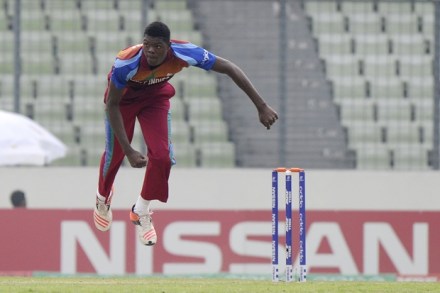
In the north of Antigua, just by the medical school, is a neat little cricket ground. It was a bit overgrown and bedraggled when I drove past the other day, but the small stand was still there, the changing rooms, the peeling scoreboard, and the sails of the kite-surfers dancing skittishly out on the Caribbean. It was all different in 2013 when a team of us from the UK played in a T20 match against a student side. The mid-afternoon start was breezy, the outfield rugged, but the ground was quite full of youngsters who had come to watch their friends give a pasting to a bunch of ageing overweight English guys. They weren’t disappointed. We knew we were in trouble when their opening bowler’s run-up went back to the boundary.

Don’t cry for John Terry

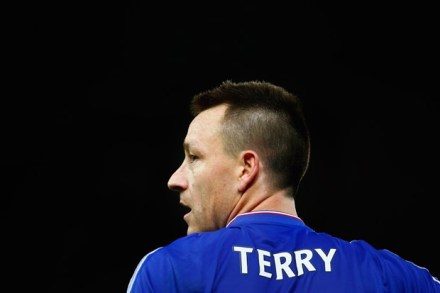
Just when you were thinking that the Premier League had become a much nicer place without José Mourinho in it, here comes another old friend from Stamford Bridge who can be relied on to pollute the atmosphere. Yes, it’s John Terry again, JT, Captain, Leader, Legend, who issued a tear-stained farewell saying Chelsea didn’t want him any more (sob), it couldn’t be a fairytale ending (sob), and he wasn’t going to retire at Chelsea (hysterical weeping). But so loyal was he that he couldn’t possibly be going to another Premier League club (stately music and solemn applause). Oh please, what a load of tosh.

Three sides to our success

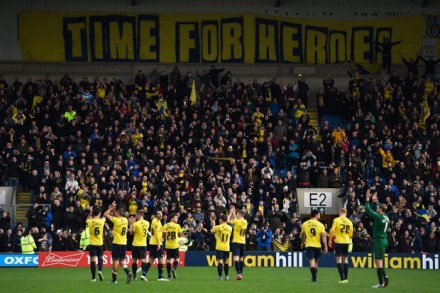
In the middle of Oxford is a socking great cinema: once the Ritz, it’s now an Odeon multiplex. Back in 1962, in the intermission of, I think, The Longest Day, the curtain moved and on walked a group of men, young I suppose, though to my 15-year-old eyes they seemed impossibly grown-up. It was the Oxford United team, led by their manager Arthur Turner, and including such titans as Ron ‘The Tank’ Atkinson, his brother Graham, John Shuker and Maurice Kyle. They had just won promotion from the Southern League to the Fourth Division (today’s League Two). They were introduced to the audience, and I have been a fan ever since.

Add Ben Stokes to the world’s greatest batsmen

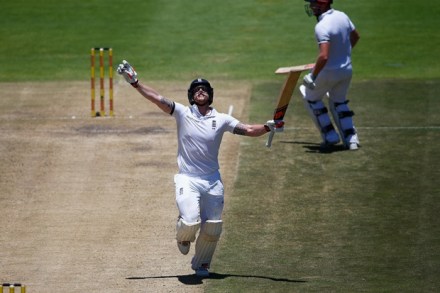
On Sunday morning a friend texted: ‘You watching the big bash, or the domestic stuff down in Australia?’ On one channel, you could be in Cape Town as Ben Stokes slaughtered the bowling attack of the world’s No. 1 side; one click and you were in Brisbane at the Gabba to see the Heat play the Sydney Thunder in the Big Bash T20 League. What a joy to be in South Africa — well, via TV — for the most extraordinary innings of this century. It was quicker than most T20 matches and much more brutal. I thought there were just three great batsmen in the world right now: Steve Smith, Joe Root, and A.B. de Villiers. With Kane Williamson thereabouts. But now add Ben Stokes.

From the dismal to the delightful: the year in sport

So long, then, to another thrilling year of sport in which the full range of human possibility — from the dismal frailties of the recidivists who run world football to the brazen brilliance of Japan’s rugby players — made for an intoxicating mix. It began and ended with two epic highs. Back in January, Tommy Caldwell and Kevin Jorgeson made the first free ascent of the Dawn Wall in Yosemite, the most difficult route in rock climbing, taking 19 days in all. A truly awesome achievement. Most of us could barely get off the ground; Yosemite is 3,000 ft high. Then, almost at year’s end, another high: the only people who recall Great Britain’s last Davis Cup victory are at least 90 years old. Now all of us have something to tell the grandchildren.