Features

Features

My travels in DeSantisland

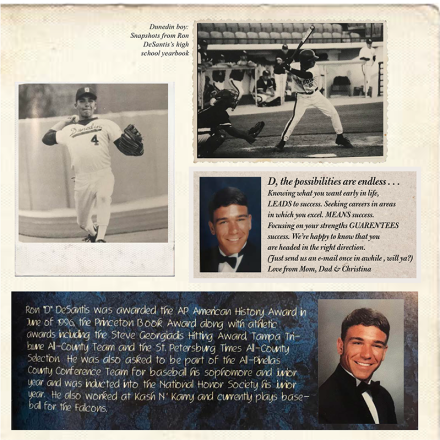
Long before he became a darling of the right and the left’s second favorite villain, Ronald Dion DeSantis was just a Florida kid they called “D” who played baseball, worked at a grocery store and dreamed of becoming president of the United States. Florida’s audacious forty-four-year-old governor earned legions of fans — and plenty of enemies — for keeping his state open during the pandemic. And he’s become a national figure since – a reinvented Florida Man – by playing offense on issues ranging from parental rights in education to illegal immigration to Critical Race Theory to fighting woke corporations.
ron desantis
F1 formula one

How Formula One took America by storm

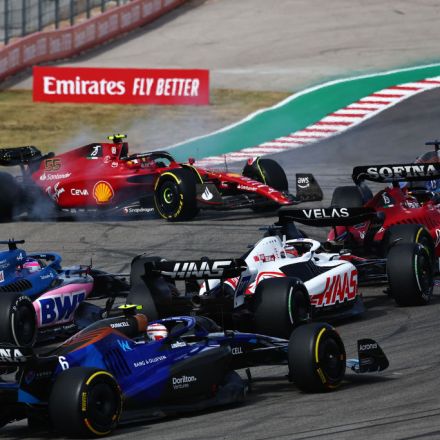
Even for Texas the scale of the Austin Grand Prix is overwhelming. The Circuit of the Americas, as the track is known, is simply massive: it is state-fair sized, though the goings-on are of a far more sophisticated flavor. Walking into the Paddock Club, techno blaring and pretty people flitting about like accented Abercrombie and Fitch models with cocktails in tiny Patrón bottles, one friend looked at me and said, “This ain’t NASCAR.” And indeed it is not. Formula One racing, one of the world’s most popular sports, has begun to get a foothold in the United States, owing in part to the Netflix series Drive to Survive.

At war with my pearly whites

I am a dental basket case. When I was a child, my orthodontist used to joke that he could drive a Mack truck between my two front teeth. I didn’t have braces so much as fight a losing battle against the evil telekinetic forces at work in my mouth, which seemed to shift my molars and incisors around at will. This was back in the 1990s when orthodontics was a matter of steel torture devices glued to your teeth — and I had all of them. There was the expander, a kind of bear trap in the roof of my mouth, which every night my mother would tighten by inserting and twisting a key. There was the headgear, the wires that circumnavigated half my head, which my orthodontist was delusional enough to think I was going to wear to school.

teeth
levi's

How I went from woke capitalist to victim of the woke mob

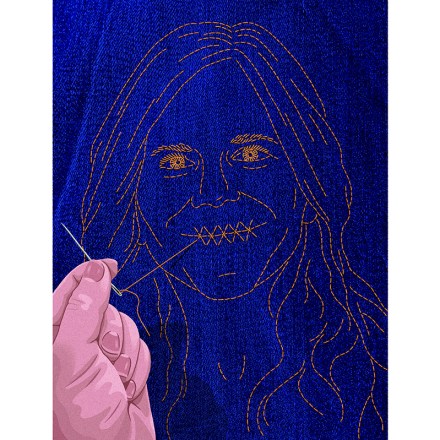
In February 2022 I walked away from my job as the first female global brand president of Levi’s after close to twenty-three years at the company. I’d given the better part of my adult life to Levi’s because of the product itself — I do love my 501s. (I have always preferred the button-fly on my jeans, rather than the zipper.) But while I may have chosen to work there in the beginning because of the product, I stayed because of the company culture. I believed in their mantras: “profits through principles,” “harder right over easier wrong,” “use your voice.” These refrains were rooted in the company’s heritage of rugged individualism, corporate philanthropy and populist inclusiveness.

The Republican march on Rome

Perhaps the greatest defeat the Roman Republic ever suffered was at the hands of Hannibal at the Battle of Cannae in 216 BC. Livy estimates that some 50,000 Romans were slaughtered and nearly 20,000 captured. Hannibal lost fewer than 6,000 men. It was a brilliant tactical victory for the Carthaginian general. The sun and wind were at his back. He had deployed his men in a convex semicircle with his weakest troops in front. When the armies assembled for battle, Hannibal ordered his men to shuffle their feet to stir up the dust. The Romans, half-blinded by the dust and the sun, plunged headlong against the protruding bulge of Hannibal’s line, easily pushing it in upon itself. Yet too late did they realize that only the tip of Hannibal’s line was falling back.

republicans
playbook

How Politico’s Playbook went from must-read to spam

Imagine one day you walk into your local watering hole and find out that all of your favorite bartenders have been hired away. In their place are new “cocktail specialists,” who are too busy flirting with one another to actually help customers. When they finally pour you a drink, they are awfully stingy with the booze. You briefly grieve over an overpriced vodka soda and then vow to never go back to that awful place. That’s more or less how I feel about Politico’s Playbook, the newsletter that was once the go-to morning read for Washingtonians. Reporters, lobbyists, government employees and politicians used to consume the daily newsletter before their first cup of coffee.

The outrage fever over Critical Race Theory

On October 10 Mississippi Today ran an article that nicely captures how America’s debate over Critical Race Theory has been marked by far more hyper-politicized nonsense than policy substance. As the author, Bobby Harrison, points out, GOP officials in Mississippi have been taking a victory lap over their supposed banning of CRT. “Here in Mississippi we are leading the way and we are driving the conservative movement,” Governor Tate Reeves said at a country fair. “We have banned Critical Race Theory — and we have banned vaccine mandates.” But the CRT bill, Harrison notes, does no such thing.

crt
Pickleball

Big Pickleball is coming for your tennis court

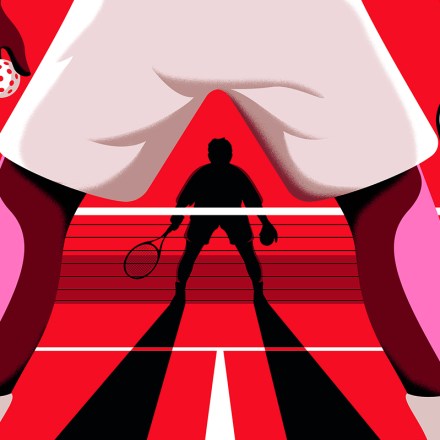
One morning this past summer I played tennis with two friends at the John J. Carty tennis courts in Bay Ridge, Brooklyn. About halfway through our session, dozens of senior citizens flooded onto what looked like four child-sized tennis courts next to ours. Wielding rectangular paddles, the seniors formed doubles teams and thwacked plastic wiffleballs back and forth across the nets, producing a bracingly loud pop-pop-pop sound. They were playing pickleball, a sport with origins as a 1960s backyard pastime that has become a craze in the United States over the past few years. Given the small courts and slow ball, the players didn’t have to move very far in any direction to keep a good rally going. They looked like they were having a lot of fun.

What conservatives lack

A famous passage in the preface to Lionel Trilling’s book The Liberal Imagination is widely quoted and just as widely misunderstood. Trilling, a Columbia University professor and literary critic, wrote that at the time — this was 1950 — that there was no articulate conservative or reactionary thought in America, only conservative or reactionary “impulses” expressed “in action or in irritable mental gestures which seek to resemble ideas.” Trilling’s point was not to criticize conservatism but to set up an argument for his work as a literary critic. Liberals, Trilling argued, needed to be challenged; they had grown complacent in the absence of a vigorous conservatism to spotlight liberalism’s deficiencies.

basic

Have yourself a very basic Christmas

Humbug! I’ve written before in these pages about how much I loathe Christmas. It’s not just Christmas though: with the exception of Thanksgiving, because it’s all about eating and gratitude and football, I could never stand any of the holidays. This has gradually abated over the years as I’ve started creating traditions of my own here in Los Angeles, but I still resent the feeling of obligation. Then this year, a neighbor asked, “What’s your daughter going to be for Halloween?” That was the moment it struck me — I’m going to have to fully engage in the holidays now. All of them. No more hiding under the bed and letting them blow over. Turning off the lights and pretending Halloween doesn’t exist is not an option.

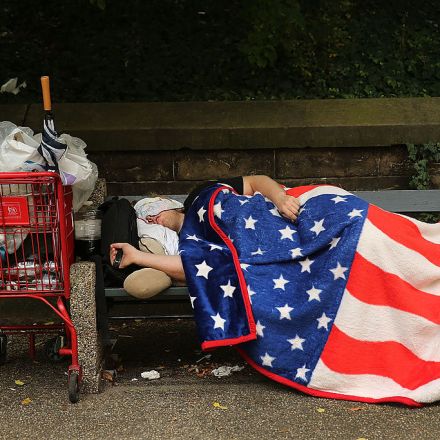
What Hawaii taught me about American homelessness

"What stands out for visitors?” I asked our guide during a tour of Honolulu’s Chinatown with my out-of-town guests. “Always the same,” he replied, “the homeless.” You can’t miss his point. During our brief walk through Chinatown’s markets, we saw a disturbed man dressed only in his underwear touching himself, several streetworn people begging and a fire department respond to a prone vagrant. When someone in our party needed the restroom, the shopkeeper apologized for having to keep it locked to prevent misuse. Many places had signs saying “no public toilet.” Despite some great-tasting food, it was hard to keep up a holiday spirit. Same for when we passed the tent cities and parks overtaken by the homeless along a drive on the Windward side.

homelessness
twitter

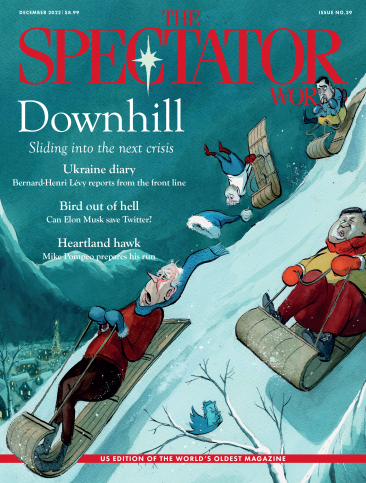
Can Twitter still be saved?

A philosopher once famously said that Hell is other people. What the world has learned from Twitter is that Hell is other people’s opinions. It’s no wonder, then, that when Elon Musk came bounding into Twitter headquarters in late October — after changing his Twitter bio to “Chief Twit” — a popular response, on Twitter and off, was, “welcome to Hell.” When Musk, in an open letter to Twitter advertisers, wrote that he doesn’t want the site to become a “free-for-all hellscape,” he touched a debate concerning a much larger issue — balancing free speech against the need to keep hate, propaganda and manipulation out of public forums, particularly digital ones that can spread malicious content around the world instantly.

How to survive the ‘permacrisis’

Are we in a permanent state of crisis? The Britain-based lexicographers at the Collins Dictionary think so. Last month they chose “permacrisis” as their word of the year. Defining the neologism as “an extended period of instability and insecurity,” Collins explained that their selection “sums up quite succinctly how truly awful 2022 has been for so many people.” It’s easy to see why the word has particular resonance for the Brits, now onto their third prime minister this year. But the sense that we are stuck in an endless cycle of crises is a global one. As 2022 draws to a close, the world faces a daunting set of overlapping disasters.

permacrisis