Features

Features

The death of the American museum

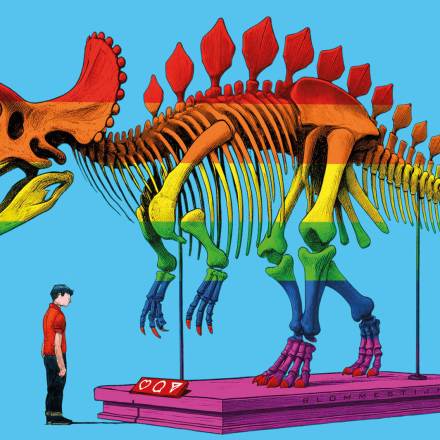
It starts with the promise of skipping school — always an illicit thrill at nine years old. My son and I, seasoned truants, hop the early train to downtown Chicago for what I’ve convinced him is a real education. The day’s agenda: two of the city’s iconic museums — grand, intimidating and, up until recently, somewhat sacred. These sprawling neoclassical behemoths, both originally constructed for the 1893 World’s Columbian Exposition, dot the waterfront like ancient ruins. They once felt like temples to knowledge, where wonder and learning collided, where static displays ignited curiosity. But as we step inside, I can’t shake the feeling that maybe, just maybe, their magic has faded. Can museums as we know them survive my lifetime?
museum
Democracy

Democracy on the ballot

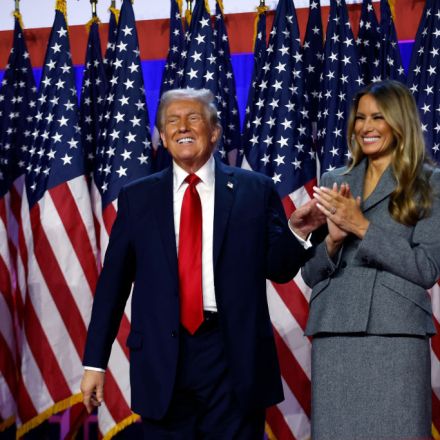
Democracy won, apparently. More than 73 million people voted for Donald J. Trump, who won 312 Electoral College votes and the popular vote, making him the 45th and 47th president of the United States. In the end, it wasn’t particularly close, and the exit polls from the night paint a pretty bleak picture for Vice President Kamala Harris and the Democratic Party. By now, you will have read most of the breakdowns — she lost ground with Hispanics, whites, blacks, married people, non-college-educated people, et cetera. In fact, the only demographic group that she gained ground with was college-educated white women — she even somehow managed to lose ground from 2016 and 2020 with black women, a stunning and impressive feat. Tim Walz lost his home district in deep-blue Minnesota.

Drea de Matteo’s Italian-American Christmas

Los Angeles, California The Italians take their holidays very seriously. We live in California, so winter isn’t really tangible; we pretend we’re freezing when it’s 60 degrees out. For food, the Italians always would prepare the Feast of the Seven Fishes. But since my grandma and dad are gone, we’ve shied away from a lot of the tradition; it’s a really heavy load to make that meal. We do some of it; I’ll do a pasta with a lobster sauce. Some Christmases we’ve made a Genovese sauce, with meat that’s cooked for about eight hours with like thirty onions and butter. We would cook for forty-five people on Christmas Eve and then thirty people on Christmas Day. On Christmas Day it was always lasagna.

drea de matteo italian-american christmas
donald trump won

The three reasons Trump won

Bishop Butler once observed that probability is “the very guide of life.” This is true. It follows that possibility is cheap, an errant muse. Yes, we must stash away in the back of our mind the admonition that “in this life... we must always distinguish between the Unlikely and the Impossible” (that’s the philosopher R. Psmith, courtesy of P.G. Wodehouse). Nevertheless, we should not run our lives or write our columns on that basis.   “Why Trump won.” That is my assignment. I shall treat it as a declaration, not a question. And even though I write before the returns are in, I can give you the reasons. After all, I have been predicting that Donald Trump would win “in a landslide” at least since July.

The realignment election

We’re sitting at the airport bar in Lansing, Michigan when we notice a MAGA hat next to the cash register. “What’s that?” my husband asks the black bartender. The bartender curls up the corners of his mouth and says, “I’m a Trump supporter.” He tells us that he was raised to be a Democrat by his grandmother and his mother but found himself disillusioned with the Obama administration and the bailouts of Wall Street and the auto industry. “They got their annual bonuses and their stock buybacks. What did we get? We got the bill. That was my breaking point.” “I got tired of hearing the same shit every four years,” he asserted. “Now I wear my hat out and people look at me like, ‘a black Trump supporter?

election
NeverTrump

The end of NeverTrump

Donald Trump’s sweeping victory in the 2024 election saw the end of a host of political assumptions — about the country, the inevitability of the left’s generation-shifting agenda and the inability of the Republican Party to penetrate key demographics that have proven resistant to its message. But it also ends one of the most vile and corrupt strains of political activity in the past eight years: the professionalized NeverTrump movement, which raised scads of cash — “generational wealth,” in the phrasing of Steve Schmidt — selling an obviously failed product to Trump’s antagonists.

How podcasts swayed the 2024 election

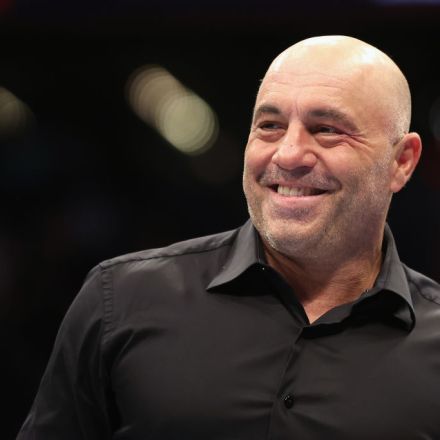
Around 2:45 on the morning of November 6, Donald Trump beckoned Dana White to the lectern to address the sea of MAGA-hatted supporters assembled to celebrate the former president’s election victory. In his brief but animated remarks at the Palm Beach County Convention Center, the CEO of the Ultimate Fighting Championship made sure to thank a cadre of figures who might just have been the key to Trump’s shocking triumph. “I want to thank the Nelk Boys, Adin Ross, Theo Von, Bussin’ With the Boys,” White said, “and last but not least, the mighty and powerful Joe Rogan!” You would be forgiven for not knowing who all these people are. No doubt many of the faithful assembled to cheer Trump were perplexed as well.

podcasts
Trump

How the lawfare campaign against Trump backfired

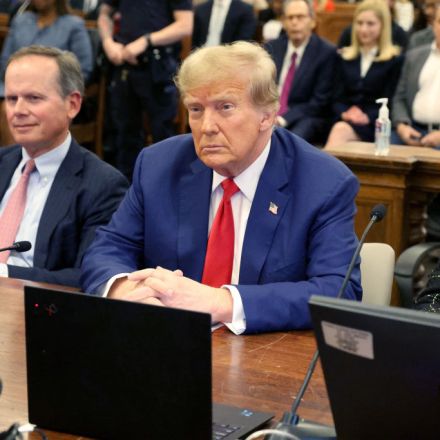
The effort to bankrupt, disgrace and banish Donald J. Trump to a jail cell in Riker’s Island has instead helped pave his road right back to the Oval Office. The unprecedented abuse of the American legal system fueled plenty of cable news coverage, but it also alienated the electorate. As with President Joe Biden’s mental decline, voters trusted their own eyes over the tale being told on their screens and delivered a decisive verdict against an eight-year politically-motivated lawfare campaign — exit polls showed that Trump voters were more likely to say democracy was under threat.

The two final battles of the culture war

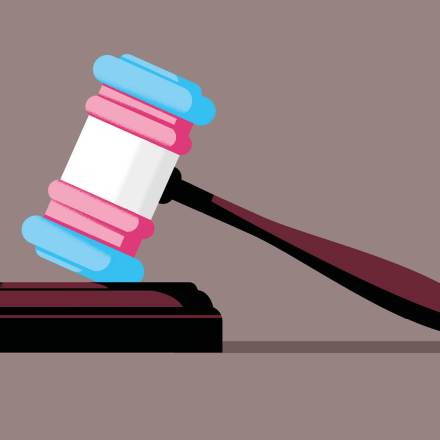
On issue after issue, conservatives — and Republicans — have lost the “culture wars.” Not just lost but lost decisively and permanently. The victories are so secure on most issues that conservatives have abandoned the fight. At times, the result has been a more tolerant public consensus, for example regarding gay rights and marriage. There are two notable exceptions, however, where the cultural battles remain white-hot: abortion and transgender rights. Both issues motivated voters in 2024. On abortion, voters have been mobilized by controversial Supreme Court decisions. The fight began in earnest in 1973, when Roe v. Wade effectively legalized abortion throughout the country and throughout the nine months of pregnancy.

culture
books

The Spectator’s 2024 Books of the Year

William Boyd It makes grim, compelling and minatory reading, but Hitler’s People (Penguin, $35) by Richard J. Evans is not only the only book you ever need to read about Nazi Germany but a salutary example of what happens when crazed populist leaders win power. Twenty-two short portraits of the key players and lesser apparatchiks of the Nazi years manage to encompass the whole history of the Third Reich and its baleful legacy. Evans’s hundred-page chapter on Hitler — the “Boss” — is masterly. Evie Wyld’s fourth novel, The Echoes (Knopf Doubleday, $28) with its edgy and moody supernaturalism (the narrator is a ghost) establishes her growing reputation as one of our finest young writers.

Ta-Nehisi Coates, the DEIty

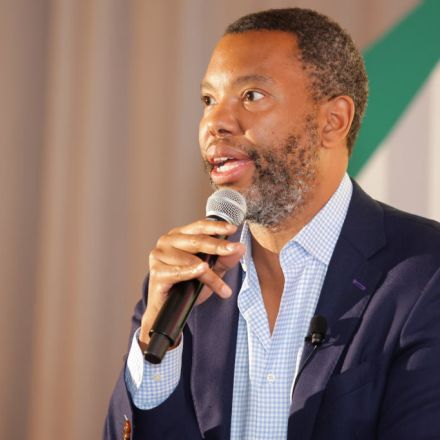
A decade ago, in June 2014, the Atlantic published a cover story with a simple declarative title: “The Case for Reparations,” by Ta-Nehisi Coates. The piece had taken him two years to write, and the work paid off — with praise sweeping through the ranks of media, prizes from the most prominent elite institutions. The piece was named the “Top Work of Journalism of the Decade” by New York University’s journalism institute. It was hailed as a rare piece of writing which pushed open a cultural dialogue about a controversial subject.

Coates
poker

Why I quit poker

I played my last hand of poker on an innocuous Saturday afternoon in October. My pocket Kings lost to 4-7 offsuit. They shouldn’t have been in the hand at all, but I still did everything wrong at the end, and there went $500 to some sweaty moron directly to my right. “Clock me out,” I said to the dealer, my hands shaking. They’d seated me at the table right by the door, so I at least was able to contain my temper tantrum until I got outside. “FUCK,” I screamed loudly enough so they could hear me inside — and also probably down the block. “SHIT SHIT GODDAMN IT FUCK!” I bashed my lunchbox against the wall. It tore at the handle. I kicked a post. It bent my toenail back. And I kept screaming, cursing my luck, damning the gods, destroying my lunchbox.

In praise of American charity

Here’s a bittersweet headline to warm your heart this holiday season: “Woman set up GoFundMe that raised over $1 million for her children before she died.” And another: “GoFundMe benefiting pregnant wife of Matthew Gaudreau has raised over $500K.” And one more for good measure: “GoFundMe raises over $26K for Massachusetts State Police trooper’s family.” I see stories like these weekly — and what’s remarkable about them is not so much that people are willing to help neighbors enduring tragedy, but how so many people are willing to go above and beyond what is being asked. The first fundraiser, for instance, was set up by a single mother from Utah dying of cancer to raise $5,000 for her own funeral expenses and a little money for the kids she left behind.

charity
budweiser

How the Democrats Bud Lighted their brand

Last spring, a marketing grunt at Bud Light sent TikTok star Dylan Mulvaney, a trans woman, custom cans of beer featuring her picture. As intended, Mulvaney posted about the beer on social media, igniting a firestorm and a boycott of the brand. Men revolted. Bars stopped serving it. Bud Light lost its status as the top-selling beer in America; it’s only back up to number three today. I became aware of the left’s man problem when I wrote for Playboy back in 2015. When I’d ask my audience to submit their thoughts about hair loss, erectile dysfunction or dating, I would often receive thousand-word screeds, with a “thank you for actually caring” theme. Thank you for listening. Thank you for writing about men like we matter.

A prayer in Ukraine

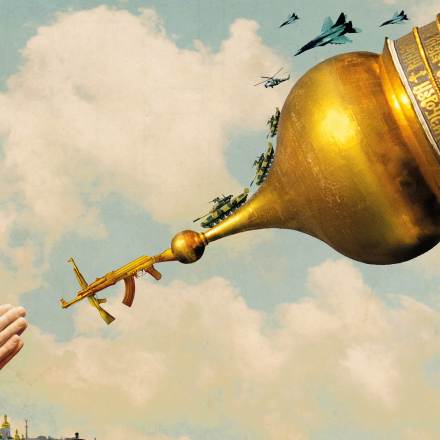
By the summer of 2024, Kyivans could joke that there was no way the Russian army could take their city now — they’d never get through the downtown traffic. The simple normality of urban congestion, crawling through grand boulevards in the shadows of buildings that, with fresh coats of paint, would suggest a Wes Anderson vision of Mitteleuropa, could lull a visitor into thinking he could be in any capital on the old Orient Express route. So, too, would the world-class Fenix restaurant, run by a celebrity chef and festooned with Chihuly-inspired decor. It was between the salmon tartare eclair and the rabbit ravioli that I heard for the first time, face-to-face, what it’s like to be persecuted for worshipping God in the wrong way.

ukraine
panic

Panicking over the planet and population is pointless

One sign of moral panic is that when the facts change, the fears remain the same. In the 1970s, the Washington Post, TIME and Newsweek stoked fears of “a new ice age.” As soon as scientists updated their models to show a trend in the other direction, “global warming” became as threatening as global cooling. And when winters stubbornly kept happening and the direst predictions of new-age prophets like Al Gore failed to come to pass, the whole thing was rebranded as “climate change.” Whatever the label, and whatever the underlying phenomenon was thought to be, the moral implication remained the same — human beings were ruining the earth and must curtail their comforts to save the planet. Bad weather used to be God’s punishment for human sinfulness.

South Africa’s international decline

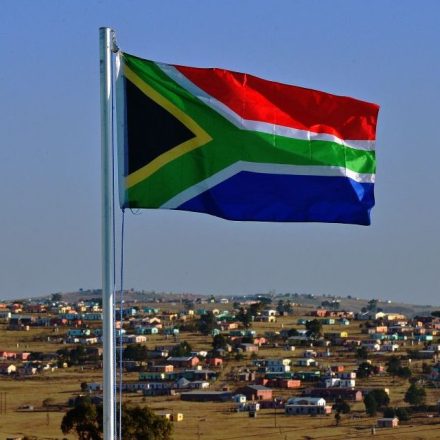
South Africa’s recent foreign policy has both surprised and dismayed Western diplomats and strategists. Many of these entered their careers during the era of the “end of history” when the Soviet Union had collapsed and with it, or so the thinking went, the last serious threat to the Western liberal order. Western democracy had triumphed, and policy doctrines of hard power and deterrence could give way to strategies of acquiescence and engagement. In South Africa, the African National Congress Party of Nelson Mandela was coming to power. Given that its key ally the Soviet Union had collapsed, the ANC took a sufficiently circumspect view of the new unipolar global order for Western diplomats to conclude that it had become their ally.

South Africa