Books & Arts

Books and Arts

Barcelona turns thirty

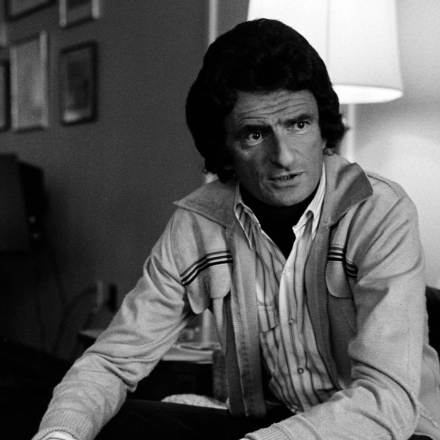
Released thirty years ago this year, Barcelona is the movie with which Whit Stillman came of age. The New York-born cinematic portraitist of the well-mannered and well-heeled launched his career in 1990 with Metropolitan, which charted a course deep into J.D. Salingerdom with its cast of demure debutantes and their callow escorts. For all its wit and winsomeness, the movie has a certain undeniable post-adolescent soppiness: a girl is driven to tears by a cruel remark by her brother; a young man clings to the toys of his youth; there is a paean to Babar and a lament for absentee fathers. The film’s much-loved Christmastime setting actively contributes to this tone of teenage melancholia.

Barcelona
culture

This month in culture: December 2024

Star Wars: Skeleton Crew Disney+, December 3 Of the making of Star Wars, there appears to be no end. This one, though, looks different. The characters are a group of children on an Amblin Entertainment-style adventure, a coming-of-age story as they try to make their way back home across the universe after something goes wrong on their home planet. The trailer gives strong Spielberg/E.T./Goonies vibes. Taking place around the same time as The Mandalorian, it rounds out its cast with Jude Law as a “new kind of Jedi,” according to the creators. — Zack Christenson Nightbitch In theaters December 6 Based on Rachel Yoder’s hit horror-comedy novel of the same title: Amy Adams stars as an artist turned stay-at-home mom who learns that domesticity contains multitudes.

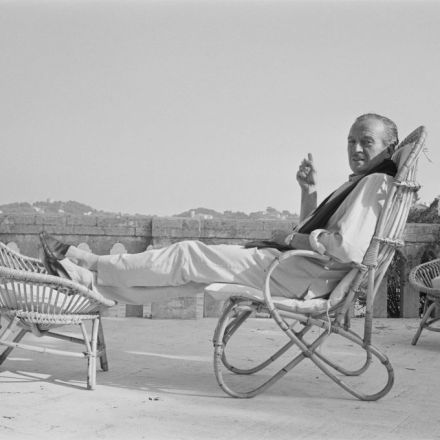
Memories of David Niven

In 1967 I visited, as I often did, my uncle, who lived for twenty years in the Hotel Richemond in Geneva. From there I was flying back to London; in those far-off days the tendency among educated people was to dress up rather than down. I immediately realized that my trim, military-looking neighbor was none other than David Niven, wearing, I observed, a Rifle Brigade tie, from the regiment he patriotically joined from Hollywood at the outbreak of war in 1939. Niven, like myself, had been educated at Stowe in its early days under the founding headmaster J.F. Roxburgh.

Niven
Chaplin

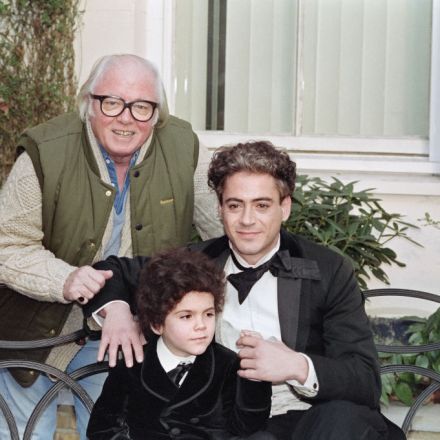
The ups and downs of making Chaplin

The commission Thirty-four years ago, in the summer of 1990, I had a call from my Hollywood agent, Geoffrey Sanford. Lord Richard Attenborough, the film director, would like to meet me to discuss a project. I said “Yes, please,” instantly. The timing was good — I had delivered my fifth novel Brazzaville Beach to my publishers and was awaiting its autumn publication. I met Dickie, as everyone called him, with his co-producer and right-hand woman, Diana Carter, in Blake’s Hotel in west London. The subject of the meeting was a proposed film of the life of Charlie Chaplin, a passion project of Dickie’s. But there was a complication. A script had already been written by Dickie’s old friend, the actor-director-producer Bryan Forbes.

Why Alice Neel remains a vital presence

There is no portrait by Alice Neel quite as radical as her own. The artist was one of the first octogenarian women to exhibit a nude of herself with 1980’s “Self-Portrait.” In the painting, Neel grasps her paintbrush and sits exposed at the edge of a blue-and-white striped armchair. There’s no doubt about it; this is a woman of conviction who demands, “Look at me, in all my senescent glory: my silver hair, wrinkled face, sagging breasts, this is a life lived and here are its marks.” It’s only in the last decade or so that Neel has risen from relative obscurity to be acknowledged as one of the twentieth century’s greatest portraitists.

Neel
kosinski

Reassessing Jerzy Kosinski

At the conclusion of Hal Ashby’s remarkable Being There, which celebrates its forty-fifth anniversary this month, comes a scene that has only acquired greater resonance and relevance since it first appeared. At the funeral of the plutocrat Ben Rand (Melvyn Douglas), the US president (Jack Warden) is delivering a heartfelt but somehow trite eulogy. As the pallbearers march away with Rand’s casket, which will be buried in the family mausoleum, talk turns to who should replace the president; the film has already suggested that he is suffering from erectile dysfunction and, wickedly, equates this with his falling popularity ratings.

The life and legacy of Mavis Gallant, an American in Paris

"God help the English if she ever starts on us,” remarked Jonathan Keates in a blurb for Mavis Gallant’s Paris Notebooks. Far from being the ubiquitous “love letter” to a city, the essays and reviews within revealed people and their lives as they were, not as ideals. What Keates didn’t realize was that in Gallant’s short stories, everyone, regardless of nationality or gender, was fair game for her sometimes vicious, often dryly funny, always unblinking gaze. When she died in 2014, aged ninety-one, an obituary noted her profound irritation at her critics’ focus on The Collected Stories of Mavis Gallant: “Everyone who has reviewed it so far mentions exile.

Gallant
Harkaway

John le Carre’s son resurrects George Smiley

Anyone reading this review will know a few fundamentals of the Smileyverse: spymaster George Smiley is podgy, spectacled, middle-aged, soft-spoken, wears ill-fitting clothes, can vanish in a crowd and is routinely cuckolded by his wife over the course of all “his” novels. Thanks to the success of John le Carré’s novels about him, the Smiley canon is now (we might assume) unchangeable: so, making a virtue of necessity, novelist Nick Harkaway has gone back to his Golden Age. Karla’s Choice opens in 1963, the year after the Cuban Missile Crisis, the era when the Berlin Wall went up, the aftermath of Suez, the “candle-end days” of Empire. In East Berlin, a charismatic young man is carted away by the Stasi.