Features

Features

Will we ever know the truth about Russiagate?

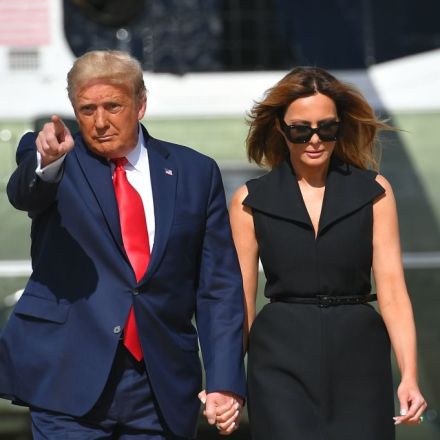
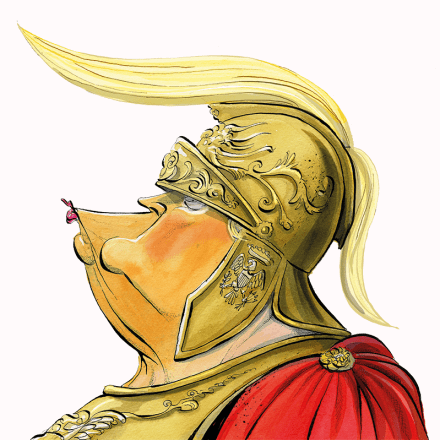
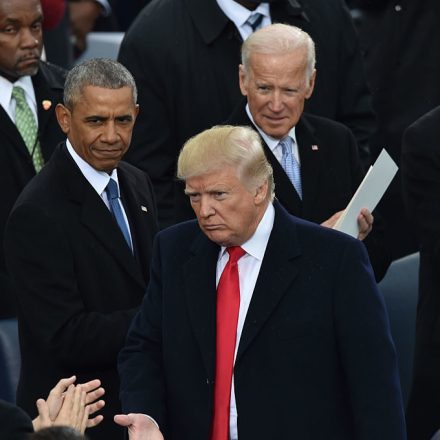
Writing in mid-October, anno domini 2020, it is sobering to speculate that when the results of a certain upcoming political contest are finally decided, an item that has captivated the public’s attention for nearly four years might be about to evaporate without trace. I refer, of course, to that great long-running entertainment, the Trump-Russia Collusion Delusion. As I write, the latest morceaux are the revelations from John Ratcliffe, the newly installed Director of National Intelligence, to the effect that Russian intelligence believed that Hillary Clinton had approved a plan ‘to vilify Donald Trump by stirring up a scandal claiming interference by Russian security services’ during the 2016 presidential campaign. Why? Typical campaign dirty tricks, in part.
russiagate
scott atlas

Atlas shrugs

‘Trust the experts’ is the battle cry of America’s elitists. After President Trump’s shock election in 2016 showed that Americans are sick of hearing from politicians, the politicized classes adopted experts as their proxy for power. Climate change ‘experts’ justify AOC’s radical Green New Deal with prophecies of planetary extinction. Foreign policy ‘experts’ claim America will destabilize the Middle East if, as Trump wants, we withdraw troops from Syria and Afghanistan. Medical ‘experts’ are wheeled out to justify increasing control over the lives of everyday Americans through draconian lockdowns, mask mandates and stringent travel restrictions.

But seriously: will Trump refuse to leave?

At a drinks party in Washington DC just after Donald Trump was elected, someone from the old regime told me: ‘This will end with tanks on the White House lawn.’ It was a popular opinion that night, although there was confusion over whether the tank barrels would point inwards or outwards. Would Trump do something so outrageous that he would have to be removed by the US military? Or would he declare himself president-for-life with help from the generals? At the time, I put this down to shock at Trump’s unexpected victory, an early example of Trump Derangement Syndrome. But now, in the final stages of the 2020 campaign, you hear speculation like this from both sides of the political divide. Dictatorship, state of emergency, civil war?

leave
disunited america

Onwards and upwards

It would strain credibility to assert that this election campaign has enhanced America’s reputation in the world. The best that might be said is that it has been a slightly less gruesome spectacle than the 2016 affair — and that, perhaps, only because the pandemic has limited public appearances. The great puzzle is how a country of 330 million cannot seem to find two more inspiring candidates. Yet should we take seriously those who are forecasting that the country now descends into civil war or that democracy has died? No, and not just because the latter prediction tends to be conditional on the election’s failing to deliver their favored outcome. American democracy, American power and influence are not dying, and neither are they under threat.

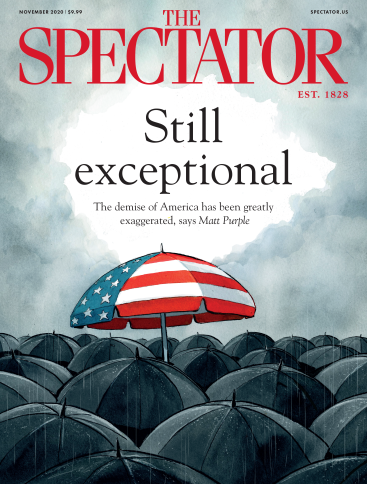
The demise of America has been greatly exaggerated

One of my favorite quotes about America — mainly because it annoys so many people — comes from the historian Robert Wiebe. In his book Self-Rule, he writes: ‘Telling Americans to improve democracy by sinking comfortably into community, by losing themselves in a collective life, is calling into the wind. There has never been an American democracy without its powerful strand of individualism, and nothing suggests there will ever be.’ Cue the yelping from nationalists, socialists, Burkeans, take your pick. Yet Wiebe was less making a political argument than he was observing what was right in front of his nose.

america
wars

The wars go on

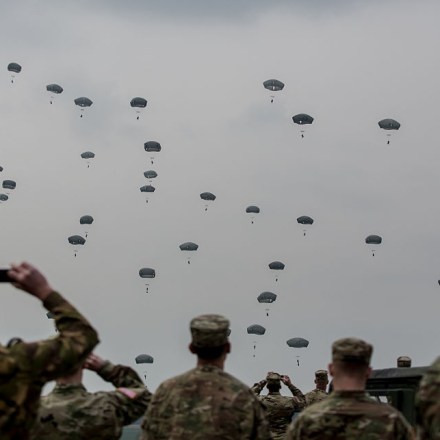
America’s longest war has just entered its 20th year. The US invaded Afghanistan in October 2001 to overthrow the Taliban and destroy al-Qaeda. Now, nearly a decade after the death of Osama bin Laden, the Afghan war continues. And everyone expects that if the Americans ever leave, the Taliban will return to power. Yet the Taliban who take charge will not be the same as those who harbored bin Laden. The median age in Afghanistan is around 19 years old: half the country’s population was born after the war began. The US is not fighting a limited reservoir of Taliban militants; it is fighting a cultural force that has renewed itself over a generation.

The next American empire

Americans have never been sure of their standing in the world, and the world has never been sure of Americans’ standing. In their first century as a nation, Americans believed that their principles made their civilization not just different but also better than Europe’s. Meanwhile, the intellectual and political leaders of Europe were unconvinced that America was a civilization at all. In their second century as a nation, other, older civilizations were obliged to admit that Americans were not just different: they were better at modern life. The Americans achieved this recognition first by the force of their industrial and military power, and then by the flattery that other civilizations could become equally forceful and seductive by adopting the American way of life.

empire