Books & Arts

Books and Arts

The Phoenician Scheme is Wes Anderson at his most transparent

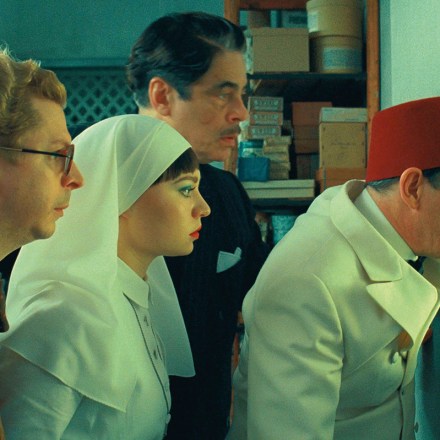
My name is Curtis. I’m a GenXer. I love Wes Anderson. I also like IPAs. Sometimes it’s OK to be a cliché. The Phoenician Scheme is not Wes Anderson’s best movie (that would be The Life Aquatic with Steve Zissou), or even his second-best. It may be his most transparent, though. Wes Anderson is certainly our auteuriest of major auteurs. A Wes Anderson film knows it’s a Wes Anderson film and doesn’t mind that at all. As a monarchist, I always point to auteur theory as a micro-reflection of my crackpot political theories. If it were possible for corporations to make movies by committee, it would certainly be done that way. But it isn’t. Instead, even the most hackneyed superhero sequel has a director – just as even the cheapest taquería has a chef.

Anderson
Heathers

The problem with Heathers: The Musical

There is a euphoric moment in Heathers: The Musical, based on the cult 1989 film of the same name, when anything seems possible. It happens when 17-year-old Veronica – facing ostracism from the popular clique for barfing on the group’s tyrannical leader, Heather Chandler – climbs through the bedroom window of her crush, J.D. He’s in bed, asleep. As she mounts him, she sings the sassy, come-hither “Dead Girl Walking.” She’ll be toast come Monday morning, she’s “hot and pissed and on the pill,” and J.D. is her “last meal on death row.” Cue the boldest sex scene I’ve ever seen on stage. Veronica straddles J.D. and takes charge, ripping open her shirt to reveal her bra.

How Esther inspired the imagination of Rembrandt

If you attended Sunday or Hebrew school, you know the story. There once lived in the ancient Persian city of Susa a King Ahasuerus and his Jewish wife, Queen Esther. At first she hid her Jewish identity from the king, only revealing it in order to foil the plot hatched by Haman, her husband’s Jew-hating second-in-command, to exterminate all who shared her faith. In doing so, Esther saved her people from destruction – and earned a volume in the Hebrew Bible named for her. Less well-known is that centuries later, in the Amsterdam of Rembrandt van Rijn (1606-69), Esther’s valor also made her a heroine to the citizens of the predominantly Protestant Dutch Republic.

Esther
Vermeer

Vermeer’s Love Letters is something of a riddle

Johannes Vermeer (1632-75) is doubtless a blockbuster artist, but the Frick’s exhibition, Vermeer’s Love Letters, is the size of a postage stamp – or, maybe more fittingly, a wax seal. The Frick has three Vermeers of its own, but only one made the cut: “Mistress and Maid” (c. 1664-67). From the 37 known works by the artist, the museum has only borrowed two to bolster the show: “Woman Writing a Letter with her Maid” (c. 1670-72) and “The Love Letter” (c. 1669-70). Each depicts a woman, her maid and at least one letter somewhere in the mix. Though we don’t know exactly what’s written in those papers, it’s fair to say that these discreet works have an air of romance. The show’s effect is something of a riddle. Why has the Frick picked these three?

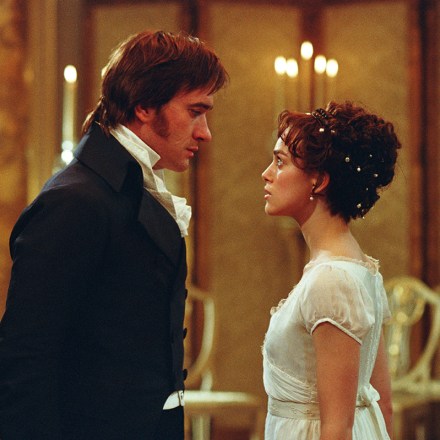
Why Jane Austen is still the queen of romance

Jane Austen was born in Hampshire on December 16, 1775, the seventh child of a poor country rector. Despite being red-cheeked and a good dancer, she never married. And despite the handful of novels she wrote under the byline “A Lady,” she was always considered by her family less promising than her older sister. She died of a painful illness at 41. Her books found a readership that included the Prince Regent, but she had some prominent detractors. Charlotte Brontë scorned them: “I should hardly like to live with her ladies and gentlemen in their elegant but confined houses.” Where were the windswept moors, the big feelings? In the next century, D.H. Lawrence dismissed Austen as “mean” and “snobbish.

Austen
Baldwin

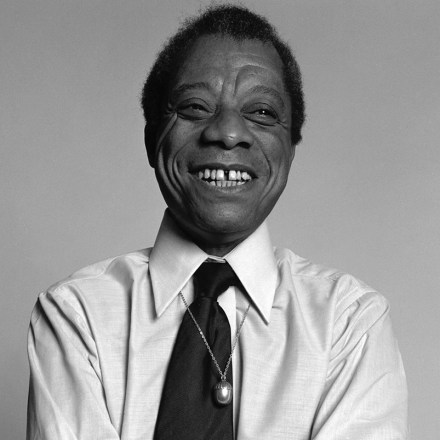
A more rounded picture of James Baldwin

James Baldwin never wanted to be a symbol, but became one anyway: a stand-in for defiance, for beauty, for pain wrapped in elegance and for the entire weight of a country’s unresolved sin. Baldwin didn’t just write about America – he exposed it: the good, the bad and the ugly. He told the truth, even when it hurt. He didn’t soften the edges. What he never quite got, in his lifetime, was intimacy on the page about his own life. Biography existed around him, but he was rarely at the center of it. If we see him now, we see a man who smoked too much, drank too much and who sometimes ran from both his lovers and himself – rather than what he was: an intangible literary icon. Nicholas Boggs tries, in Baldwin: A Love Story, to give us a more rounded picture of the author.

The thrill of ghostwriting

“I begin to see the outlines of a scene, so I open my computer and start revising, growing it into what I think he intended it to be. This is the job of a ghostwriter, and I’m going to do it with fidelity.” If Julie Clark is clear about anything in The Ghostwriter, her gripping fifth novel, it’s the magnetic power of narrative – particularly when filtered through layers of secrecy, memory, and artifice. Clark, a New York Times bestselling author, has a flair for sleek, psychological crime fiction and delivers a taut and addictive story that is both clever and compulsively readable.

ghostwriting
Meyer

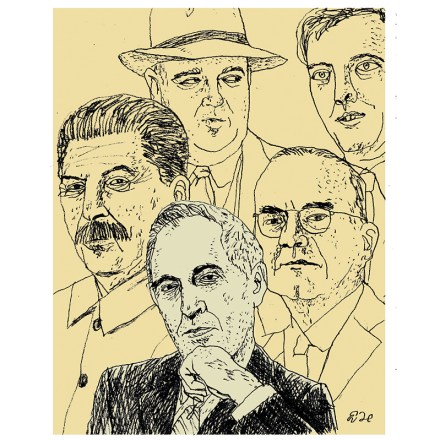
Frank S. Meyer was a political paradox

Noel Parmentel’s quote, “The right wing was fun back then,” is one of the takeaways from Daniel J. Flynn’s new book The Man Who Invented Conservatism: The Unlikely Life of Frank S. Meyer. Fun? The progenitors of post-World War Two American conservatism were, as portrayed here, a high-spirited lot. They were also intemperate, combative, self-destructive, often brilliant, not infrequently loony – and always deeply interesting. One could apply those qualities to the subject of the book, a character who looms large in the minds of intellectual conservatives and hardly anywhere else. Frank Meyer is not a household name like William F. Buckley Jr.