Books & Arts

Books and Arts

SoHo’s downtown drawings

Pity the poor Drawing Center. Founded in 1977 — or, rather, “born into the petri dish of the SoHo art scene in the 1960s and 1970s” — the Center was the pet project of Martha Beck, a former curator at the Museum of Modern Art. She felt that the medium of drawing, being underserved by the arts establishment, needed its own specialized venue. Over the years, this downtown gallery has proved its mettle, mounting a variety of historical and contemporary exhibitions, as well as making a point of reaching out to working artists, some of whom later went on to greater recognition. But that petri dish? It’s changed mightily since the heyday of industrial lofts rented on the cheap.
ornament
Durham

The underrated Kenny Dorham

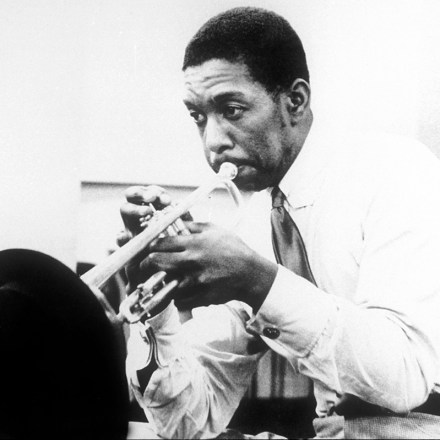
Kenny Dorham was one of the jazz greats. The closest player in modern times to his intimate sound is probably Roy Hargrove, who, like Dorham, hailed from the Lone Star State. But despite all the accolades from the jazz cognoscenti, there is something plaintive about his career, down to the liner notes for his own albums. Indeed, right from the first sentence. Take the 1956 album Kenny Dorham and the Jazz Prophets on the ABC-Paramount label: “Kenny Dorham is one of those artists who have not as yet been accorded their deserved share of recognition.

Arcade Fire: the last of the art-rockers?

After I saw the Canadian band Arcade Fire on tour in London in late 2010, I began my review of the gig by quoting Psalm 98: “Make a joyful noise unto the Lord, all the earth: make a loud noise, and rejoice, and sing praise.” My abiding memory of the evening was that it was fun. Despite the apparent solemnity of many of the act’s songs — several of which had been taken from their debut album, Funeral, and revolved around death and despair — the concert had a celebratory and upbeat aspect. It concluded (as virtually all of their shows had done) with a euphoric singalong of what has become their signature song, the cathartic “Wake Up.” A decade later, matters have changed. The world is in a considerably more anxious state than it was.

arcade fire
North Star

Ukraine in black and white

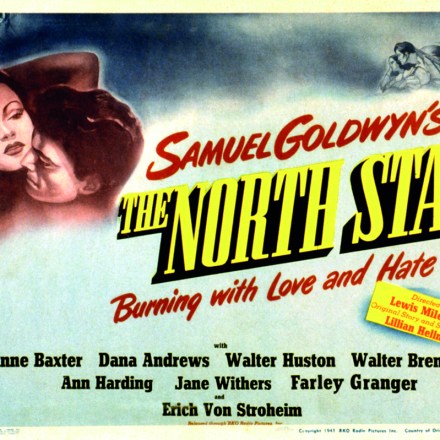
Displays of wanton brutality and heroic resistance in the Russo-Ukrainian War of 2022 have prompted some in the West to proclaim a moment of “moral clarity.” Some caution might be wise here, since moral clarity in world affairs is not always as clear or as moral as its claimants think. It was Soviet ideology, succeeding czarist imperialism, that for so long smothered Ukraine, along with the other captive nations consigned to Stalin at Yalta. As Ukraine may now be slipping captivity at last, the West rejoices. But how clear is the clarity? History’s players sometimes switch roles even from one act to the next. It has not, for example, always been brutal Russians that heroic Ukrainians went up against. Eighty-one years ago, it was brutal Germans.

Sinking into the pixels

More than two decades into internet ubiquity, we’re finally seeing the rise of a generation raised by screens as much as by their parents and peers. Smartphones and social media may not have reared their ugly heads completely until the 2010s, but even in the lead-up to the millennium, computers and the “World Wide Web” were a frequent topic of pop cultural conversation. Within those conversations was always an enormous amount of anxiety. Chatroom “stranger danger” and scammers posing as Nigerian princes seem quaint now compared to the overflowing sewers on display daily in the most craven corners of the web. Digital anxiety is done.

world's fair
guston

Philip Guston in the padded room

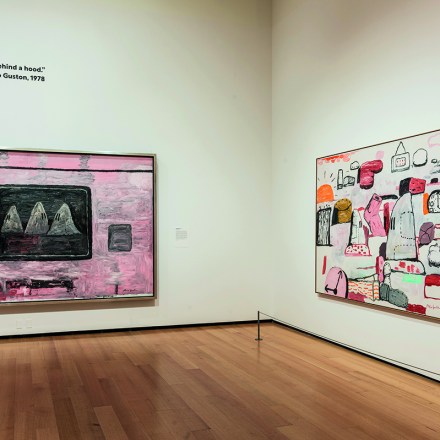
It was once a cliché of modern art that its principal aims included shocking its audience. Aesthetic aggression was the correlative of class warfare. It’s no accident, as the Marxists say, that avant-garde comes from the military lexicon. In painting, Gustave Courbet’s 1866 “L’origine du monde,” a rudely realistic, closely cropped view of an anonymous woman’s nude genitals, is often hailed as an early shot across the bow. Five years later, the artist would lead the Paris Commune in toppling over the Napoleonic Vendôme Column. For pugnacious creatives like Courbet and his descendants, consciousness-raising was always going to be a little bit uncomfortable. One can imagine how easily this gets out of hand.

Berlin as the unreal city

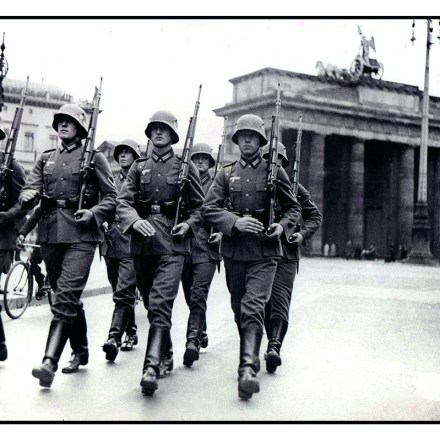
"Berlin has too much [history]." Sinclair McKay cites this rueful observation in the preface to his new book about the city. Given that he is not simply discussing Berlin between the wars, or during the second of those wars, or in the Cold War that followed, but all of it, this may come off as a cry for help. History may — in those words attributed to, well, take your pick — be “one damned thing after another,” but when it came to Berlin, those things hurtled through time in a horde, colliding, overlapping and refusing to form an orderly line. And, in Berlin’s case, they had a way of mattering. Not for nothing does this book’s subtitle refer to Berlin as “the city at the center of the world.” Bad news for a writer aiming, presumably, at a degree of concision.

berlin
Gaitskill sex pill sex

Mary Gaitskill and the body electric

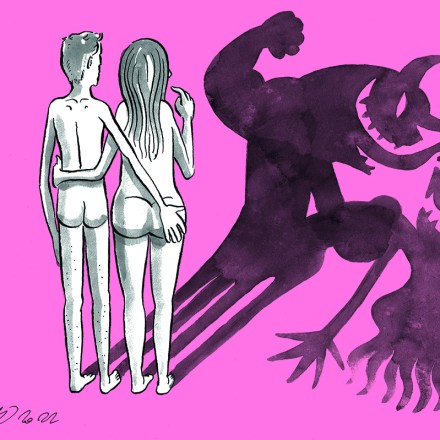
A man bites a woman’s breast with the aim of drawing blood, before taking a cigarette lighter to her stomach. The woman’s lack of arousal at this cruelty causes the man to enquire angrily why she lied when she told him she was “a masochist.” A young secretary is spanked by her boss for mistakes in her typing, before he masturbates over her naked behind. In a conversation between two young adulterous lovers, a woman casually admits to “flirting... like wild” with a man after she discovered he had “broke his girlfriend’s jaw.” These snapshots of masochism, warped desire and sexual depravity made Mary Gaitskill famous when her short story collection Bad Behavior first appeared in 1988.

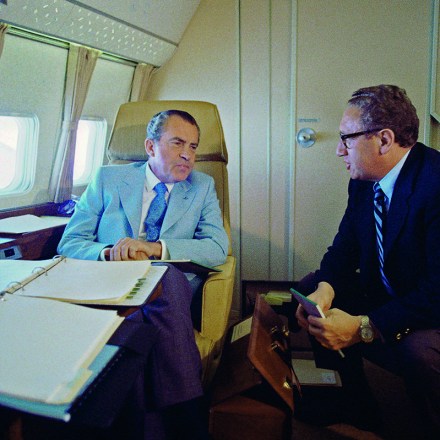
Henry Kissinger’s likely last book is on leadership

Leadership, Henry Kissinger writes in his latest book, is a medium by which a society moves from the past of its memory to the future of imagination. It is “indispensable.” As Kissinger says, “Decisions must be made, trust earned, promises kept, a way forward proposed.” Without leadership, ordinary people are, he argues, incapable of “reach[ing] from where they are to where they have never been and, sometimes, can scarcely imagine going.” But leadership is also, in Andrew Roberts’s phrase, “a ‘protean’ thing with little fixed definition.” Leadership is ultimately what leaders do; it goes in whatever direction they choose.

kissinger
gerhardie

Evelyn Waugh’s sincerest form of flattery

T.S. Eliot once made the significant point, in an essay on Philip Massinger, that “Immature poets imitate; mature poets steal; bad poets deface what they take, and good poets make it into something better, or at least something different.” Eliot knew exactly what he was talking about (himself). However, change “poets” to “novelists” and the same pertinence applies. In fact, this wholesale, covert purloining may be true of all artists in all ages in all the seven arts. Let’s start with some backstory. Evelyn Waugh (1903-66), as they say, needs no introduction. William Gerhardie (1895-1977) is almost wholly forgotten today, but in the 1920s he was the luminous young wunderkind of English literature — a kind of Donna Tartt or Sally Rooney of his times.