Books & Arts

Books and Arts

Perry Mason jars

Unpopular opinion: film noir is dull, self-indulgent and grossly overrated. I recognize it has given us some great performances — Bogart, Peter Lorre and Sydney Greenstreet in The Maltese Falcon, say — as well as chiaroscuro lighting, laconic dialogue, cynical hard-bittenness and cancerously heroic quantities of smoking. But that’s exactly the problem. Film noir is so in love with its look and style, the plotting comes a very poor sixth. What, though, does any of this have to do with Perry Mason, the suave, brilliant, clean-cut lawyer played by Raymond Burr in the long-running Fifties and Sixties courtroom drama series? Well, bizarrely, HBO has decided to revive him for another of those dark and grimy origin stories that Joker made so fashionable.

perry mason
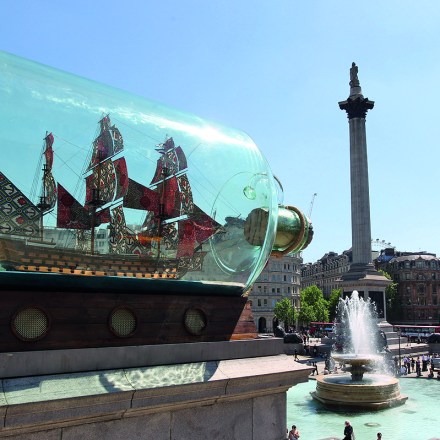
statues

Statues and limitations

Statues do more than monumentalize individual achievement. They embody the self-image of those who raise, cherish and preserve them. It is this common self-conception that is being upended by the wave of iconoclasm that is sweeping through American cities. The race to raze structures that have stood untouched for decades or centuries disturbs because, instead of reassessing the past, it attacks it to reorder the present. Wherever you stand on this, the ‘debate’ is limited by Western visual traditions and stunted by patchy education. In Wisconsin, the abolitionist Hans Christian Heg was yanked down. In San Francisco, Ulysses S. Grant, a president who set the US Army on the Klan, was deposed. In Washington, DC, Gandhi, once praised by W.E.B.

Purple podcasters

You’re familiar, no doubt, with the term ‘red pill’, the Matrix-inspired metaphor that’s become a catch-all for the type of right-wing thinking that thrives in the dark corners of the internet. Now the journalist Katie Herzog, in an admittedly tongue-in-cheek comment, might well have given us a new term: the purple pill. To take the purple pill, inferring from Herzog’s outlook, is to oppose the dangerous excesses of identity politics, but also the reactionary extremes of the red-pillers. This is, simply, a compromise — or the kind of terminally sensible position that shouldn’t need corny movie metaphors in the first place. But you see her point.

purple pill katie herzog
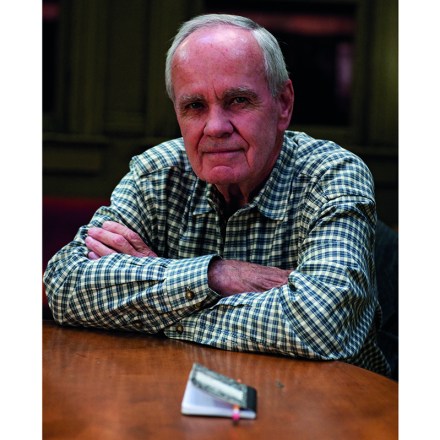
cormac mccarthy

Cormac McCarthy, brutal but brilliant

Cormac McCarthy of all living American novelists has realized most fully the potential grandeur of his métier by revealing the spiritual condition of our time in the old epic language. In this sense, he is the most serious American novelist of the post-war era. McCarthy’s work is magnificently oblivious to modern industrial and technological society and to the post-urban and suburban culture of consumerism, triviality and superficiality that are its fruits: the penalty a decadent civilization pays for its self-alienation from nature, humanity and metaphysical reality, and its embrace of an artificial world in which what is real and human withers and dries up, and art becomes well-nigh impossible.

Meet the Mozarts

It’s 1771, you’re in Milan, and your 14-year-old genius son has just premiered his new opera. How do you reward him? What would be a fun family excursion in an era before multiplexes or theme parks? Leopold Mozart knew just the ticket. ‘I saw four rascals hanged here on the Piazza del Duomo,’ wrote young Wolfgang back to his sister Maria Anna (‘Nannerl’), excitedly. ‘They hang them just as they do in Lyons.’ He was already something of a connoisseur of public executions. The Mozarts had spent four weeks in Lyons in 1766, and, as the music historian Stanley Sadie points out, Leopold had clearly taken his son (10) and daughter (15) along to a hanging ‘for a jolly treat one free afternoon’.

mozart
kassabova

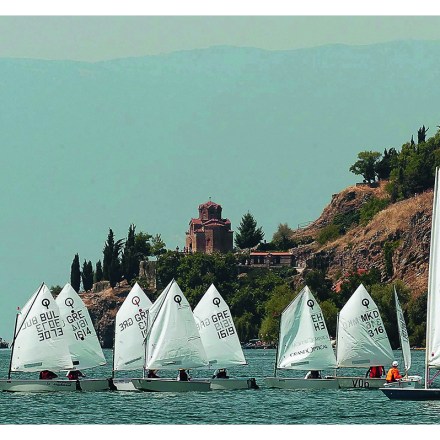
Mountain heir

Kapka Kassabova’s previous travel book, Border, was rightly acclaimed and won several prizes. The author traveled to the edge of Europe, between Greece, Bulgaria and Turkey, and teased out ‘where something like Europe begins and something else ends, which isn’t quite Asia’. This is a sequel of sorts. She now travels to another border, that between Macedonia, Albania and Greece, where the vast and beautiful Lake Ohrid remains one of the Balkans’ surviving religious melting pots, despite considerable nationalist pressure. It is where her mother was originally from, so her journey is partly a rediscovery of her own roots.

Last of the red-hot lovers

John Giorno’s breakthrough work, he explains in his richly salacious telltale memoir of the Sixties New York art scene, was ‘Pornographic Poem’. In 1964, Giorno took phrases from mimeographed erotica and reconstituted them as homosexual lyric poetry: ‘I shivered/ looking up / at these erect pricks/ all different/ lengths/ and widths/ and knowing/ that each one/ was going up/ my ass hole.’ ‘Pornographic Poem’ is a ‘readymade’ or ‘cut-up’ that follows Andy Warhol, Robert Rauschenberg, Jasper Johns and William S. Burroughs — all of them artistic appropriators, and all of them Giorno’s lovers. These revolutionary artists are Giorno’s ‘great demon kings’.

john giorno great demon kings
seeger

The spy’s spy

Sitting beneath the pergola of the historic Roycroft Inn, J.R. Seeger looks the part of a successful thriller writer. He is wearing an immaculate white shirt, blue jeans and boat shoes, his blue-green eyes peering over a camouflage-style face mask. The western New York hotel, some 20 miles from the city of Buffalo and the Peace Bridge crossing into Canada, was a centerpiece of the American Arts and Crafts movement when it opened in 1905. It is also the setting for one of the most gripping scenes in Seeger’s debut novel, Mike 4, in which a Russian double agent tries to lure an American protégé into a life of treason. The rendezvous involves a splintered oak door, a Colt Python .

Guerra goes to war

Every civilization needs its barbarians. Lazy, filthy, dumb and dangerous, the barbarian, real or imagined, is the eternal grindstone on which the civilized sharpen their prejudices. They are, as the Greek Alexandrian poet Constantine Cavafy wrote, ‘a solution of a sort’ — but to what? In Cavafy’s poem ‘Waiting for the Barbarians’ (1898), an unnamed city is gripped by cultural torpor and political sloth. The gridlocked citizens, weakened by indolence and luxury, dream of a bloody release from their troubles. Disaster, a visit from the barbarians, becomes their last hope for rebirth. You don’t need to be a specialist to see the parallels between the poem and the illicit undercurrents of politics in the 2010s.

barbarians guerra
morrissey

Human after all

As the weird world of lockdown winds down, we might pause to consider what we’ve learned. I am hardly alone in my heightened hankering to unravel, synthesize, undo and discard. In this mission a voice from the past is helping me piece things together anew as the strange tyranny begins to dissolve. It began when Google started throwing videos of the Smiths in my daily cyberpath, prompting a non-essential trip down Memory Lane. Back in the day, I was, as David Cameron used to boast, a ‘huge fan’ of the Smiths. Precisely, I was a fan of Johnny Marr’s guitar literacy and the persona of Morrissey, the enchanting singer who had jettisoned his given names.