Features

Features

Give peace a chance

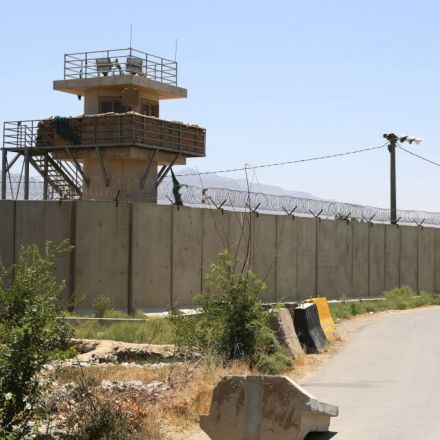
The American war in Afghanistan is over. In the predawn hours of July 2, US troops slunk away from Bagram Air Base, without even informing the local Afghan commander. It was a sorry end to a sad and futile war. For 20 years Bagram was the Gibraltar of American power in Afghanistan, the single largest Nato base in the country, housing 10,000 troops, thousands more support personnel and a Pizza Hut. Now Bagram, and the adjacent prison holding 5,000 Taliban fighters, are in the hands of the Afghan military, which soon showed its mettle by letting an army of looters plunder the base.

afghanistan military

How the US military got rich from Afghanistan

The departure of American troops from Afghanistan is being lamented (or hailed — see the Chinese press, passim) as a defeat. But this is a shortsighted attitude, at least from the point of view of the US military and the multitude of interested parties who feed at its trough. For them, the whole adventure has been a thumping success, as measured in the trillions of taxpayer dollars that have flowed through their budgets and profits over the two decades in which they successfully maintained the operation. The truth of this was forcefully brought home to me once by a friend of mine who, as a mid-level staffer, attended a conclave of senior generals discussing Donald Trump’s Afghan mini-surge back in 2018.

The FBI has lost the plot

Whom the gods would destroy, they first make ridiculous. Consider the Federal Bureau of Investigation. That once-respected institution has been busy wiping (or, more to the point, not wiping) egg off its face at least since the moist tenure of James ‘higher loyalty’ Comey. For those wondering why it is that Comey is cashing fat royalty checks instead of stamping out license plates at Club Fed, the answer is part of my story. There is the Elect, of whom James Comey numbers himself, and there are the Serfs, among whose number, Dear Reader, you probably belong. But I am getting ahead of myself. James Comey was plenty ridiculous, as were his jesters and factota, the love birds Lisa Page and Peter ‘Dracula’ Strzok, Andrew McCabe and the rest of that unlovely Brady Bunch.

FBI
lightfoot

Lori Lightfoot’s inner Republican

It’s not known when Chicago mayor Lori Lightfoot experienced the first stirrings of her secret GOP gland, but knowledgeable conjecture puts it perhaps two nanoseconds after taking the oath of office in 2019. It’s then that Lightfoot, buoyant after having been swept into office with 74 percent of the vote, surely had an alarming thought: ‘OMG, I’m mayor. What do I do now?’ All Democratic politicians aspiring to executive office have a secret Republican gland, although it’s vestigial till they sit behind an executive desk. When it’s dormant they can sign up for any damn fool notion. During her mayoral campaign, Lightfoot had cheerfully endorsed both an elected school board and an elected police board.

Iran’s president is a mass murderer

The US and other western countries are faced with a dilemma: how to bring to justice a man with the blood of thousands on his hands when you have to do business with him. Ebrahim Raisi’s path to the presidency of Iran is strewn with corpses. He comes to office this month already under American and European sanctions for the mass murder of prisoners in 1988. Some 5,000 may have been killed, though we can only guess at the true number of dead. It was a crime against humanity in the strict legal meaning of that term. At an earlier stage in his career, Raisi is said to have personally supervised the torture of dissidents, but in the 1988 case his responsibility was bureaucratic. He was a grim fanatic, eager to carry out orders. He was — and remains — Iran’s hanging judge.

raisi
patriotism

My country, right or left

A funny thing happened to me this Fourth of July and, at the risk of having every jaded member of the blue-check Twitterati respond, ‘I’ll take things that didn’t happen for $200, Alex,’ I’m going to tell the story. My aunt and uncle invited me and my husband to join them in their annual excursion to the Fourth of July celebration at the Hollywood Bowl. This has become a ritual for us and as it was the first event at the Bowl since the pandemic, everyone was in a festive mood. For the occasion, I wore American flag leggings and a headband that spelled out U-S-A. On springs. As we settled into our box, we chatted with the women drinking wine and eating tapas next to us. Standard small talk. How excited we were to be back at the Bowl. What a gorgeous night it was.

Let’s make it a Hot Bartender Summer

Is renaming the seasons a sign of late-stage capitalism? Or empire? Or decadence? Whatever the case, our cultural commissars have spoken and they’ve decided that seasonal epithets are back in. No longer is it acceptable to wistfully recall the summer of ’69; we must now commemorate it as Raspy Canadian Dreamboat Summer or some such thing. The Chinese have long categorized their years according to animals — dogs and rabbits and tigers and so on. Not us. What we’ve done is to head to the Narcissus pool, hold up a calendar, and demand that the months and equinoxes look a little more like us. This began two years ago when someone called Megan Thee Stallion released a rap single called ‘Hot Girl Summer’.

hot bartender summer
children

My role in our demographic disaster

When you come from a family of a certain size — in my case, one with eight children — you often get asked: ‘How many kids do you want?’ Innocent on its face, this question is carefully phrased in terms of my personal preferences, and I’m happy to answer: I’ll take what I can get! It’s an easier question every year, because biology has largely made the decision for me. My mother had four kids by the time she was my age, and as of this writing I don’t even have a boyfriend. Childlessness at 30 has its inadvertent blessings, of course: I get lots of rest and exercise; I spend my disposable income on haircare and loungewear and coffee, and the most stress I regularly endure is over WiFi connectivity.

Anti-anti-crime policies are ruining American cities

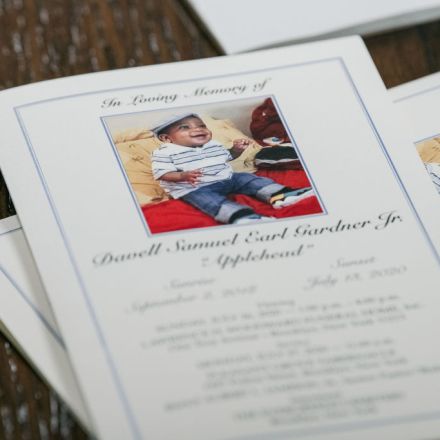
I didn’t meet Davell Gardner Jr. Yet his photo — and the bubbly personality it captures — will forever remain etched in my mind. The picture shows a baby with fuzzy curls; trusting, happy eyes; a beaming, gap-toothed smile. His chubby, loaf-like baby hands remind me of my own kids’ hands, which I often can’t help kissing or blowing raspberries on. There he is, crawling on his dad’s belly, enjoying one of the last playtimes of his life. On July 12 last year, a convoy of three cars pulled up in front of a residential building on Pulaski Street, in Brooklyn. Suspecting potential gang activity, officers in an NYPD cruiser flashed their lights, and one of the cars, a Volkswagen Jetta, sped away. The cops gave chase, exactly as the gangsters had hoped they would.

cities
father dad

Critical father theory

Throughout the 1970s and 1980s, my stepfather worked as an auto mechanic in Upstate New York, at a ‘youth camp’ nestled in a pine forest. The bucolic sobriquet was a euphemism; this ‘camp’ was a medium-security pre-prison of sorts for boys 14-17, mostly from New York City, sent up following precocious encounters with the law. These youthful offenders were not the worst of the worst. Boys implicated in rape, murder or similarly terrifying offenses were assigned elsewhere, to compounds with barbed wire and armed guards. As it happened, campers liked to hang around the garage, and over the years, some who showed diligence and aptitude with tools were taken under my stepfather’s wing.

Old Glory, new anger

America is no longer just angry. We have become a nation of wrath. It is a risky emotional condition, recognizable by our desire to obliterate our opponents. Wrath doesn’t seek reconciliation. It wants revenge. Nor does wrath want to accommodate what it can’t control. It wants to rub the slate clean. There is a wrathfulness of the political left, stemming from visceral hatred of Trump and his supporters. But as the left is ascendant in the seats of power, it can pursue its effort to extinguish its opposition via the instruments of state. The wrathfulness on the political right is another story. Wrath reaches its zenith when people feel not just abused but hopeless in the pursuit of any redress.

anger
bradbury

Read Ray Bradbury before he’s canceled

I was 14 or 15 when I first read Ray Bradbury, which is not a bad age to enjoy the man fully. It was the short story ‘Boys! Raise Giant Mushrooms in Your Cellar’, in which a lad called Tom does just that and it doesn’t end terribly well. Superficially, it is a silly story, but what hooked me from the outset was the vague yet pervasive sense of unease running throughout this minor small-town saga, disturbing the comfortable ennui of family life. Nothing spelled out — just a deepening disquiet, the common thread in all of Bradbury’s finest little vignettes. Back then, in the 1950s, the Cold War and the possibility of nuclear annihilation were hovering in the background, just beyond the edge of our eyesight, which perhaps explains the author’s state of mind.

How to win the culture war

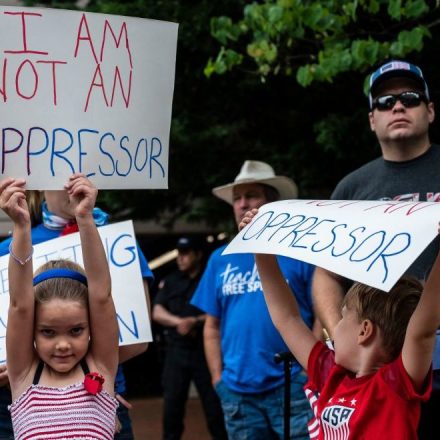
Last November, voters in California, one of the most reliably Democratic states in the Union, defeated a ballot initiative that would have restored the state’s ability to use race as a factor in government hiring and employment. Affirmative action, a supposedly positive form of discrimination, could not win over the public even in a deep blue majority-minority state. Over 57 percent of California’s voters opposed it. So it’s little surprise that ‘critical race theory’ and other forms of racial indoctrination promoted within businesses, universities and primary schools have engendered revulsion among Americans nationwide. Children are being taught to sort and rank one another by color and ethnicity.

culture
bullfighting

Why we need bullfighting

Which US state will be first to legalize bullfighting? OK, I need to qualify the question. A few bloodless corridas were held in Nevada in 2009, and some Portuguese-style bullfighting — again, bloodless — is permitted in California, legally classed as part of religious tradition. It won’t stop there, though. A friend in California breeds fighting bulls for sale to the Mexican market (bloodlines matter more than almost anything else to aficionados, each breeder seeking to stamp his beasts with his own aesthetic). My friend, the son of Mexican immigrants, is convinced it is only a matter of time before the law changes — probably through a referendum. ‘But we don’t want to win with 50 percent plus one. We want a big enough margin to settle the argument.

The monsters we become

Nietzsche would have been great at Twitter. He excelled at epigrams, which are to philosophy as the fortune-cookie motto is to Chinese takeout, and he loved to hate. Scholars divide as to whether his epigrammatic excellence came from using a typewriter — he was the earliest philosophical adopter of this technology — or because he was no good at joined-up thinking but very good at vituperating about the news. It was Nietzsche who spotted that the emerging theme of democratic society was not the reign of reason and universal brotherhood, but the ‘stupidification of the world’ and resentment. He called it ressentiment. Philosophy goes better in French, and Nietzsche had lately turned against Wagner, anti-Semitism and German nationalism.

Nietzsche
class

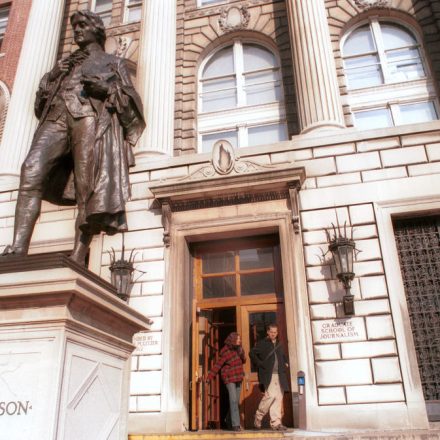
Journalism’s class problem has gotten worse

It’s very unlikely that I’d be a reasonably successful journalist today if I hadn’t come from an upper-middle-class family. Fresh out of college, I got a series of non- or low-paying internships. It wasn’t until spring of the following year that I found a staff position with benefits (and a salary of $33,000, which at the time seemed like plenty to live on). Because my parents provided financial support and because I had no debt, I was able to gain the experience and connections that helped launch my career. Somewhere, surely, there is a 37-year-old who is very similar to me and who wanted to be a journalist, but who is now doing something else because it just wasn’t feasible, financially.