Place

Place

You know when you’ve been ‘Peru’d’

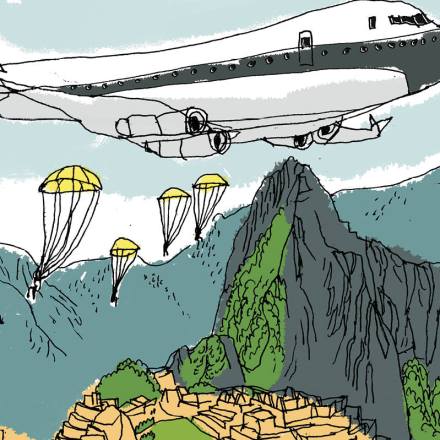
"Did you get Peru'd?" That's the question my boss, who once lived there, always asks people when they return. The idiom implies that something has gone terribly wrong, because, so my boss argues, that's inevitable during a visit to the land of the Inca. Lost luggage, food poisoning, petty theft: all of them, or worse, constitute being "Peru'd." During a recent happy hour, a colleague was describing how much she enjoyed her recent vacation to Lima and Cuzco. “Did you get Peru’d?” my boss queried. No, the woman asserted, she did not; it was a lovely trip. Another colleague piped in: “But didn’t you get Covid?” Well, yes, that’s true, she did get Covid. “You got Peru’d,” my boss decreed.

Peru
Paris

Paris: a gold-medal minibreak

As the Olympic Games descend on the French capital this July, the contest that really matters for this sports-shy travel writer is where to stay. From historic heavyweights to new contenders, these Parisian properties stand head and shoulders above the rest. Best for wellness: Shangri-La Paris The cool marble interiors of Shangri-La’s Parisian outpost feel a world away from the tumult of the Champs-Élysées (in fact, it’s only a fifteen-minute walk). If the Grecian frescoes, silk wallpaper and sweeping, gilded staircase all seem distinctly regal that’s because the nineteenth-century building was originally the pied-à-terre of Prince Roland Bonaparte, Napoleon’s great-nephew.

A mystery on Mount Everest

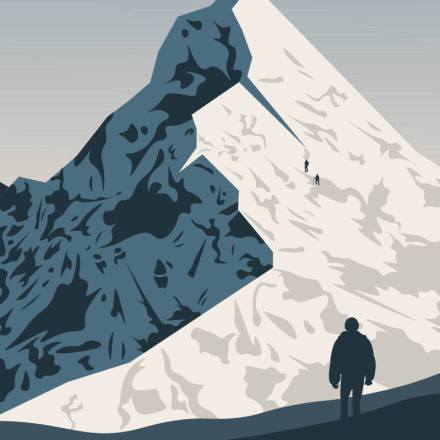
On June 8, 1924, veteran climber and geologist Noel Odell mounted the crest of a Himalayan crag and gazed up toward the tallest peak on Earth. Taking in the awe-inspiring sight, he noticed two tiny “objects” far ahead on a snowy slope “going strongly for the top.” To Odell, a trained and talented observer, the pair of ascending dots appeared to be a mere thousand feet or so below the summit. He later wrote that as he stood intently watching this dramatic appearance, the scene suddenly became enveloped in cloud and the “objects” vanished from his view. It was the last sighting of his fellow expeditionaries, George Mallory and Andrew “Sandy” Irvine, alive.

Mallory
rewilding

Rewilding the world

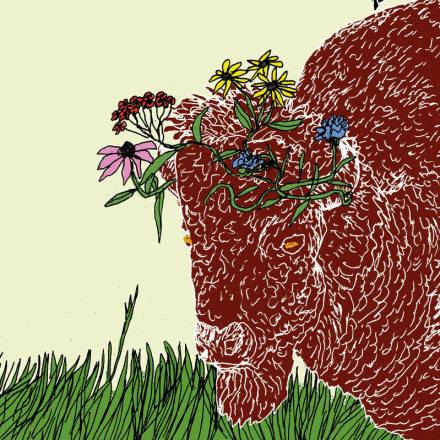
I recently found myself scrolling World Cement Weekly in search of news of a massive rewilding project in northern Mexico, created and funded by the cement giant Cemex. The growing success of the rewilding movement is strangely little known — though there are now places that are wilder, more vibrant, more teeming with life than they have been for centuries, few outside the movement know anything about them. Two decades ago, a nature-loving chief executive of Cemex decided that the company would acquire 346,000 acres of degraded land on Mexico’s border with America, an area larger than Los Angeles, renamed the El Carmen Nature Reserve.