Features

Features

America no longer knows how to fight a war

When educated Americans think about war, they’re apt to think of it in ideological terms. Wars are fought between dictatorships and democracies and the goal is to establish one form of government or the other in the defeated opponent’s territory. That’s certainly been the way American policymakers have thought about the wars of this century and it was the framework during the Cold War as well, when the conflict was said to be, fundamentally, a clash of ideologies. The French Revolution is probably the source of this concept, as the wars it set off were indeed largely about regime change, if not that alone.

war
elon musk bill debt books

Can anyone balance America’s books?

Donald Trump’s Big, Beautiful Bill was supposed to slash government waste and inefficiency. So why is it going to result in an even bigger, uglier deficit? The legislation was still being picked over in the Senate as this magazine went to press. But the Committee for a Responsible Federal Budget has calculated that the bill will add $2.5 trillion to the deficit over the next decade – and that estimate is far more likely to go up than down. The President’s opponents have characterized the Big, Beautiful Bill as a swindle that steals from the poor to give to the rich. That may be true to some extent, in that it could become harder for some people to qualify for Medicaid, while wealthy Americans will enjoy the extension of lower tax rates.

MAGA tourism in the heart of DC

On Friday night I arranged for a group to meet at Butterworth’s for a small dinner. I joke that I’ve become the Butterworth’s Whisperer, chaperoning curious and skittish liberal friends to DC’s Trump-era living museum for lamb tartare, cozy lighting and dissident ambiance. I needn’t waste too much time describing the scene. The restaurant has been profiled more often than the new Pope. Suffice it to say the fries are sliver-thin and seed-oil-free, the martinis flow like water and there are always at least a couple of Republican who’s-whos to point at in the dining room. Nothing to be afraid of. Some nights there’s even a party if you show up at the right time, as I did a couple of months ago during the Conservateur’s “Make America Hot Again” event.

Butterworth's
luigi mangione political violence

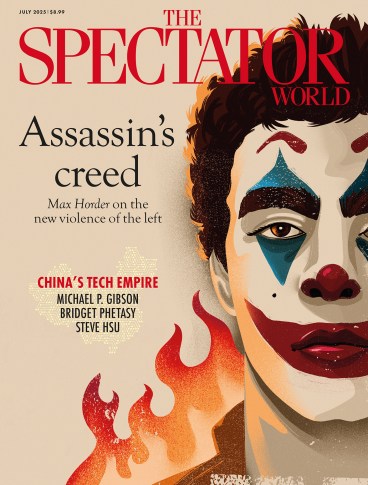
Left-wing violence is being normalized

Something has changed in America’s psyche. Violence has become more acceptable. It’s not just that we’ve seen two attempted – and very nearly successful – attacks on Donald Trump’s life, it’s that a worrying number of young Americans cheered on those attempted assassinations and still wish they had succeeded. Since early this year there has been widespread public support for smashing up Tesla dealerships – and for shooting Elon Musk. An unprecedented 10,000 new threats have been made against Senate and congressional members just this year, according to Capitol Police. Applause for the actual murder of UnitedHealthcare CEO Brian Thompson in December goes on, unabated, online.

Are antidepressants making Americans violent?

On April 20, 1999, Eric Harris and Dylan Klebold entered Columbine High School in Colorado, armed to the teeth, and set about murdering their fellow classmates and teachers. When the shooting was over, 12 children and one teacher lay dead. Harris and Klebold were dead, too, and 20 others were wounded. Within a little over a week of the atrocity, there was already speculation that psychotropic drugs might have been a factor, specifically the powerful and relatively new antidepressant Luvox (fluvoxamine), which Harris was known to have been taking. Fluvoxamine is a selective serotonin reuptake inhibitor (SSRI), a class of antidepressant medication that was first trialed in the 1970s and then brought to market in  the US in the late 1980s.

antidepressants
Democrats

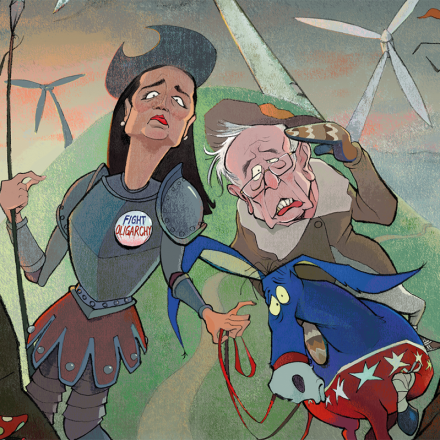
Who can bring the Democrats together by 2028?

“Why is the Democratic party viewed as toxic by so many? Even people inside the party acknowledge that,” journalist Tara Palmeri recently asked the Democratic Senator from Pennsylvania on her ominously titled Somebody’s Gotta Win podcast. John Fetterman’s answer was blunt: “I think their primary currency was shaming and scolding and talking down to people and telling them, ‘Hey, I know better than you’ or ‘You’re dopes’ or ‘You are a bro’ or ‘You’re ignorant or you know it, don’t you’? You know, ‘How can you be this dumb?’ I can’t imagine it. And then, by the way, ‘They’re fascists, how can you vote for that?’ When you’re in a state like Pennsylvania, I know and I love people that voted for Trump and they’re not fascist.

How Trump’s favorite anthem became the barometer for his policies

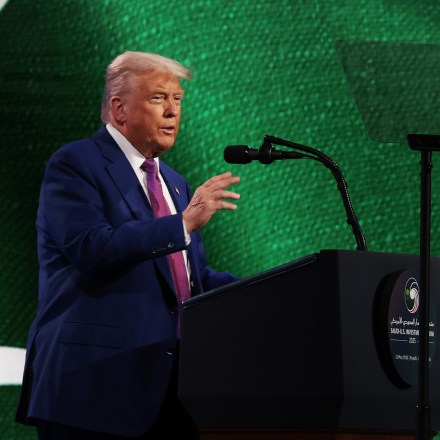
“The so-called ‘nation-builders’ wrecked far more nations than they built,” said Donald Trump on stage in Riyadh at the joint US-Saudi Arabia investment conference in May. “The interventionists were intervening in complex societies that they did not even understand themselves.” Calling time on the neoconservative framework for diplomacy – also known as waging war – was jaw-dropping enough. But President Trump wasn’t done. He wanted to celebrate. Wrapping up his speech, the self-proclaimed President of “common sense” brought his friend, the Saudi Crown Prince Mohammed bin Salman, onto the stage to commemorate the moment. Naturally, the speakers blasted out the President’s favorite anthem: the Village People’s “YMCA.

YMCA
Meloni

How Giorgia Meloni became Donald Trump’s EU whisperer

Henry Kissinger once complained: “Who do I call when I want to speak to Europe?” Today the answer would be Giorgia Meloni, Italy’s first female Prime Minister, who has emerged as the most important leader in the European Union. No Italian leader has filled this unofficial role before: it is usually reserved for the heads of the bloc’s two largest economies, Germany and France. Yet Meloni has capitalized on the weakness of their leadership. French President Emmanuel Macron may delude himself that he is Napoleon or Jupiter, but in reality he is the deeply unpopular head of a lame-duck government. To borrow a phrase from Donald Trump, he doesn’t “have the cards.” Meanwhile, Germany’s Chancellor, Friedrich Merz, heads up a flimsy coalition.

Why everyone is talking about Bill Belichick

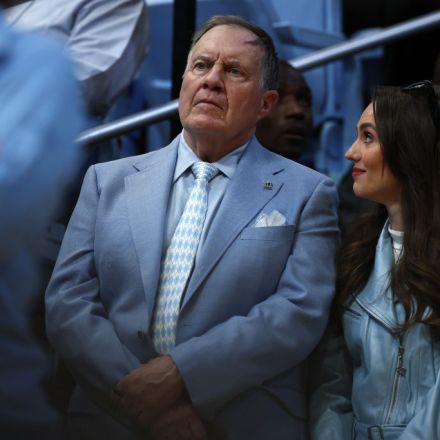
In early May, the 73-year-old former New England Patriots coach Bill Belichick published The Art of Winning, an autobiography of sorts, laying out the principles that made him the greatest coach in the history of professional football. It’s the book fans have been waiting to read for 20 years. Yet hardly anyone noticed, not even people thrilled at the prospect of Belichick’s move to the University of North Carolina next fall – his first crack at coaching college ball. People are distracted by his relationship with a 24-year-old beauty queen: two-time Miss Maine finalist Jordon Hudson. You can see why. Forty-nine years is an attention-grabbing age difference and Hudson is a force in her own right.

Belichick
Ukraine

Can Ukraine secure its military survival?

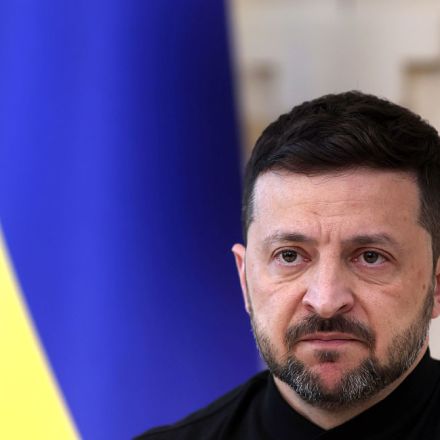
The Trump-Putin honeymoon is over. After three months of lengthy one-on-one phone calls, a handful of false starts on negotiations and flashes of Trumpian boosterism over the prospect of great commercial deals with the Kremlin, a fourth summer of war in Ukraine looks inevitable. Vladimir Putin will pretend to negotiate, while at the same time continuing to pound Ukraine’s cities with missiles and pressing forward on the ground. The Ukrainians will continue to scramble for men and resources with which to defend themselves. And the White House will continue to blame both sides for not reaching a deal. Over these three months of false hope, Putin has made two things very clear.

The architects of ‘AI rights’ are a threat to humanity

It’s easy to see that gender ideology is being used to undermine biological truth – but what’s harder to fathom is why. I am persuaded that the end goal is, in fact, to pave the way for human symbiosis with artificial intelligence, which Silicon Valley has been promising us since the early 2000s. Encouraging children to embrace macabre rituals like medical castration convinces them that they can mix and match parts of their anatomy, which makes it a simple matter for them to accept AI augmentation. We are at the beginning of more extreme changes to humanity than we have ever seen before. The gene-editing technology CRISPR now allows us to genetically alter human beings.

Pendant
Eric

The rise of Eric Trump

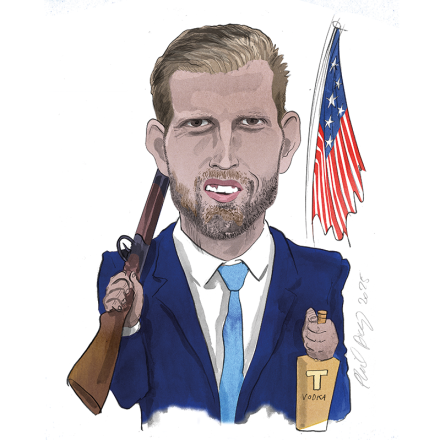
For years, Eric Trump perfected the art of strategic invisibility. In the grand theater of Trump family politics, he played the understudy: the dutiful son who minded vineyards and managed golf courses while his older brother courted Twitter controversies and his older sister pursued power. It was a calculated public persona. Eric appeared refreshingly uncontroversial and unbothered – and relatively non-political – compared to the rest of his family. But here’s what everyone missed: while his siblings were soaking in the limelight, Eric was quietly orchestrating moves of far greater consequence. His dutiful pose, it turns out, was the perfect cover for building an empire.

Trump’s revolution is coming to the UK

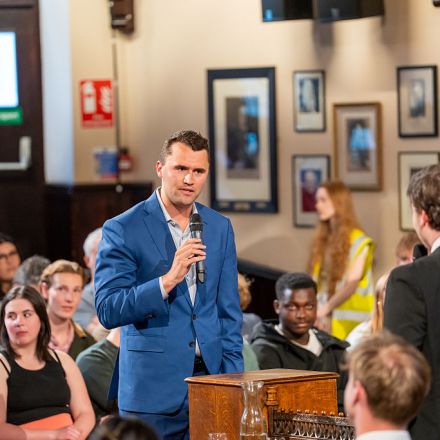
In May, Charlie Kirk, who died today from a gunshot wound, visited the United Kingdom to debate the students of Oxford and Cambridge, Britain’s two most prestigious universities. The Spectator asked him to write about the experience. The result was this well-observed, funny and now strangely prophetic-sounding piece about the condition of England. Charlie Kirk believed in free speech. He died speaking freely. RIP. Oxford and Cambridge When I was growing up, people often said British politics were where America’s would be in five, ten or 20 years. What this meant was that Britain was more to the left of America: more secular, more socially liberal, more environmentalist, more globalized.

Cambridge charlie kirk
Biden

Joe Biden’s puzzling legacy

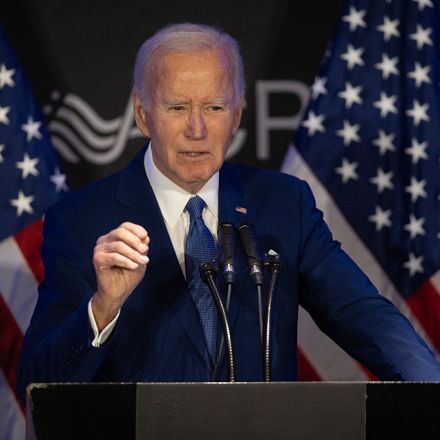
The commentariat is awash with experts on prostate cancer. What precipitated this sudden acquisition of specialized medical expertise? Why, the announcement that former president Joe Biden is suffering from stage four of the big PC which, the news reports are gasping, has metastasized to his bones. Let me pause to join Donald Trump in expressing my best wishes to the former president for “a fast and successful recovery.” Let me also recall how suddenly the world became populated with epidemiologists after the Wuhan flu led Anthony Fauci, Deborah Birx and the entire bureaucratic establishment to discover their inner totalitarian hankerings. The revelation about Biden’s health is a sort of synecdoche for a much larger universe of pain.

The anti-Semitism algorithm

The White House argues that it is committed to stamping out anti-Semitism in America – on campuses especially. Absent from the discussion, however, are the roles of China, Russia and Iran in fueling Jew-hatred across the US during the height of last year’s student protests and beyond. Organizations in Beijing, Moscow and Tehran have been secretly supporting protests in New York, waging covert online campaigns and cyberattacks and manipulating algorithms to help make Americans more anti-Semitic and to fan discord and violence. These dictatorial regimes have no genuine interest in the rights of any victims in the Middle East. Despite their supposed support of Palestinians, Russia and China have slaughtered and oppressed Muslims when it suits them in Chechnya, Crimea and Xinjiang.

anti-Semitism

How China is out-innovating the West

The world received a jolt in 2018 – and it wasn’t from a Silicon Valley whiz or a lab at MIT. It came from Shenzhen, China, where a lanky, unassuming biochemist named He Jiankui did the unthinkable. Using the newly discovered CRISPR-Cas9 toolkit, and asking no one’s permission, He edited the genes of Lulu and Nana, twin baby girls, so that both were born immune to HIV. The scientific establishment gasped, jaws dropped and the moralists clutched their pearls. “Monstrous!” the bioethicists cried. “I was just horrified,” said Jennifer Doudna, who won the 2020 Nobel Prize in Chemistry for inventing the CRISPR gene-editing technique.

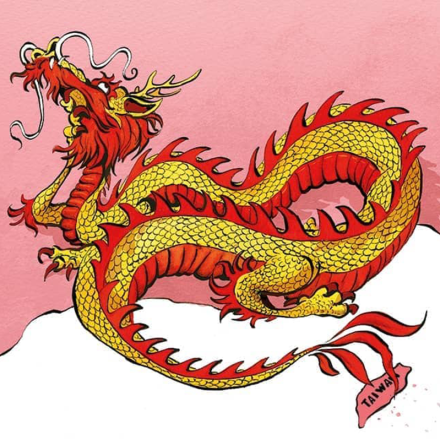
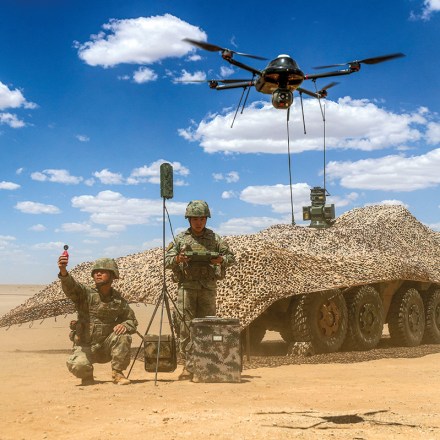
The frightening advance of China’s military capabilities

“The number (of kills) could have been higher. We showed restraint.” – Pakistan’s Air Vice Marshal Aurangzeb Ahmed “Godzilla 3? Godzilla 3? ... Explosion in Air.” – Indian Air Force flight radio “China’s hypersonic missiles could destroy US aircraft carriers in just 20 minutes.” – US Defense Secretary Pete Hegseth Historians of the future will need a word or phrase to describe the shock and the disorienting anxiety the West will feel in the coming months as it realizes that China has caught up with – even surpassed it – in technological capability. We could call these “DeepSeek” moments, named after the recent jolt to the western psyche caused by the astonishing capabilities of Chinese artificial intelligence.

China
South Africa

Inside the struggle for technological control in South Africa

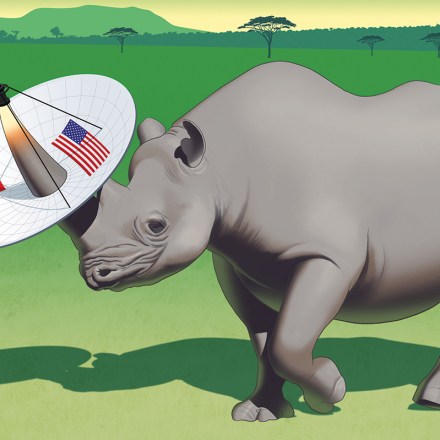
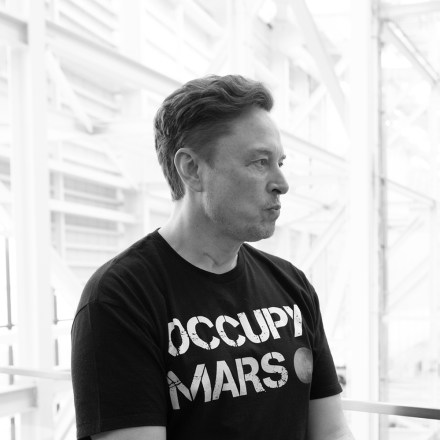
In the dawn light of a South African savanna, a team of rangers huddle around a satellite dish aimed skyward. Their phones spring to life with a signal – an unthinkable result just months earlier in this remote, off-grid conservation zone. The source is Starlink, Elon Musk and SpaceX’s satellite internet service, offering encrypted, high-speed connectivity far from state-controlled networks. But in South Africa, this signal didn’t just connect – it disrupted. And that disruption provides some subtext to the extraordinary “Wild West Wing” showdown between Donald Trump and South African President Cyril Ramaphosa in May, which played out in the Oval Office – with Musk looking on.

How deepfake fraud is rewiring our minds

We’re led to believe that America was once Mister Rogers’ Neighborhood, a place of cardigans and kindness where everyone got along just swell. Then it all went wrong. MSNBC hosts talk of a “crisis in authority” while New York Times columnists blame corrupt Republicans for a “lost faith in liberal governance.” Right-leaning commentators point to mass migration as the great trust killer. Illegal aliens, we’re told, have a “fragmenting effect on shared cultural norms” and are “importing distrust.” No doubt these arguments contain an element of truth: America is a less trusting society than it was a few decades ago. But soon such arguments are going to appear as quaint as Mister Rogers’s model Pennsylvanian town.

fraud