Features

Features

Has the influencer bubble burst?

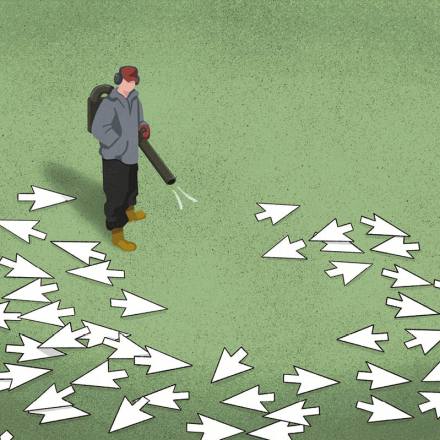
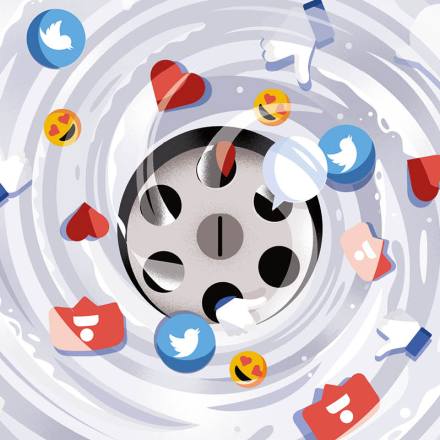
If you ask anybody under twenty about their life plan, social media will likely play some part in the answer. A friend’s nine-year-old son has just launched his own YouTube channel. My prepubescent cousins are telling their parents that TikTok is “the key to financial freedom.” When I was their age, my entrepreneurial skills went as far as selling single cigarettes to my classmates for loose change. The appeal of the influencer life isn’t hard to understand. Over the last decade, it’s been touted as the sexy, well-paid, democratic career of the future. A 2019 Morning Consult survey found that one in ten young people consider themselves “influencers.” But now these micro-celebrities are trading in their tripods and ring-lights for real jobs.

influencer
Hitchens

The afterlife of Christopher Hitchens

In 2011, a terminally ill Christopher Hitchens faced death with droll stoicism: “To the dumb question ‘Why me?’ the cosmos barely bothers to return the reply: ‘Why not?’” he wrote. As his health declined and the end drew nearer, the skeptical Hitchens stuck to his atheist guns, clear-eyed in his confidence that death was final. Hitchens died in 2011, but his work and reputation live on. No paradox there, of course, but just how large Hitchens looms twelve years after his death would surely have surprised even this immodest author. It’s certainly a surprise to me, a reformed Hitchens fanboy. The face of twenty-first-century atheism is having quite the afterlife.

Moving house sucks

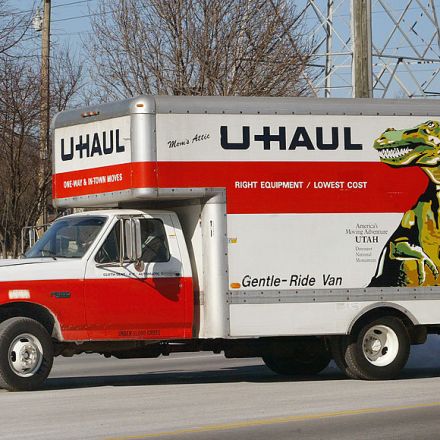
Moving sucks. It’s hard on your body, mind and wallet. It’s stressful — so much so that people consistently report it in the top ten most stressful events of their life. There are a million moving parts, a never-ending to-do list. Cross state lines and that list gets even longer. The List haunts you the entire time you pack, inexplicably growing with every item you check off. Packing supplies. Call movers to get quotes. Logistics: how are we getting the cars there? Shipping? Driving? The dog should drive. The baby should fly. I moved almost every year and a half growing up, so the sound of packing tape gives me PTSD. When that sound made my eleven-month-old daughter cry, I became a believer in generational trauma.

moving
crypto

Welcome to the crypto winter

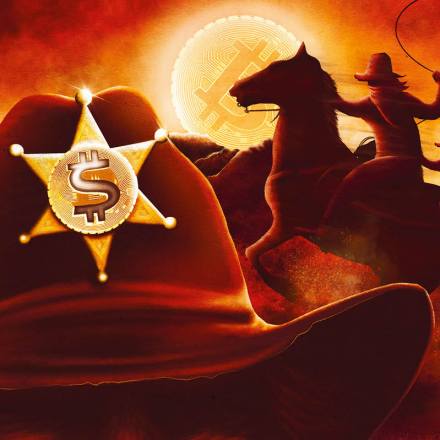
Last year, Austin scored a major coup when it landed Consensus 2022, a big in-person conference focused on the digital finance industry, specifically cryptocurrencies like Bitcoin and Ethereum. CoinDesk, a news and research company focused on the cryptocurrency industry, chose the Texas capital for its return to an in-person conference and it arrived splashy and huge, taking over not only the Austin Convention Center but several adjacent hotels and event spaces, its 17,000 attendees swarming downtown. This was June of last year. Three months earlier, South by Southwest, the city’s long-running big tech and culture conference had been a veritable playground for NFT enthusiasts, and dozens of panels hyped the transformative importance of the blockchain.

Can the Heritage Foundation unite the right?

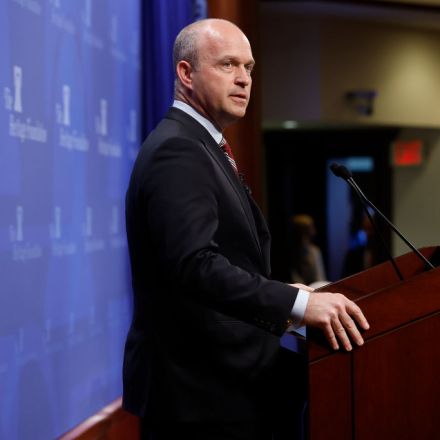
Last September I was sitting in the crowd at the annual National Conservatism Conference, lamenting the fact that my hotel room had no hot water, when Dr. Kevin Roberts, the president of the Heritage Foundation, took the stage at Miami’s JW Marriott for his plenary address. Nationalists and populists at the conference were suspicious of Dr. Roberts’s presence. The “New Right” had spent the past few years accusing the right-wing establishment, including the cache of center-right DC-based think tanks like Heritage, of selling out ordinary Americans for profit and influence.

heritage
republic

Is America a republic in name only?

Is the United States a one-party state? Surely not. Just look at the ballots the next time you vote. There are nearly always Republican as well as Democratic candidates, and often there are candidates from other parties as well (Green, Working Families, Libertarian, etc.). But when you go beyond the labels, what do you find? Tucker Carlson, a recent victim of the uniparty monopoly, put it very well. “Suddenly, the United States looks very much like a one-party state,” he said in a post-Fox video. “That’s a depressing realization,” he added. “But it’s not permanent.” I think he is right about both things: the depressing reality that the United States looks more and more like a one-party state and the fact that the situation is not, at least not necessarily, permanent.

They wanted to break the internet. It broke them

Their declared intention was to break the internet. In November 2014, the winter issue of Paper magazine, a stalwart of the New York arts and music scene for thirty years, featured an image immediately declared iconic by social media: Kim Kardashian, her neck wrapped in pearls, popping a Champagne cork and catching the bubbly white stream that jets over her head in the coupe glass propped on her prominent derrière. And that was just the cover — the internet quickly shared photographer Jean-Paul Goude’s more pornographic images of an oiled-up Kardashian stripping out of her black evening gown to show off her famous buttocks, before going full frontal with a slightly unnerving smile. The gambit worked to the tune of 16 million views for Paper in a single week.

media
electric vehicles

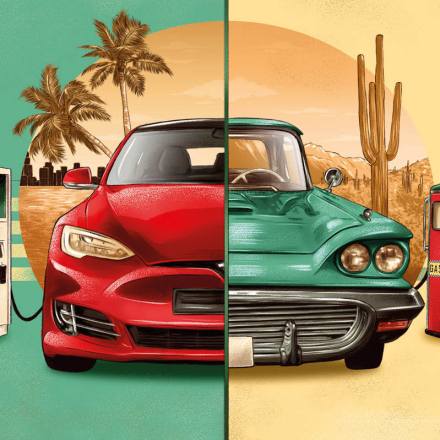
Are electric vehicles really the future?

It’s a cloudless spring day, made for a country drive. Chartreuse trees explode with pollen and glow to near neon. I wind past pastures and stone and brick farmhouses and amiable old barns that could set the scene of a Beatrix Potter story, elatedly adding to the hum of provincial enterprise by perfecting my rev-matching skills over the rolling hills and 8mph switchbacks that mark PA-74. The quiet two-lane road spits me out into city limits, and suddenly I’m crawling through a crowd at the Carlisle Collector Car Auction. I’m here to learn what classic car enthusiasts think of electric vehicles, or EVs. In 2021, President Biden issued an executive order establishing that, by 2030, half of new passenger cars sold must be all-electric or hybrid, going up to two-thirds by 2032.

The legal challenge to assisted suicide

Lonnie VanHook was preparing to board the train to Oregon when his body gave out. The Navy veteran is accustomed to these sorts of betrayals. He is quadriplegic and legless to boot; a rare form of cancer is eating away at his skeletal-muscle tissues and bladder. He awoke in a facility surrounded by medical professionals wearing the plastic countenances of concern and sympathy they picked up during the med school lessons on bedside manners. During the interaction, Lonnie told them about the reason for his upcoming trip. You can picture the Oakland native rolling his eyes as he has prepared for the rebuttal. The doctors, no doubt, exchanged astonished glances. Lonnie, what were you thinking?!? You don’t need to take the train. We can do that right here!

assisted suicide
trump

Why won’t conservatives ask Trump tough questions?

The US economy is faltering, crime is through the roof, the border is a disaster, everyone hates the vice president and Democrats are not backing off one inch on transgenderism. Only one Republican could lose to President Joe Biden next year. But Democrats’ trump card is, well, Trump. Infallible two-step Biden re-election plan. Step one: trick Republicans into nominating Trump. Step two: that’s about it. I still don’t think Trump will be the nominee, but never underestimate Republicans’ ability to embrace the worst possible thing, especially with conservative media wildly cheerleading the worst possible thing.

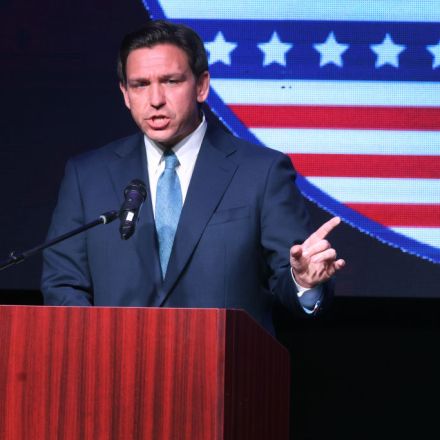
Will DeSantis lose if he runs to the right of Trump?

"Negative partisanship” is a notorious feature of American politics. In presidential elections especially, voters don’t vote for the party and candidate they like; they vote against the party and candidate they fear. This is one reason third-party politics is a waste of time. If voters want to prevent the worst outcome, they will always choose the most viable alternative over the best alternative. For Joe Biden in 2020, it was enough that he wasn’t Donald Trump. For Trump in 2016, it was enough that he wasn’t Hillary Clinton. Next year, we’ll find out whether the voting public now views Biden as more like Clinton or still considers him better than Trump.

conservative desantis
guns

How to stop the flow of guns south

Latavia McGee crossed the US border with three friends on March 3. The North Carolina resident was looking for the Mexican clinic for her tummy-tuck operation when she came under gunfire. Two of the group, McGee's cousin Shaeed Woodard and friend Zindell Brown, jumped out of the back of their vehicle and tried to flee but were cut down by bullets. The third friend, Eric Williams, stepped out the driver's side and was shot in the leg. The gunmen, who worked for the drug-trafficking mafia known as the Gulf Cartel, ran over, loaded the Americans onto a pickup truck and then held them in vehicles and stash houses for days. Woodard and Brown wouldn't make it through the kidnapping; McGee watched them die from their wounds.

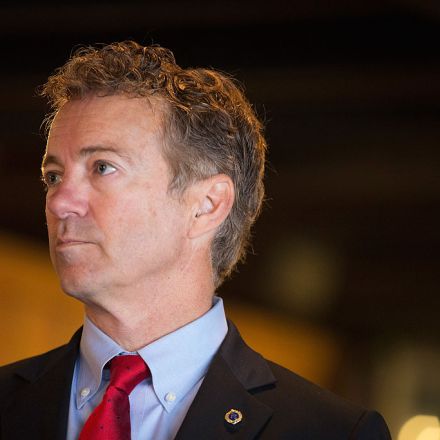
Blink and you’ll miss this libertarian moment

Political years are the opposite of dog years: they pass by in a blaze, with entire epochs elapsing in the course of a few news cycles. Ideas, even movements, fade abruptly, recalled only years later when you clean out your garage and stumble on that old tricorn hat from your Tea Party days. If you want to know how jarring political change can be, consider that at this time in the 2016 election cycle — around the late spring of 2015 — the predicted frontrunner for the GOP nomination was Rand Paul. This was no coincidence. In those days, we were said to be in the middle of something called a libertarian moment. Voters were leery of Barack Obama’s deficit spending, Washington’s endless wars, the NSA surveillance that had been unveiled by Edward Snowden.

libertarian
RFK Jr

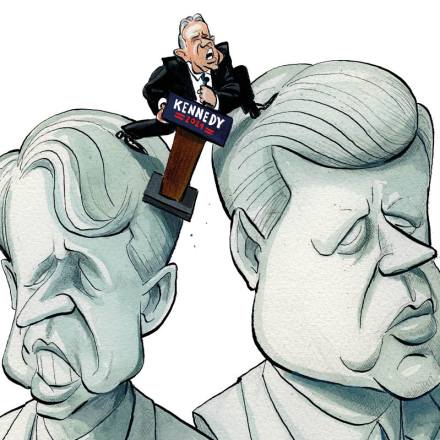
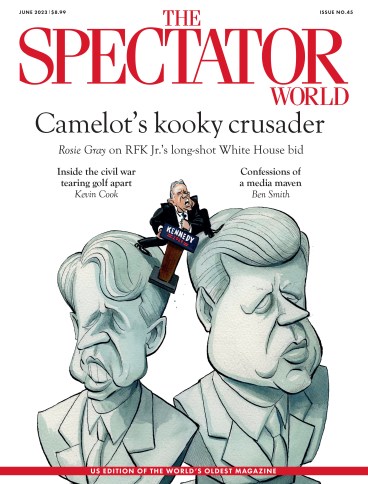
Inside RFK Jr.’s kooky White House quest

After Linda Como, a sixty-four-year-old administrative assistant from Quincy, Massachusetts, was fired from her hospital job for refusing to be vaccinated against Covid, she discovered Robert F. Kennedy Jr.’s anti-vaccine activism, and it resonated with her. But that’s not the only reason Como came to the Boston Park Plaza hotel one morning in April to see Kennedy launch his long-shot 2024 presidential campaign. “I grew up in Boston, went to Boston public schools, so you know the Kennedy family,” Como told me. “They’re like the royal family. So I’ve always been a fan of the Kennedys.” Kennedy lore runs deep in Boston. This is where Robert Kennedy’s father Robert F. Kennedy and his uncles John F. Kennedy and Edward M.

Confessions of a media chronicler

We held the party for my new book, Traffic, at Umberto’s Clam House, by the office of our new news organization, Semafor. Umberto’s is best known as the site of a notorious 1972 mob hit — “they blew him down in a clam bar in New York,” Bob Dylan sang of Joey Gallo. I’d worried the space was too small, but it was perfectly packed and noisy, with blue oil paintings of crabs on the walls. I broke off a conversation with CNN president Chris Licht to take a call from a recently fired anchor from another network. When I came back our executive editor Gina Chua began the short program by spilling who I’d been talking to.

ben smith
supreme court

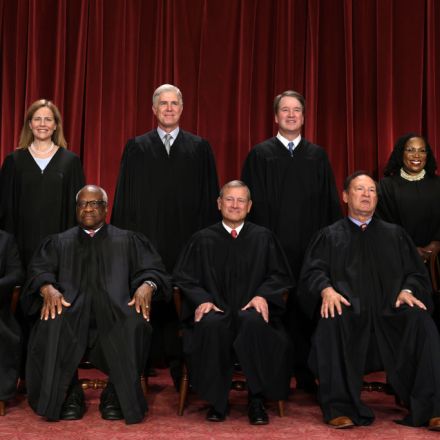
The campaign against the Supreme Court’s legitimacy

Ask anyone about politics these days and you’re likely to hear that our government institutions are in crisis. And not just government institutions, really, but American institutions: the nuclear family isn’t what it used to be; the local community group is drying up; the glazed donut bacon double cheeseburger is harder to find than in our glory days. But in particular it’s our government institutions that are in crisis — which is why the Supreme Court is so important. As Congress buckles under the pressure of endless fundraising and cable news navel-gazing, as the presidency stagnates with its shambling commander in chief and massive bureaucracy, at least the Court still seems to work. In fact, it can seem like an oasis of deliberation in a political scene gone mad.