Previous magazine Next magazine

The reviving of the American mind

Browse past issues

Books & Arts

Books and Arts

My Bob Dylan pilgrimage

On March 25, Bob Dylan delivered his first performance of the year in Tulsa, Oklahoma, as his “Rough and Rowdy Ways” tour enters its fourth year running. At 83 years old, there was no guarantee Dylan would keep performing live. At the start of the year, there were no new dates listed on his website. Then, in early January, one performance popped up. The show was to be held at the Tulsa Theater – an important location for the performer, as the city is home to the Bob Dylan Center, located in the downtown art district. Tulsa also has a reputation as a musical destination through which almost every legendary folk, rock, country and blues artist has toured. Dylan is no exception.

Dylan
Dorian

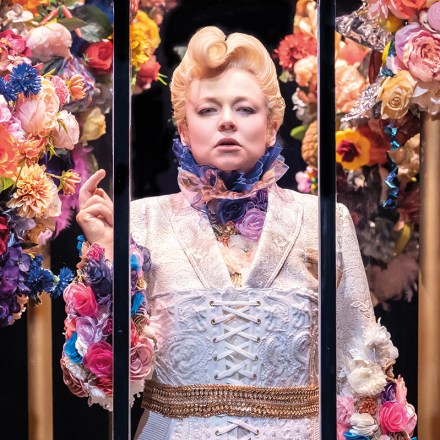
The Picture of Dorian Gray is headache-inducing

The Picture of Dorian Gray begins on an unadorned note. Sarah Snook sits alone on an otherwise empty stage, facing a camera which projects her image on to a giant vertical screen. Chameleon-like, she switches instantaneously between two characters: the awkward but sincere painter Basil and his more debonair – and dastardly – friend Lord Henry. Snook may be Australian and a woman, but borne on her considerable gifts we are transported to Victorian England. With no props save a paintbrush for Basil and a cigarette for Lord Henry, Snook chops and changes between the two men: she contorts her face into nervy, painful subservience for Basil and her voice into a high, febrile whine.

Charles Ives was a composer before his time

In February 1951, Leonard Bernstein led the New York Philharmonic through the première of a symphony by an American composer unknown at Carnegie Hall. The composer in question was Charles Ives, by then too frail to attend in person. He listened from home when the concert was broadcast a few weeks later. An experimenter by instinct, Ives’s work had already proved an inspiration to a younger generation of radical American composers including John Cage, Lou Harrison and Morton Feldman. But that Ives listened from afar to the première, at long last, of his Second Symphony – completed in 1902 – was symbolic of the distance he maintained from America’s classical mainstream.

Ives
McNally

Keith McNally’s memoir is strangely unappetizing

Harvey Weinstein has a memorable walk-on role in Keith McNally’s memoir I Regret Almost Everything. Taking a break from being New York’s most celebrated restaurateur, McNally wrote and directed a film called End of the Night that was screened at Cannes in 1990. Its auteur hoped that Weinstein, who distributed the previous year’s Palme D’Or-winning picture Sex, Lies, and Videotape, would warm to it. He was blunt: “I didn’t like your film and I’m not going to buy it.” As McNally swallows the shot, there’s a chaser. “But I’d still like to come to the after-party.” McNally admires Weinstein’s honesty, if little else. So I’m going to be straight, too. I didn’t enjoy I Regret Almost Everything. This is a shame, because the ingredients are promising.

Ocean Vuong’s newest work is an affecting celebration of misfits

Ocean Vuong’s writing is heavily influenced by his own experiences. The protagonist of his first coming-of-age novel, On Earth We’re Briefly Gorgeous, is a carbon-copy of the author. Vuong was born in Vietnam in 1988. While serving with the US Navy, his American grandfather fell in love with “an illiterate girl from the rice paddies” who gave him three children. When one of them, Vuong’s mother, was identified as mixed-race by a policeman, the family was displaced to a refugee camp in the Philippines and finally made it to Hartford, Connecticut, where Vuong was raised by his mother, aunt and grandmother. His family story merits a book of its own.

Vuong
Murray

A profound account of the October 7 pogrom

I first learned about anti-Semitism at the age of eight, when my father explained to me that his closest business friend could not live near us because he was Jewish. This was 1961, hardly three miles from Mount Vernon, Virginia, in a new-build neighborhood that was racially segregated, as was my elementary school. Black children descended from George Washington’s slaves lived in a nearby rural ghetto called Gum Springs and were not welcome east of Fort Hunt Road. Somehow that memory – like John F. Kennedy’s assassination two years later and the view of his funeral procession from my father’s office window – is one of my earliest and starkest recollections.

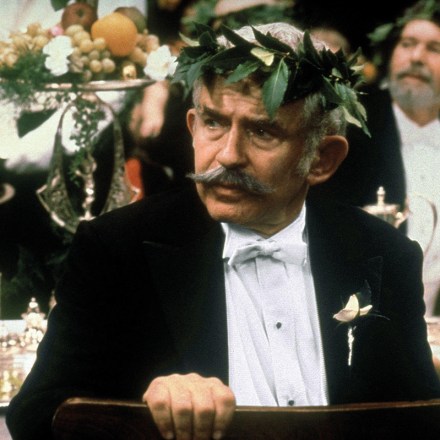
The passage of Ragtime

Back in the winter of 1980, a young Martin Amis found himself on the London set of Miloš Forman’s movie Ragtime. The plan was to inspect what Norman Mailer, whom Amis was profiling for the Observer newspaper, was doing with the part of Stanford White, the real-life architect murdered by the deranged husband of New York chorus girl Evelyn Nesbit. Impressed by the lavish million-dollar backdrop, Amis looked on as the nattily dressed and neatly bewigged author of The Executioner’s Song, accompanied by his sixth wife, Norris, made his way into a reconstruction of Madison Square Garden.

Ragtime
Buckley

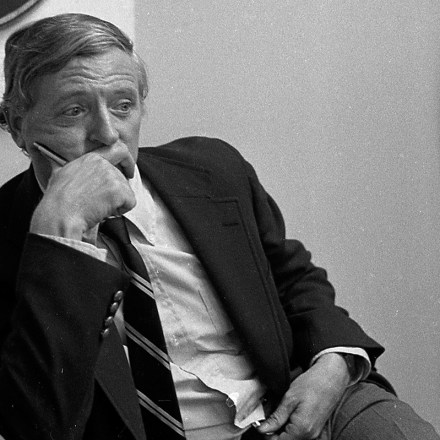
Who was William F. Buckley Jr., really?

What more can be said of the American conservative commentator, novelist, musician, sailor, talk-show host and tireless public intellectual William F. Buckley Jr. (1925-2008), that he or his previous biographers haven’t already said or written? After all, this is an individual who in 1983 wrote a 90,000-word book, called Overdrive, covering the events of a single week of his life. Plenty more, it turns out, as Sam Tanenhaus proves in his thousand-page biography Buckley: The Life and the Revolution That Changed America. Buckley was blessed with a voice that sounded like he let it marinate in a cask of port between appearances Buckley was 58 when he wrote Overdrive, and kept to a schedule that would have taxed the energy of a man half his age.