Features

Features

Time to scrap the Goldwater Rule

There are few ironclad rules in American politics. But here is one: if you are a Republican, no tactic is too disreputable to be deployed against you. I think for example, of the disgusting campaign waged to keep Judge Robert Bork from the Supreme Court in the 1980s. 'Lion of the Senate' Ted Kennedy led that charge ('in Robert Bork’s America...'), though he was aided by a young senator named Joe Biden. Journalists went through Bork’s trash and reviewed the movies he rented for incriminating evidence. Other campaigns of vilification against Republican Supreme Court nominees include the one conducted against Clarence Thomas and, most recently, the extraordinary full-court press against Brett Kavanaugh. But the calumny is directed not just against judicial nominees.


goldwater rule
coronavirus state liberalism

The weak response to coronavirus is a symptom of the decay of the liberal state

If COVID-19 spreads in the United States as it has spread elsewhere, then quite soon the virus will be established within the general population. The federal response will have changed from containing isolated ‘hot spots’ to managing a national epidemic. ‘Social distancing’ and self-quarantining will be endemic, hospitals will be overloaded and the economy will have continued to contract. This could test not just the American people — their social bonds, their sense of collective fate — but also America’s government and institutions. That testing will be far more demanding than the ‘stress tests’ faced by the banks after the financial crisis of 2007-08. America’s resolve will be challenged again. This should not be a time for petty politicking.

America is socialist, dummy

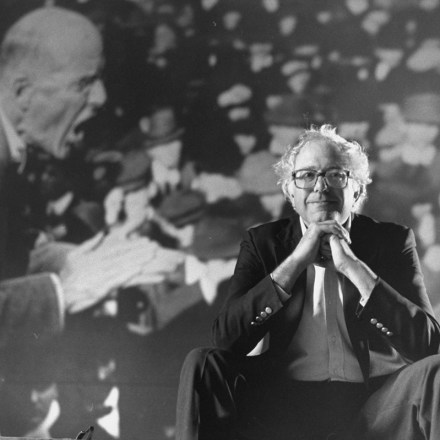
It’s widely agreed that Bernie Sanders fell short in the Democratic primary because he described himself as a socialist. As a movement, socialism has never had mass appeal in America. Even at its strongest, in 1912, it garnered fewer than one million votes for presidential candidate Eugene Debs, who was trounced by Woodrow Wilson. More often, Americans have used the word ‘socialism’ as a synonym for communism, to signify everything America doesn’t stand for. Pundits put Sanders’s failure down to his attempts to give the word a positive spin. On the other hand, a dispassionate glance at American history shows that Uncle Sam has already gone a long way down the road of democratic socialism.

socialist
liberalism post-liberal

After liberalism

We’re entering the post-liberal moment. From Trump to Brexit, Ireland to Brazil, we’ve seen a number of revolts at the ballot box that point to a mass vote of no-confidence in the economic and cultural status quo — in other words, in 21st-century liberalism. The liberals aren’t taking it lying down. They’re doing their best to define post-liberalism in language they are most comfortable with, calling it ‘fascist’ or ‘communist’ — and sometimes the criticism is spot-on. But other times it is wholly inaccurate. One of the glaring paradoxes of the post-liberal moment is that many of the people involved in it want to rescue liberalism from itself.

Constrained by freedom: what do post-liberals want?

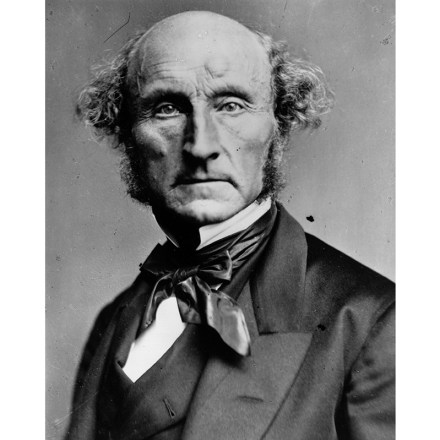
Any attempt to expound post-liberalism must begin by taking a view of what liberalism is. And liberalism can be viewed as a philosophy that enshrines freedom as its foundational principle. Freedom from what, though? That is a moving target. The pioneers of liberalism, whether they be John Locke or the Founding Fathers, wanted to be free from the tyranny of the minority, that is, from power exercised arbitrarily by a political sovereign. Two hundred years later, following J.S. Mill’s disdain for the craven conformism of late-Victorian social mores, liberals realized they wanted to be free from an empowered majority. That is, even if a majority want democratically to decide gambling should be made illegal, for liberals the practice should remain legal as long as one gambler remains.

post-liberals
foreign policy

Foreign policy is in a straitjacket

Before the world went into quarantine, I had the chance to take part in a small way in some interesting discussions about the present and future of US foreign policy. Some of these involved Trump administration officials and think-tank honchos; others brought together US and European diplomats and scholars. Chatham House rules were in effect, but identifying who said what is less important than giving a sense of how hard it is for conversations on these topics to break out of old habits of thought and ideological preconceptions. The academics and policy minds of America’s most respectable think tanks, for example, still assume that the most morally edifying solution to a world problem is also the most practically effective one.

Right on: Boris Johnson’s Britain and the new political reality

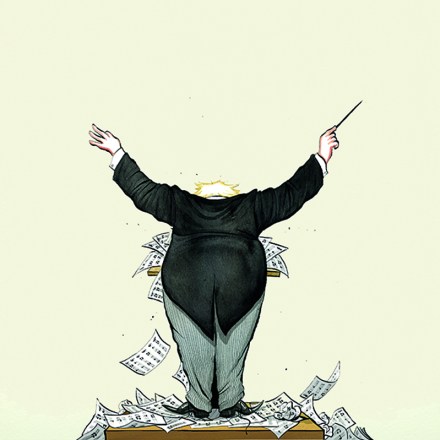
Political realignments occur when large groups of voters desert one party for one or more other parties, shattering old coalitions and forming new ones. In America and northern Europe, working-class voters — mostly, but not exclusively, native and white — have been leaving established left-of-center parties. On their way out, they have met college-educated metropolitan professionals and managers migrating the other way. Center-left parties have exchanged the industrial workers who were once their core constituency for a new upscale clientele. The emerging center-left is supported by the college-credentialed middle classes, native minorities and immigrant diasporas.

boris johnson right neoliberalism
fatwa twitter

Giving up Twitter for Lent went well

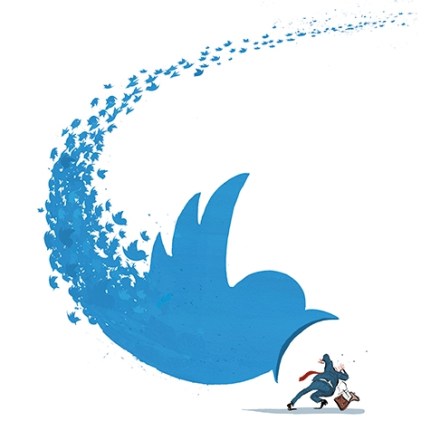
It’s Lent and the good Catholic schoolgirl in me loves this season of fasting and rending the heart and not my garments and all that jazz, so I dug deep and asked myself the hard question: what would be the most challenging thing in my life to give up? Since I’ve already given up heroin, cocaine, alcohol, weed, cigarettes and toxic men, two primary substance addictions remain: coffee and Twitter. If I’m honest with myself, Twitter is the most hardcore addiction I have and it’s also the one that robs me of the most productivity. So. Into the media desert I go...I rip the Band-Aid off around 5 p.m. PST on Tuesday, logging out from my account and removing the app from my phone. Goodbye, my love. Day 1: Holy Moly. I have a problem. 6 a.m. PST: Ash Wednesday.