Books & Arts

Books and Arts

Things go flying

There are fashions in the paranormal as in everything else. Since the famous Enfield hauntings of the late 1970s, poltergeists seem to have gone quiet, or at least unreported; but before then they were everywhere. In 1938, poltergeists kicked off in Thornton Heath, Surrey, and a Jewish Hungarian journalist and psychic investigator, Nandor Fodor, was alerted to strange happenings in the home of a 34-year-old housewife there. The list of happenings is familiar in all poltergeist stories. Furniture moves, light fittings shatter, crockery, money, knick-knacks, even small pictures are thrown through the air, sometimes seemingly aimed directly at individuals.
alma fielding
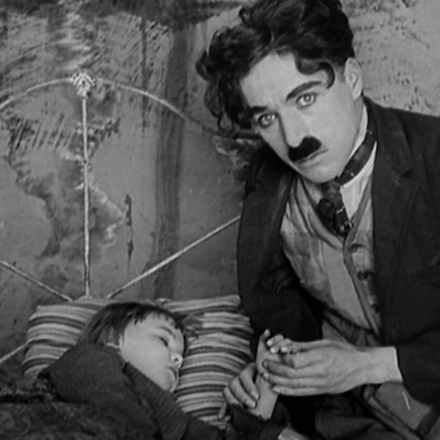
kid

Here’s looking at you, Kid

‘I learnt there was Charlie and there was Chaplin,’ Jackie Coogan, the actor’s young foil in 1921’s groundbreaking The Kid once remarked. ‘The first was the biggest movie star on the planet, the second an insecure boy from the slums of London.’ Luckily for us, both sides of the Chaplin persona meshed perfectly in The Kid, with its generous helpings of the comic and the sentimental. It may be the Little Tramp’s most perfect and most personal film. Like almost everything that’s any good in art, The Kid emerged out of turmoil. In October 1918, the 29-year-old Chaplin had married the first of his child brides, 16-year-old Mildred Harris, after she told him she was pregnant.

Fear thy neighbor

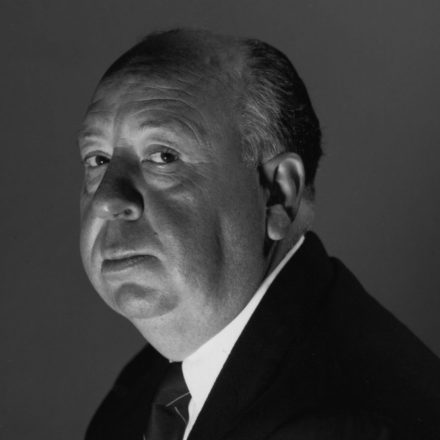
In an age of rancor, one thing we can all agree on is that it makes a certain amount of sense to fear the police. What other force in civil society is authorized to intrude on private life, and deny its benefits and freedoms, in quite the same way? It may be the law-abiding members of society who fear the police most palpably. While actual criminals carry knowledge of their own guilt, the innocent must live with the knowledge of how easily we could be wrongly accused, misidentified or railroaded. Alfred Hitchcock did more than any other popular artist in the last century to help form a certain image of the police in the public consciousness.

hitchcock
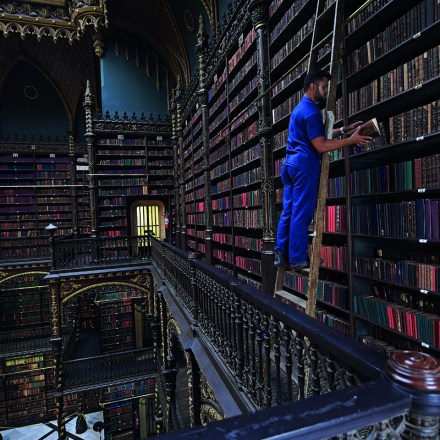
library

Spells and bindings

In 1791, Isaac D’Israeli, father of future prime minister Benjamin, published his most famous work, the Curiosities of Literature, a collection of freewheeling mini-essays on whatever literary topics happened to tickle their author’s fancy: ‘Titles of Books’, ‘Noblemen Turned Critics’, ‘On the Custom of Saluting after Sneezing’, ‘Cicero’s Puns’. One of its joys is its capaciousness — completely unsystematic, yet seeming somehow to touch a little on everything. The book is long, but the essays are rarely more than a couple of pages, sometimes less.

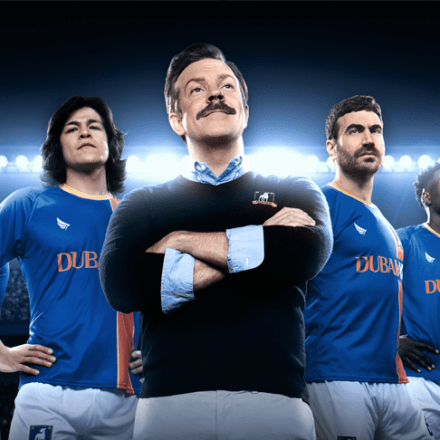
Picking Apple

Would you sign up for a screening streaming service that only had a dozen movies? A handful of series, and no classics? You might pause and ask if it’s worth it, compared to the range of options on other streaming providers. But if you’re like many of us, you might decide to pony up — after all, it’s only $5. Of course, I’m describing Apple TV+. It’s cheaper than Netflix or Hulu. But what you get, at least for now, is pretty limited. That’s not to say what they have isn’t good: they’ve pumped in a massive budget to lure creators like Oprah and Werner Herzog to this enterprise. Their movies have major stars. There just aren’t many of them. But they could have gone the other way.

apple
sam harris

Comfortably numb: Sam Harris on meditation

Sam Harris has been in several tangles in his busy career. This is to be expected from a leader of the New Atheist movement, a vocal critic of Islam (he called the term ‘Islamophobia’ a ‘pernicious meme’), a member of the Men’s Movement (shocker: some non-men found it anti-woman), and a gleeful saboteur of the notion of free will. But for years now, Harris has been using his background in neuroscience and meditation to help people untangle their minds through his podcast Making Sense. It’s hard to find a podcast about meditation that is not made by or for quasi-spiritual, anti-vaxxer yoga moms. Making Sense is for the more serious inquiring mind. Harris, dry and wry, discusses not only meditation but philosophy, science, politics and ethics.

Radetzky marches on

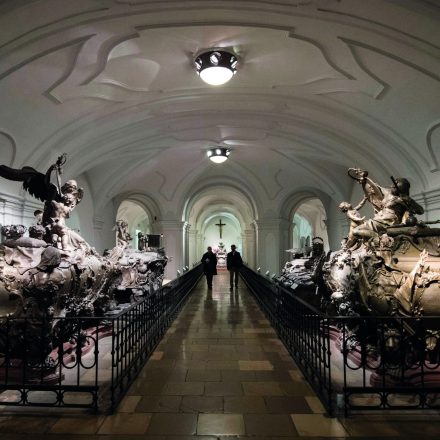
‘The Radetzky March’ was composed by Johann Strauss the Elder as a tribute to Field Marshal Joseph Radetzky von Radetz. An aristocrat of Czech origin, he was one of the fiercely conservative soldiers who gave the Habsburg Empire its bad name. First performed in 1848, the year of revolt in Europe, the ‘March’ was an immediate success. Austrian bands men were playing it at the battle of Königgraetz in 1866, fought against the Prussian Kaiser. For the first time, the Prussians had machine guns, and their rapid fire bloodied the white uniforms of the Austrians. Prussian victory condemned Austria to be the lesser of the two German-speaking nations, and on the losing side in the two world wars.

habsburg
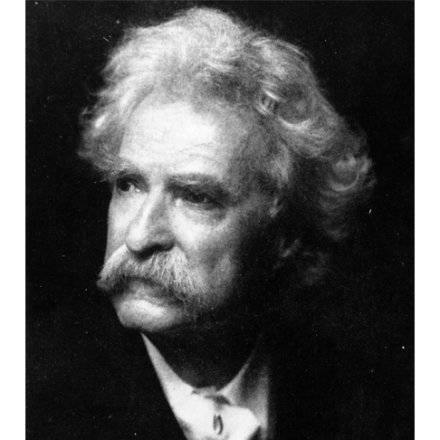
twain

Ever the Twain

Mark Twain’s work contains in itself pretty much all of 19th-century America. This is America as she was when still, geographically and socially, more a frontier society than not; before she became heavily industrialized, urbanized and suburbanized: increasingly convergent upon the European societies from which she was descended. Twain’s America is, in short, America when she remained a unique place; even as she was evolving with lightning speed from her earlier self into something approaching her present one. Mark Twain made an international reputation for himself with the publication in 1869 of The Innocents Abroad, a travelogue that recounts a trip of many months through Europe and the Middle East.

Sundance memories

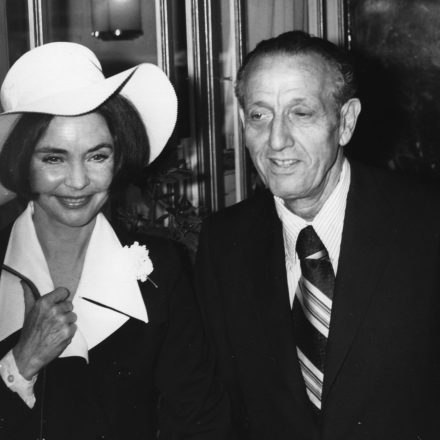
In 1969 Robert Redford purchased 5,000 acres of land in the mountains of Utah and built a ski resort. In 1981 he founded the nonprofit Sundance Institute to cultivate new voices in American independent film through annual directing and screenwriting labs (alumni include Quentin Tarantino and Paul Thomas Anderson) and to provide financial support for select projects. In 1985 Redford took over the US Film Festival, based in nearby Park City, and brought it under the Sundance umbrella. In 1989, the festival had its breakthrough with Sex, Lies, and Videotape. Sundance became a film-industry fixture for talent scouts, acquisitions executives and journalists, particularly those inclined to go skiing in their downtime.

sundance
grassi

Pictures at an exhibition

Deeply learned and with a style all his own, Marco Grassi is as at home with Duccio as with Norton Simon; Bronzino as with Bernard Berenson; a painting on his desk as with a ‘Last Supper’ in Florence’s Basilica of Santa Croce. In the Kitchen of Art presents Grassi’s most memorable essays over a span of nearly 20 years. Beginning with a previously unpublished memoir of his Florentine upbringing, and continuing with in-depth critical discussions of the greats of Italian art along with recollections of the grandest collectors of the 20th century, this book shows the art world in the round.

Dark knight of cool

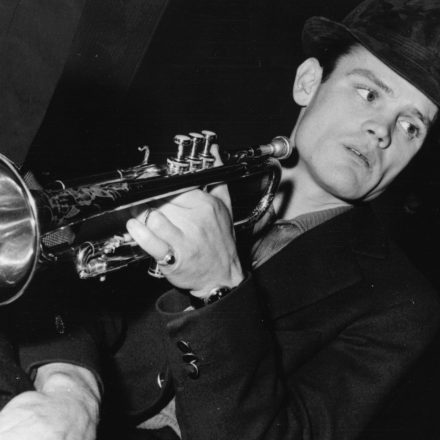
‘When the legend becomes fact, print the legend,’ Maxwell Scott announces in The Man Who Shot Liberty Valance. Something like this seems to have occurred with the jazz trumpeter Chet Baker. Other members of the West Coast jazz scene such as the great saxophonist Art Pepper were often in dire straits, but Baker has come to personify the romantic figure of the tragically doomed jazz artist. Once heralded as the ‘prince of cool’, Baker’s self-destruction was lucidly chronicled by Bruce Weber in the 1988 documentary Let’s Get Lost. Even his album covers, where he gazes broodingly at the viewer, underscore his vulnerability. His meditative, halting solos formed the antithesis of the frenetic bebop movement emanating from jazz haunts on the East Coast.

chet baker