Features

Features

The new age of the con man

In the precarious world economy of 2023, everyone is selling you something — and much of that something doesn’t amount to anything. Companies, of course, sell you products and services; much of their junk amounts to solutions for problems that didn’t previously exist, though at least there’s still some sort of deliverable. Meanwhile, in worlds as essential to human flourishing as personal finance and bodily fitness, an ever-expanding class of so-called “influencers” are selling a whole lot of nothing dressed up as something. Their underlying success, ostensibly tied to their ability to help people become richer or fitter, depends in actuality on their ability to sell advice or investment opportunities that are likely only to enrich themselves. How did this happen?
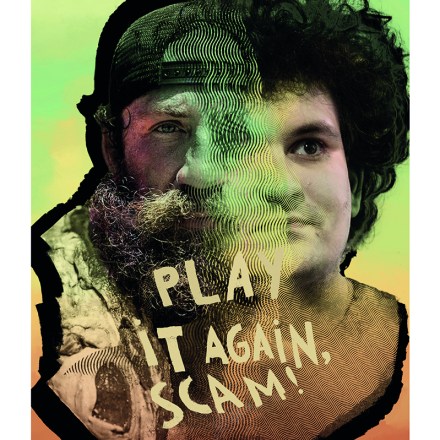
con
weight

The new war on weight

We’re getting fatter. We even have a whole day dedicated to it now, World Obesity Day. We are reminded about our expanding waistbands and inflated cheeks every time we walk down the street, or look at an XXL model stuck onto a magazine cover to make the rest of us chubsters feel empowered. I don’t feel empowered at all. I feel alarmed — and confused. In a time when such advanced medicine is at our fingertips, the obesity problem is worse than ever. In America, one person dies from cardiovascular disease every thirty-four seconds, making it the biggest killer in the country. Globally, the World Health Organization estimates that obesity is responsible for 2.8 million deaths each year. But what if there were a simple way to stop us from eating ourselves to death?

Can anyone save Philadelphia?

Americans may never before have felt their country was farther from its finest hour. And yet, on the Fourth of July last year, residents gathered in the heart of its birthplace for an ever-rarer expression of patriotic sentiment. It was to be a brief display. Blood spilled before the clock struck ten. Though no one saw a gunman or heard gunfire, two police officers were struck by stray bullets on the famous steps of the Philadelphia Art Museum. Word spread quickly, and suddenly no one could be sure whether they were hearing fireworks or gunshots. On the Benjamin Franklin Parkway, patriotism turned to terror, then shrieks gave way to silence.

philadelphia
seed

Seed catalogs and their rejuvenating power

Winter’s bleakest days have set in. “The holidays” are a distant memory. Rose-colored resolutions to wake up earlier, eat healthier and exercise have gone the way of Dry January — all a wash, as you quickly discovered the only antidote for your Seasonal Affective Disorder was something equally cold and dark. You glimpse the N/A beers in the back of the fridge the same way you spy the sun — in passing, and with a feeling of faded hopefulness. As you lug bags of empty bottles to your sidewalk, you glance up at the brightish blob lending a hazy glow to the grayscale landscape. You deposit your clanging bag of glass and cans beside your Christmas tree’s corpse and shuffle back inside to refill the fridge and cover up reminders of your dalliance with the sober-curious.

America has too many state secrets

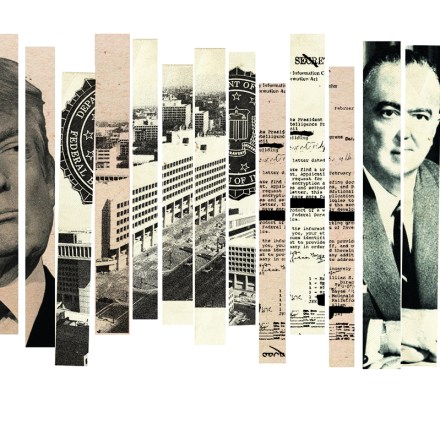
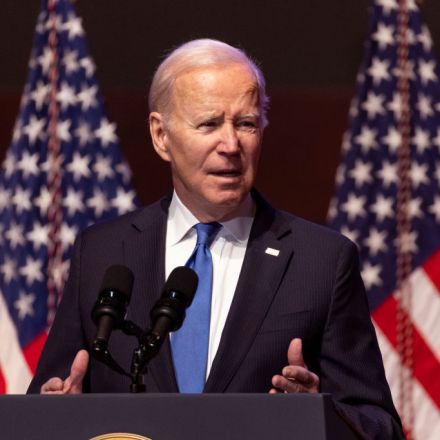
Last September, when 60 Minutes asked Joe Biden what he thought of the August raid at Mar-a-Lago where the FBI found folders of classified documents mixed in with Donald Trump’s personal effects and papers, the president said he was shocked. Biden wanted to know how “anyone could be that irresponsible.” He worried about what sources and methods might have been compromised by his predecessor’s carelessness. Were there agent lists among those purloined records? That bit of political point-scoring has become a petard with which the president has hoist himself. Two months later, Biden’s lawyers found classified documents in his Wilmington home and garage and in his personal office at the Penn Biden Center in Washington.

secrets
white privilege

The trouble with ‘white privilege’

This article is an excerpt from Kenan Malik's new book, Not So Black and White: A History of Race from White Supremacy to Identity Politics. In 1935, while writing his masterpiece Black Reconstruction in America, W.E.B. Du Bois pondered the question of why, in the wake of the Civil War, there had not developed working-class solidarity across racial lines. “The South, after the war,” he observed, “presented the greatest opportunity for a real national labor movement which the nation ever saw or is likely to see for many decades.” Yet, he lamented, “the labor movement, with but few exceptions, never realized the situation.

The unraveling of Joe Biden: a retrospective

Looking back on the classified docudrama that brought down the Biden administration, it is still not easy to identify the exact moment when the official narrative began to unravel and the political establishment understood that Biden had to go. With the wisdom of hindsight, we can see that the New York Post breaking the story about Hunter Biden’s laptop was an important alarm bell. That happened only weeks before the 2020 election, so it was a serious breach. At first, it seemed as if the threat had been contained. Elite squadrons of the regime’s damage-control department swung into action. They instantly de-platformed the Post, the nation’s oldest newspaper, shutting down its social media accounts for weeks.

biden
germany

Germany’s folly: Berlin has miscalculated on Russia and China

The notion that closer trade connections with the West will necessarily set less enlightened nations on a course toward prosperity and liberty is nonsense, but convenient nonsense. Germans have a phrase for it — Wandel durch Handel, change through trade — often given as a justification for their business dealings with Russia and China. Unfortunately, the change they triggered was in Germany. In one case it has been for the worse; in the other it appears to be headed that way. To start with Russia, it’s true that Germany’s ultimately disastrous dependency on natural gas from the east has its origins in the Ostpolitik years: by 1989 the Soviets were supplying West Germany with around a third of its gas.

Drinking with soldiers in Ukraine

Getting into Ukraine can be tricky, especially if you don’t speak Ukrainian or have a national television network paying your way. I recommend the latter: it seems slightly easier and they have hair and wardrobe budgets. I cross into Chop on a short train carrying a mix of old couples and young kids. When I get off I’m directed to a booth manned by soldiers, who ask my business. Journalist, I say. The guard asks for press credentials. The best I can do is a copy of the magazine, but reading The Spectator is apparently something he’s unwilling to do and I’m waved through immediately. Russian spies, take note. I have two hours to kill before my train to Lviv, so I do what anyone would do — wander the blacked-out streets in search of a drink.

ukraine
name

What’s in a name?

Someone, I think it was Martin Amis, once said that you can judge a novelist by how much effort he puts into his characters’ names. If that’s true, a political independent who grew up in the 1990s with the name “Matt Purple” may be a sign of some cosmic writerly laziness. Yes, that is my real name. The one you see in the byline there. I’m always amazed at how many people assume it’s a nom de plume, as though if I could have any last name I wanted I’d choose an Easter color. I actually did write an essay under a pseudonym once: “Matt Thomas,” Thomas being my middle name. Given that it was instantly posted to the top of a prominent website and discussed on a national radio show, I sometimes wonder whether I’m the victim of nomenclature discrimination.

How Pat Buchanan redefined the twenty-first century

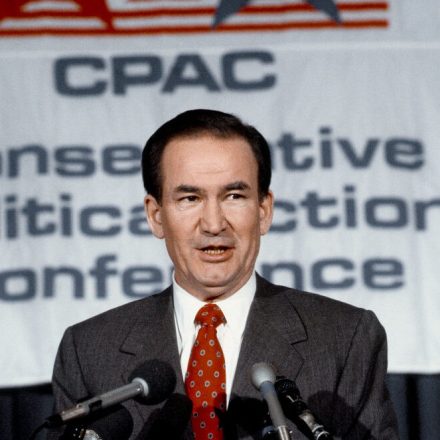
Pat Buchanan recently ended his syndicated column, essentially completing his retirement from public life. Yet it’s hard to think of any writer in his or her prime today whose ideas enjoy the currency that Buchanan’s now do. From trade and foreign policy to immigration and the “culture war” — a term that Buchanan introduced into popular politics — views that once set Buchanan apart from his fellow conservatives are now redefining the right. Buchanan was not the only conservative skeptic of free trade or foreign interventionism in the 1990s, but he was the only one that most newspaper-reading or cable news-watching voters knew about. At the zenith of American power and economic globalization, Buchanan defined the opposition to the spirit of the age.

pat buchanan
race-neutral

Inside the legal fight for a race-neutral America

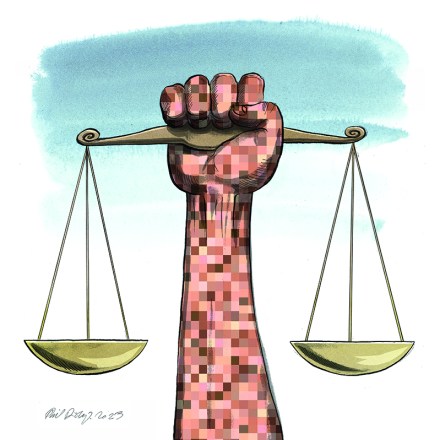
Four billion dollars in debt relief for black farmers only. Special stipends for Black, “Latinx” and Native American entrepreneurs. Minority- and women-owned restaurants prioritized for pandemic recovery funds. School admissions policies designed to reduce the number of whites and Asians. Racial preference programs have become ubiquitous in American society. When was the last time you filled out an official form without being asked to disclose your race? In the name of ending racism, we have been divided and labeled according to vague and outdated racial classifications that are then used to benefit certain groups at the expense of others. Is there hope for a more race-neutral America?

Anita Dunn and Bob Bauer: meet Biden’s clean-up couple

Joe Biden’s personal attorney Bob Bauer once berated the commander-in-chief at his Wilmington home. Biden couldn’t get a word in edgewise without the legal giant interrupting. Aides recall the no-nonsense law professor muttering, “Not very smart, Joe,” and “I don’t know why you’d say that,” and “That’s dumb.” Bauer was playing Trump in mock debates at the time. Little did he know that he was standing in the middle of a crime scene, one he and his team of attorneys would be revisiting to quell a scandal of the president’s own making. The discovery of classified material at Biden’s various residences and offices makes for an open-and-shut case, according to former federal prosecutor Joe Moreno.

bob bauer anita dunn
business school

Business schools are dating apps for the super-rich

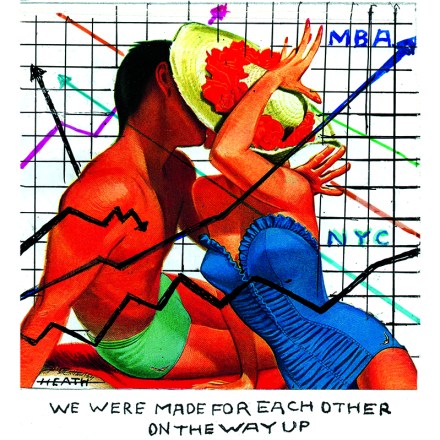
“D’you know what the acronym MBA stands for?” The twenty-seven-year-old who asked me this had a deep tan and fluorescent teeth. He may have winked, but the eye-twitch was more likely a nervous tic developed from looking at himself in the mirror so much. I responded with a look of indifference mixed with fear. “Married” — he paused for dramatic effect and demonstratively looked at my wedding ring — “but available.” I felt nauseated. I was in my first semester of business school in New York City and had so far learned how to make an educated estimate of a company’s optimal capital structure, how to make a balance sheet look balanced and how to use the word “conceptually” to sound smart in strategy class.

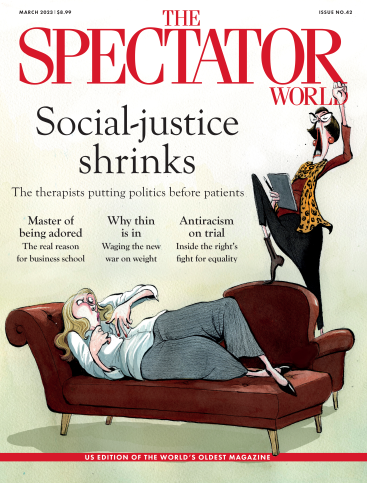
Social-justice shrinks: how identity politics infected therapy

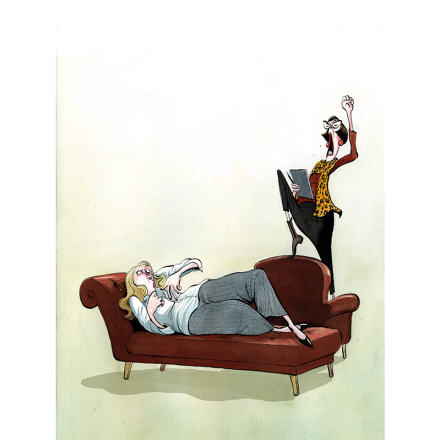
In winter 2019, Leslie Elliott enrolled as a graduate student in Antioch University’s Mental Health Counseling program. At first, she found it to be a stimulating master’s program — informative and clinically relevant. Then she took a required course in “multicultural counseling.” “We were taught that race should be the dominant lens through which clients were to be understood and therapy conducted,” says Elliott, a mother of four who’d majored in psychology. Elliott’s professors taught her, for example, that if clients were white, she was supposed to help them see how they unwittingly perpetuate white supremacy. “We were encouraged to regard white clients as ‘reservoirs of racism and oppression.

therapy sessions therapist
school education american pandemic

Why aren’t we more focused on cleaning up the pandemic mess?

Unless you work for the White House, where the emergency declaration doesn’t expire until May, the pandemic has long been over. March marks three years since Covid upended Americans’ lives and, for all but a tiny minority, it has ceased being a day-to-day consideration. After long and bruising fights over everything from lockdowns to vaccine mandates, perhaps the only thing Americans can agree on is that the country’s response to the pandemic was a failure. From that starting consensus, arguments about what went wrong soon diverge sharply.