Books & Arts

Books and Arts

This month in culture: March 2025

With Love, Meghan Netflix, March 4 If there were an award for the year’s least eagerly awaited show, Netflix’s With Love, Meghan would have to be in the running, if not quite the clear front-runner at this early stage of the year. Even the synopsis — “Meghan Markle invites friends and famous guests to a beautiful California estate, where she shares cooking, gardening and hosting tips” — summons up gasps of horror. The footage that has arrived via trailer indicates that this will be as vacuous as an Instagram reel brought to full, unlovely life, with its uniquely dreadful hostess conveying nothing so much as an onscreen vacuum where any kind of charm, grace or likability should be.
culture
Barcelona

Barcelona rising

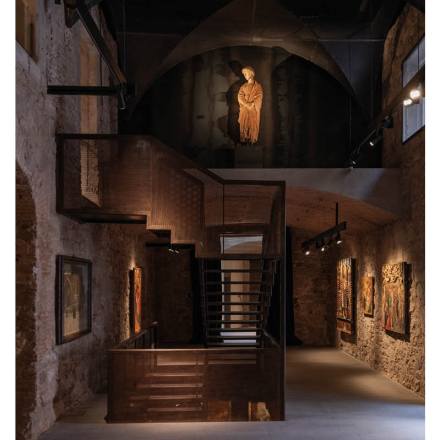
Barcelona is one of the world’s great cities; happily, it seems to be waking up from a lengthy nightmare of its own conjuring. During the anti-everything leadership of its previous mayor, failed actress Ada Colau, empty storefronts, open-air drug markets and sidewalks reeking of urine proved unconducive to outside investment. A deal to establish a local branch of the Hermitage Museum fell through, thanks to political virtue-signaling by local officialdom. Anti-tourism campaigners stepped up their activities over a period of years, even as cities such as Madrid and Málaga began to boom with historic renovations, new luxury hotels and cultural projects designed to attract visitors. Fortunately, things seem to be turning a corner.

The genuine faker John Myatt

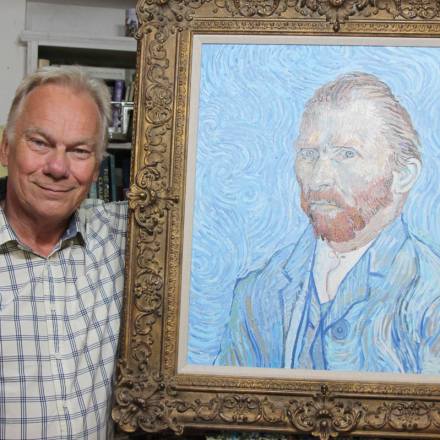
John Myatt held his breath as the bidding began in the Christie’s auction room. His drawings were selling, one by one. He had dreamed of having his work on the block since the beginning of his career. He felt a tingle of adrenaline as the paddles went up... and victory as he strolled through the city streets with a wad of money in his back pocket afterward. But the feeling didn’t last long. Eventually, Myatt started to feel empty and disappointed. The psychic void grew as the prices that his agent, John Drewe, sought for his work went up and up.

Myatt
Dubai

The underground music scene reshaping Dubai’s cultural landscape

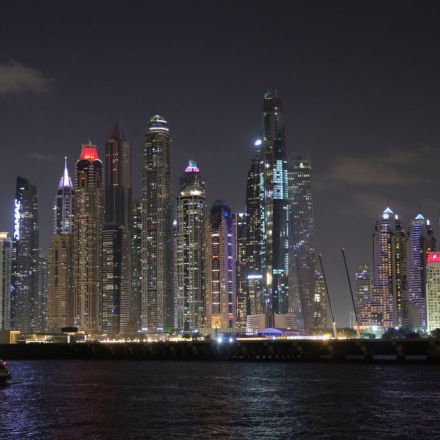
Nestled between the sci-fi skyscrapers of downtown and luxury marina beaches, Dubai has a side few tourists or outsiders get to see. Forget the glamour and explore the industrial warehouses of al Quoz and the unassuming streets of al Barsha, coated in a layer of desert dust. You would be justified in assuming the al Barsha Holiday Inn, awkwardly situated adjacent to the eighteen-lane Sheikh Zayed Road, must be a low point. But if you find yourself in its gaudy lobby on the odd Saturday night, you might be surprised to see punk ravers and goth girls draped in chains suddenly streaming toward the elevators at the back. Follow them down to the lower levels and you’ll find the Q Underground, one of the venues at the vanguard of Dubai’s boundary-pushing alternative music scene.

Like Bob Dylan in the movies

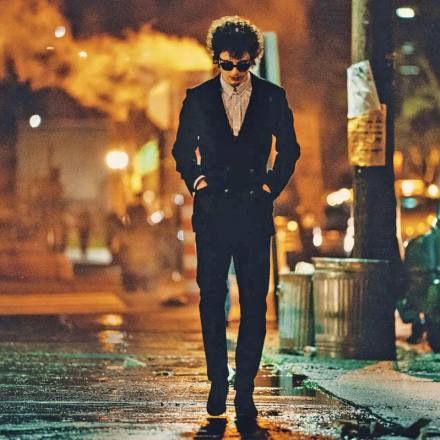
The Bob Dylan biopic A Complete Unknown has opened worldwide to largely positive reviews. Negative ones have focused on the silly quibble that fiction is not fact: the story told in the movie of Dylan’s rise to fame, from his January 1961 arrival in New York City as an unknown, folk-obsessed teenager from the Minnesota Iron Range, to his electrified electrifying performance at the Newport Folk Festival in July 1965, does not strictly hew to actual biography. Recently the New York Times made the unfathomable decision to take A.J. Weberman, best known for going through the Dylans’ garbage when they lived in Greenwich Village in the early 1970s (and getting thumped by Dylan for stalking), to see A Complete Unknown.

Dylan
Wong

Veteran journalist Edward Wong on his memoir of food and feud

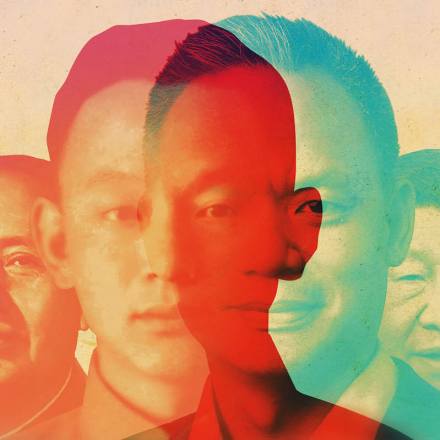
From 2008 to 2016, Edward Wong reported on China for the New York Times, heading up its Beijing bureau. Last year, the veteran journalist, now the Times’s diplomatic correspondent, published his first book: a blend of family memoir, narrative history, political observation and personal reckoning. At the Edge of Empire tracks Wong’s father, Yook Kearn Wong, as he moves from fervent support of the Chinese Communist Party and its ideological goals to disillusionment and disappointment. It is also a book about what makes an empire. Born in Hong Kong before moving to Guangdong Province as a child, after joining the military as a young man Yook Kearn was posted to remote Xinjiang province, in China’s northwest corner.

David Lodge, the master of Anglo-American campus humor

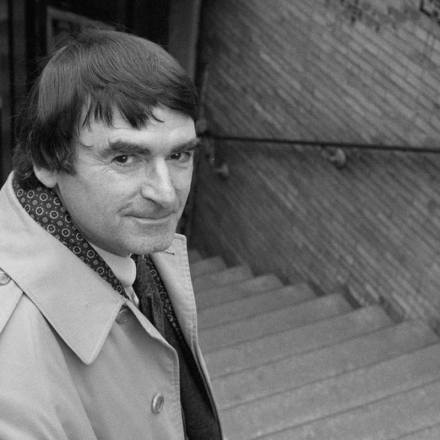
"Literature is mostly about having sex and not about having children.” So said the British novelist, occasional screenwriter and literary critic David Lodge, who died at the beginning of 2025 at the age of eighty-nine. Lodge, who had suffered from encroaching deafness for several decades, had not, in truth, been a major literary figure for a considerable period before his death. This retreat into obscurity had not been helped by a trio of memoirs, beginning with 2015’s Quite a Good Time To Be Born, which perplexed critics — including this one — with their dour, downbeat and decidedly un-humorous tone. Few would have known, from reading them, that their author had once been regarded as one of the late twentieth century’s most accomplished comic novelists.

Lodge
Pynchon

Inside Thomas Pynchon’s most underrated novel

Atop the Almaden Tower in downtown San Jose — the world headquarters of Adobe Systems Inc. — sits a singular art installation. Four amber wheels rotate every few seconds in a seemingly innocuous and frankly nonsensical digital display. The installation, known as the “San Jose Semaphore,” is the brainchild of the data-driven media artist Ben Rubin and first appeared — or began transmitting — in August 2006 to the mass bamboozlement of passersby. What was going on, they cried? Was it that most millennial of things — a sign? For those less likely to be beguiled by some concealed piece of chicanery, the circles were little more than frivolous decoration, another example of Adobe splashing the cash on some geometric garnishing.

Romantasy, the hot new literary genre du jour

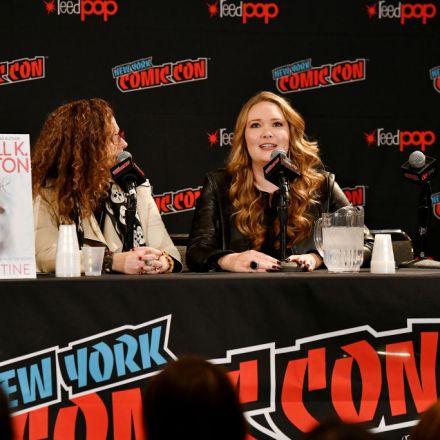
A friend recently found himself trapped on a plane next to a young woman reading a Kindle bedecked with stickers of dragons and pointy-eared, hunky men. The font size was so large it was impossible not to see the sexually explicit text. He observed, “I was reading The Lord of the Rings; her book was more along the lines of I’m the Lord of Your Ring. I’ve never felt so uncomfortable.” Welcome to the cultural phenomenon of romantasy — a newly mainstreamed trend fueled by TikTok, or rather BookTok. It’s a shame there isn’t room in the portmanteau name for “sex,” which is a crucial ingredient in the genre, made clearer in the alternative informal term “fairy porn.

romantasy
Gates

Bill Gates’s memoir offers an oddly revealing look into the Microsoft founder’s psyche

In 2024, a Swiss company called FinalSpark claimed to have built the world’s first computer processor fired by human brain cells. To do this, the company evidently took small samples of living brain tissue, and — so the press release says — “connected them to specialized electrodes to perform computer processing and digital analog conversions to transform neural activity into digital information.” Frankenstein undertones aside, the whole FinalSpark initiative raises the issue of how far a computer can be humanized, made not only to respond with factual accuracy but with something approaching emotional intelligence.

The Einstein family atrocity

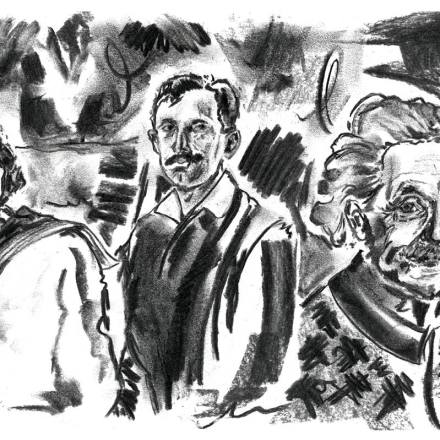
What’s in a name? Well, if it’s Einstein, quite a lot. For Roberto Einstein, it was to prove a devastating connection, even though he had lived in Italy all his adult life, was married to an Italian Christian woman, Nina, with whom he had two children who regularly attended church, and was father to two motherless nieces who were brought up Catholic. In 1944, the increasingly paranoid German occupation decided that Roberto’s whole family was Jewish and inextricably linked to the world-famous Nobel prizewinning scientist Albert Einstein, now in America and high on the Nazi death list. There were connections, of course. Roberto and Albert were first cousins — their fathers were brothers — and were both committed atheists.

Einstein