Society

Is McDonald’s the Apple of the fast food world?

The Golden Arches are shining with even greater lustre than usual in Chicago these days. McDonald’s, the world’s biggest food chain, has just opened its flagship restaurant in the town it calls home – and what a marvel it is. More like an Apple Store than a fast food joint, the new outlet is described by designers Ross Barney Architects as an ‘oasis,’ a sleek glass cube the size of a city block with shared tables, ‘tapestries’ of living plants on the walls, an apple orchard and table service as well as automated ordering. The new look will form the basis of redesigns for the majority of the firm’s 14,000 restaurants across the country, at a cost of $6 billion, meaning an oasis could be coming to a McDonald’s near you very soon.

mcdonald's chicago

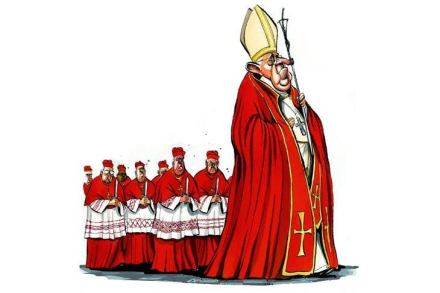
A thousand victims. Hundreds of priests. How many cardinals knew?

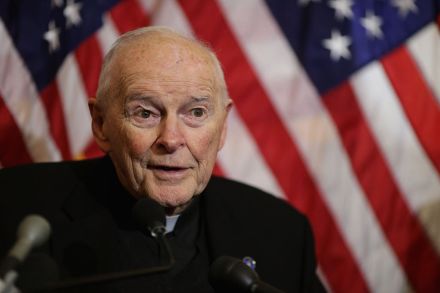
A Pennsylvania grand jury report released last night has revealed that the Catholic Church in six dioceses systematically and sneakily covered up sexual abuse by priests on a horrifying scale. The American Church has now been plunged into the worst crisis in its history. The 884-report comes less than a month after the revelation that ex-Cardinal Theodore McCarrick, former Archbishop of Washington DC, was a compulsive predator. His serial molestation of seminarians was an open secret, and cannot possibly have come as a surprise to some of his friends in the American hierarchy.

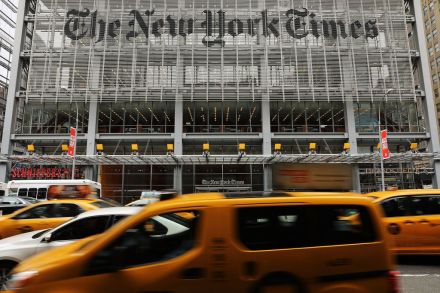
Could The New York Times’s abortion coverage be any more one-eyed?

A writer friend recently told my son about an exercise he was given in a high school composition class. The idea was to show how word choice affects the mood and emotional weather of your prose. He recalled an example from TIME magazine. (For younger readers: TIME used to be — long, long ago — an important news outlet; that TIME is not to be confused with the virtue-signaling enterprise of the same name that has taken its place). Consider the different rhetorical implications of these two sentences: Truman slunk from the back room to huddle with his cronies. vs. Eisenhower strode from the chamber to consult with his advisers. Would you rather “slink” or “stride”? Do you frequent “back rooms” or occupy “chambers”?

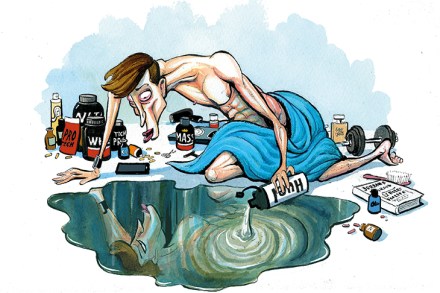
Why are modern men obsessed with self-improvement?

My friend recently met a man on a dating app and went out for dinner with him. When he arrived, the man announced that he didn’t drink. Nothing unusual about that: plenty of young men are abstemious these days. His next declaration was more surprising: he didn’t eat. Instead, he lived off something called ‘Huel’. Huel — an abbreviation of ‘human fuel’ — is a type of powdered food made of oats, peas, flax and rice. I’ve tried it and it is disgusting — gruel, essentially, in smart packaging. But it’s hugely popular: Huel is now one of the fastest growing companies in Britain. Huel is low in fat and high on principle. ‘We live in difficult times,’ says its evangelical marketing bumf.

Amazon and Facebook: the twin evils of our age

They used to say that the primary function of a boat was to be beautiful. I suppose that is why boats were feminine, as in ‘she’s a real beauty, that one’. Puritan is certainly a beauty and I’ve had a great time on board, especially when anchoring near some modern horror or other, bloated and overstuffed with ‘toys’, its occupants reflecting the boat: fat, ugly and invasive. Why is it that boats reflect their owners, as dogs do, and as women used to, although one can get oneself killed nowadays for describing a female as ‘owned’? Show me a tart and she’s sure to be with a James Stunt type.

How blockchain can beat state censorship

The concept of blockchain is popularly associated with cryptocurrencies, Bitcoin in particular. But there is another function of the technology which could have huge repercussions for states which attempt to censure the internet – as well as improving inline security and even tackling fake news. It is called ‘Proof of Existence’ (PoE) – the least talked about but perhaps most powerful application of this nascent technology. Earlier this year, a blog post by a Chinese student documenting the intimidation she’d suffered from school officials trying to block her investigation into an incident of sexual assault went viral.

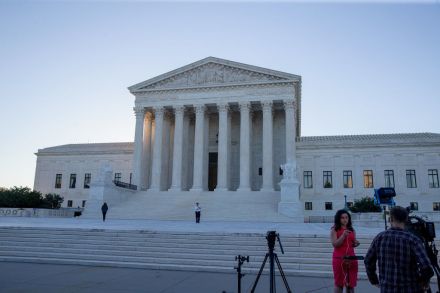
If Trump picks Amy Coney Barrett tonight, prepare for all hell to break loose

President Trump has confirmed that tonight, at 9 pm EST, he will announce his choice of candidate for the Supreme Court following the departure of Justice Anthony Kennedy. And what, do you reckon, are the chances of his critics here being mollified if it turns out his candidate is in fact a woman, and a working parent? It would bring the Supreme Court almost into gender balance, with four women and five men. I mean, when President Obama added a further woman to make it a measly four women out of 113 Supreme Court judges who have served to date, that was seen as proof of his essential soundness. But if President Trump does so, well, that’s another matter.

Conservatives are wrong about free speech

‘There. I said it.’ That phrase, and the attitude it strikes, says something pretty specific. It doesn’t just say: here’s what I think. It says: ‘Here’s what I think, and, you know what? It’s what nobody except me dares to say in public.’ It says: I’m brave. It says: I speak truth to power. It says: here I am on the battlements. It also says: I’m a grade-A chocolate-coated plonker. And though most people are too fly these days, too aware of the lurking threat of Craig Brown, to use that form of words, there’s a good deal of there-I-said-it-ism about these days. In particular, when it comes to the issue of ‘free speech’.

Technology has invaded our once peaceful homes

How we love our homes: we make them cosy and secure, protected from the outside world, defended by locks, bolts and burglar alarms. But we haven’t always had our own private dwellings, and under the invasive influence of the internet, home, as we’ve come to understand it, may well soon be a thing of the past. In early medieval times, a home was often just a basic tenement, a shelter shared with cattle, owned by an employer. As prosperity spread, so a sense of the private developed. Common areas subdivided into individual ones; pieces of furniture (chests, bookcases, beds, wardrobes) marked areas for particular activities and specific people. At the same time, a sense of home as a place of refuge started to take hold.

The dream of driverless cars is dying

I was worried that going to the autonomous vehicle exhibition in Stuttgart would be tantamount to an atheist walking into St Peter’s while the Pope was conducting a mass. There is something religious about the fervour with which adherents to the driverless credo practise their faith and promise us a new kingdom. Their proselytising has indeed convinced many. Politicians are making outlandish statements, such as Jesse Norman’s two weeks ago, that ‘Our entire use of roads is to be revolutionised by autonomous vehicles’, and pouring large sums — a promised £180 million so far — into bizarre research projects such as the development of strange robot cars slower than a Reliant Robin and allowed only on pavements in Milton Keynes.

The Bible’s #MeToo problem

I write this on my last day in the Bagel, and it sure is a scorcher, heat and humidity so high that the professional beggars on Fifth Avenue have moved closer to the lakes in Central Park. Heat usually calms the passions, but nowadays groupthink pundits are so busy presenting fake news as journalism you’d think this was election week in November. Here’s one jerk in the New York Times: ‘The court’s decision was narrow…’ The decision in question is the Supreme Court ruling that a baker could refuse a gay couple’s request for a cake on religious grounds. The writer who described the result as narrow, one Adam Liptak (Lipgloss would be more appropriate), did not mention that the vote was seven to two. Talk about fake news.

I don’t want to keep pushing the Francis-Trump analogy. But the Pope makes it tough to resist the temptation

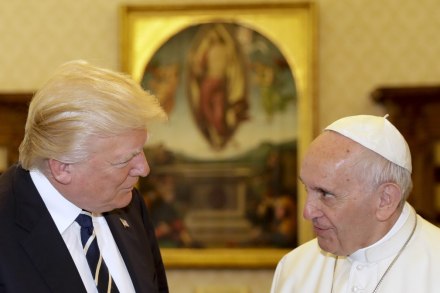
A solution ‘must be found’ in order to halt the Trump administration’s policy of separating migrant children from their families, according to an American cardinal. That’s hardly news, you may say: the US conference of bishops is united in outrage at this cruel practice. But the cardinal I’m quoting is Raymond Leo Burke, former Archbishop of St Louis, a theological and political conservative who is the closest thing the president has to an ally in the American hierarchy. Cardinal Burke therefore finds himself in an unfamiliar place: on the same side of the fence as the man who sacked him from a top-ranking post in the Vatican, Pope Francis.

The club sandwich: three slices of white supremacy?

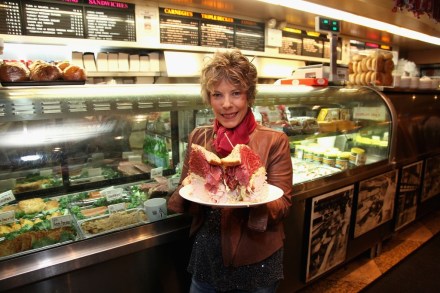
I don’t often read the Boston Globe. There isn’t much of it to read. The paper has been wasting away for years. Apart from a couple of local reporters who burrow into the mound of corruption that is Boston’s all-blue city politics, the Globe is now so debilitated that it sublets most of its news and all of its opinions from the New York Times. There’s nothing sadder than a paper that has the courage of other people’s convictions This week, however, the Globe reversed its sad decline, and placed itself at the heart of the national debate. Not on border policy or North Korea, but on the really important stuff. The story began a couple of weeks ago, with a remorselessly probing piece of investigative journalism by Devra Furst.

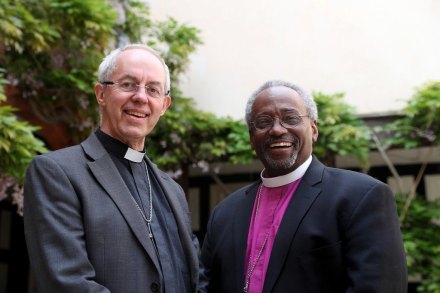
The Global Anglican crack up

The divide in the world’s largest Protestant denomination has widened beyond issues related to gay marriage. Controversy in the Episcopal Church, the U.S. branch of the global Anglican Communion, over the revision of traditional marriage and the ordination of openly gay and partnered clergy and bishops is old news. The new split centres on the role the archbishop of Canterbury plays in the Anglican Communion, which consists of churches, formally known as provinces, drawn largely upon national boundaries. That was evident at the Global Anglican Future Conference, a confab of some 2,000 theological conservatives from 50 countries, held in Jerusalem.

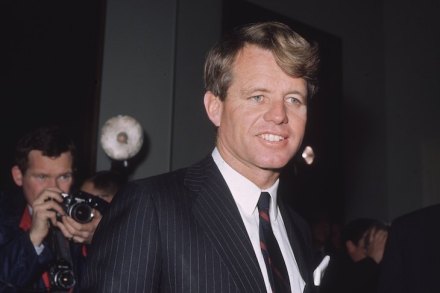
50 years after Bobby Kennedy’s murder, the ‘deep state’ still reigns supreme

New York This week 50 years ago saw the assassination of Robert Kennedy, a man I met a couple of times in the presence of Aristotle Onassis, whom some Brit clown-writer once dubbed Bobby’s murderer. (Bad books need to sell, and what better hook than a conspiracy theory implicating a totally innocent man?) I once witnessed Bobby, at a Susan Stein party, asking Onassis for funds — the 1968 election was coming up — and Ari showing Bobby his two empty trouser pockets. Bobby’s assassination did alter American politics. Violence, black anger and despair spilled out on to the streets of American cities.

Social conservatism is dead

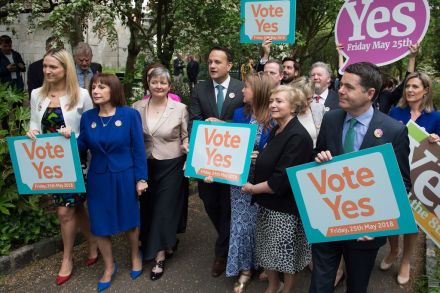
Just before Ireland voted overwhelmingly to end the country’s constitutional ban on abortion, Catholics in the fishing village of Clogherhead could be seen storming out of Sunday mass halfway through the service. Why? Their parish priest had come on too strong. He had not only ordered them how to vote but also supplied grisly details of an abortion procedure. Presumably some of them voted to repeal the eighth amendment. The ‘Yes’ campaign couldn’t have won its two-thirds majority without the support of practising Catholics. Very few of these, we can assume, were militantly pro-choice. Instead, they were reassured by promises that any future law would be limited in its impact — and determined to ignore a Catholic hierarchy contaminated by child abuse.

Ireland’s abortion referendum has been horrifically one-sided

It will, as one pro-life campaigner told me, take an act of God to swing the Irish referendum for the No side tomorrow. I’m all for referendums but this one has been so wildly unbalanced as to make the Brexit campaign look almost effete in its regard for impartiality and fair play. The polls suggest a win for the Yes side, on repealing the eighth amendment to the Irish constitution which protects the right to life of the unborn – something around the 44-32 per cent margin according to the last Irish Times poll. It’s a big deal, abortion. But there is not one political party that represents the No side other than a tiny outfit called Renua which doesn’t have a single MP. There is no newspaper that represents this quite hefty minority.

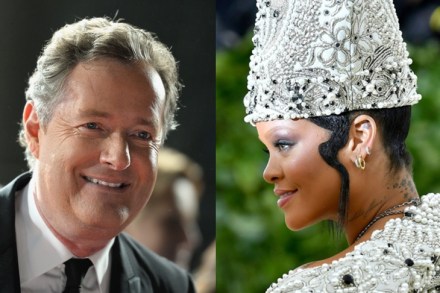
Is Piers Morgan the only Catholic offended by the Met Gala?

It will come as no surprise that something in the news has Piers Morgan deeply troubled. For the past two days, Morgan has been incandescent over the Met Gala and its dress code. In a column for MailOnline he claims that, as a Catholic, he has become a victim of cultural appropriation due to fancy dress outfits worn to a party by celebrities.The Gala, a fixture of the New York social season at the Metropolitan Museum of Art, is well known for the theme it sets, and this year it was ‘Heavenly Bodies’ - inspired by the Roman Catholic Church. The Gala was held to launch an exhibition of the same name. Dozens of items of religious clothing have been allowed out of the Vatican Archives to be seen by the public for the first time.Guests at the party took the dress code to heart.

Circe has been recast as the girl next door – it’s a sign of the times

When poor old battered Odysseus landed on Circe’s island having lost all his ships (except his flagship) when he tangled with the Laestrygonians (their king liked to eat Greek flesh and swallowed up most of his crews, yummy) Circe — witch, sorceress and goddess in her own right — turned the few survivors into swine, except for Odysseus, whom she wanted for some old-fashioned hanky-panky. If she were around today she would most probably be the first American female president. Odysseus serviced her rather well and stayed in her palace for a year. He also used the ‘moly’, the antidote Hermes had given him in the form of a magic herb that turned pigs back into men.

For conservative Catholics, Pope Francis’s hell remarks commit a double heresy

Hell is a hell of a problem. Eternal punishment of the damned is a basic dogma of the Catholic Church and most other forms of Christianity. But the Bible has surprisingly little to say about it, and philosophers have struggled for millennia to give a rigorous account of what hell would really mean. Without reason or revelation giving a clear picture, hell has been left to the popular imagination to fill in with scenes of devils either scary or absurd poking people with their pitchforks.