Society

A ban on animal testing is long overdue

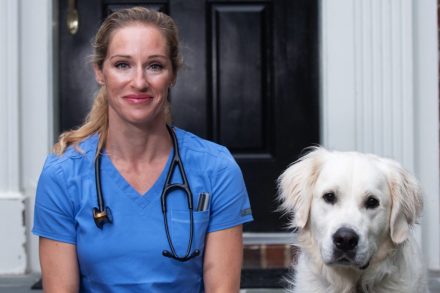
I was 12 years of age and mooching along Putney high street when someone thrust into my hand a leaflet that changed my life. It bore a photograph of a cat with its head covered in electrodes, and the slogan: Curiosity Will Kill This Cat. I had a beloved cat of my own called Chippy. The sight of the leaflet’s tortured feline froze me to the spot. Last year alone there were 2.64 million animal tests in Britain This was the mid-1980s, when animal testing was the main animal rights issue. You didn’t hear much about veganism, instead it was a different ‘v’ word – vivisection – that was the

Andrew's downfall is nearly complete

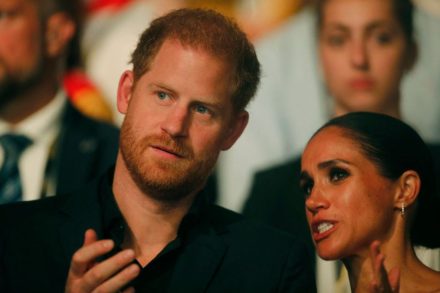
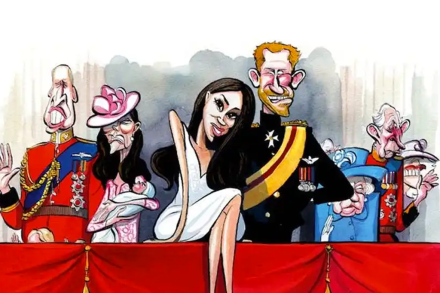
Amidst all the ceremony and gravity of the Remembrance Day service on Sunday, one salient fact could not be ignored. The King has long talked of his desire for a ‘stripped-down monarchy’, and now he has his wish. The only male figures from the Firm who were out on show alongside him were the Prince of Wales and Prince Edward, who together had the effect of making the royals look a rather paltry selection compared to the grander gatherings of the past. We all know about Harry, but although some would like to see him, too, stripped of his royal title, Montecito’s second most famous resident continues to be able

More asylum hotel protests are inevitable

The Labour party will, one suspects, curse the name of Epping for some time. The uncomfortable fact is that it stood to lose big-time whatever the result of today’s hearing in the High Court. Following the refusal by Mr Justice Mould to order the owner of the Bell Hotel to cease using it as a migrant hostel, social media is awash with condemnation. As a result of its having made common cause with the hotel owner’s claim to carry on using the premises, Labour is being now being pilloried as soft on illegal immigration and unsound on the rule of law. At the same time, by making clear its opposition

The people of Epping have had enough

The Bell Hotel in Epping has hardly been out of the news since the summer. In July, Bell resident Hadush Kebatu’s sexual assault of a 14-year-old girl sparked weeks of protests. And if Epping was forgotten for a short time after he was jailed, it swept back to the headlines when Kebatu was released in error from HMP Chelmsford, and spent days wandering about London. Over these past few months Epping District Council has been fighting a legal battle to force the Home Office to house these illegal migrants elsewhere. Its a goal shared by the majority of Epping’s councillors and voters. Everyone knows we can’t go on admitting over

How lawfare is killing the SAS

Here’s a question for you to contemplate, this Remembrance Day: If you found yourself in the chaos of a terrorist attack, or if your child was kidnapped, who would you most like to come to the rescue? My particular hope is that the Prime Minister and his Attorney General, Lord Hermer, consider this question, because the honest answer has to be that they’d want men like the one sitting in front of me now, staring out at the grey north sea: George Simm, former Regimental Sergeant Major (RSM) of the 22 Special Air Service (SAS). George Simm’s love affair isn’t actually over. He’s still fighting for the SAS and thank God he

Why did it take the Olympics so long to see common sense?

The International Olympic Committee looks set to ban males who identify as trans from all female sports after a review of the scientific evidence. World Athletics announced a similar ban way back in March 2023, but athletics is only one of the constellation of sports that make up the summer and winter Olympics. To say we should not presume male advantage in a sport unless we have specific data for that sport is like arguing that just because most of the apples in a tree have fallen to the ground, we shouldn’t presume the remaining apples are also subject to gravity The news follows a presentation last week by Dr

David Szalay is a worthy winner of the Booker Prize

The results of last night’s Booker Prize – the most prestigious and generous prize for literature in the country – were not entirely as anticipated. In a notably strong shortlist, which was finely balanced with three men and three women, it was anticipated that Andrew Miller’s The Land in Winter would be the frontrunner for the £50,000. Miller, who was previously nominated for the prize in 2001 with his novel Oxygen, may have been the best-known author on the shortlist. The Land in Winter is certainly the best-selling of the six, with sales that were rumoured to be in excess of the other five novels combined. It was the bookie’s

The truth about 'UK-born' criminals

The police want us to know one thing about Anthony Williams, the alleged LNER knife attacker. We can only speculate about his motives, his record or whether he was responsible for an earlier attack in the London Docklands. But one fact was broadcast almost immediately: he was British-born. The police put out a statement soon after arresting him (along with a second man, who was released afterwards): A 32-year-old man, a black British national, and a 35-year-old man, a British national of Caribbean descent, were both arrested on suspicion of attempted murder. Both were born in the UK. OK, he was born in the UK. So were three of the

Are we forgetting how to remember the glorious dead?

The generation that fought in the First World War is gone, and the days are closing for those who served in the Second. Since I started as a doctor, one of the standard questions, to check whether people were oriented, has been to ask them the dates of World War Two. In the past few years, for the first time, I’ve met people who look outraged or indifferent, saying they couldn’t be expected to know. What was once a universal cultural possession has, for them, become trivia. Something has happened to the way we mark Remembrance Day The question used to yield remarkable stories, but it has been years since

The sinister attempts to tarnish Churchill’s legacy

Winston Churchill is one of Britain’s enduring symbols. His relentless drive, deep conviction and steadfast leadership means that he remains admired by millions around the globe. Yet for years, the political mainstream has been compelled to defend his memory from spurious attacks from the left, such as John McDonnell calling him a ‘villain’. Depressingly that threat – and the same pernicious desire to denigrate our nation’s greatest hero – can now be found on the right. The aim is not simply to manipulate the public’s view of Churchill, but through his denigration to create the intellectual space for their other pernicious ideas to flourish Spawned from a sinister fringe of

There has been no ‘coup’ at the BBC

Readers who woke to Radio 4’s Today programme at around 6:30 a.m. can be forgiven for leaping out of bed in alarm. ‘There has been a coup at the BBC!’ cried presenter Nick Robinson, or words to that effect. Clearly, as we lay snoozing, a hostile takeover of our state broadcaster was underway. ‘These are not,’ Robinson informed us, ‘normal times’. Indeed, they are not.  His monologue began: The boss of the organisation which remains, despite all the rows about bias, the most trusted news organisation in the country – perhaps also across the globe – has quit, along with the head of news, after a row in which the President of

The BBC's fake news blindspot

The rot at the BBC is worse than people think. It’s far more serious than the occasional twisting of facts to get one over on a politician the Beeb hates, like Donald Trump – an act of journalistic malpractice for which director-general Tim Davie and News CEO Deborah Turness have now resigned. This scandal exposes a great truth of our time – that the elites are often more susceptible to fallacy and hysteria than the rest of us The deeper problem is that the BBC has been so corrupted by faddish ideology that it is now content to burn truth itself in the service of that ideology. It has supped

The rot at the BBC runs far deeper than Tim Davie

The resignations at the top of the BBC mark a critical juncture for an institution long seen as a pillar of British public life. Yet their departures, while welcome, are insufficient. The BBC’s failure is not confined to the mistakes of individual executives. It is institutional, entrenched, and long overdue for a reckoning. The BBC has repeatedly blurred moral lines on Israel and antisemitism Unlike privately funded media outlets, be it GB News, Talk, The Spectator, the Daily Telegraph, or the Daily Mail, the BBC is funded by coercion. Britons are compelled by law to finance its operations if they own a television, regardless of whether they watch or endorse

I'm a fan of the BBC – but even I'm struggling to defend it

Another Director-General bites the dust. And the number two with him. What a facepalm. What a honking, stupid, first-day-in-the office sort of error to make. What cost Tim Davie his job, and presents the BBC with its latest existential crisis, was not just an error: it was an unforced error of the most wince-making kind. Defenders of the BBC regard this as a confected row, a political hit job, and affect outrage that it cost the top man his job. I’m afraid I don’t think it is Those of us who, in general, think of the BBC as a good thing – and certainly a much better thing than the various privately-owned alternatives – would like to defend it. We’d like to stick up for the rigour of its journalism and its commitment to

Is this the man who can save the BBC?

I’m not going to rehash here the details of the memorandum by Michael Prescott, the former independent editorial standards adviser to the BBC, which has now led to the resignations of both Tim Davie, director-general, and Deborah Turness, CEO of BBC News. You’d have to have been in a cave for the past week – or, perhaps, watching BBC News – not to know about the story. The issue now is, rather, what, or specifically who, comes next. If the BBC wants to secure its future and regain trust, it should make Trevor Phillips director-general One of the problems which holed Davie below the waterline from the start was that

Learning French taught me to love English

One of the greatest dangers posed by the government’s curriculum review is that it will result in children abandoning more demanding subjects such as history, geography and languages at GCSE. This is the fear voiced by a number of educationists, including Baroness Spielman, the former chief of inspector at Ofsted, who said that scrapping the English Baccalaureate would be a ‘death blow to secondary languages teaching.’ Learning to read, write and speak a foreign language is not only a ‘skill’. It’s about learning how to think differently and think better This, alas, merely reflects a longer-term malaise: teaching the adults of tomorrow how to speak – and think – in

Why Prevent doesn’t work

Our state counterterrorism strategy ‘Prevent’ is overwhelmed. This is the strand of our national plan, ‘Contest’, to defeat extremism. Prevent is charged with spotting and stopping tomorrow’s terrorists, but the official data on its operation over the last reporting year, released yesterday, paints a picture of mission creep and distraction and an organisation and that can’t do this job. Far from identifying people who want to kill for ideas, Prevent has become a repository for vulnerable and often dangerous young people who have been failed by every other state agency. Its net is cast so wide that very bad people have fallen through it and into atrocious crimes. There have

Remembrance Sunday is about more than just the two world wars

At 11 a.m. today, much of the nation will fall silent in remembrance of those who have made the ultimate sacrifice in the service of our great country. For some, thoughts will focus on the enormous death toll of the two world wars. But many of us will be reflecting on losses from more recent conflicts. During the 1991 Gulf War, I was shot down, captured, tortured and paraded on TV. My war back then was both short and unpleasant, but I was fortunate enough to return home to my family. Others have not been as blessed, so I will be thinking of countless RAF friends who have died both