Music and Opera

Our curation of music and opera reviews

An operatic treat

Opera is a good word. It means work. And if you want to experience a work that is the absolute and utter works, a shattering combination of music and drama and visual imagination, get yourself along to the London Coliseum right now and book seats for Lucia di Lammermoor. It’s a triumphant return to form for English National Opera, with a cast of singing actors performing to the absolute hilt of their pretty spectacular abilities. And that includes Clive Bayley, who was so unwell that he couldn’t carry on singing beyond the first scene, but continued to give an impassioned performance on stage while Paul Whelan sang for him from

And Another Thing | 16 February 2008

What is a genius? We use the word frequently but surely, to guard its meaning, we should bestow it seldom. To me, a genius is a person whose gift contains an element of the inex- plicable, not to be accounted for by heredity, upbringing, background, exertions and talents, however noble. Thus, we can’t account for the extraordinary imagination of Chaucer, the vintner’s son, brought up at a military-minded court. Equally, where Shakespeare got or acquired his magic is a mystery. By contrast, Jane Austen, though one of the greatest of novelists — and my personal favourite — is a straightforward case of a clever girl, brought up in the congenial

Unknown pleasures of the post-punk scene

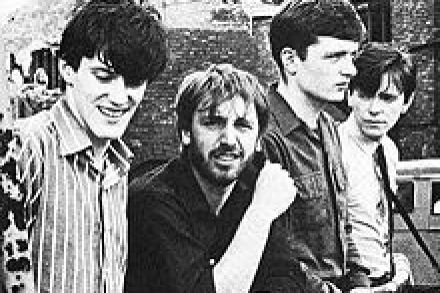
As this is the last week of my thirties, I feel entitled to indulge in a spot of pop culture nostalgia (or more than usual, at any rate). In tomorrow’s Spectator, I review Paul Morley’s masterly book on Joy Division, which I recommend to anyone who is interested in the music, ideas and social currents of the late Seventies and early Eighties. Looking back on three decades of writing about the Manchester band, Morley explains why the group, and the Factory records label pioneered by the late Tony Wilson, were so important in the history of rock and the redevelopment of the North. Absolutely terrific. And while I am at

Led Zeppelin are back

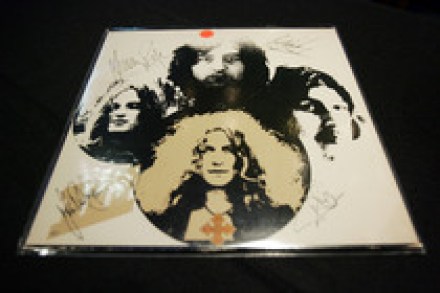
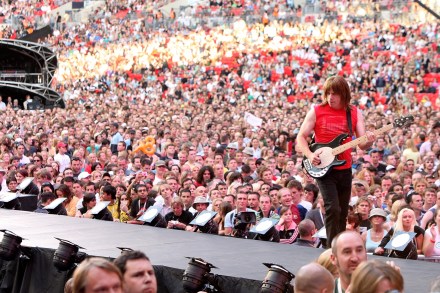
Twenty seven years after it was grounded by sudden death, the Zeppelin flies once more – and none of us can quite believe it. The three surviving members of the ultimate rock group – Robert Plant, Jimmy Page, and John Paul Jones – take to the stage at London’s O2 Centre, joined by Jason Bonham, son of their late drummer John Bonham, and burst without ceremony into “Good Times, Bad Times”.  It is an extraordinary occasion in every way, the most eagerly awaited reunion in the history of rock’n’roll. Each member of the audience, gathered from 50 countries, is conscious that more than a million (some say 20 million) people

John, Paul, George, Ringo — and John Paul II

Coming to a music store near you: Santo Subito!, the first ever papal music DVD. Featuring the late John Paul II, it is to be launched in Britain by Universal — better known for Amy Winehouse and the Sugababes — on 19 November. By Christmas, if the prayers of the PR people are answered, it will be a worldwide number one hit. Santo Subito! (‘sainthood immediately!’) is what crowds outside the Vatican traditionally chant when they want someone canonised without delay. Anyone who watched John Paul II’s funeral will remember the numerous banners in the crowds displaying the slogan. The DVD is a 60-minute compilation of footage of the late

"Get Money"

You don’t need to like – or know anything about – rap music or cartoons to still think this is pretty neat*: *Though not entirely safe for work since it would be plastered with warning stickers in the stores. But, sod it, it’s Friday… [Thanks to reader MH for the heads-up]

Who would have thought it?

There is a long tradition of the pop intelligentsia getting involved with academe or publishing — Pete Townshend’s work as an editor for Faber being the obvious example, Jah Wobble’s labours over Blake’s poetry rather less so. Sir Paul McCartney was the driving force behind the Liverpool Institute of Performing Arts. The Spectator’s own Alex James is the best bassist of his generation, and lived the pop life to the full, but he also has the cerebral firepower to hold his own in an academic common room or editorial meeting. So there ought to be nothing unsettling about the Smiths’ former guitarist, Johnny Marr, becoming a visiting professor of music at

Opera lives

Anyone tempted to think that opera might be a dying art only had to be at the Grand Theatre in Leeds on Tuesday night or the Royal Opera House, Covent Garden last night to discover that it is triumphantly and thrillingly alive.  On Tuesday, for a performance of Madam Butterfly, I sat surrounded by a group of fabulously dressed-up 16-year olds, mostly female and every one of them chattering or texting busily until the moment the lights dimmed and the music started. From that moment they were all on the edge of their seats and silent except for the occasional sharp intake of breath or sigh of pleasure. And at

The glory of music

Amidst the coruscating party conference commentary might I just slip in a small musical note akin to that so enjoyed by Matthew Parris in his terrific article in this week’s Spec? He was entranced by a single phrase played on the violin, cutting through the artificial flurry and tension before the transmission of a live television broadcast. On Friday night I was similarly transported by the glory that is two people making music together. In the eastern crypt of Canterbury Cathedral, as a dirty night pressed itself up against the windows and the rain sluiced down, two old friends – friends who had been choristers together in the same cathedral

Mary suggests...

Have you Herd? If you haven’t already done so, buy a copy of Mark Earl’s Herd: How to Change Mass Behaviour By Harnessing Our True Nature  It sounds sinister, but there’s not much harnessing in it and lots of exciting ideas about what it is to be human. Mark’s thesis is that we’re basically group animals, like chimps, and that ideas and fashions spread not as a direct result of some ad campaign, but because of our instinctive desire to mimic each other. This is tremendously cheering. It means all those threatening, cajoling ads — inside mags, blocking the letterbox, thrust at you in the street — will come to

It’s folk music but not as we know it

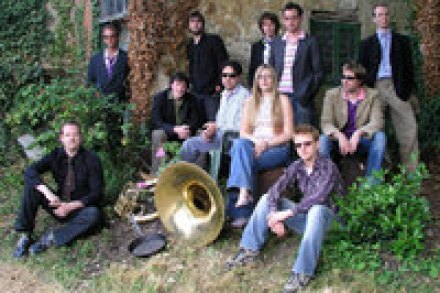
There’s more to folk these days than dodgy beards and cable-knit sweaters and it’s clear why Bellowhead, instigators of an outbreak of frenzied folkish foot-stomping at Shepherd’s Bush Empire on Wednesday, picked up Best Live Act in this year’s BBC Radio Two Folk Awards. Fronted by the charismatic Jon Boden, and underpinned by a riotous brass section, the 11-piece big band’s quirky, contemporary take on ballads, sea shanties, and traditional dance tunes had an ecstatic cross-generational audience singing along and jigging wildly, inhibitions cast asunder. Between them they play more than 20 instruments, including bouzouki, mandolin, banjo, bagpipes, sousaphone and frying pan, producing a unique sound which is described as

What a voice to waste

I have a piece in today’s Independent on the downfall of Amy Winehouse, an extended version of my post earlier this week. Which just goes to show that where Coffee House leads, the press follows.

The tragic fall of Amy Winehouse

There is something more than usually grotesque about the slow-motion downfall of Amy Winehouse being played out daily in the media. As the singer and her appalling husband holiday in St Lucia, their respective parents are fighting a shameful proxy battle at home, with her father-in-law, Giles, calling on Amy’s fans to boycott her records until she cleans up. She looks pitifully skeletal in the latest pictures, hollow-eyed and miserable. The worst of it is – beyond the horror of watching a human life collapse like a frame-by-frame car crash – is that she is, quite simply, one of the best soul singers of all time, possessed of a voice

Elvis: Still the King

This Tim Luckhurst piece for (who else?) The Guardian may be the dumbest thing even this professional contrarian has ever written. Apparently Elvis made “dull music for duller people” and “affection for Elvis is a workable predictor of anti-intellectual attitude”. Mr Luckhurst concludes that: The only credible claim that can be made on Elvis Presley’s behalf is that he helped introduce blues influences to a mass audience. But in a less bigoted era that would have been accomplished by authentic blues musicians. They expressed real emotions, despite origins at least as disadvantaged as his. But the world was not ready for their genius. It preferred to celebrate a dimwit instead.

Blue Saturday

I do not know whether, as was so often claimed, Tony Wilson, who has died aged 57, was a genius. But, as music mogul, club entrepreneur, loudmouth and zealous Mancunian, he was certainly one of the most important and remorseless figures in British popular culture of the past 30 years. Immortalised by Steve Coogan’s performance in the film 24 Hour Party People, Wilson was a jobbing Granada TV presenter who also had a passion for pop. As a musical Svengali, he is rivalled only by Epstein and McLaren, and he was more prolific than both. The influence of the bands he launched on Factory Records – Joy Division, New Order,

An evening with Barbra Streisand

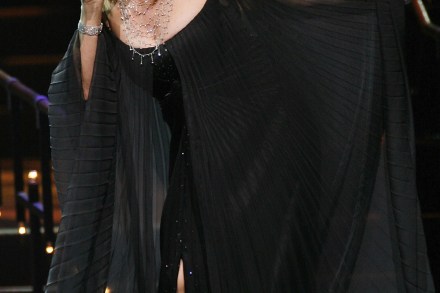
“Can you believe it?” Every time Barbra Streisand remembered how long it was since she had first sung a song, visited a town, tried a local delicacy – “1961!” – 23,000 adoring fans agreed that, no, it was quite unbelievable. Most of the audience at the 02 arena last night could not quite believe they were actually, at last, genuinely hearing their heroine, playing in London for the first time in 13 years. And the sense of event was as palpable as the crushed velvet of the legend’s gown: veering effortlessly from the ditzy to the diva, she held a thousand dreams in the palm of her hand, and yet

What happened at Live Earth

Read Matthew d’Ancona’s Live Earth reports: Live from Live Earth, Rocking for the Planet, Gore’s message is confusing, can Geri be clearer?, Let’s save this funny old world, Nan-archy in the UK, The Excellence of Tree Stock, Turning it up to 11 and Nobody does it better.

Turning it up to 11

There are few sights in Western civilisation to compare with Spinal Tap performing ‘Stonehenge’ and it is at least arguable that the risk of impending apocalypse caused by climate change was worth it to get Nigel, the boys and the dancing dwarves back on stage. Two billion people watching around the world are surely happier for having seen this awe-inspiring sight. Surely the end of modern society and the melting of the polar ice-cap is a small price to pay? We must all suffer for art, you know. (The  Beastie Boys were pretty splendid, too.)