Music and Opera

Our curation of music and opera reviews

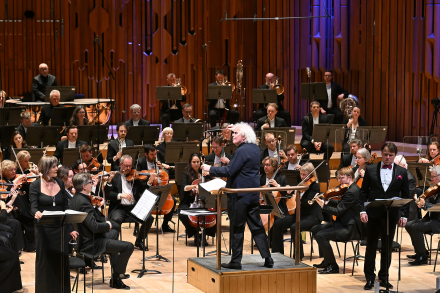
Rattle’s glorious Janacek

The Czech author Karel Capek is probably best known for his plays: high-concept speculative dramas such as R.U.R. and The Insect Play, bristling with wit and ideas. But he paid his bills as a newspaper columnist, and he seems to have been pleasantly surprised when Janacek approached him about turning his ‘conversational, fairly unpoetical and over-garrulous play’ (Capek’s words) The Makropulos Affair into an opera. Capek licensed Janacek to adapt it as the composer saw fit, in words that have the authentic ring of the working journalist – ‘because I simply wouldn’t get round to revising it myself’. No fear on that count. The Makropulos Affair is a brisk, nervy
What drama gets right and wrong about science

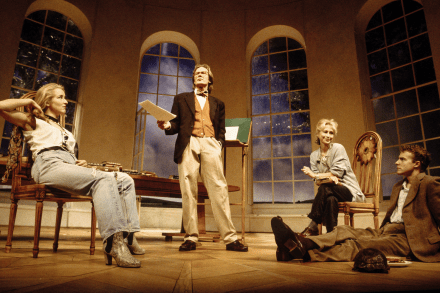
A few days after Tom Stoppard’s death last month, Michael Baum, a distinguished surgeon, wrote a letter to the Times. He explained how Stoppard’s discussion of chaos theory in Arcadia had inspired him to discover a new and far more effective chemotherapy to treat breast cancer. ‘Stoppard never learnt how many lives he saved by writing Arcadia,’ wrote Baum. I’ve long been fascinated by the relationship between science and drama. I knew Tom Stoppard and when I was professor of history and philosophy of science at UCL, we had several illuminating conversations about art, science and theatre, which he recalled in a 1994 article entitled ‘Playing with Science’ for the

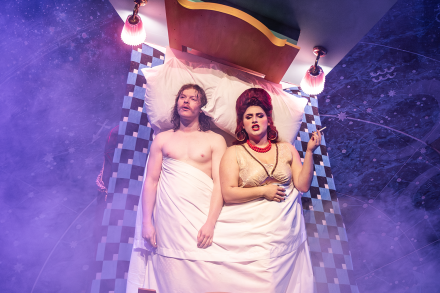
Oh, Mary!’s climax is an inspirational bit of comedy

High Noon, directed by Thea Sharrock, is a perfectly decent version of a trusty western which celebrates its 74th birthday this year. An elderly sheriff, Will Kane, marries a priggish beauty, Amy, on the day of his retirement but his marital plans are overturned by news that a dangerous convict, Frank Miller, has been released from jail and hopes to shoot Will dead. Amy is a devout Quaker and she grumbles bitterly as Will cancels their honeymoon and heads back to town to deal with the evil Frank. But Frank is not the brightest criminal in New Mexico. News of his plans have spread and everyone knows that he’ll show

Why has it all gone wrong for The Night Manager?

The Night Manager is finally back after ten years with three major drawbacks: no Elizabeth Debicki for the sex scenes; no Tom Hollander for the comedy scenes; and no Hugh Laurie for the evil-kingpin-in-his-toothsome-mountaintop-lair scenes, I nearly claimed. But only because at the very beginning of the new season the Laurie character’s grizzled body is identified by Olivia Colman (in her most irritating performance ever, as a dowdy but capable MI6 officer with a gratingly suburban accent). And I didn’t want to spoil the coming plot twist in case any of you were foolish enough to have fallen for this blatant case of Chekhov’s misidentified corpse. Now the cat’s out

Brendan Fraser is the king of the everyman: Rental Family reviewed

Rental Family stars Brendan Fraser as an out-of-work American actor living in Tokyo. He accepts employment with an agency that gets performers to play roles in real people’s lives. You may need a friend, for example, or a mourner should you fear your funeral will be sparse. (Tell me about it.) Fraser won an Oscar for a dark performance in The Whale but in this he’s back as a lovable, good-hearted everyman. (Is there anyone who does that better, aside from Tom Hanks?) Fraser plays Phillip, who arrived in Tokyo seven years before to star in a toothpaste commercial and has never left. Presumably, there is nothing, and no one,

This Royal Opera Traviata is no ordinary revival

First opera of the year, first night back in London, and the jolly old metrop was already springing surprises. A hulking pink Rolls-Royce was parked on Bow Street – a real oaf of a car, the lumpish nepo-baby of a Humvee and Lady Penelope’s Fab 1. And as we stood outside the Royal Opera House, cooling off from Act Two of La traviata, a large fox came jogging out of Broad Court and urinated against the front tyre before sauntering off in the direction of Aldwych. Pure magic. You should never take the capital for granted, just as you should never assume that a mid-season revival of a standard repertoire

What has happened to the Paris Opéra Ballet?

Freighted by a 350-year history, the Paris Opéra Ballet is a behemoth of an institution – lavishly subsidised by the state, hampered by barnacled traditions (including compulsory retirement on a full pension at the age of 42) and about twice the size of our own dear Royal Ballet. They do things differently there. Programming favours choreographers such as Pierre Lacotte, Maurice Béjart and Jiri Kylian – relatively unfamiliar in London – and the classics are dressed up in fancily revisionist productions by the company’s overly venerated former director Rudolf Nureyev (transliterated as Nouréev in French). Once famed for fabulously glamorous ballerinas – among others Élisabeth Platel, Isabelle Guérin, Agnès Letestu,

Lucy Worsley's sleuthing is rather impressive

Lucy Worsley’s Victorian Murder Club opened with its presenter unexpectedly channelling that gravelly voiced bloke who used to do all those film trailers beginning ‘In a world…’. ‘The London Thames,’ she intoned as gruffly and menacingly as she could, ‘winding silently through the capital. But in Victorian times…’ dramatic pause ‘…it had a sinister side.’ She then introduced ‘a story that has haunted me since I first heard it’ – possibly, you couldn’t help thinking, from a TV producer keen to find her another true-crime project. In the late 1880s, a serial killer dismembered several women while also taunting the police and never being found. Yet, this was not Jack

Johnny Rotten’s still got it

Robert Plant and John Lydon were fixed in the public mind at the age of 20. Plant, a golden-haired lad who had grown up in Worcestershire, became the leonine singer of Led Zeppelin in 1968, a self-proclaimed ‘golden god’. Lydon, a scrawny kid from Holloway, who had been hospitalised for a year with meningitis as a child, became Johnny Rotten, and in 1976 helped deliver ‘the filth and the fury’ – as the Daily Mirror put it – on the nation’s TV screens as a quarter of the Sex Pistols. Both, it would be fair to say, have ambivalent relationships with their pasts. After Zeppelin’s demise in 1980, Plant spent

The magnificence of Beare’s Chamber Music Festival

The quartet is the basic unit of string chamber music. Two violins, a viola and a cello: subtract any one of those, and you’re walking a tightrope. Add further players and the issue is redundancy: you’d better know precisely what you want to do with those additional voices, because otherwise they’ll congeal like cold gravy. When it comes to the string octet – two string quartets fused together – only the 16-year-old Mendelssohn really cracked it, going all out for transparency, daring and youthful verve. The Romanian George Enescu took the opposite approach. His Octet of 1900 is chamber music as epic construction project, wrought from steel, not spindrift. ‘No

Why has the National got it in for Oirish peasants?

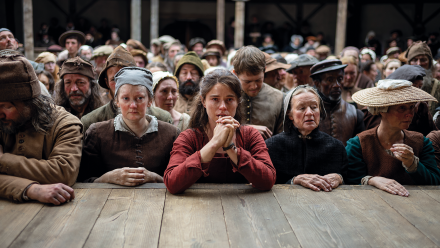
The Playboy of the Western World is like the state opening of parliament. Worth seeing once. Director Caitriona McLaughlin delivers a faithful production of John Millington Synge’s grand satire about dim-witted Oirish peasants and, perhaps unwisely, she spreads the show across the entire length of the vast Lyttelton stage. It looks as if it’s being performed on a railway platform. The drama consists of several broad, daring and improbable steps. A handsome farmer’s boy, Christy, rolls up in a sleepy village in Co. Mayo and claims to have murdered his father. The lustful local girls treat him as a hero rather than an outlaw and compete for his hand in

The genius of Morton Feldman

To accompany an exhibition of paintings by Philip Guston at the Royal Academy of Arts in London in 2004, a performance was arranged of Morton Feldman’s composition written in homage to Guston, for which I was persuaded to page-turn. For Philip Guston runs non-stop for four hours and the thick A3 bundle of manuscript paper balanced precariously on a flimsy music-stand was a matter of concern: what could possibly go wrong? Once the performance ended, I snatched the bundle of £20 notes that I’d been promised, sprinted to the bathroom, then fortified myself with the chunkiest slice of cheesecake I could find in Patisserie Valerie on Old Compton Street. Nothing

An opera that will actually make you laugh

‘What we want is proper comedy!’ bellows the male chorus in the opening seconds of Prokofiev’s L’amour des trois oranges – in this case, a bevy of Monty Python bruisers in nylon frocks. The audience stirs. We’re being invaded by outsize schoolkids and what looks like a Scandinavian Eurovision entry, pushing through the stalls to the roars and whoops of a more-than-up-for-it student crowd. The previous night, I’d had four hours of manicured Handel and now a solo trombone was blowing raspberries in my face. ‘Stuff your tragedy! Take us out of ourselves!’ Yes, please! Do that. After prolonged exposure to da capo arias, a blast of raucous, multicoloured nonsense

Sublime: Song Sung Blue reviewed

Song Sung Blue is a musical biopic of the real-life Milwaukee couple who formed a Neil Diamond tribute act and never hit the big time, or anywhere near. At its heart is a love story – one that is beautifully told. It stars Hugh Jackman and Kate Hudson, who is so sublime that we may even opt to forgive her for How to Lose a Guy in Ten Days and similar. The only real downside is that it will leave you with an earworm of ‘Sweet Caroline’ (‘bom, bom, bom’) for the rest of your born days. A Hollywood biopic wouldn’t normally give such a couple the time of day

One for hardcore Stoppard fans: Indian Ink reviewed

Unusual. After the press night of Indian Ink by Tom Stoppard, no one leapt up and cheered. The crowd applauded politely at the amusing dialogue and the marvellous acting in Jonathan Kent’s handsome three-hour production but there was no standing ovation. The script feels like a literary novel overstuffed with detail. Flora Crewe is a ravishingly beautiful but utterly sexless poet who floats around India in the 1930s provoking the adoration of lustful men. But she doesn’t evolve or change during the action. And she’s maddeningly indifferent to the romantic attention she excites. A maharajah tries to impress her with his fleet of Rolls-Royces. A dashing English captain proposes marriage

Who let Men Without Hats make a new album?

Grade: D A Montreal band led by a Ukrainian/Canadian called Ivan Doruschuk, with a histrionic baritone, famous solely for having had the most ludicrous hit of that ludicrous decade, the 1980s, with ‘Safety Dance’. Perhaps more famous still was the hilarious video that accompanied the song: Mr Doruschuck in medieval gear cavorting in fields with peasants, throttling a dwarf and entrancing a very pretty blonde woman who looked well up for it. Status Quo, bizarrely, covered ‘Safety Dance’, but the band had no more hits. Why on earth are they still going? Who gave them the advance for a new album? And is it any good? No, of course not.

What links Jeffrey Dahmer to the Spice Girls?

The path that links the Spice Girls to Jeffrey Dahmer – necrophile mass murderer of at least 17 men – is a circuitous and unusual one. It involves the establishment of Mothercare and Harold Wilson’s Chancellor of the Duchy of Lancaster and the New York underground of the early 1980s. The thread that joins the ends is a 76-year-old Ohioan called Chris Butler. Butler was part of that art underground in 1981. He was – and is – a musician. Back home in Akron he’d started several bands – the wonderful art rock group 15-60-75 (aka the Numbers Band), and Tin Huey – and he’d brought the newest of them,

Paddington – The Musical is sensational

Who doesn’t love Paddington? The winsome marmalade junkie has arrived at the Savoy Theatre in a musical version of the 2014 movie. First of all, the show is sensational. Absolute box-office gold, full of joy, mirth and spectacle. It’s also quite pricey but never mind. Sceptics who feel indifferent to children’s fiction will be relieved to learn that the dyspraxic Peruvian asylum seeker doesn’t feature much in the story. Paddington’s main attribute is his physical clumsiness and once he succeeds in destroying the crockery and furniture at the Browns’ family home, he runs out of narrative possibilities. His fur is invitingly combustible. Could someone set him on fire? Not quite.